
Heat pump vs furnace in Comanche County, Oklahoma

Find a Pro Near You

Get a price before you decide

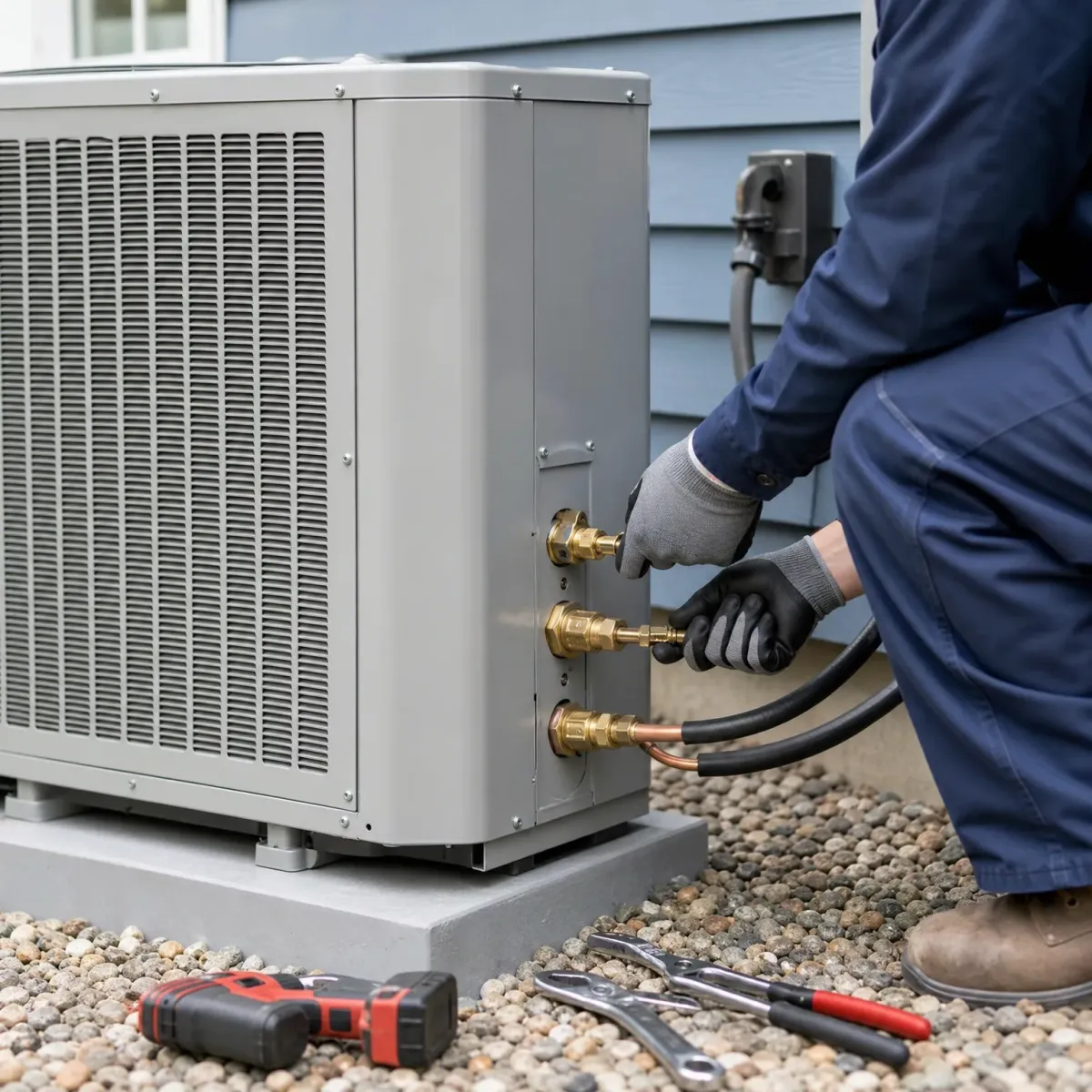
A gloved worker in dark blue coveralls kneels beside a gray outdoor heat pump unit on a concrete pad, connecting insulated copper refrigerant lines to brass service valves, with pliers and a cordless drill lying on gravel in the foreground.

Tell us about the job

Takes about a minute. No obligation.

New system or replacementComanche County, OK
Step 1 of 3

What kind of equipment?

Which costs less to run in Comanche County?

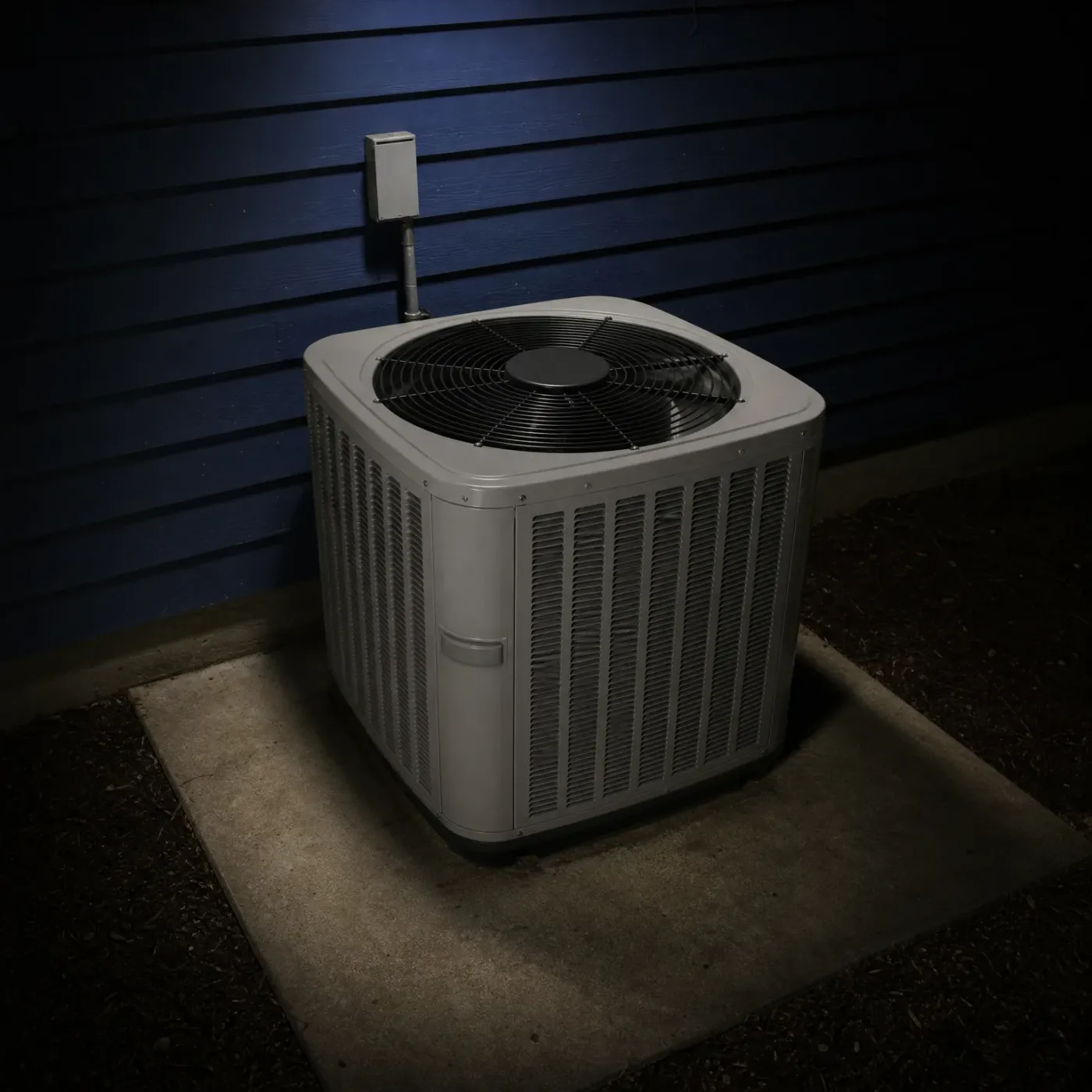
A gray outdoor condenser unit with a top-mounted fan grille sits on a concrete pad beside a dark blue horizontal lap-siding wall at night, with a disconnect box and conduit on the wall above it.

Heat pump

To heat your home here$1.63per 100,000 Btu

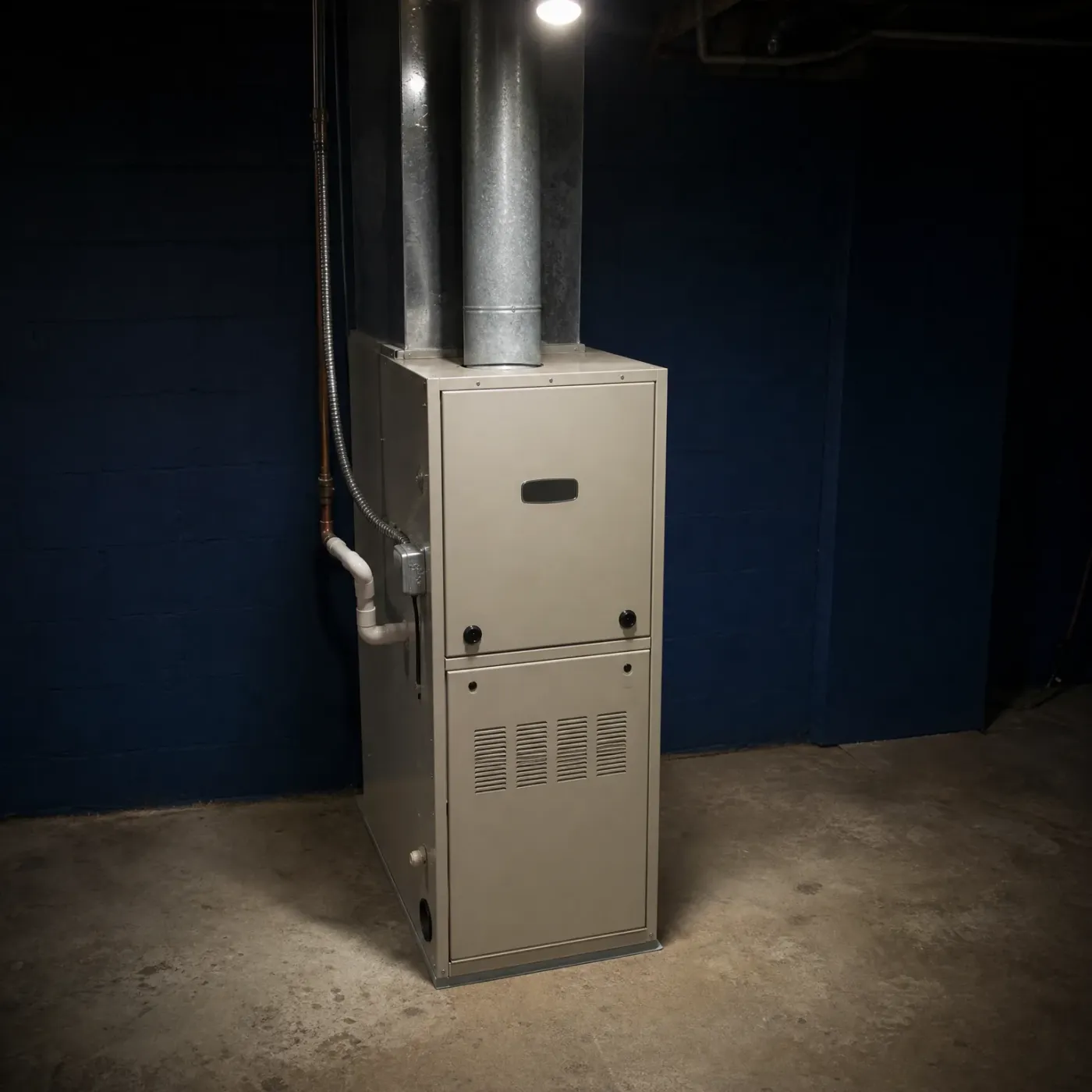
A beige sheet-metal furnace stands on a concrete basement floor against a dark blue painted block wall, with galvanized flue ducts rising to the ceiling and a flexible metal conduit and PVC pipe at its left side.

Furnace

To heat your home here$1.69per 100,000 Btu

At Oklahoma's gas and electricity prices, a heat pump and a gas furnace cost about the same to run here.

Btu stands for British thermal unit, the standard measure of heat energy.

Where does a heat pump shine?

  • Covers a long cooling season

    Cooling runs May through September here, five months of the year. A heat pump covers all of that and the cold months too, with one system doing both jobs.

    A covered porch with white columns, lap siding, a ceiling fan and lantern, hanging ferns and potted flowers, a black rocking chair, and a glass of iced tea on a wicker table beside a potted herb plant.
  • Heats and cools in one system

    Winter and summer are covered by the same outdoor unit. That's one machine to service instead of two.

    A living room with a light gray sofa holding navy and pale blue pillows and a navy fringed throw, a rustic wood coffee table with a woven tray and hydrangeas in a white vase, a navy built-in bookshelf at left, and large windows showing green trees and flowering shrubs.
  • Steady, even comfort

    A heat pump runs long and low instead of blasting on and off. Rooms hold an even temperature all day.

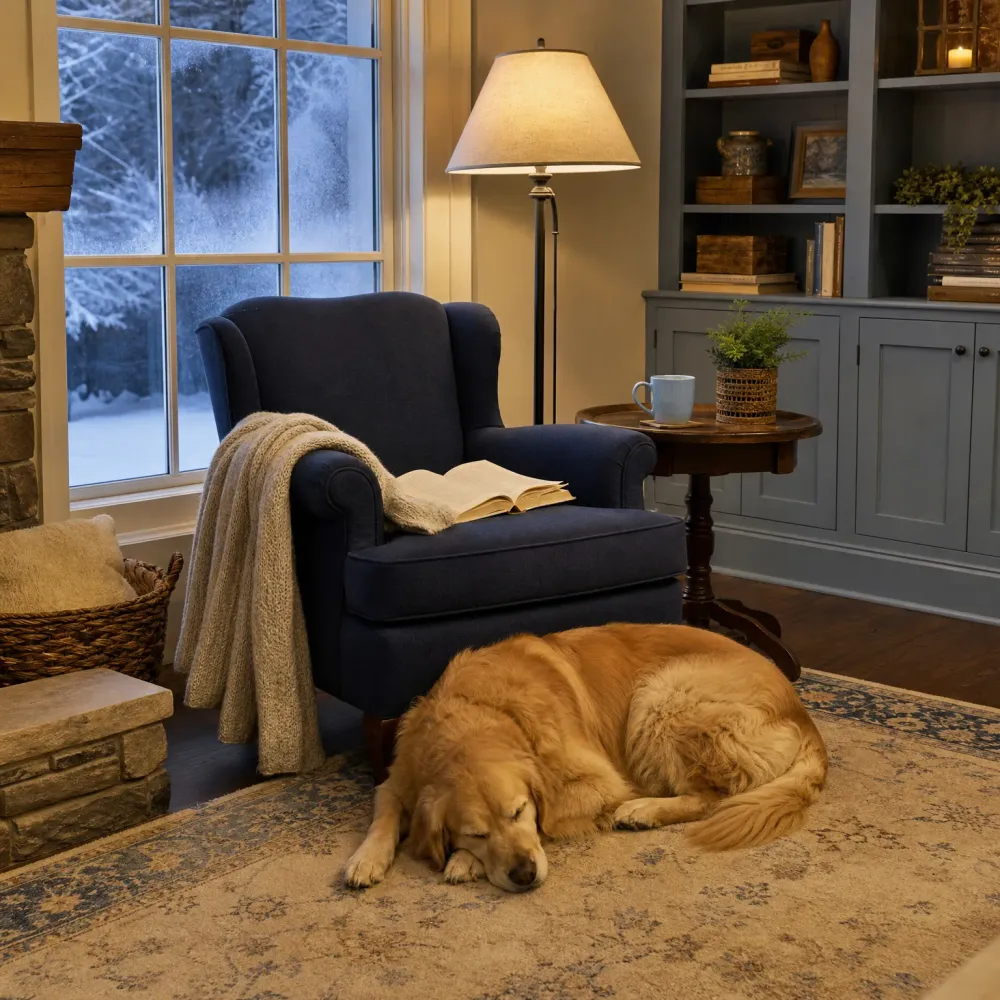
    A golden retriever sleeps on a patterned rug beside a navy wingback chair with a knit throw and open book, next to a lit floor lamp, a side table with a mug and small plant, gray built-in shelving, and a window showing snow outside.

Where does a furnace shine?

  • Proven, simple, easy to get serviced

    Gas furnaces have heated homes for generations. Almost every HVAC tech knows them inside and out.

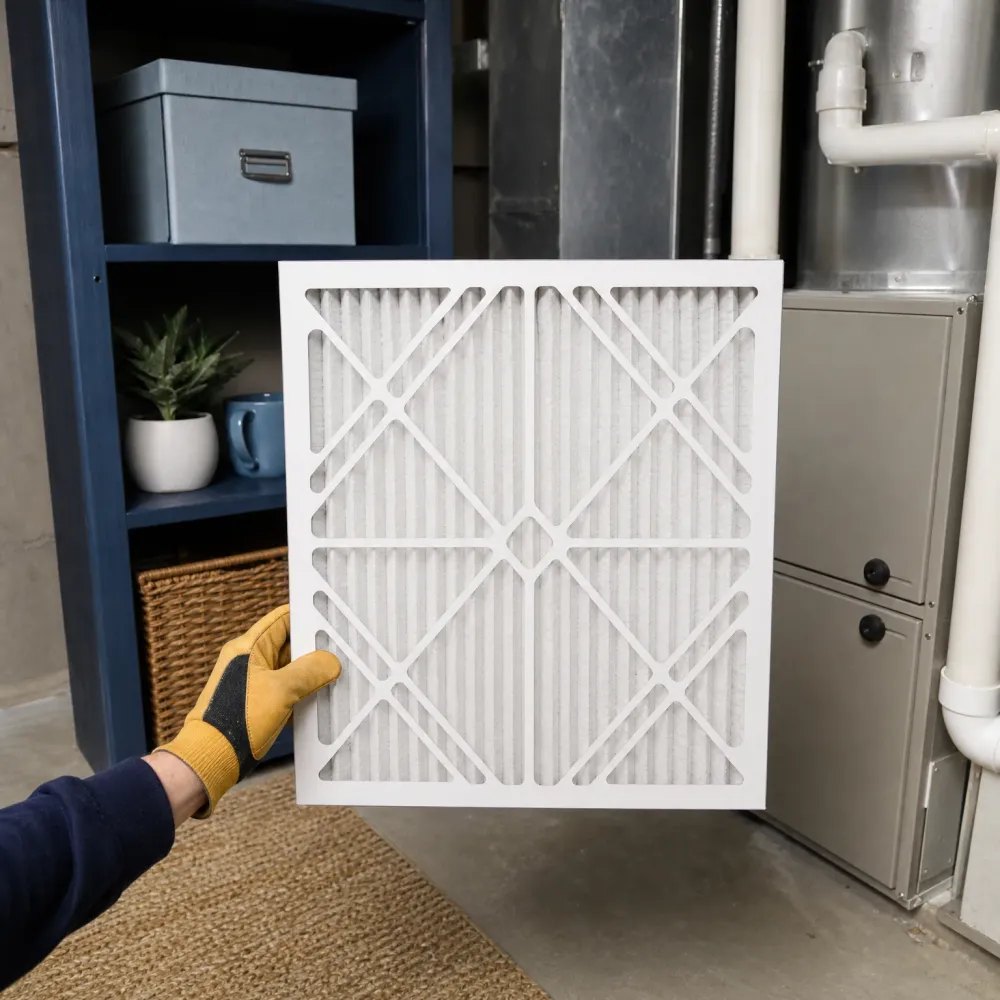
    A gloved hand holds a square pleated air filter in front of a furnace in a basement, with a shelving unit, potted plant, and woven basket in the background.
  • Fast, strong heat on demand

    A furnace pushes out hot air within minutes of switching on. A cold house warms up fast.

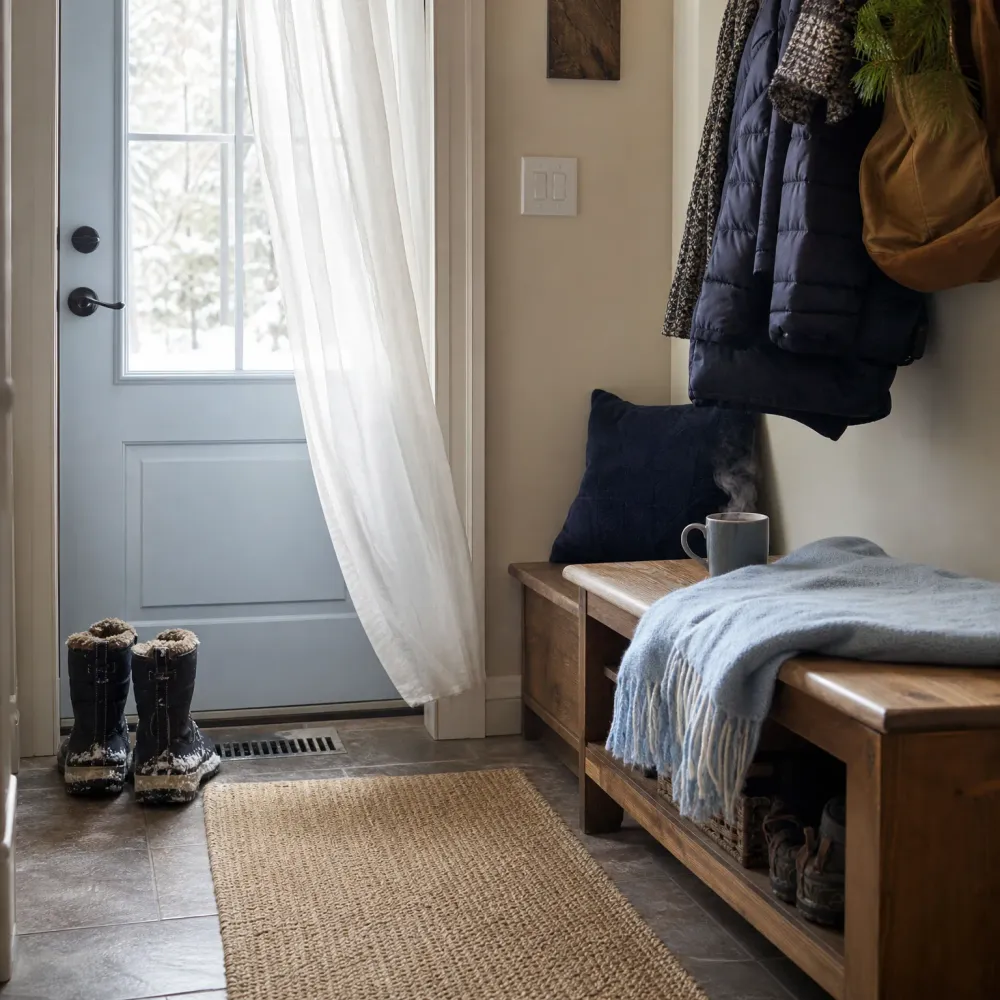
    An entryway with a windowed door showing snow outside, sheer curtain, winter boots on tile, a jute runner, and a wooden bench with a blue blanket, pillow, and mug beneath hanging coats and a bag.
  • Pairs with any central AC

    A furnace's blower and ducts carry cooled air too. Adding central AC uses the same system.

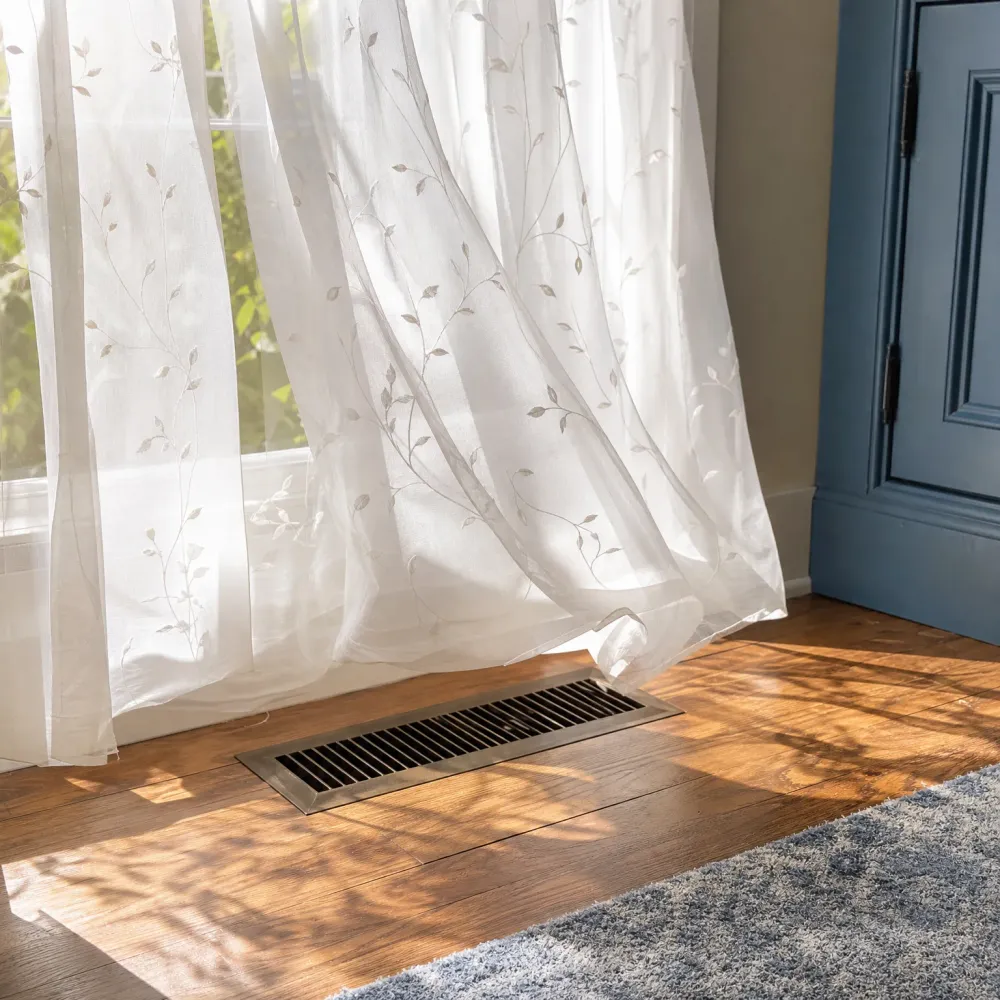
    A metal floor vent set into hardwood flooring near a window with sheer leaf-patterned curtains, with sunlight casting leaf shadows and a gray rug at lower right.

What the cold here does to a heat pump

Your winter low here averages 31°F, and about 70 nights a year dip to freezing or below. That matters because a standard heat pump starts falling short of its rated heat below 40°F, and below about 35°F it often leans on backup heat to keep up. Your average night is past both marks. So on most winter nights here, the heat pump is not working at full strength, it is working at partial strength and calling on backup to cover the rest.

That sounds worse than it is. Fewer than one night a year here reaches 0°F, where a heat pump struggles most. Almost all of your cold nights sit in that 31 to 32°F range, mild enough that a modern heat pump still makes real heat, just not quite its rated amount. If you go with a heat pump, look for one with the ENERGY STAR Cold Climate mark. That rating requires it to still produce most of its heat and keep a real efficiency at 5°F, verified by outside testing, which covers you even on the rare night that cold actually shows up.

Field tests of these cold-climate heat pumps back this up. Running on backup heat alone was rare even down near 0°F, and backup only covered a small share of the heat needed between 0 and 35°F. So the dip in output on a freezing night here does not mean the system stops heating your house, it means it works harder and shares the load with its backup strip more often than a furnace would need to.
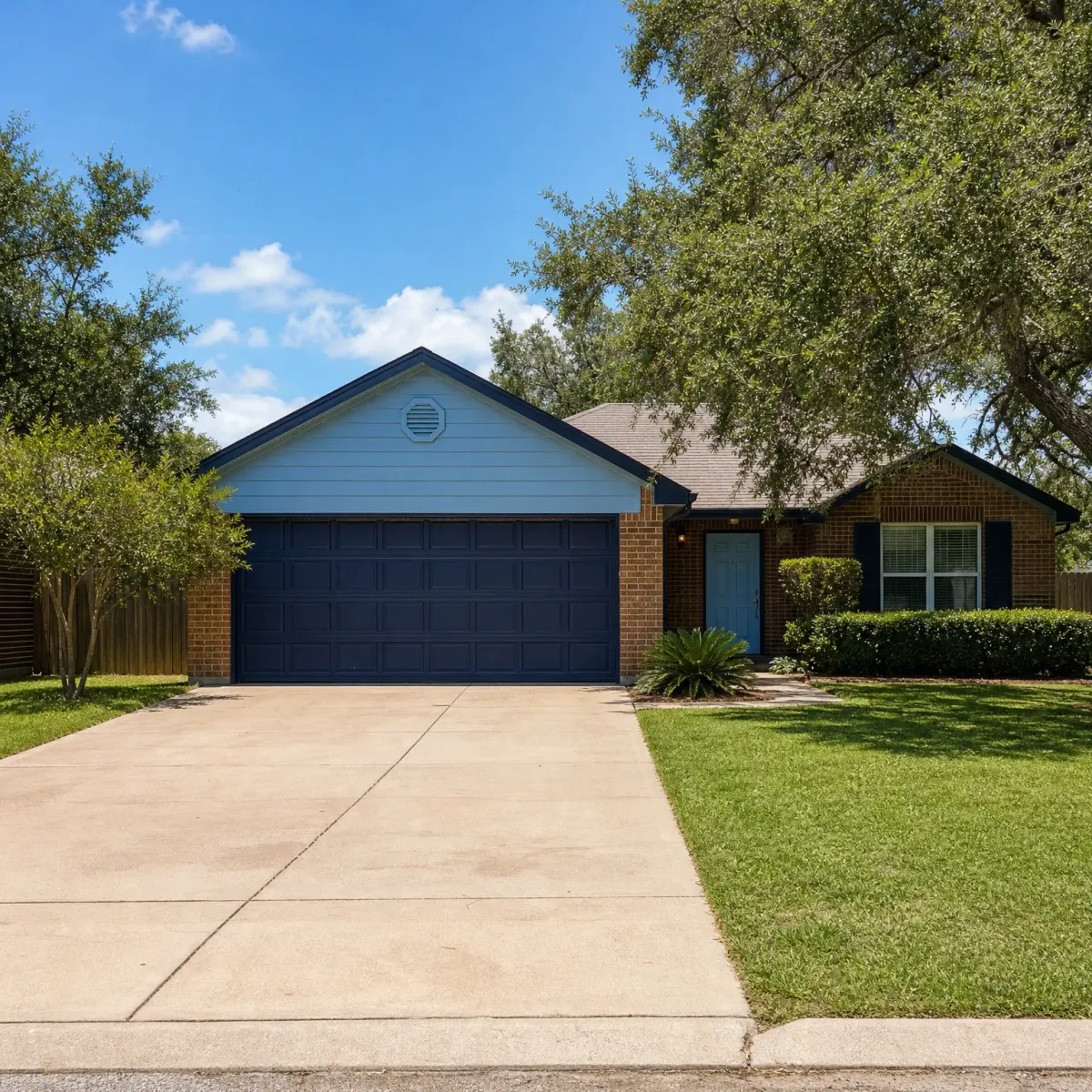
Single-story brick house with a light blue gabled section, navy two-car garage door and blue front door, fronted by a concrete driveway, lawn, shrubs and large trees under a blue sky.

What it costs, and what else it does for you

Run the numbers at Oklahoma's prices and a heat pump costs $1.63 to make 100,000 Btu of heat, a gas furnace costs $1.69. That is close enough that fuel cost alone will not decide this for you. The heat pump's number assumes federal-minimum efficiency and adds nothing for the backup heat it leans on below 35°F, so on your coldest nights the real gap is smaller than six cents.

The bigger difference is what each machine does the rest of the year. Your cooling season here runs five months, May through September, with about 90 days a year hitting 90°F or hotter. A furnace only heats. It sits idle all summer and you still need a separate air conditioner. A heat pump is both machines in one, heating your home the six months heat runs and cooling it the five months after, with one system to maintain instead of two.

A gas furnace is still the simpler, more familiar choice, and it is what close to two in five homes here already run on, against a little over half on electric heat. If your house already has gas line and ductwork sized for a furnace, pairing it with a standard AC is the lower-friction path. But if you are choosing new, a heat pump covers the long cooling season here, costs about the same to run as a furnace through winter, and does not leave you buying a second system for summer.

Sources: NOAA nClimDiv · NOAA 1991–2020 seasonal normals · PNNL Building America guide · PNNL-37127 field study · ENERGY STAR product criteria · EIA SEDS 2024 · 10 CFR 430.32 · Census ACS 2020–2024

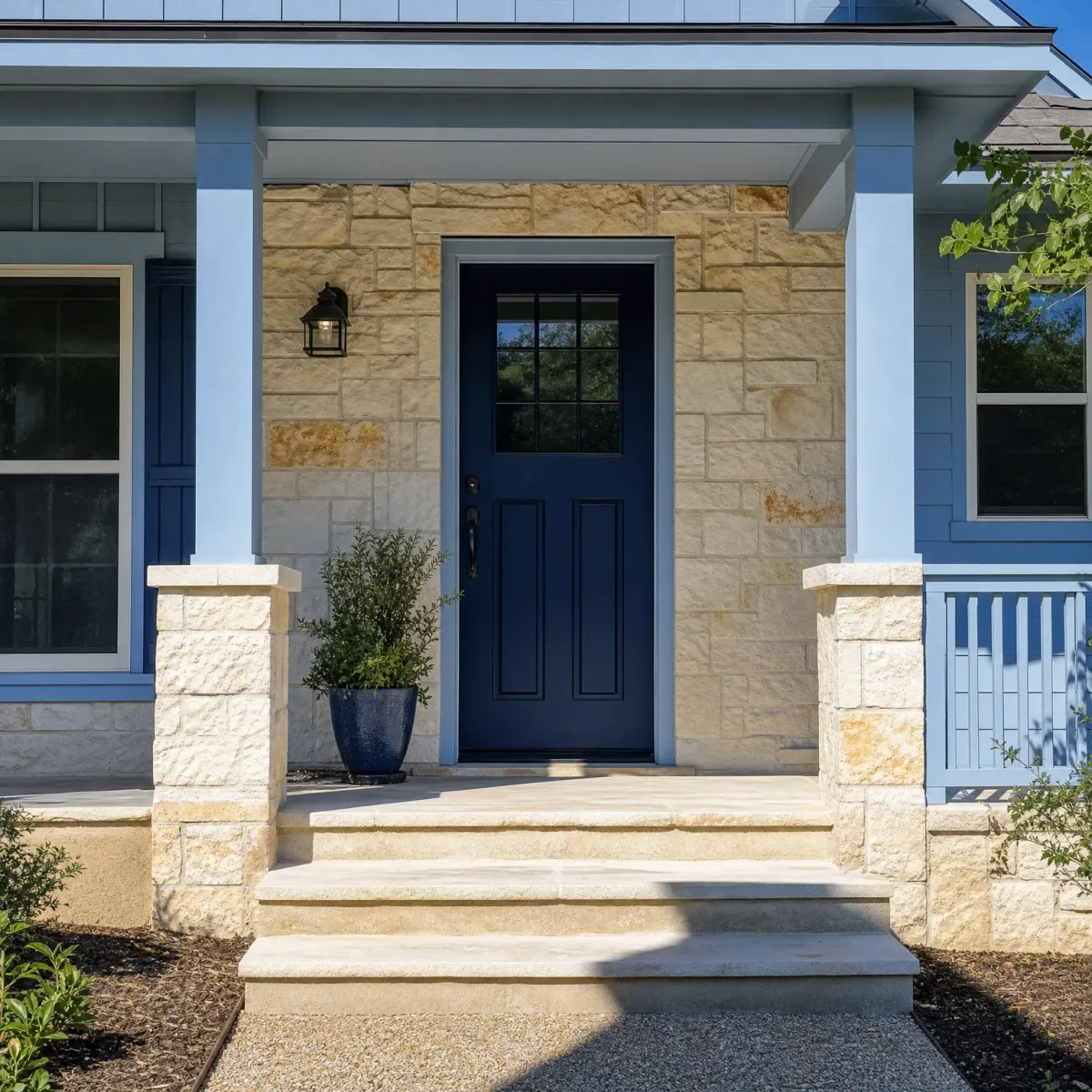
A navy blue front door with a divided-light window set in a cream stone facade, flanked by light blue siding and columns, with stone steps, a potted shrub, and a black wall lantern.

Common questions about heat pumps and furnaces

  • Will a heat pump keep my house cool enough here?

    Yes. A heat pump is a central air conditioner in the summer, running the same cycle in reverse, and it covers a cooling season here that runs May through September, including the roughly 90 days a year that reach 90°F or hotter.

  • Can I keep my furnace and add a heat pump?

    Yes, and here that's a common setup. The heat pump carries the heat down to around 35°F, and the furnace takes over below that, which matters since the overnight low here averages 31°F and falls to freezing or below on about 70 nights a year.

  • What if my house doesn't have a gas line?

    A heat pump is the usual choice. Without a gas line the other options are electric resistance heat or a furnace burning propane or oil, and a heat pump heats and cools in one system while costing less to run than straight electric resistance heat.

  • Is a heat pump cheaper to run than a furnace in Comanche County?

    Yes, slightly. At Oklahoma's average fuel prices a heat pump runs $1.63 per 100,000 Btu of heat against $1.69 for a gas furnace, close enough that the choice between them usually comes down to what else you need from the system rather than the running cost.