





An unfinished basement featuring concrete block walls, exposed floor joists, a bare concrete floor, and a forced-air furnace with a large metal exhaust duct in the corner.

Furnace Repair in Lawton, OK

Tell us about the job

Takes about a minute. No obligation.

RepairFurnace or heatingComanche County, OK
Step 1 of 2

What ZIP code is the job in?

Comanche County saw 358 severe weather events between 2015 and 2024. Damaging wind hit 148 times, hail 185 times, and 11 tornadoes touched down in that same stretch. A furnace doesn't sit in the open the way an air conditioner does, but the parts tied to it, the flue, the vents, anything routed near the roofline, can take damage in weather like that without it showing right away. Statewide, a quarter of Oklahoma households went at least a full day without power in 2024. A furnace with no power doesn't ignite, no matter what shape it's in otherwise.

6 months
November through April, your furnace is on duty
31°F
the average winter night it heats against
14 winter storms
in ten years, the nights a failure hurts most
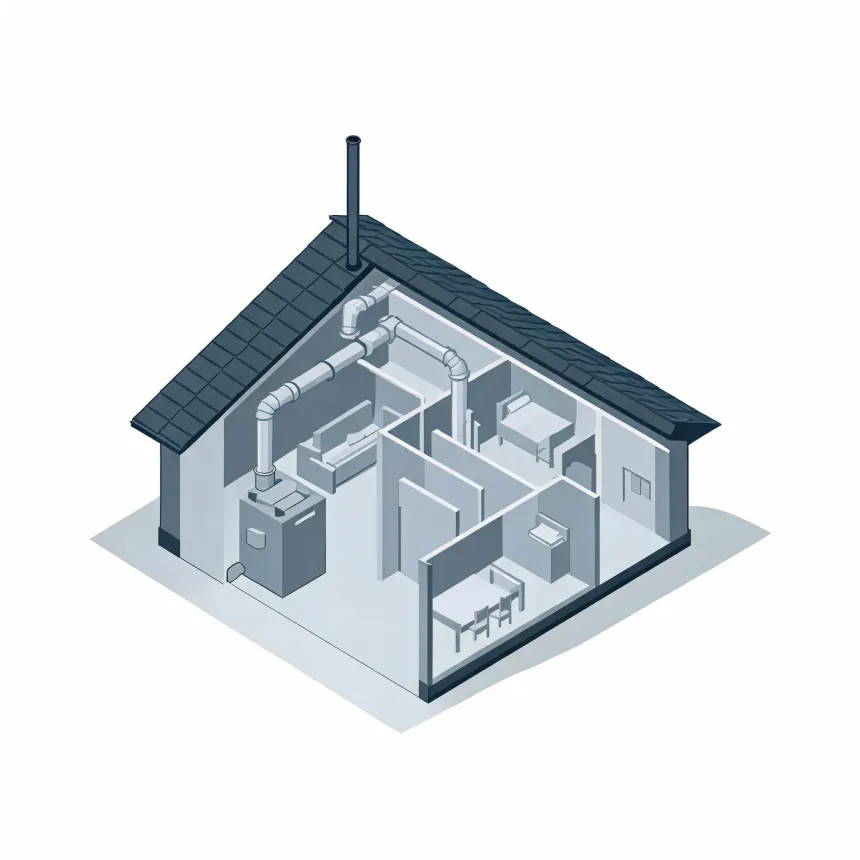
Isometric cutaway illustration of a small single-story house showing interior rooms with furniture, a furnace unit with attached ductwork running to a roof flue, and a dark shingled roof.
Your furnace works hardest from November through March.

NOAA nClimDiv, 1991–2020 normals

A cracked heat exchanger or a failed igniter ends a furnace's life the same way, by stopping it cold.

A furnace that cuts out mid-cycle needs a tech who checks the flame sensor and the exchanger before anything else.

Six months of duty a year is a light enough load to keep a repair worth making

Heat runs November through April
Winter nights average 31°F
14 winter storms from 2015 to 2024
November asks a lot of a furnace that hasn't run since springFurnaces here sit idle through October, then start running in November with overnight lows averaging 31 degrees

Get a furnace checked out after a storm even if it seems to be running fine. Comanche County saw 14 winter storms between 2015 and 2024, and a furnace built to run six months a year, November through April, has the reserve to shrug off most of what weather does to it. Ask the tech to look at the flue and vent connections while they're in there, since that's where storm damage tends to hide. A furnace that's been running light duty all its life is usually worth the repair call, not the replacement one.

Had a storm come through? Get the flue checked before you need the heat

If the flue or vent connections took a hit in the last storm, a furnace can keep running for a while before it shows. Worth having a tech look at them now, before the cold sets in and you're relying on it every day.

Find a contractor
A man in a dark long-sleeve shirt and tan work pants, seen from behind, carries a worn canvas tool bag up steps toward a navy blue front door of a gray clapboard house, with a large blue planter and shrub to the right.
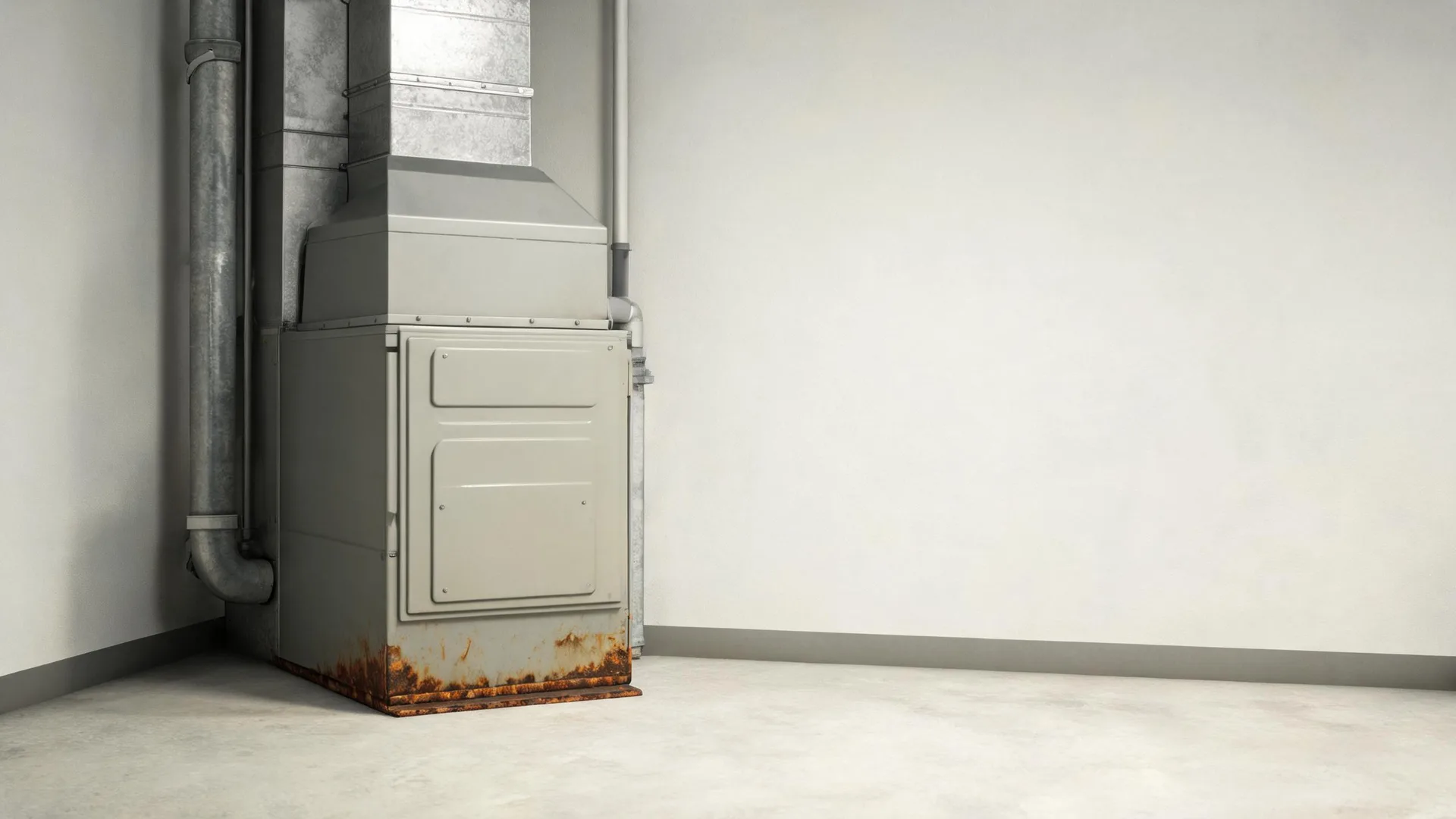
A gray gas furnace with attached ductwork and piping installed in an unfinished concrete basement.

A furnace rarely fails without saying so first

A furnace that's working right starts the first time it's asked to, every time. Short cycling is the first thing most people notice: it fires, runs for a minute or two, shuts off, then starts again before the house has warmed up. That usually means a flame sensor that's coated and can't tell the burner is lit, or a limit switch tripping because airflow is restricted somewhere. A furnace that won't stop running, on the other hand, points at a thermostat that's lost its connection to the system or a blower that's stuck on. Listen for anything different. A bang at startup is gas building up before it catches, and that one needs a tech soon. A screech points to the blower motor or its bearings. Rooms that used to heat evenly and don't anymore usually mean a duct problem or a blower that's lost strength. Any smell of gas means shutting off the furnace at the switch or the breaker and calling for help right away, no exceptions. Yellow burner flames instead of blue are worth a same-week call even if the furnace seems to be running fine, since that flame color usually means incomplete combustion. None of these mean the furnace is finished. Most of them are a single part doing the talking.

A small problem left running becomes a bigger one

A cracked heat exchanger stays a one-part repair until the crack spreads from the heat or keeps flexing open and shut on every cycle. A blower motor with worn bearings will keep turning until it seizes, and when it seizes it can take the control board with it. A clogged flue restricts how exhaust leaves the house, and a furnace pushed to keep firing against that restriction runs hotter than it should every time it cycles.
The furnace can't tell you it's struggling

A furnace doesn't ease off when something's wrong with it. It fires the same way every time until a safety switch finally trips and shuts it down, or until the strained part gives out. That's why a sound or smell that's new is worth calling in right away rather than waiting to see if it keeps happening. By the time it won't start at all, it's usually been telling on itself for a while.

Before calling anyone, check the thermostat is set to heat and the setting is above room temperature, not just on. Look at the switch that looks like a light switch near the furnace itself, usually on the side of it or on a nearby wall, and make sure it's on. That switch gets bumped off or mistaken for a light switch more than people expect. Check the breaker it runs on too, since a tripped breaker will stop it cold with no other sign. If the furnace has a standing pilot, see if the pilot light is actually lit. Last, pull the filter and look at it. A filter packed with dust chokes off airflow and can trip a limit switch, shutting the furnace down as a safety measure rather than a failure. None of this fixes a cracked exchanger or a bad igniter, but it rules out the simple stuff before anyone drives out.

A furnace that needs a new igniter or blower motor is usually still worth fixing, since the rest of the furnace has plenty of life left and that part alone doesn't carry a high cost. What changes the math is a cracked heat exchanger, or a control board failing on a furnace that's already needed several other repairs recently. At that point you're not fixing a furnace, you're keeping an old one on life support, and the next part to go is rarely far behind. A tech who's honest with you will say so plainly: this repair makes sense, or it doesn't, given what else is likely to fail next. If nobody's said the word replacement to you yet, that's usually a sign the repair in front of you is still the right call.