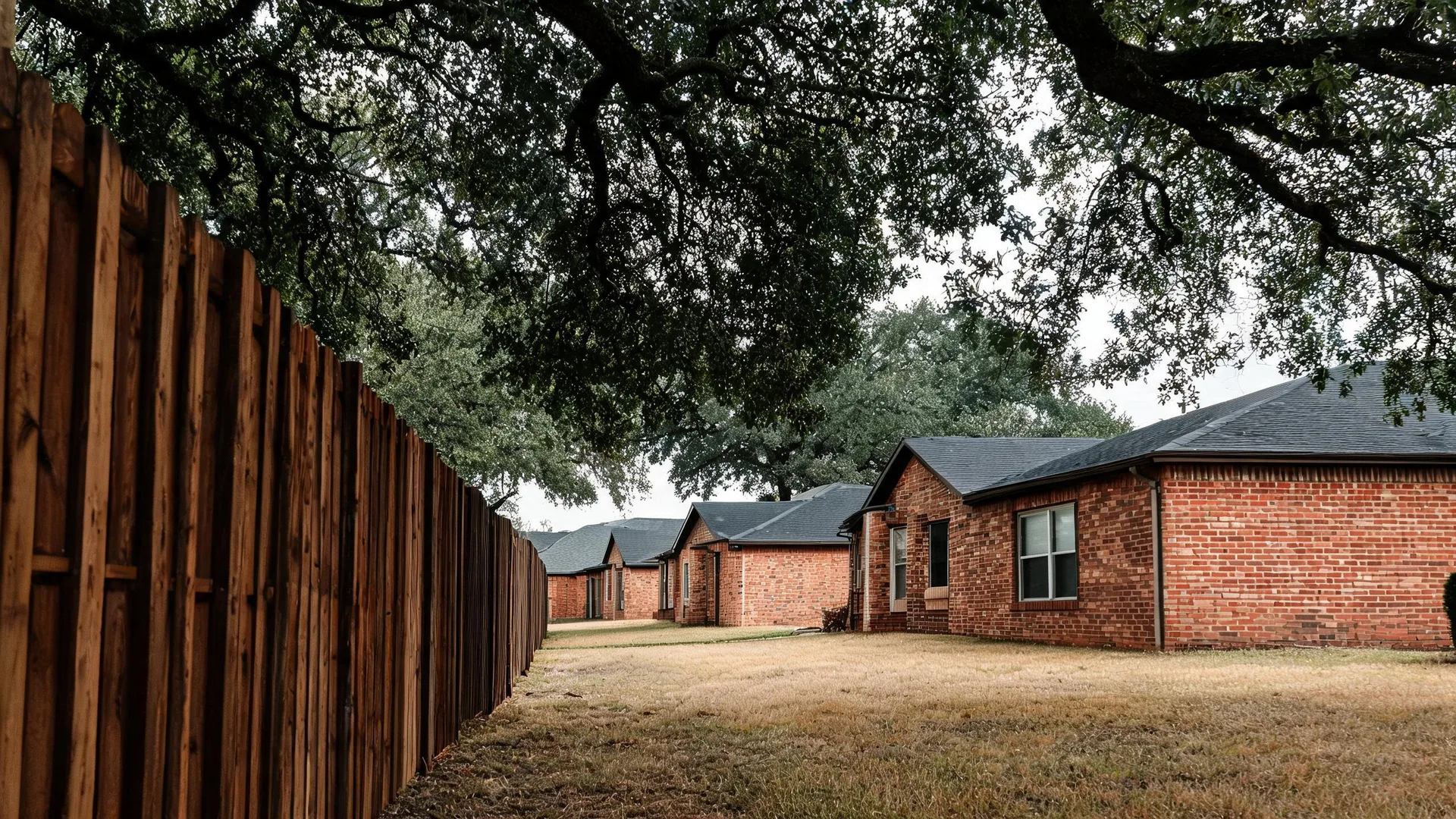
A tall wooden privacy fence runs along the left side of a dry grass lawn beside a row of single-story brick houses with dark shingled roofs, under large overhanging oak branches.

Heat Pump Repair in McAlester, OK

Tell us about the job

Takes about a minute. No obligation.

RepairHeat PumpPittsburg County, OK
Step 1 of 2

What ZIP code is the job in?

Humid air, a heat pump working against it

The dew point around McAlester averages 68 degrees through June, July and August. That's heavier air than most of the country deals with, and a heat pump has to pull more moisture out of it to keep a house comfortable. That extra work adds up over a summer.

What that means for your repair

A heat pump running hard for months at a time wears its parts sooner than one in a milder climate. The coil, the compressor, the reversing valve, all of them see more strain here. Whatever's acting up on your system, there's a good chance that steady workload is part of why. A proper diagnosis finds the actual cause instead of just patching the symptom.

6 months
November through April, your system heats
5 months
May through September, it cools
32°F
the average winter night it heats against
91°F
the average summer afternoon it cools against
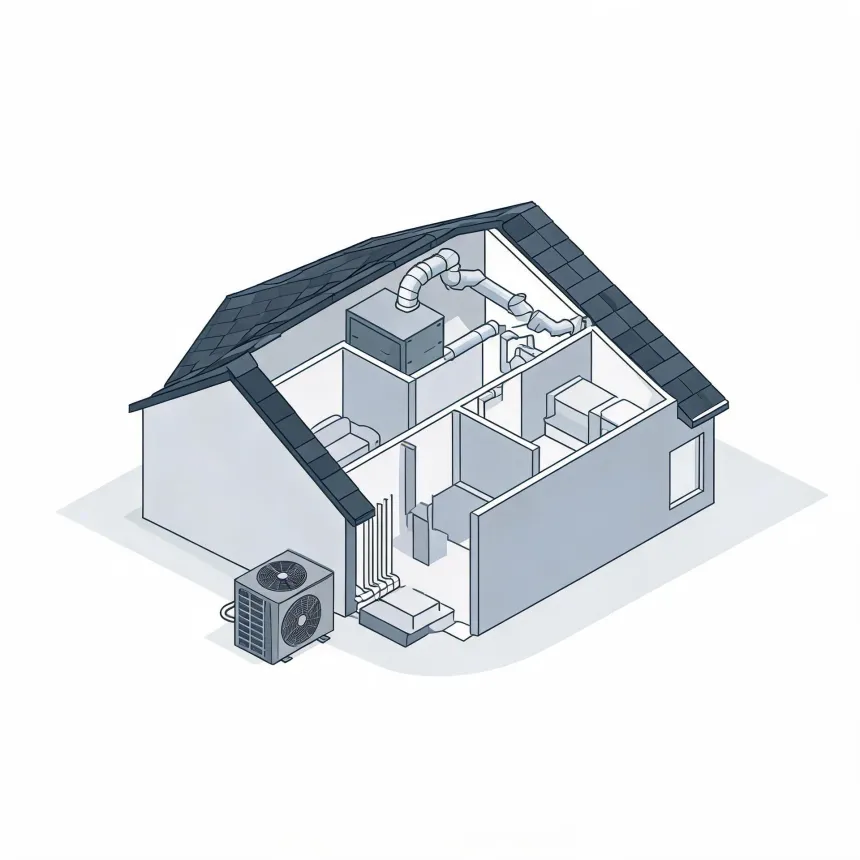
Isometric line illustration of a cutaway house showing interior rooms, an air handler with ductwork in the attic space, and an outdoor condenser unit beside the exterior wall.
Your system heats November through April and cools May through September.

NOAA nClimDiv, 1991–2020 normals

A heat pump runs for cooling and for heat, so it never gets a season off.

That means the compressor, the reversing valve and the fan motors all wear year round, not just in summer.

A county that gets hit hard, and an outdoor unit that takes it

147 severe weather events from 2015 to 2024
25% of homes statewide lost power a day or more in 2024
61 damaging wind events from 2015 to 2024
Heat Pump Repair in McAlester, OKHeat runs here from November through April, cooling from May through September. The machine gets no real break.

If your outdoor unit took a hit from a storm, even one it seemed to shake off, get it looked at before you decide the repair is something else. Hail dents fin coils and bends them closed, and a bent coil cuts the airflow the system needs to heat or cool right. Wind-blown debris does the same from the other direction, jamming the fan or scoring the coil face. Sometimes the unit keeps running after that and the trouble just shows up weeks later as higher bills or a system that won't hold temperature. A tech checking a heat pump for any other reason can look the cabinet and coil over for that kind of damage at the same visit, so it costs you nothing extra to ask.

Your heat pump has been working hard. Find out what that's cost it.

Whatever's going on with your heat pump, the cause usually traces back to how hard it works here, running cooling most of the year and heat the rest. A tech who knows that will check the parts that take the brunt of it first, the coil, the compressor, the reversing valve, instead of guessing. Get it looked at and you'll know what's actually wrong, not just what seems wrong.

Find a contractor
A man in a gray t-shirt and tan work pants, seen from behind, carries a canvas tool bag up wooden porch steps toward a dark blue front door beside a potted shrub.
A gray air-source heat pump mounted on a concrete pad next to a house with gray vinyl siding, surrounded by gravel and flanked by green shrubs and white hydrangea flowers.

What you can check before anyone comes out

Before you call anyone, check the thermostat. Make sure it's set to heat or cool as needed and the temperature is actually set past the room temperature. A dead battery in the thermostat will cause odd behavior that has nothing to do with the heat pump itself. Next, go look at the air filter. A clogged filter starves the system of airflow and can make it freeze up or short cycle. If you can see daylight through it, it's fine. If it's gray and matted, swap it. Walk outside and look at the outdoor unit. Check that nothing is stacked against it, no leaves, no branches, no dirt built up on the fins, and that the fan on top spins freely without wobbling or grinding. Check the breaker panel too. A heat pump that won't start at all sometimes just has a tripped breaker, and it's worth resetting once before assuming the worst. If you see ice on the outdoor coil in winter, that can be normal during a defrost cycle, but ice that never melts off points to a real problem. Don't chip at it or pour water on it. If the system is blowing air that feels cool when it should be heating, check that the vents around the house are open and unblocked first, since closed vents and blocked returns put a heat pump under strain it wasn't built for.

Short cycling and a system that won't settle

A heat pump that turns on, runs a couple minutes, and shuts off again is working against something: a dirty coil, a low charge, a failing sensor, or a reversing valve that's stuck between positions. It never gets to finish a full cycle, so the house never quite reaches temperature and the compressor takes the wear of all those extra starts. Left alone, that kind of cycling is what burns out a compressor early.

Warm air in winter, weak cold air in summer

Heat pumps move heat instead of making it, so the air coming out of the vents is never as hot as a furnace's. But it should still be noticeably warm. Air that feels barely lukewarm, or cooling that never quite gets the house cold, usually means the system is low on refrigerant, the reversing valve isn't fully switching, or the outdoor coil is too dirty or iced over to do its job. The fix depends on which one it is, and that's not something to guess at from inside the house.

A heat pump that's struggling will often still run, and that's the trap. Low refrigerant makes the compressor work harder to move the same amount of heat, and running it in that state heats up the compressor itself past what it's built for. A reversing valve stuck halfway puts strain on parts that were never meant to see that load. Ice on the outdoor coil blocks the airflow the system needs, so it pulls in less heat, works harder to compensate, and builds more ice. None of that gets better by letting it keep going. A problem that starts in one part, caught early, is usually a repair. The same problem, run for weeks, tends to take the compressor down with it, and that turns a repair into a replacement.

A repair makes sense when the problem is one part acting up on a system that otherwise runs fine. A failed capacitor, a stuck contactor, a sensor giving bad readings, those are isolated jobs, and fixing the one thing restores the whole system. Replacement starts making more sense when the compressor itself is the problem, or when the same system keeps coming back with a different failure every year. A compressor is the one part that effectively costs as much as starting over, since it's the heart of the system and everything else depends on it. Age matters too, not as a number but as a pattern: a system nearing the end of its working life tends to fail in one part, get fixed, then fail in another a few months later. At some point the honest answer is that you're not fixing the system anymore, you're renting it back a few months at a time.