Two illuminated single-story brick houses with mature oak trees photographed at twilight on a quiet residential street.

Heat Pump Repair in Newcastle, OK

Tell us about the job

Takes about a minute. No obligation.

RepairHeat PumpMcClain County, OK
Step 1 of 2

What ZIP code is the job in?

Warm air in heating mode, cold in cooling

A heat pump that blows air that feels wrong for the mode it's in usually points to the reversing valve. That valve switches the system between heating and cooling, and when it sticks, the system keeps running but stops doing its job. It will not fix itself by running longer.


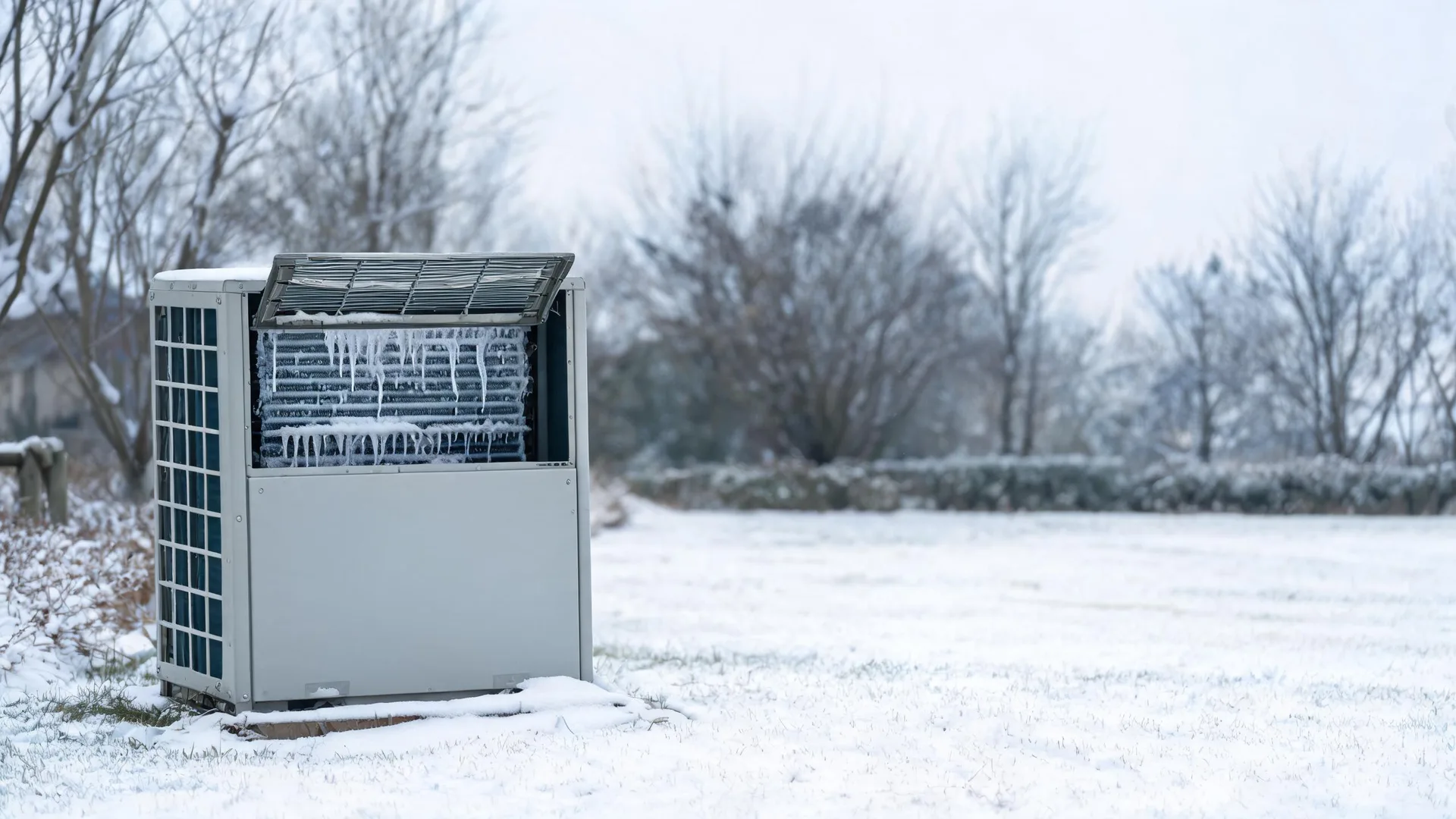
Ice building up on the outdoor unit

Some frost in cold weather is normal and the defrost cycle clears it. Ice that stays, thickens, or coats the coil means the defrost cycle isn't kicking in or the refrigerant charge is off. Left alone, that ice blocks airflow across the coil and the system has to work harder to move any heat at all.

6 months
November through April, your system heats
5 months
May through September, it cools
30°F
the average winter night it heats against
92°F
the average summer afternoon it cools against
Isometric line illustration of a cutaway house showing interior rooms with furniture, ceiling ductwork connected to an indoor air handler, and an outdoor condenser unit linked by refrigerant lines.
Your system heats November through April and cools May through September.

NOAA nClimDiv, 1991–2020 normals

A heat pump has one job in winter and another in summer, and the reversing valve is what tells it which one to do.

When that valve sticks or the contactor burns, the system keeps running without doing either job right.

October is worth paying attention to here. Heat hasn't run since April, and the first cold night in November asks a heat pump to reverse and push warm air for the first time in six months. If the reversing valve was already sticking, or a contactor was already worn, this is when it shows up. Homes in Newcastle run heat about six months a year, November through April, so a part that fails early gets leaned on hard right after. Getting it looked at in October catches a weak part before it fails on the night you need it most.

McClain County storms are hard on the outdoor unit

McClain County saw 90 hail events between 2015 and 2024, plus dozens more windstorms and tornadoes. That's the unit sitting outside your home taking the hit. Hail dents the fins, wind throws debris into the coil, and a heat pump can keep running with that damage for a while before it shows up as a repair call. If a storm has come through recently, have the outdoor unit checked even if it still seems to be working.

Find a contractor
A man in a cap, dark shirt and tan work pants, seen from behind, carries a worn canvas tool bag up steps toward a dark blue front door beside a tall planter of flowers.
A dark gray heat pump unit mounted on a concrete pad next to a house with gray siding and a stone veneer wall.

A unit that never gets a season off

The outdoor unit here does not get a break between seasons. It runs through summer heat, then straight into whatever winter brings, and it sits outside through all of it. McClain County recorded 90 hail events between 2015 and 2024. Add in wind and storm debris and the coil and fins take a beating year after year. That wear adds up quietly. A dented coil or a weakened part can keep running for a while before it shows up as warm air in the wrong mode or ice that will not clear. A proper diagnosis finds what actually gave out, instead of guessing at it.

What you can check yourself

Look at the outdoor unit first. Clear away leaves, mulch or anything blocking the fins, and check that nothing is sitting on top of it or crowding its sides. Inside, check the thermostat is set to the mode you want and the batteries aren't dead. Then check the air filter. A clogged filter starves the system of airflow and can cause problems that look like bigger failures than they are.

What tells you to stop and call

If the breaker trips more than once, stop resetting it and get someone out. If you smell anything burning, shut the system off at the thermostat and the breaker. Ice on the indoor coil, water pooling near the indoor unit, or a system that short cycles, turning on and off every few minutes, all mean something is actually failing, not just needing a reset.

A heat pump that's struggling doesn't rest when you leave it running, it just fails harder. A weak capacitor still kicks the compressor on, but the extra strain wears it down faster each cycle. A low refrigerant charge still moves some heat, but the compressor runs hotter than it's built for the whole time it's on. Ice on the coil still lets some air through, until the blockage gets bad enough that the compressor can flood with liquid refrigerant, and that's the kind of damage that turns a repair into a replacement. The system rarely shuts itself off to protect its parts. It keeps trying to do the job with what it has left, and what it has left keeps getting worse.

A diagnostic visit starts outside at the unit itself. A tech checks refrigerant pressures, because that number says a lot about whether the compressor is working the way it should. They run the system in both heating and cooling and watch whether the reversing valve actually switches or just hums and stays put. Electrical parts get checked next, the contactor, the capacitor, the wiring at the disconnect box. A capacitor can look fine sitting still and still be too weak to start the compressor under load, so it gets tested, not just eyed. Airflow gets checked too, across both coils, because weak airflow can mimic a refrigerant problem and send someone chasing the wrong fix. By the end, the goal is to point at the part that actually failed, not the ones that only looked suspicious.