Heat pump vs furnace in McClain County, Oklahoma

Get a Local Quote

Installers who work on both

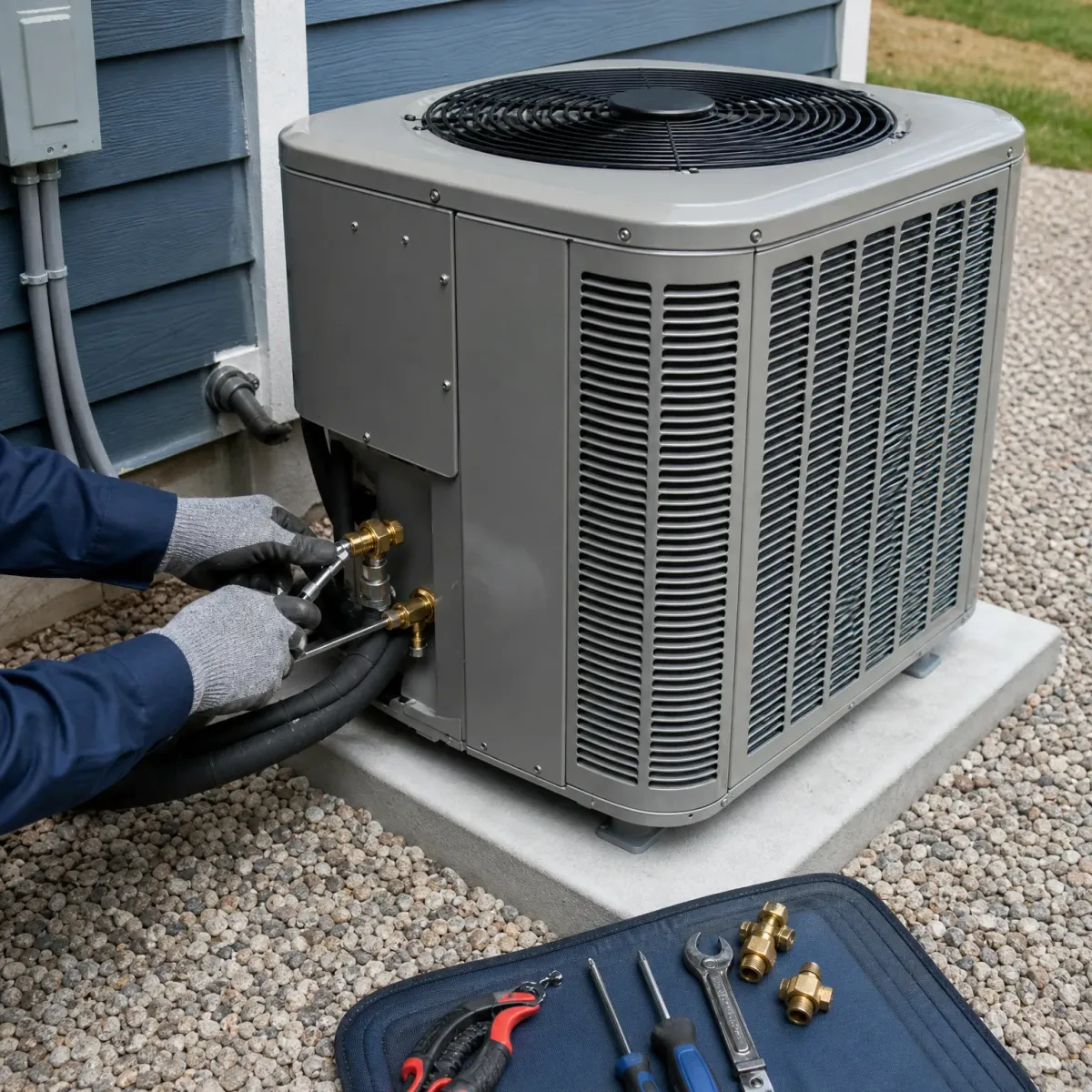
Gloved hands attach a hose with brass fittings to the service valves of a gray outdoor air conditioning condenser on a concrete pad, with a tool roll holding a wrench, screwdrivers, pliers and brass fittings on gravel in the foreground.

Tell us about the job

Takes about a minute. No obligation.

New system or replacementMcClain County, OK
Step 1 of 3

What kind of equipment?

Which costs less to run in McClain County?

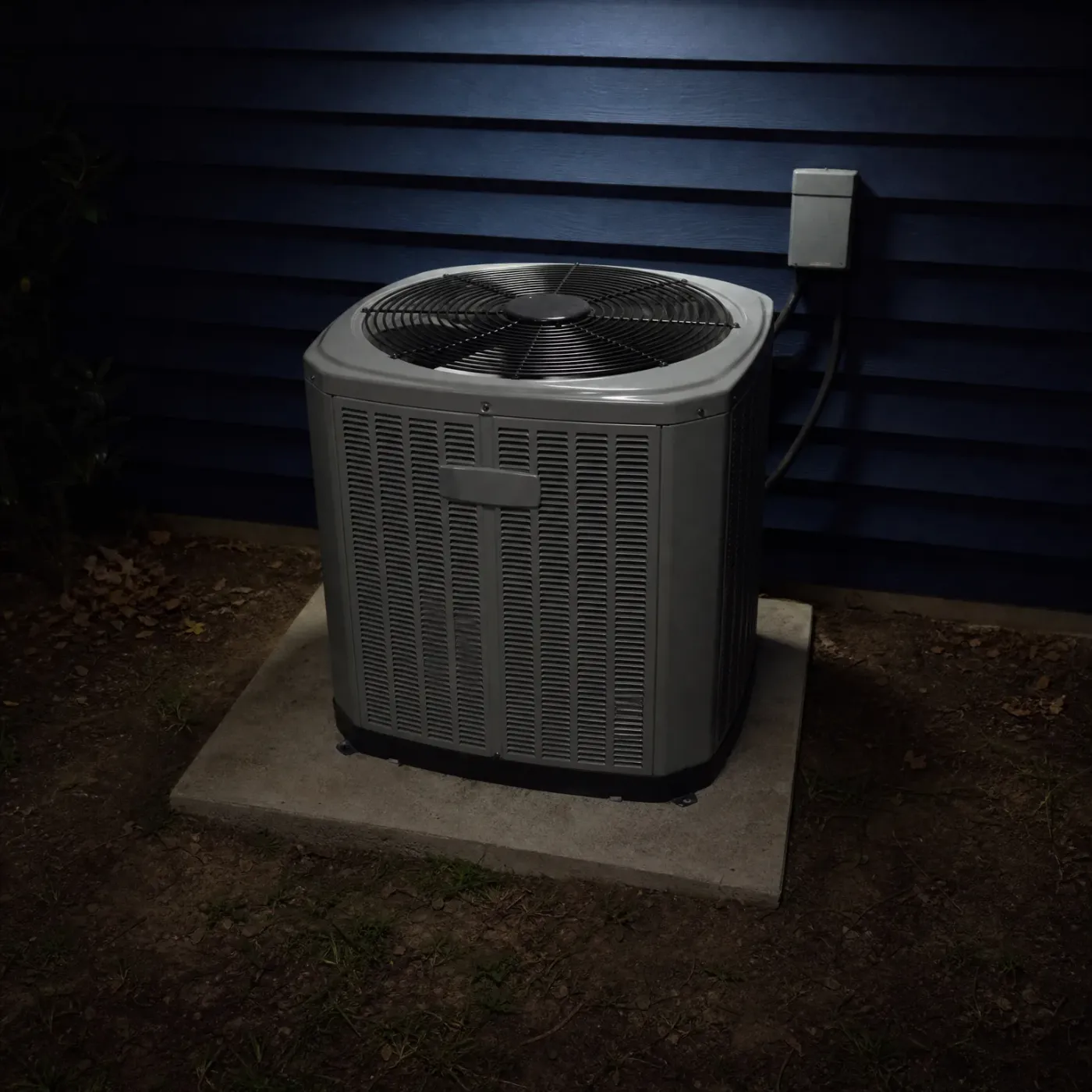
A gray outdoor air conditioner condenser unit on a concrete pad beside a dark blue horizontal lap-sided wall at night, with a wall-mounted disconnect box and conduit above it.

Heat pump

To heat your home here$1.63per 100,000 Btu

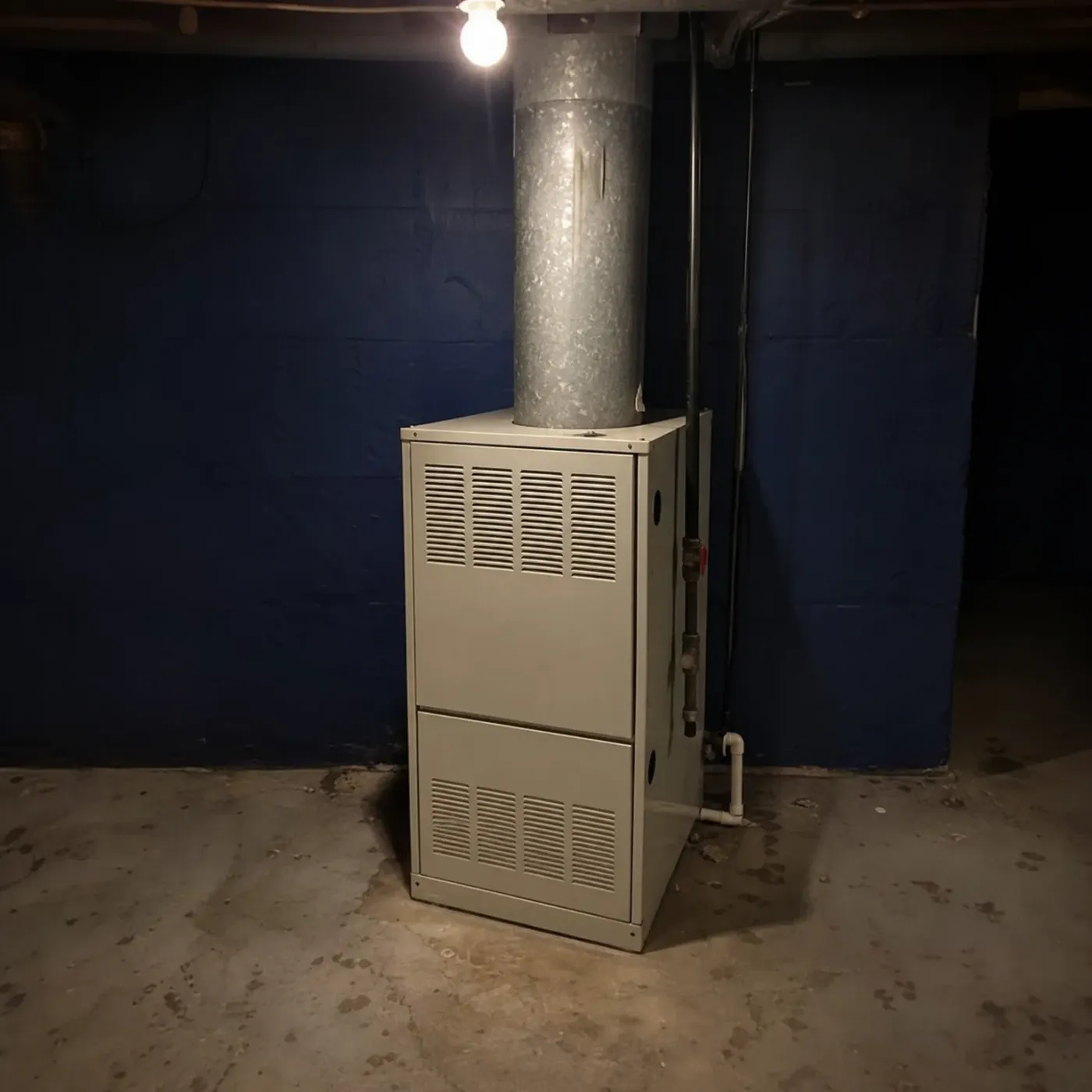
A beige furnace with louvered front panels stands on a concrete basement floor against a blue-painted block wall, with a galvanized metal flue pipe rising from its top and a bare bulb lit overhead.

Furnace

To heat your home here$1.69per 100,000 Btu

At Oklahoma's gas and electricity prices, a heat pump and a gas furnace cost about the same to run here.

Btu stands for British thermal unit, the standard measure of heat energy.

Where does a heat pump shine?

  • Covers a long cooling season

    May through September is five months of cooling in McClain County. A heat pump is built to carry that load and the heating side too, in one system.

    A covered porch with blue lap siding, white columns and a wood ceiling fan, furnished with brown wicker chairs with navy cushions, potted ferns, and a glass of iced tea on a wooden table, with green trees beyond.
  • Steady, even comfort

    It eases up and down with the weather. There are fewer swings between too warm and too cool.

    A golden-coated dog sleeps on a woven rug beside a lit wood stove, in front of a dark blue armchair with a grey knit throw, open book and cushion, near a frosted window and a bookshelf.
  • No gas line, nothing burning in the house

    A heat pump runs on electricity alone. Nothing burns inside the house.

    Kitchen interior with white upper cabinets, navy lower cabinets, stainless range hood over a cooktop, white subway tile backsplash, and a light countertop island holding a bowl of lemons and a vase of white hydrangeas.

Where does a furnace shine?

  • Pairs with any central AC

    Most central air systems are built around a furnace. The two share the blower, the ducts and the thermostat.

    A metal louvered floor register set into a light wood plank floor near a glass door with sheer curtains, beside a gray cabinet with a round knob.
  • Proven, simple, easy to get serviced

    The design is simple and well understood. That keeps service calls short.

    A gloved hand holds a white pleated air filter in a basement utility area with a furnace, ductwork, and wooden shelves holding storage bins, folded blue fabric, a potted plant, and a woven basket.
  • Fast, strong heat on demand

    The air coming from the vents feels genuinely hot. That's welcome on a freezing morning.

    An entryway with a navy door and sheer curtain showing snow outside, snow-dusted black winter boots and brown suede boots on a patterned rug, a floor air vent, and a wooden bench holding a steaming mug and a light blue fringed blanket.

Can a heat pump handle winter here

Winter here is mild more often than it's hard. The overnight low averages 30°F across December, January and February, and that number alone tells you something important: it sits right below the point where a standard heat pump starts losing ground. Below 40°F, a conventional heat pump puts out less than its rated capacity. Below about 35°F, it often needs backup heat to make up the difference. An average winter night here is under both marks.

That sounds worse than it is. About 75 nights a year drop to freezing or below, out of roughly 180 nights in the six months the heat runs. That's under half. The other half sit above freezing, right where a heat pump works the way it's rated to. And of those 75 cold nights, only about 0.2 a year reach 0°F. Single-digit cold almost never happens in McClain County.

So the honest answer is that a standard heat pump will lean on backup heat some nights here, but not many, and rarely on the coldest end of the scale, because that end barely exists in this county. If you want to close the gap further, an ENERGY STAR Cold Climate heat pump is built and tested to keep most of its heating power down to 5°F. That buys you a margin you don't strictly need most winters here, but it removes the question entirely.
Single-story brick ranch house with blue shutters, a blue front door, a white porch railing, and a concrete walkway crossing a dry lawn, with large trees above and a street in the foreground.

What this means for your utility bills and your AC

Run the two machines on what they actually cost to operate here and they land close together: $1.63 per 100,000 Btu for a heat pump against $1.69 for a furnace. That's Oklahoma's electricity price against its gas price, each machine at the federal minimum efficiency. Neither one wins on running cost by enough to decide this for you.

What decides it is the other six months. Cooling runs May through September here, with about 75 days a year hitting 90°F or above. A furnace has no part in any of that. It heats your house and then sits unused all summer while a separate AC system does the cooling. A heat pump is that AC system. It cools in summer and heats in winter, one machine instead of two, covering both the five-month cooling season and the six-month heating season.

Gas heat still has its own case in this county. Utility gas heats 37.8% of homes here, close to two in five, and a furnace paired with a central AC is a pairing most contractors know well and can service easily. If your house already has a gas line and ductwork built around a furnace, that counts for something. But if you're choosing with a clean slate, the heat pump is doing more for about the same money: the same winter heat most nights, backup covering the rest, and the cooling season handled by the same unit.

Sources: NOAA nClimDiv · NOAA 1991–2020 seasonal normals · Census ACS 2020–2024 · EIA SEDS 2024 · 10 CFR 430.32 · PNNL Building America guide · PNNL-37127 field study · ENERGY STAR product criteria

Single-story house with light blue siding, tan brick accents, a navy two-car garage door and matching front door, a concrete driveway, trimmed shrubs, lawn, and a large shade tree in the foreground.

Common questions about heat pumps and furnaces

  • Will a heat pump keep my house cool enough here?

    Yes. A heat pump is a central air conditioner in summer, built to cover a cooling season that runs May through September here, with about 75 days a year reaching 90°F or above. It cools the same way any central AC does, so it will keep up on the hot afternoons same as the heat it has to make up for on the cold nights.

  • Can I keep my furnace and add a heat pump?

    Yes, and here that often means a heat pump for most of the year with the furnace standing by for the coldest nights. A standard heat pump's output falls short of its rating below 40°F and it often needs backup heat below about 35°F, so the furnace would be doing real work on winter nights here, not just sitting unused.

  • What if my house doesn't have a gas line?

    Without a gas line your real choice is a heat pump or a furnace burning propane. Propane runs $20.89 per million Btu here against electricity's $35.86, but a heat pump still comes out ahead on running cost because it moves heat instead of burning fuel for it, so compare it against propane rather than against electric resistance heat.

  • Is a heat pump cheaper to run than a furnace in McClain County?

    A little, yes. A heat pump runs $1.63 per 100,000 Btu here against $1.69 for a gas furnace, close enough that the choice usually comes down to what else you need the system to do, like cooling in summer or a backup plan for the coldest nights.