A single-story brick ranch house at night, lit by exterior lights that illuminate the facade, driveway, and several large mature trees in the front yard.

Heat Pump Repair in Oklahoma City, OK

Tell us about the job

Takes about a minute. No obligation.

RepairHeat PumpOklahoma County, OK
Step 1 of 2

What ZIP code is the job in?

Oklahoma County sees serious storms

Oklahoma County logged 593 severe weather events between 2015 and 2024, including 296 hail events, 253 damaging wind events and 28 tornadoes. That outdoor unit sitting next to the house has been through a lot of them.

A unit that still runs can still be damaged

Hail dents fins and bends them shut. Wind throws branches and debris into the cabinet. A heat pump can keep running after a hit like that and still lose efficiency or wear out early from the damage underneath.

7 months
October through April, your system heats
5 months
May through September, it cools
30°F
the average winter night it heats against
92°F
the average summer afternoon it cools against
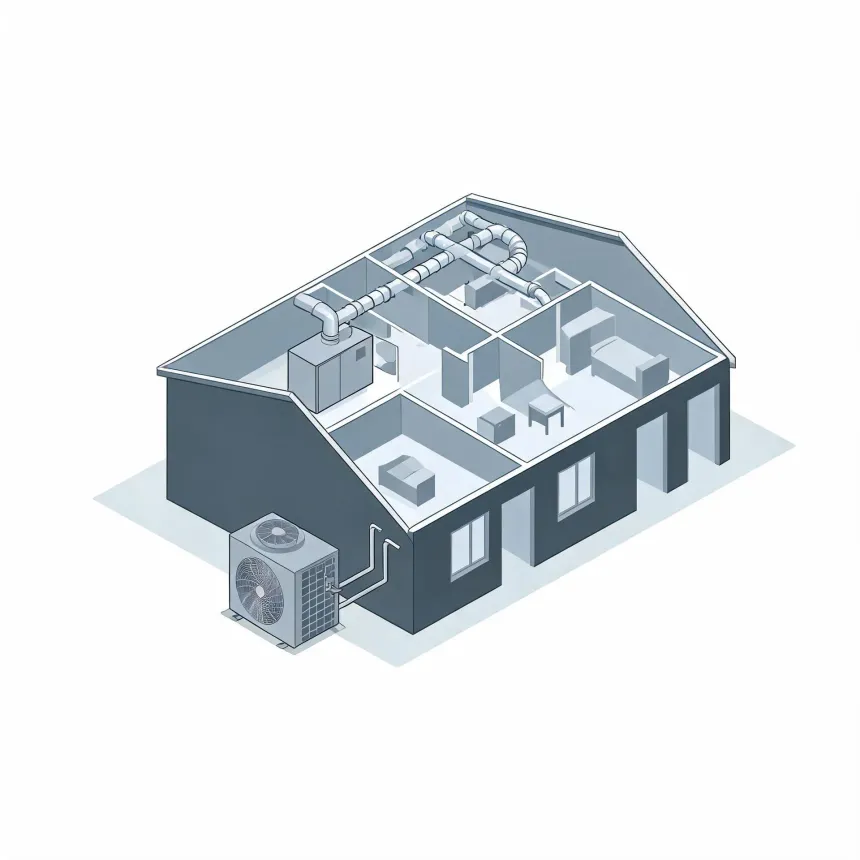
Isometric cutaway illustration of a single-story house showing interior rooms, attic ductwork and an air handler, with an outdoor condenser unit connected by lines along the exterior wall.
Your system heats October through April and cools May through September.

NOAA nClimDiv, 1991–2020 normals

Your heat pump switches over to heat in October, and the cold snaps right behind it.

A weak part that made it through summer can give out the first week it has to push heat through a 30 degree night.

This machine takes a beating most years

253 damaging wind events from 2015 to 2024
296 hail events from 2015 to 2024
Power here costs 12.35 cents per kilowatt-hour

With storm numbers like that, a heat pump here rarely fails for no reason. Get a contractor to check the outdoor unit for hail dents and bent fins before they write off a repair as simple wear. Debris thrown by wind can work its way into the cabinet and damage a part that looks fine from the outside. If the unit took a hit this year, say so when you call. That tells the contractor where to look first and whether the fix needs to cover more than the symptom you're seeing.

If this unit took a hit, get it looked at now

A heat pump that still runs can still be hiding damage from hail or wind. If yours has been through a storm this year, have a contractor check the outdoor unit before the next cold snap puts real load on it. Mention the storm when you call so they know where to look.

Find a contractor
A gray heat pump outdoor unit mounted on a concrete pad next to the stone-accented exterior wall of a house.

What to check before you pick up the phone

Before you call, go look at the outdoor unit. Stand in front of it and see if the fan spins freely or if it's dragging. Check that air is actually moving through the top grille. If the unit is running but the fins on the side look caked with dirt, pollen or grass clippings, that alone can choke the airflow enough to make it struggle. A garden hose, not a pressure washer, can rinse that off from the inside out. Look at the refrigerant line running from the outdoor unit into the house, it should be wrapped in insulation, and check whether that insulation is torn or missing. Inside, pull the air filter and hold it up to a light. If you can't see light through it, replace it, a clogged filter can make a heat pump freeze up or short cycle. While you're inside, check that every supply vent is open and nothing is blocking a return. Go to the thermostat and make sure it's set to call for heat or cool, not stuck in fan-only, and swap the batteries if it uses them. Check the breaker panel for a tripped switch before you assume the worst, a heat pump that lost power to just the outdoor or just the indoor unit will act like it's broken when it isn't. If you see ice on the outdoor coil, don't chip at it. Switch the system off and let it thaw on its own, running it iced over can damage the compressor. None of this fixes a bad capacitor or a failed reversing valve, but it rules out the easy explanations before someone drives out.

The reversing valve is the part unique to this machine

A heat pump has one part a furnace or straight AC doesn't: the reversing valve that switches it between heat and cool. When it sticks, the system can get stuck in one mode, blow air that's the wrong temperature, or short cycle. It takes that switch every single time the system changes direction, and that wear adds up over the years.

Most failures still come from the same few parts

A failed capacitor can stop the outdoor fan or the compressor from starting at all. A low refrigerant charge, usually from a slow leak, makes the system run long and still fall short on heating or cooling. A dirty outdoor coil or a clogged filter chokes airflow until the compressor overheats or the coil ices up. These are the most common reasons a heat pump calls for a repair, storm damage or not.

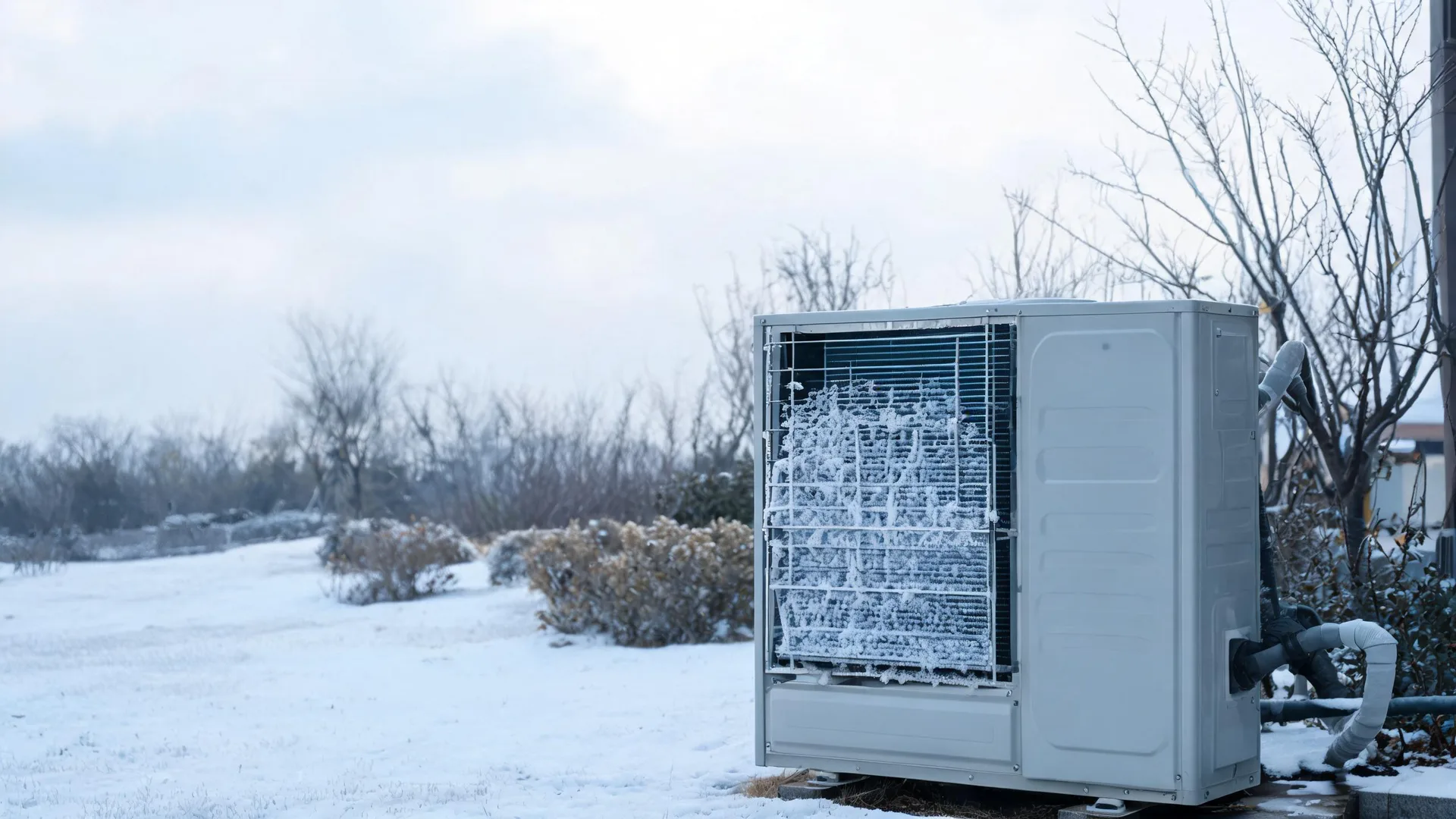
A heat pump that's struggling will keep trying to hit the temperature on the thermostat, and that's the problem. If the charge is low, the compressor runs longer and harder to make up for it, and it still won't catch up. If the coil is dirty or the airflow's choked, the compressor can overheat trying to push through it. Ice on the coil is the clearest case: once the system can't move heat properly, ice builds, which blocks airflow further, which builds more ice. Left running, that cycle can take the compressor down with it, and a compressor is the one part in this system that often costs more to replace than the unit is worth. A system acting off is telling you something is already wrong. Shutting it off and calling someone is cheaper than finding out how much worse it gets.

A diagnostic visit starts outside at the unit itself, not with a clipboard of guesses. The contractor checks for power at the disconnect, then watches the compressor and fan start up, because a hard start or a hum with no spin points straight at a capacitor. They'll hook up gauges to read the refrigerant charge, since a system can be low without a single obvious symptom besides weak output. Temperature readings at the supply and return tell them whether the coil is actually doing its job or just sitting there iced over or caked with dirt. If the system runs fine in one mode and acts up in the other, that's when the reversing valve comes under suspicion, and they'll test it directly rather than assume. None of this takes guesswork once the readings are in front of them, which is why a visit usually ends with a clear answer instead of a list of maybes.