

Heat pump vs furnace in Oklahoma County, Oklahoma

Get a Replacement Quote

Local pros in Oklahoma County

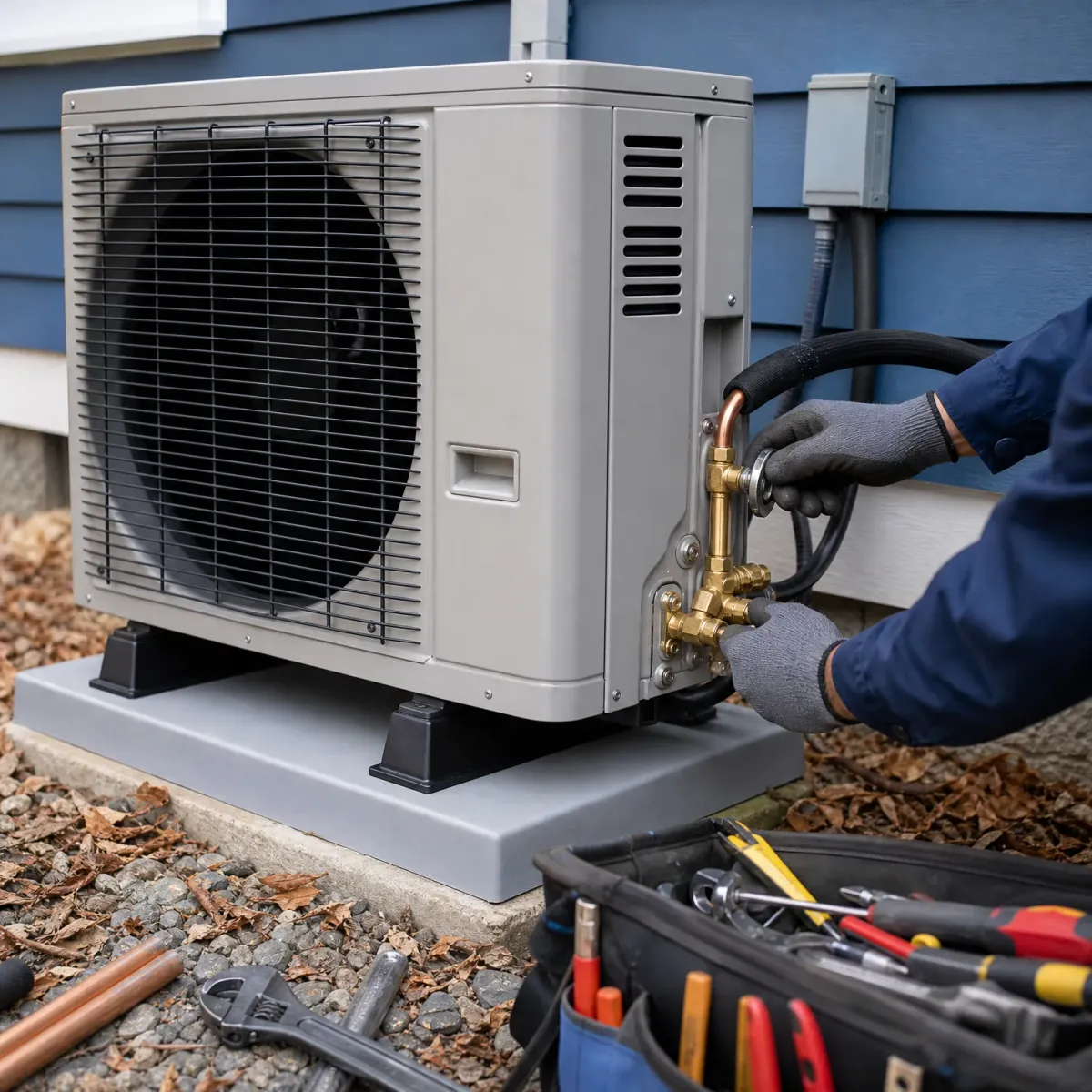
A gloved worker in a dark blue jacket connects refrigerant lines and copper piping at the side of a gray outdoor heat pump unit mounted on a concrete pad beside a blue lap-sided house, with a tool bag and wrench in the foreground.

Tell us about the job

Takes about a minute. No obligation.

New system or replacementOklahoma County, OK
Step 1 of 3

What kind of equipment?

Which costs less to run in Oklahoma County?

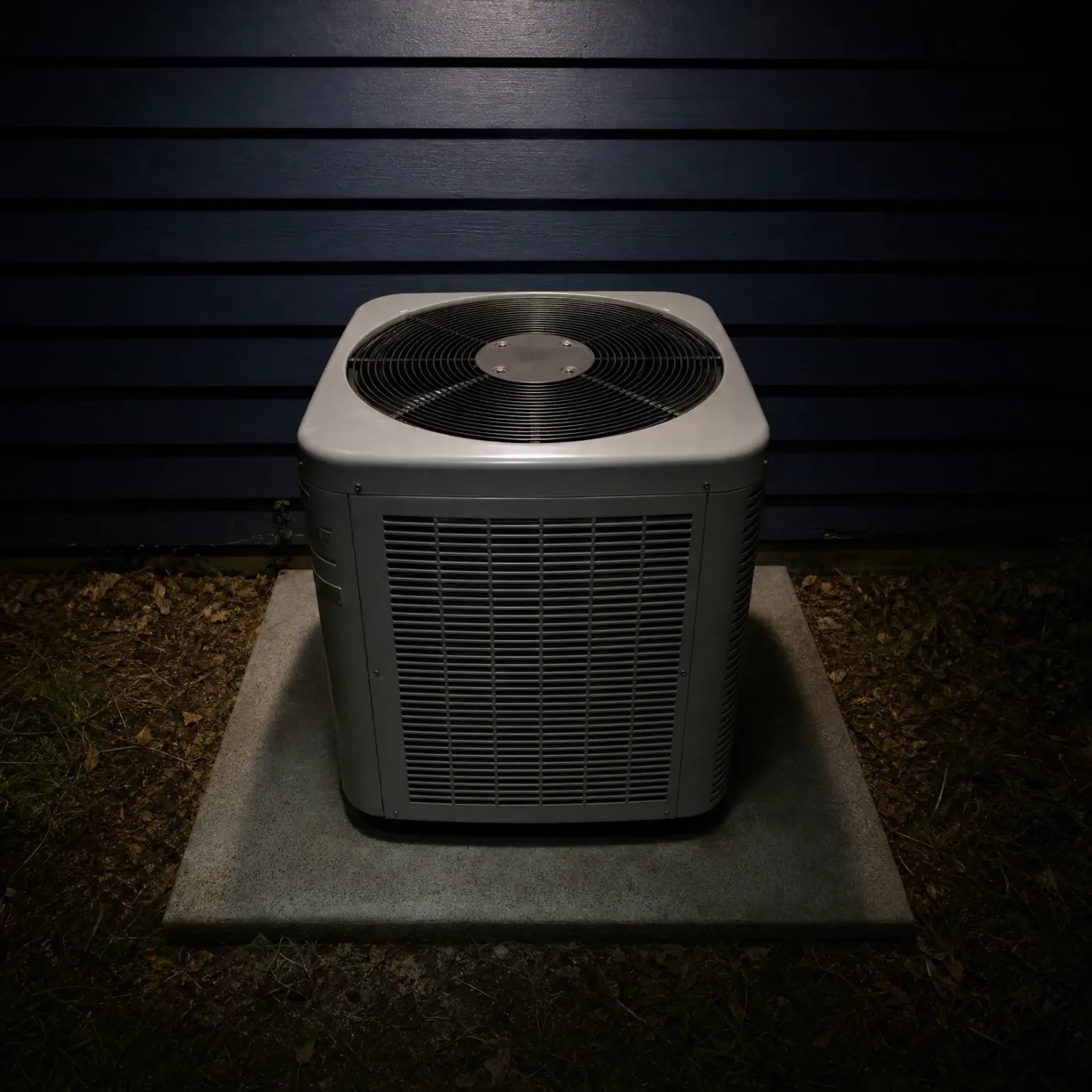
A gray outdoor condenser unit with a top-mounted fan grille sits on a concrete pad against dark horizontal lap siding, photographed at night with surrounding bare soil and leaf litter.

Heat pump

To heat your home here$1.63per 100,000 Btu

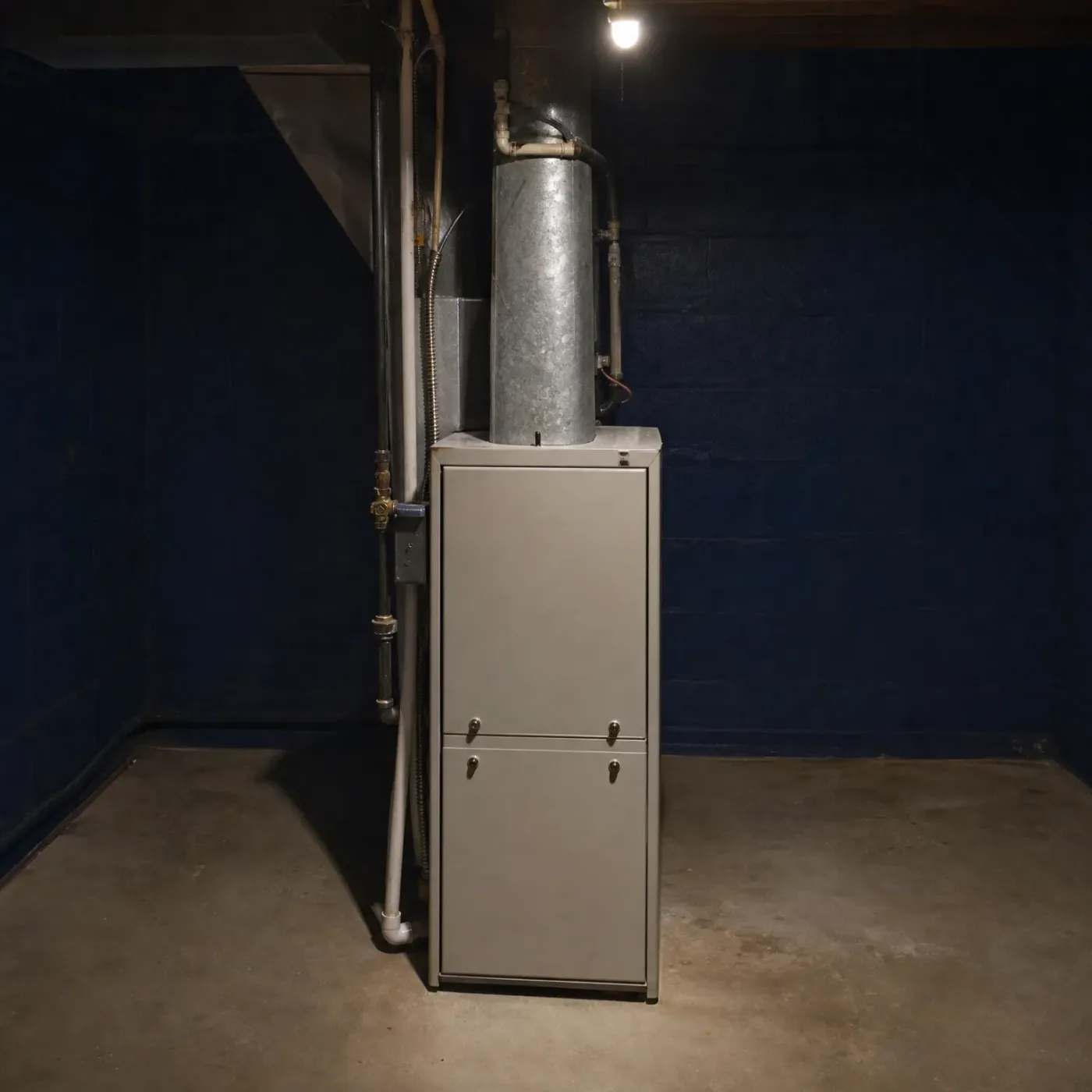
A tall gray furnace cabinet stands on a concrete floor in a basement with dark blue painted block walls, with a galvanized metal flue duct and pipes running up behind it and a bare light bulb overhead.

Furnace

To heat your home here$1.69per 100,000 Btu

At Oklahoma's gas and electricity prices, a heat pump and a gas furnace cost about the same to run here.

Btu stands for British thermal unit, the standard measure of heat energy.

Where does a heat pump shine?

  • Covers a long cooling season

    Cooling runs May through September here. A heat pump is the one doing that job every one of those months, so it matters that it cools well, not just that it heats well.

    A covered porch with navy and light blue cushioned outdoor furniture, potted palms, a striped rug and ceiling fan, with a tall glass of iced tea on a coaster on a dark table in the foreground.
  • Heats and cools in one system

    One machine handles the heat in winter and the cooling in summer. There's no second system to buy or keep up.

    A living room with a beige sofa holding navy and light blue cushions and a blue throw, a wooden coffee table with a mug, bowl, books and white hydrangeas, flanked by table lamps and a bookshelf, in front of a large window overlooking a green garden.
  • Steady, even comfort

    Instead of short bursts of heat, it keeps a gentle, steady output going. The house stays at one comfortable temperature.

    A dark blue armchair with an open book and gray fringed throw sits beside a lit fireplace and a lamp-topped side table, with a golden-colored dog curled asleep on a patterned rug and snowy trees beyond the window.

Where does a furnace shine?

  • Runs on the gas most homes here already use

    Most homes in Oklahoma County already have gas line run to them, since gas heats 58.5% of occupied homes here. If yours is one of them, a furnace just hooks into what's already there.

    A row of houses with covered porches, white railings and exterior gas meters, with snow on the ground beside a concrete sidewalk in low sunlight.
  • Pairs with any central AC

    A furnace's blower and ducts carry cooled air too. Adding central AC uses the same system.

    A metal floor vent set into a light wood plank floor beside a sheer white curtain, with a blue mug on a gray notebook and a knit rug at the lower right.
  • Fast, strong heat on demand

    A furnace pushes out hot air within minutes of switching on. A cold house warms up fast.

    A mudroom with a navy glass-paned door covered by a sheer white curtain, snow-dusted boots on a tiled floor, a woven rug, coats hanging on a rail, and a white bench with a wooden top holding a blue mug.

Can a heat pump actually keep up here

Your winter nights don't get that cold, most of the time. The average overnight low from December through February is 30°F, and freezing or below happens on about 75 nights a year, out of the roughly 210 nights the heat runs here. So more than half the nights your heat runs, it never even reaches 32°F outside.

That matters because a standard heat pump changes character below certain points. Below 40°F it puts out less heat than its rating says. Below about 35°F it often needs backup heat to cover the gap. Your average winter low of 30°F sits below both marks, and every one of those 75 freezing nights does too. That's not a rare cold snap. That's most of an Oklahoma County winter.

A regular heat pump will still run on those nights, just not at full strength, which is why it's usually paired with a backup heat source for when it falls behind. A cold-climate heat pump is built differently: to earn that label, it has to deliver at least 1.75 units of heat per unit of electricity, and keep at least 70 percent of its warm-weather capacity, at 5°F, a temperature your winters almost never see. A field test of prototype cold-climate models backed this up in practice: backup heat covered only a small share of the load between 0°F and 35°F, and running on backup alone was rare even at 0°F.

Your nights below 0°F are almost nothing here, about 0.2 a year. So the question for your house isn't whether a heat pump can survive an Oklahoma winter. It's whether you install one built for the kind of cold you actually get, or a standard model that leans on backup heat through most of the season.
Single-story light brick house with gray shingle roof, blue front door and shutters, a small covered porch, and a concrete walkway crossing a dry lawn shaded by a large oak tree.

What this means for your AC and your bill

Heating is the longer job at your house. It runs about seven months a year, October through April, against five months of cooling. A furnace does nothing for those other five months. A heat pump covers both, which matters more here than in a place where summer is short, since your afternoons hit 90°F or above on about 75 days a year.

On cost to run, the two land close enough that the difference won't decide it for you. A heat pump figures out to $1.63 per 100,000 Btu of heat here, a furnace to $1.69, both at Oklahoma's average fuel prices and each machine built to the federal minimum. That's a few cents apart, not a reason to choose one over the other.

What's really deciding this is what's already at your house. Utility gas heats close to three in five homes in Oklahoma County, electricity a little under two in five. If gas is already piped to your house and you're happy with the furnace you have, a new furnace paired with central AC is a known quantity: strong, fast heat on demand, no backup system to think about. If you're choosing new, or your ductwork and electrical can support it, a heat pump built for cold climates gives you one system for both seasons and gets real efficiency out of your winters, not just your summers.

Sources: NOAA nClimDiv · NOAA 1991–2020 seasonal normals · Census ACS 2020–2024 · EIA SEDS 2024 · 10 CFR 430.32 · PNNL Building America guide · PNNL-37127 field study · ENERGY STAR product criteria

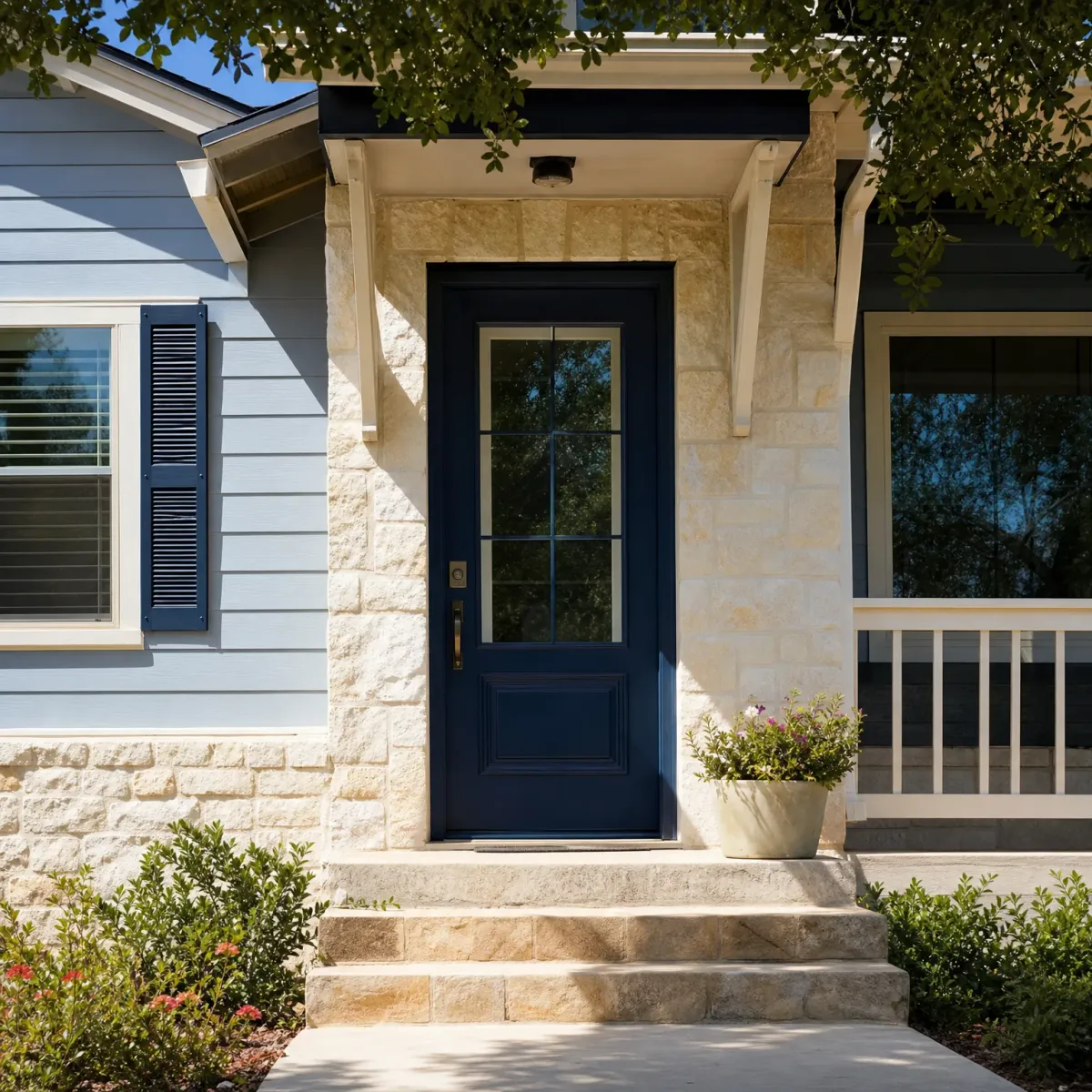
A navy blue front door with a divided-light glass panel set in a light stone entry, flanked by pale blue lap siding with a navy shutter, a potted flowering plant, stone steps and shrubs.

Common questions about heat pumps and furnaces

  • Do I need backup heat with a heat pump here?

    On most standard heat pumps, yes. Output starts falling short of the rating below 40°F and backup heat often kicks in below about 35°F, and here the average overnight low all winter is 30°F, with about 75 nights a year at or below freezing. A cold-climate model can cut how often that backup runs, since those are built and tested to hold most of their capacity down to 5°F, but check whether the unit you're considering carries that rating before counting on it.

  • Will a heat pump keep my house cool enough here?

    Yes. A heat pump is a central air conditioner in the summer, built to handle the same afternoons above 90°F, which happen about 75 days a year here, as any other central AC. Cooling is the one job where a standard heat pump's output never falls short, since that only happens on the heating side once it gets cold out.

  • Can I keep my furnace and add a heat pump?

    Yes, and here that often makes sense. The heat pump handles most nights on its own, since the average winter low of 30°F and the about 75 nights at or below freezing are the range where a standard heat pump still runs but starts losing output. Your furnace takes over as backup on the coldest nights instead of a bank of electric resistance coils, which costs more to run than gas.

  • Is a heat pump cheaper to run than a furnace in Oklahoma County?

    A little, yes. A heat pump runs $1.63 per 100,000 Btu here against $1.69 for a furnace, close enough that the choice comes down to how each handles your winters rather than the bill. That gap also assumes the heat pump's rated efficiency alone, with nothing added for the backup heat it is likely to need on your coldest nights.