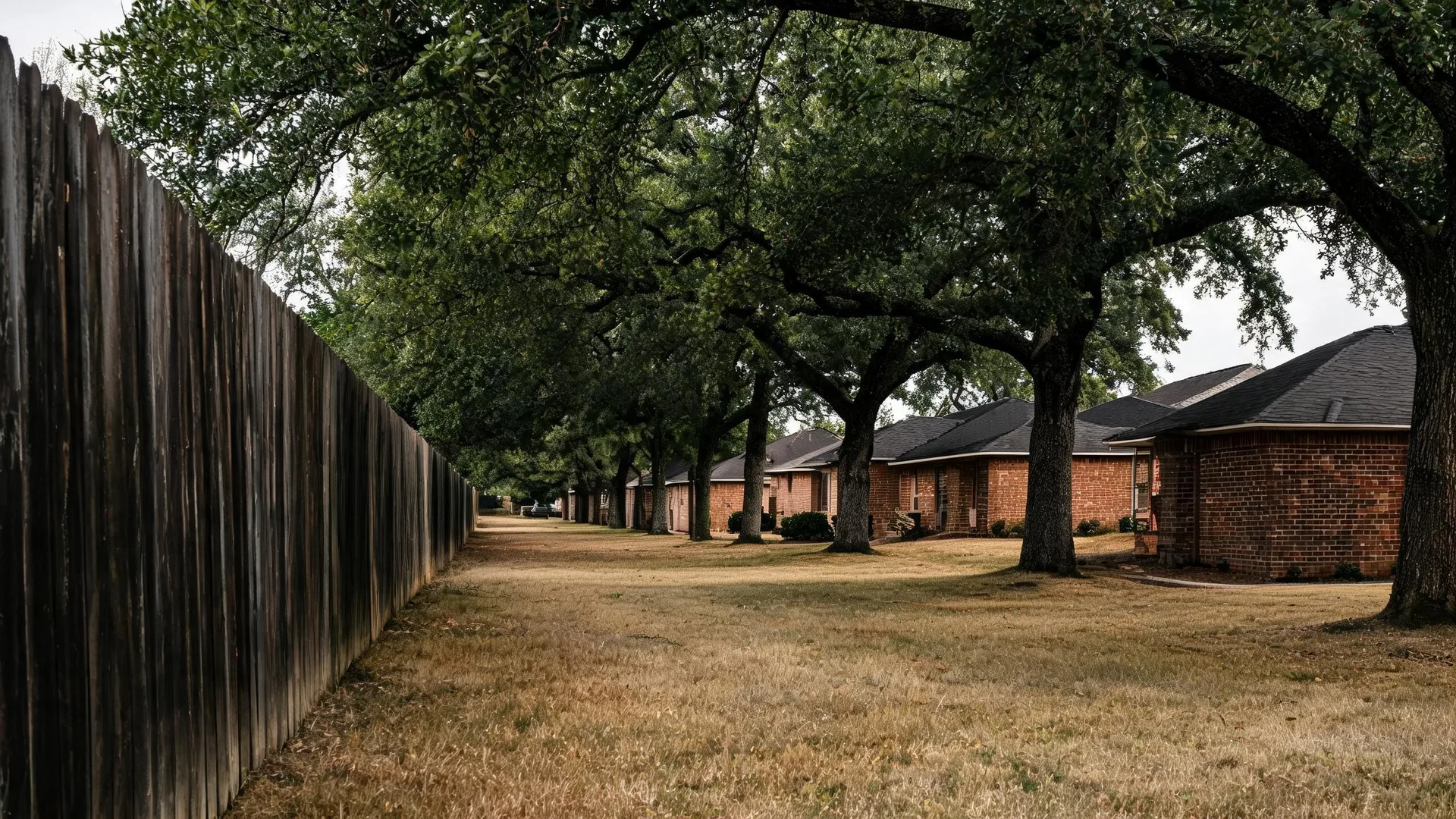




A tall weathered wooden privacy fence runs along the left side of a dry grass strip, with large leafy trees and a row of single-story brick houses on the right under an overcast sky.

Furnace Installation in Oklahoma City, OK

Tell us about the job

Takes about a minute. No obligation.

New system or replacementFurnace or heatingOklahoma County, OK
Step 1 of 2

What ZIP code is the job in?

Oklahoma County recorded 593 severe weather events between 2015 and 2024. Damaging wind caused 253 of them, hail another 296, and 28 tornadoes touched down in that same stretch. A furnace sits inside, but it still runs on electricity to power the blower and the control board, even when the fuel is gas. Statewide, a quarter of households went at least 24 hours without power in 2024. A furnace with no power won't fire, no matter how much gas is behind it.

7 months
October through April, your furnace is on duty
30°F
the average winter night it heats against
59%
of homes here heat with gas, so most furnaces here burn gas
80% AFUE
the federal minimum any new unit must meet
Isometric cutaway illustration of a house showing interior rooms with furniture, a furnace unit with a tall flue pipe outside, and ductwork running through the attic.
Your furnace works hardest from November through March.

NOAA nClimDiv, 1991–2020 normals

Gas heats 58.5 percent of homes in Oklahoma County.

A gas furnace is the easier choice to size, install and service, since most crews in this county work on them every day.

Gas here is cheap, so pick the furnace that won't quit on you

Climate zone 3A
Heat runs October through April
Winter nights average 30°F

Heat runs here from October through April, seven months of the year. That makes September the month to get a new furnace in, before the first cold night forces the decision. A furnace that fails once heat season has started gets replaced in a hurry, with whatever unit a crew has on hand. One replaced in September gets picked and sized properly, with time to do the install right. Overnight lows average 30°F across December, January and February, so once winter sets in, the furnace runs hard for months with no break to cover for a rushed job.

Plan the install around the outages, not just the cold

A furnace needs power to run, no matter how much gas is behind it, and this county loses power more than most. Ask about where the outdoor equipment goes and what keeps the blower running when the lines go down, before the install is scheduled, not after a storm already took the power out.

Find a contractor
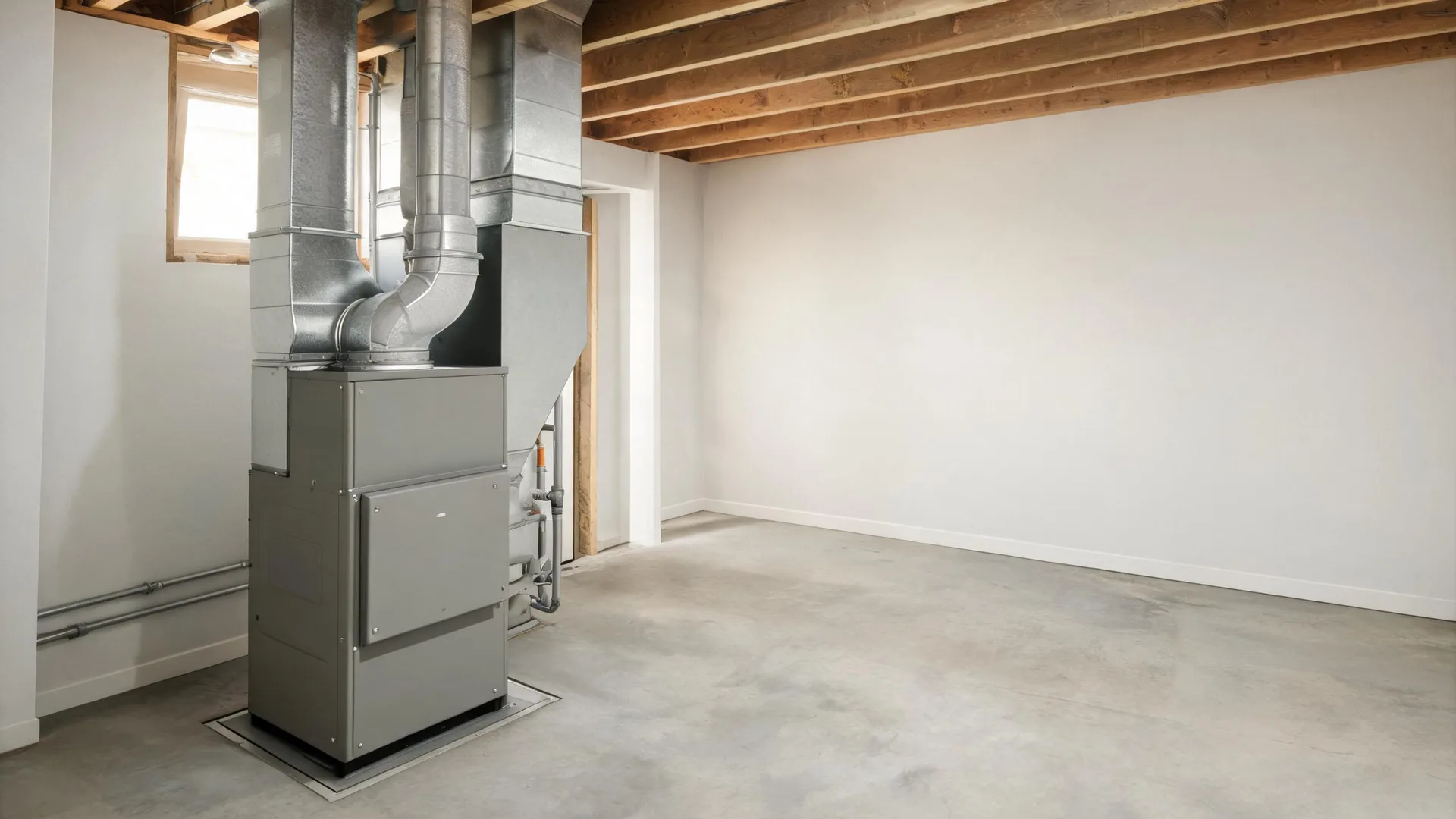
A gray residential gas furnace installed in an unfinished basement, connected to sheet-metal ductwork and PVC pipes.

Ask what the furnace does when the lights go out, not just when they're on

Ask what happens to the furnace the moment the power drops, not just how it runs when the power is on. Every gas furnace needs electricity to run the blower, fire the control board and open the gas valve, so a unit that looks identical to another on paper can behave very differently in an outage. Ask whether the furnace can be wired to a transfer switch or backed up by a generator, and whether that takes a simple plug or a dedicated circuit run during install. Ask how the furnace restarts once power comes back. Most modern furnaces go through a short ignition sequence on their own, but it helps to know whether yours needs a manual reset at the switch or the breaker. Ask about the hot surface igniter too. It's the part most likely to fail after years of cycling on and off, and some are far easier to find and replace than others. A furnace that's simple to service after a bad storm is worth as much as one that runs a little more efficiently on a calm night.

The old furnace doesn't get reused

Once a new furnace goes in, the old one gets disconnected from the gas line, the vent and the ductwork, then hauled out. None of it carries over. The heat exchanger has already been through years of heating and cooling cycles, and cracks in it don't show themselves until they fail, so no tech will try to salvage parts off a unit that old and put them back into service somewhere else.

The gas line and vent get a real check, not a glance

Before the new furnace connects to anything, the gas line gets checked for the right size and the vent gets checked for the right slope and clearance, since both were sized for a furnace that's now gone. An old vent connector or a gas line that was only ever adequate for the last unit can be wrong for the new one, and that gets caught and corrected during the swap, not after.

An unfinished concrete basement containing a metal HVAC air handler, exposed wooden ceiling joists with sheet-metal ducts, a hanging bare bulb, copper pipes, and stacked cardboard boxes.

A high-efficiency gas furnace would save about $90 a year to run in Oklahoma County compared with a gas furnace.

  • A high-efficiency gas furnace$470 a year
  • A gas furnace$560 a year

Estimates for a typical Oklahoma County home, from EIA household energy data, Oklahoma fuel prices and NOAA climate normals. Your home will differ.

Oklahoma County falls under zone 3A, and the energy code sets a floor under what any new furnace can be. Every indoor gas furnace built on or after November 19, 2015 has to turn at least 80 percent of the gas it burns into heat over the winter. That's already the baseline here, not an upgrade. A bigger change is coming on December 18, 2028, when new furnaces have to hit 95 percent. A furnace bought before then can still meet the 80 percent rule and be installed legally. One bought after has to clear the higher bar. Either way, the unit going into this house has to meet whichever standard applies the day it's manufactured, not the day it's installed.