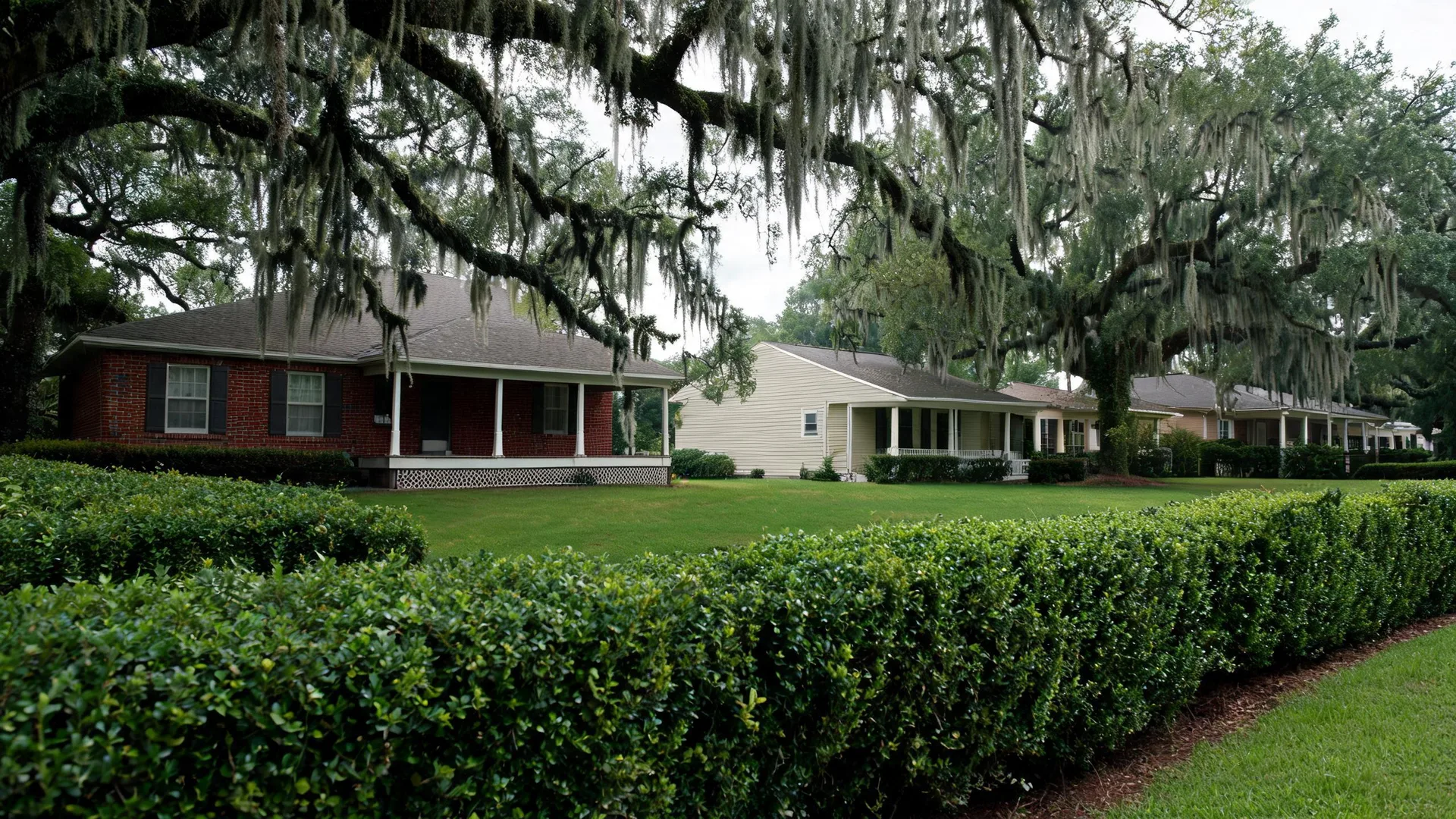





A row of single-story houses, the nearest of red brick with a covered porch and others with light siding, set behind a mowed lawn and a tall trimmed hedge, with large oak trees draped in Spanish moss overhead.

Heat Pump Repair in Poteau, OK

Tell us about the job

Takes about a minute. No obligation.

RepairHeat PumpLe Flore County, OK
Step 1 of 2

What ZIP code is the job in?

Le Flore County sees serious weather, 220 severe events logged over the past ten years. A heat pump's outdoor unit sits right in the path of it, the coil fins and fan exposed to whatever blows through. Hail dents the fins and bends them shut, cutting off airflow the system needs to work. Wind and tornadoes throw debris that can do the same damage, or worse. A unit can take that kind of hit and keep running for a while, then struggle to keep up or quit in the middle of a cold snap.

7 months
October through April, your system heats
5 months
May through September, it cools
31°F
the average winter night it heats against
90°F
the average summer afternoon it cools against
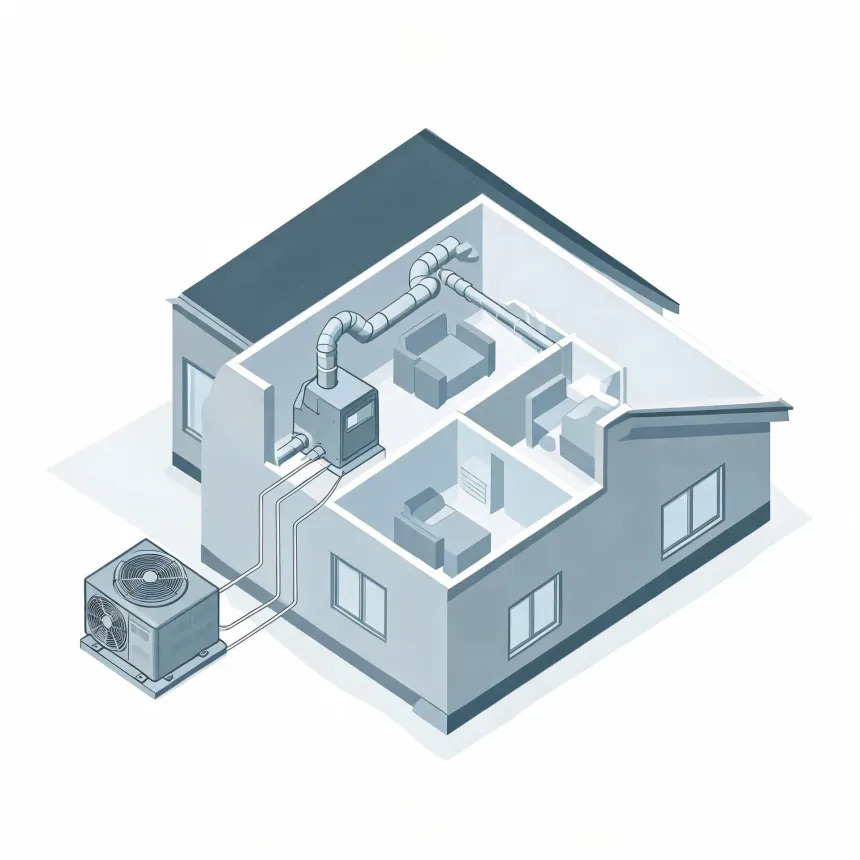
Isometric cutaway illustration of a two-room house showing an indoor air handler with ductwork connected by lines to an outdoor condenser unit on a pad.
Your system heats October through April and cools May through September.

NOAA nClimDiv, 1991–2020 normals

October is the month before the heat pump has to work for real.

A weak spot from last spring's storms usually shows up in the first cold snap, not before.

96 wind events and 94 hail events means this unit has taken a beating

96 damaging wind events from 2015 to 2024
94 hail events from 2015 to 2024
Power costs 12.24 cents a kWh statewide
Newer homes, newer heat pumpsHalf the homes in Le Flore County were built in 1985 or later.

If the outdoor unit took a hit this year, have it looked at before the cold snap finds the weak spot. A tech can check the fins for dents that are choking airflow and make sure the fan spins true. Bent fins can be combed back out, and a cracked fan blade or a dented cabinet gets caught before it takes down the whole unit. This matters even if the heat pump still seems to run fine. With 96 wind events and 94 hail events on record for this county, plenty of debris has had a chance to hit something.

A newer system is usually worth repairing

If your heat pump came with a house built in 1985 or later, it's likely young enough that storm damage is the more probable cause of what you're seeing, not old age catching up with it. That points toward a repair rather than a replacement.

Find a contractor
A gray outdoor HVAC unit mounted on a concrete pad beside a house with gray lap siding and a stone foundation.

Every month since the last storm is a month it's run on damaged fins

Right now is when the wear from spring storms turns into a call for repair. The unit has been running since, sitting outside through whatever hail and wind came through, and every month since then is a month those dents and bent fins had to work around. Get the outdoor unit checked before the first real cold snap asks more of it than a damaged coil can give.

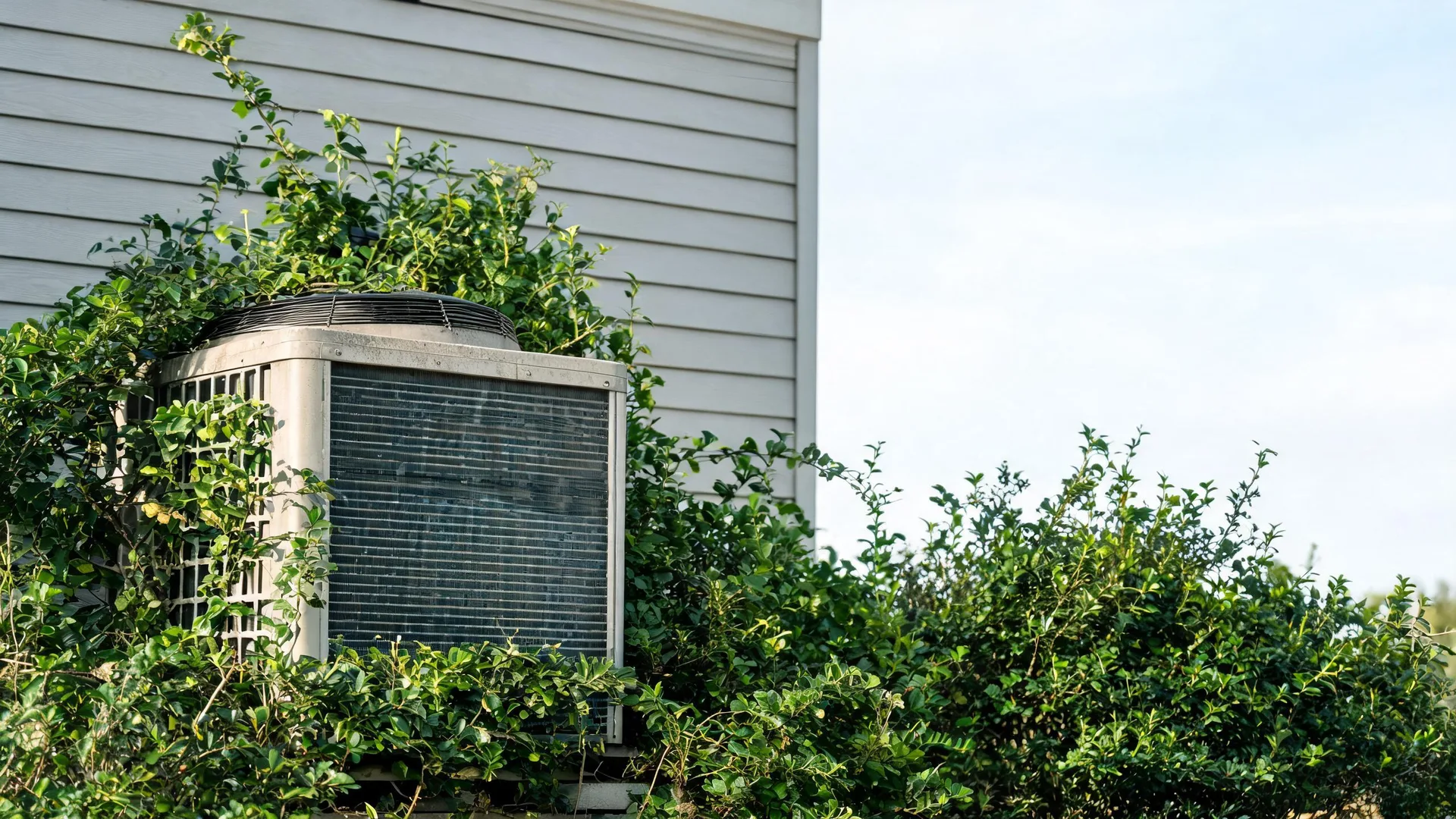
Look at the outdoor unit first

Walk around it and check the fins for anything bent flat or packed with leaves and dirt. Look at the fan blade for cracks or a bend, and see if the cabinet is dented in. If the fan spins but sounds off, or doesn't spin at all when the system calls for heat, that's worth mentioning when you call.
Check what you can reach inside

Look at the air filter and swap it if it's packed with dust, since a clogged filter chokes airflow the same way bent fins do. Check that registers around the house are open and not blocked by furniture. If the thermostat screen is blank, check the breaker before assuming the unit itself is the problem.

A heat pump in trouble usually tells you before it quits outright. The first sign is often weak heat, air coming out of the registers that doesn't feel as warm as it should, or the system running long stretches without seeming to catch up. Short cycling is another one, where the unit kicks on and off in quick bursts instead of running a full cycle. Listen for noise too. A grinding or rattling from the outdoor unit usually means the fan motor or fan blade is the problem, not something minor. Ice building up on the outdoor coil and not clearing during the defrost cycle is worth a call on its own, since that points to a problem with the reversing valve or the defrost control. Any of these is easier to deal with before the unit stops producing heat at all.

Age and damage point in different directions, and it helps to know which one you're dealing with. A compressor failure on an older unit is usually the end of the road, since a new compressor can cost close to what a new system would. A bad run capacitor, a failed contactor, a stuck reversing valve, or fan motor trouble is a different story. Those parts fail on their own on units of any age, and replacing one doesn't mean the rest of the system is going. The question worth asking a tech is which part failed and why, not just what it costs to fix it.