





Two illuminated white Southern-style houses with wraparound porches and staircases, framed by a Spanish moss-draped tree on a quiet street at night.

Heat Pump Repair in Sallisaw, OK

Tell us about the job

Takes about a minute. No obligation.

RepairHeat PumpSequoyah County, OK
Step 1 of 2

What ZIP code is the job in?

A diagnostic visit starts outside, at the outdoor unit. A tech checks the refrigerant charge, watches how the compressor is running, and feels whether the coil is actually releasing heat or pulling it in, depending on the mode. Then it's inside to the air handler, to check the indoor coil, the blower, and the reversing valve, since that valve is what tells the system to heat instead of cool and a stuck one is a common reason a heat pump blows cold air when it should be warm. The tech also checks the defrost board and the sensors that tell the unit when to melt frost off the outdoor coil. Most of this is done with gauges and a multimeter, not guesswork, so by the end the tech can point to the actual part that's failing and explain what it does.

7 months
October through April, your system heats
5 months
May through September, it cools
31°F
the average winter night it heats against
91°F
the average summer afternoon it cools against
Isometric line illustration of a cutaway house showing interior rooms with furniture, ceiling ductwork under a dark shingled roof, and an outdoor condenser unit connected by lines on the right.
Your system heats October through April and cools May through September.

NOAA nClimDiv, 1991–2020 normals

October is the month before heat runs here.

A weak part usually waits for that first cold snap to fail, right when the system switches over to heat.

Half the homes here were built in 1986 or later, so a lot of heat pumps still have years left in them

Half the homes here were built by 1986
Power costs 12.24 cents a kWh statewide
Climate zone 3A

The reversing valve is the part most likely to leave a heat pump stuck in one mode. It gets a signal to switch and either doesn't move or moves partway, and then the system runs backward or won't give up cold air at all. The compressor usually fails from running low on refrigerant over time, from a stuck contactor that lets it short cycle, or just from age, and once it's gone the rest of the system can't do much on its own. Capacitors wear out quietly, they weaken instead of failing outright, so the compressor or fan motor strains to start and draws more current than it should until something gives. Outdoors, the defrost sensor or the board that reads it can fail, and then frost builds on the coil and never clears, which chokes off airflow and heat at the same time. None of these announce themselves ahead of time. They just stop working, usually at the point the system is asked to do the most.

A newer system is usually worth repairing

If your heat pump came with a newer house, it's probably worth fixing rather than replacing. A stuck reversing valve or a weak capacitor is a repair, not a reason to start over.

Find a contractor
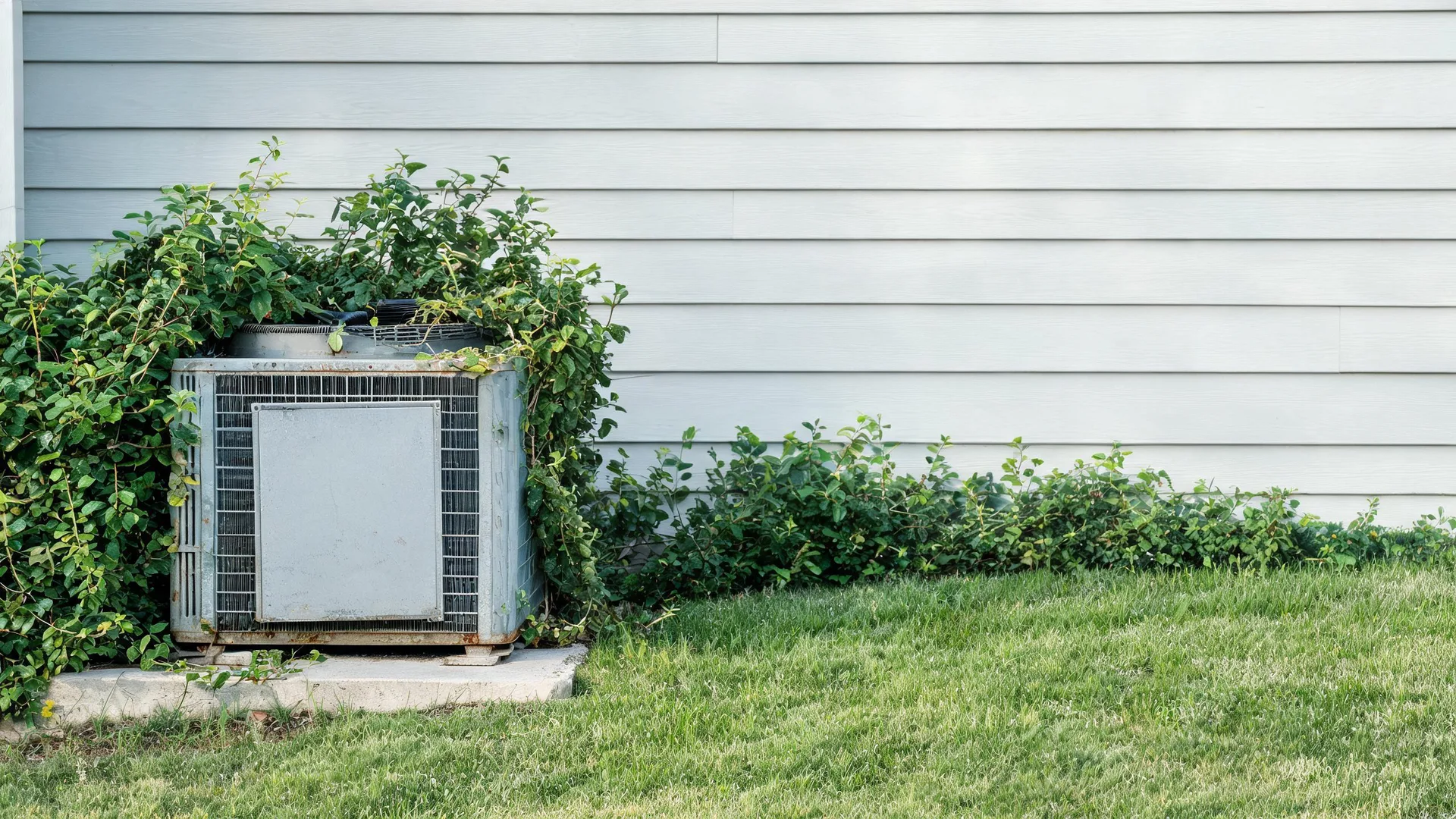
A gray heat pump condenser unit mounted on a concrete pad against the gray lap-siding exterior wall of a house.

Running it longer doesn't buy time, it spends it

A heat pump with a weak part doesn't get a break between cycles. A weak capacitor makes the compressor strain to start, and every start like that pulls more current than the windings were built for. That extra heat has nowhere to go but into the compressor itself, and it wears the windings down a little more each time. Low refrigerant does something similar. The compressor works harder to move less, and it runs hotter for longer than it should. A reversing valve that's starting to stick will often still move, just partway, for a while. Run it like that long enough and the refrigerant moving through it the wrong way erodes the valve body. Frost that isn't clearing because of a bad defrost sensor builds a little more with every cycle, and a fan motor pushing air through an iced-up coil is working against resistance it was never built for. None of this gets better with time. It just brings the system closer to the one failure that isn't a repair anymore.

Warm air when it should be cold, or the other way around

A heat pump blowing the wrong temperature is the complaint that actually gets people to pick up the phone. The system runs, air moves through the vents, but it's not matching the setting. That almost always points straight at the reversing valve or the signal that controls it, not at something vague wearing out everywhere at once.
The sound and the smell are worth paying attention to

A heat pump that hums or clicks before it starts is usually a capacitor losing its grip on the compressor or fan motor. A burning smell from the air handler is different and shouldn't wait for a scheduled visit. Ice building on the outdoor coil that never clears during the day points to the defrost cycle failing, not just cold weather.

Before calling anyone, go outside and look at the unit. If the outdoor coil is caked in ice during the day, not just overnight, that's worth noting, since the defrost cycle should be clearing it on its own. Check the air filter too. A filter packed with dust chokes airflow over the indoor coil and can make a heat pump seem like it's failing when it's just starving for air. Inside, check the thermostat batteries if it has a screen that's dim or blank, and make sure it's actually set to heat, not auto, since auto can quietly let it drift into cooling. Walk the vents and feel whether air is moving at all, even if it's the wrong temperature, because no airflow at all is a different problem than wrong airflow. None of this fixes a stuck reversing valve or a failing capacitor, but it rules out the simple stuff first.

A heat pump wears out a part at a time, not all at once, so the question is usually about one component, not the whole system. If the compressor itself has failed, that's the one that tips toward replacement, since it's the most expensive part to replace and the one everything else depends on. A reversing valve, a capacitor, a defrost sensor, these are contained jobs. The tech replaces the part, the system goes back to working the way it did before. What matters more than which part failed is what else is still sound. A unit that's kept its refrigerant charge, hasn't strained the compressor with months of short cycling, and is losing a single part to normal wear is a good candidate for repair almost regardless of how old it is. One that's lost several parts in close succession, or where the compressor's been running hot for a while before anyone caught it, has usually used up more of its life than the calendar suggests. Age matters less than what the system has actually been through.