
Heat pump vs furnace in Sequoyah County, Oklahoma

Compare Real Quotes

Installers who work on both

A person's hand in a blue long-sleeved shirt touches a white wall-mounted thermostat with a blank screen and four buttons, with a living room containing a stone fireplace, window, and an open tool bag visible in the background.

Tell us about the job

Takes about a minute. No obligation.

New system or replacementSequoyah County, OK
Step 1 of 3

What kind of equipment?

Which costs less to run in Sequoyah County?

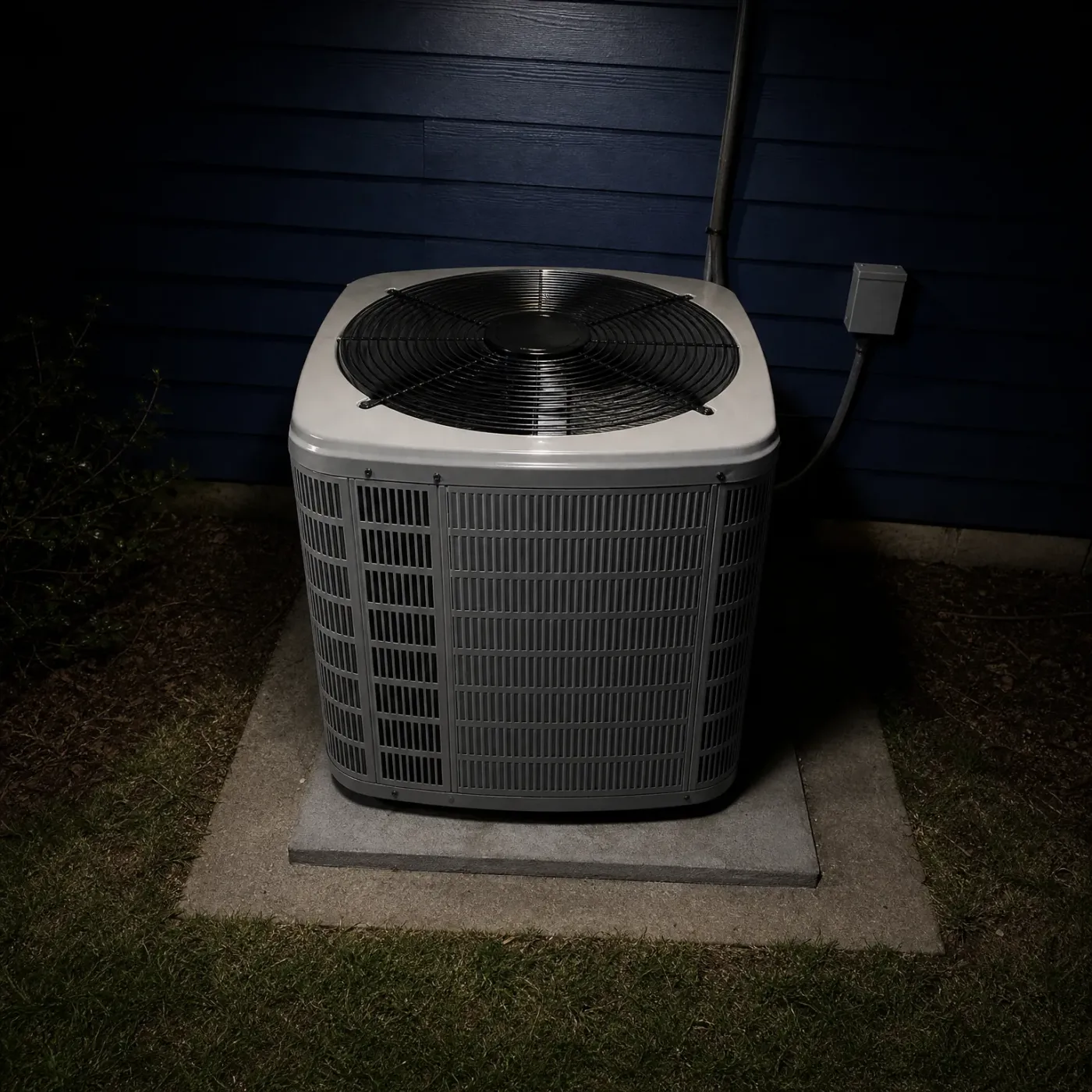
An outdoor air conditioner condenser unit on a concrete pad beside a dark blue horizontal-siding wall at night, with conduit and a small electrical box on the wall and grass surrounding the pad.

Heat pump

To heat your home here$1.63per 100,000 Btu

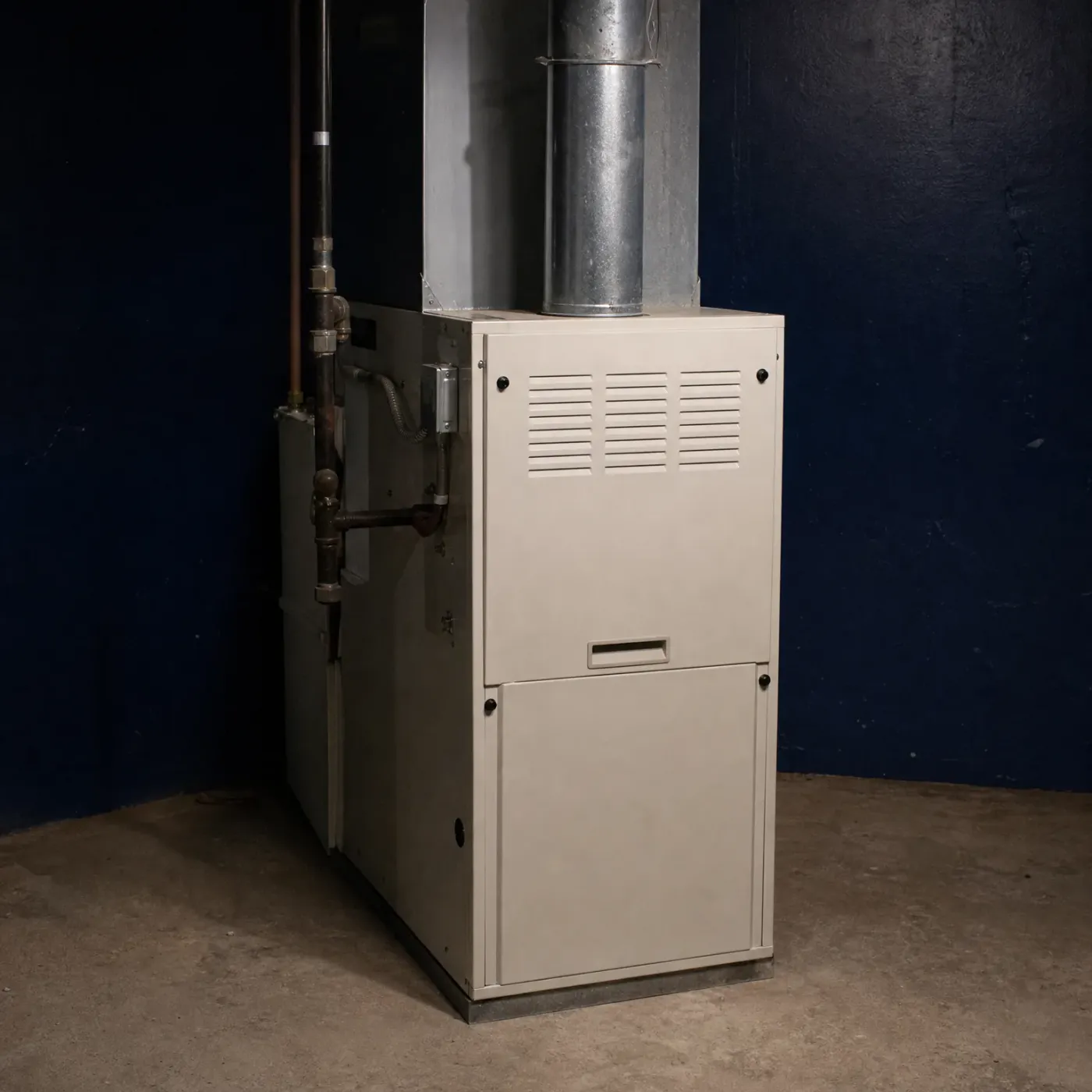
A beige residential furnace with a louvered upper panel stands against a dark blue basement wall, with a metal flue pipe rising from its top and copper and steel pipes running along the left side.

Furnace

To heat your home here$1.69per 100,000 Btu

At Oklahoma's gas and electricity prices, a heat pump and a gas furnace cost about the same to run here.

Btu stands for British thermal unit, the standard measure of heat energy.

Where does a heat pump shine?

  • Covers a long cooling season

    Cooling runs May through September here, so whatever you pick is working hard most of the year just to keep the house comfortable. A heat pump handles that cooling load and does the winter heating too, all from one unit.

    A covered porch with a ceiling fan, wicker sofa with cream cushions and blue and white pillows, wicker armchairs, a wooden coffee table with a tray, a navy rug, potted plants and a hanging fern, and a glass of iced tea on a round wicker table, with green trees beyond the railing.
  • Steady, even comfort

    A heat pump runs long and low instead of blasting on and off. Rooms hold an even temperature all day.

    A dimly lit living room at night with a dark blue armchair holding an open book and knit throw, a lit table lamp, a stone fireplace with a log basket, and a yellow Labrador sleeping on a patterned rug.
  • No gas line, nothing burning in the house

    It moves heat instead of making it from fire. That means no combustion, no flue and no gas bill for heat.

    A navy blue whistling kettle sits on a black induction cooktop set into a light stone island with navy cabinets, with wooden open shelves holding bowls and plants, a stainless steel refrigerator, and a window with green trees behind.

Where does a furnace shine?

  • Proven, simple, easy to get serviced

    Parts are easy to find and most repairs are routine. Getting one fixed rarely means waiting on a specialist.

    A gloved hand holds a pleated air filter in front of a furnace and shelving unit in an indoor utility space.
  • Pairs with any central AC

    A furnace's blower and ducts carry cooled air too. Adding central AC uses the same system.

    A metal floor vent set into a wood floor near a window with sheer white curtains, a white baseboard, a dark blue cabinet at right, and a patterned rug in the foreground.
  • Fast, strong heat on demand

    The air coming from the vents feels genuinely hot. That's welcome on a freezing morning.

    An entryway with an open dark blue door showing snow outside, snow-covered boots on a slate tile floor, a wooden bench with a steaming enamel mug, hanging coats and a plaid scarf, and a sheer white curtain by a window.

Can a heat pump keep up here

Your winters here are mild, not cold. The overnight low averages 31°F across December, January and February, and it only reaches 0°F or below less than once a year. That matters because a standard heat pump has two different weak points, and this county barely touches either one. Below 40°F its heat output falls short of its rating. Below about 35°F it often needs backup heat to fill the gap. Your average winter night is below both marks, but not by much, and the deep cold that really strains a heat pump almost never shows up.

Look at the nights that actually get to you. About 70 nights a year fall at or below freezing, under a third of the roughly 210 nights the heat runs here. Of those 70, only about 0.1 reach 0°F. So the nights where a standard heat pump leans hardest on backup heat are rare, and the nights where it runs comfortably on its own are most of the season. A two-winter field test of cold-climate heat pumps in occupied homes found backup heat covered only a small share of the output between 0°F and 35°F, and running on backup alone was rare even above 0°F. If you want more margin than the federal minimum gives, a heat pump with the ENERGY STAR Cold Climate mark holds onto at least 70 percent of its 47°F capacity at 5°F, which is colder than this county sees in a normal year.

A furnace does not have this question at all. It burns gas, makes heat, and the outdoor temperature does not touch how it works. If you want to never think about backup heat or capacity curves, that simplicity is the furnace's real case.
A navy-sided house with a white-columned front porch holding a hanging wooden swing with cushions, two hanging ferns, a ceiling fan, white railings and painted steps, flanked by green shrubs.

What each one costs you and covers for you

Run the two side by side on price and they come out almost even. A heat pump costs $1.63 to make 100,000 Btu of heat here, a furnace costs $1.69, both figures built on Oklahoma's average fuel prices and each machine at its federal minimum efficiency. That's close enough that fuel cost alone should not decide this for you.

What should decide it is the other seven months. Heating runs about seven months a year here, October through April, but cooling runs five, May through September, and the afternoon hits 90°F or above about 65 days a year. A furnace only heats. For those five months it sits there doing nothing while a separate air conditioner carries the load. A heat pump is the air conditioner, the same machine, all year.

That's also where the county's own numbers lean. Electricity already heats 64.4% of homes here against 20.7% on gas, nearly the reverse of the state as a whole, where gas heats about half of homes and electricity 42%. If a heat pump is close to a furnace on running cost and also replaces your air conditioner, it is carrying two jobs for the price of one system. A furnace paired with a separate AC is proven and easy to get serviced, and if your house is already set up that way, that counts for something. But for a house choosing fresh, the heat pump's mild winters and long cooling season both point the same direction.

Sources: NOAA nClimDiv · NOAA 1991–2020 seasonal normals · Census ACS 2020–2024 · PNNL Building America guide · PNNL-37127 field study · ENERGY STAR product criteria · EIA SEDS 2024 · 10 CFR 430.32

A single-story light blue clapboard house with a gabled roof, white columns, navy front door and shutters, and a railed front porch, flanked by pink-flowering crape myrtle trees with tall pines behind, seen from across a street.

Common questions about heat pumps and furnaces

  • Will a heat pump keep my house cool enough here?

    Yes. The afternoon high hits 90°F or above about 65 days a year here, and a heat pump is built to cool a house the same way a central air conditioner does, through the same ducts. You get five months of cooling, May through September, out of the same machine that heats you the other seven.

  • Can I keep my furnace and add a heat pump?

    Yes, that pairing is common and it's called a dual fuel system. The heat pump carries the heating load most nights, and the furnace kicks in on the roughly 70 nights a year here that drop to freezing or below, when a standard heat pump's output falls behind its rating. You keep the furnace's strong heat for the coldest nights and the heat pump's lower running cost for the rest of the season.

  • What if my house doesn't have a gas line?

    A heat pump still works, and it doesn't need one. It runs on electricity alone, and electricity already heats 64.4% of homes in Sequoyah County, more than gas. Propane or oil furnace both need a fuel tank and deliveries, something a heat pump skips entirely.

  • Is a heat pump cheaper to run than a furnace in Sequoyah County?

    Yes, by a small margin. A heat pump runs $1.63 per 100,000 Btu here against $1.69 for a gas furnace, so it costs less to run, but not by much. At Oklahoma's fuel prices the two are close enough that other things, like whether you have a gas line or want cooling from the same machine, matter more than the few cents between them.