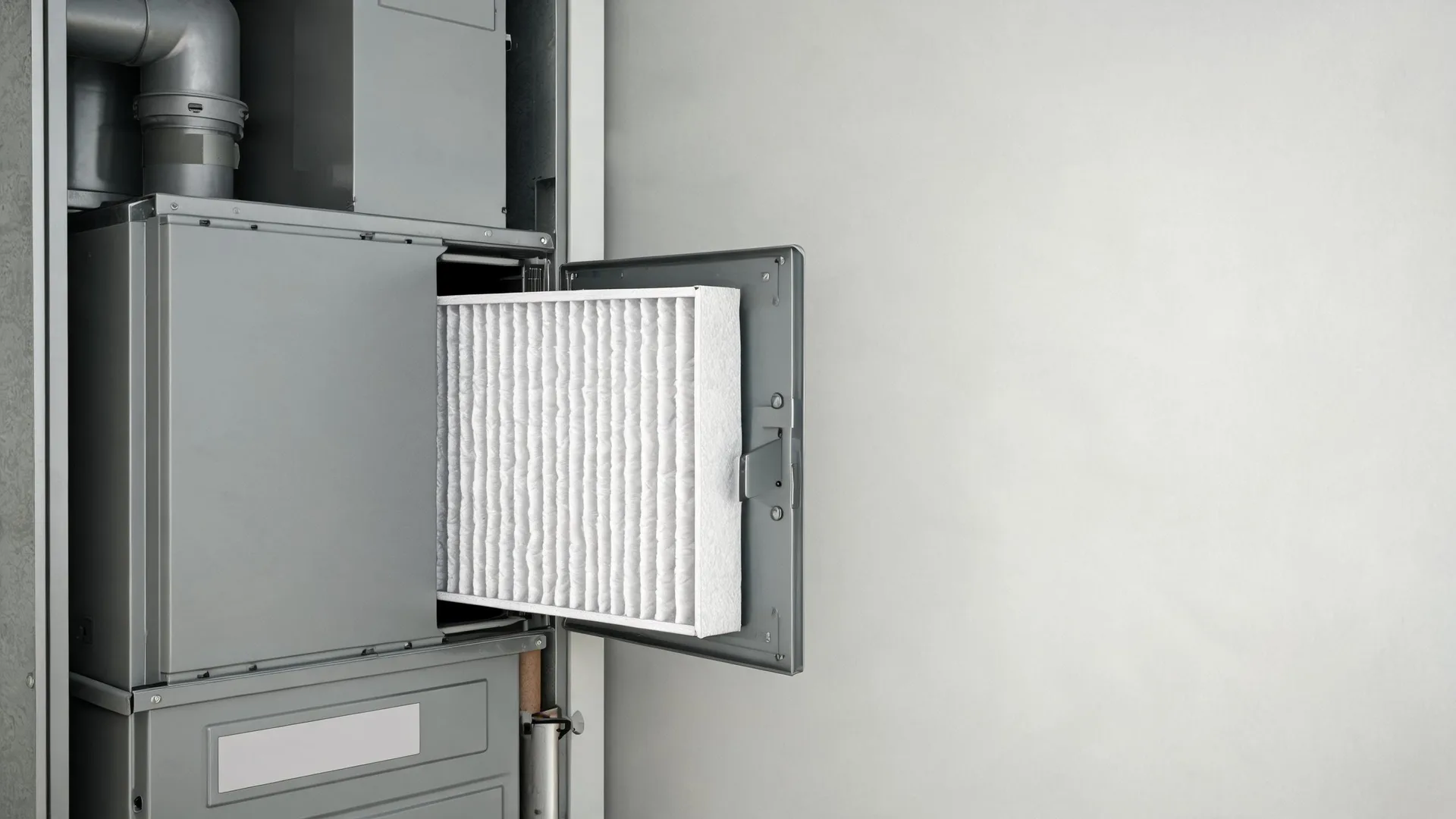
The cabinet comes off
A quick visit gets a filter swap and a glance at the thermostat. A thorough one has the panel off so the burners, the flame sensor and the igniter get looked at directly, since that's where most no-heat calls start.
Takes about a minute. No obligation.
A quick visit gets a filter swap and a glance at the thermostat. A thorough one has the panel off so the burners, the flame sensor and the igniter get looked at directly, since that's where most no-heat calls start.
A dirty flame sensor can shut the burners off even when everything else is fine, and it only gets caught by someone willing to pull it and check it by eye. Skip that step enough times and the furnace that quit on the coldest morning is the one that only ever got the filter swapped.
Half the homes in Sequoyah County were built in 1986 or later.
A furnace that age still has years in it, and a yearly check is what keeps it getting them.




Seven months of heat a year is real work for a furnace, but it isn't hard work. Overnight lows in December and January average around 31 degrees here, not the teens or single digits that force a system to run flat out for hours at a stretch. That's steadier duty than a lot of places get, and steadier duty means less strain on the igniter, the blower motor, the burners. Less strain doesn't mean no wear. Those parts still age every season, just slower here than somewhere colder. A furnace that's had an easy run is usually a good candidate for repair when something does go, since the rest of the system hasn't been pushed hard either.
If your system is fairly new, a yearly check keeps it in good shape for longer.
Find a contractor
A furnace running easy duty for seven months still needs its yearly look. The parts wearing slowly are still wearing, and a check is what catches a weak igniter or a cracked flame sensor before it leaves you without heat on a 31 degree morning. One visit a year, before October, is what easy duty asks for.
A technician checks that the flue is pulling exhaust out instead of letting it back up into the house. That draw can weaken from a cracked heat exchanger, a blocked vent or a loose connection, none of which show up by looking at the furnace running. It's checked with a meter or a smoke pencil, not a glance.
Amp draw on the blower motor, gas pressure at the manifold, temperature rise across the heat exchanger. Each has a range it should fall in. A motor pulling higher amps than it should is wearing out even while it still spins fine, and that only shows up when someone puts a meter on it.
Between visits, the filter is the one thing worth your attention. Pull it out and hold it up to a light. If you can't see light through it, swap it, and check again a month later since the right interval depends on your filter and your house. Keep furniture and boxes away from the return air grille so the blower isn't starving for air. If you have a standing pilot, you can check that the flame burns blue and steady, not yellow or flickering. Past that, leave the panel alone. The burners, the igniter and the flame sensor are not something to clean or test yourself, and taking the cabinet apart between visits just adds a chance to put something back wrong.
A proper tune-up starts with the furnace running, not off. The technician checks the flame through the viewport first, looking for a steady blue burn across every burner instead of one that's yellow, lazy or uneven. The heat exchanger gets inspected for cracks or rust-through, since that's the part separating combustion gas from the air moving through your house. The blower wheel comes out from under the motor housing and gets cleaned if it's caked with dust, because a dirty wheel moves less air no matter how strong the motor is. Wiring gets checked at the connections, not just looked at, since a loose connection can run fine for months before it finally fails. The condensate line gets checked too if your furnace has one, because a clog there can shut the whole system down on a safety switch for no reason anyone would guess by looking at the furnace itself.