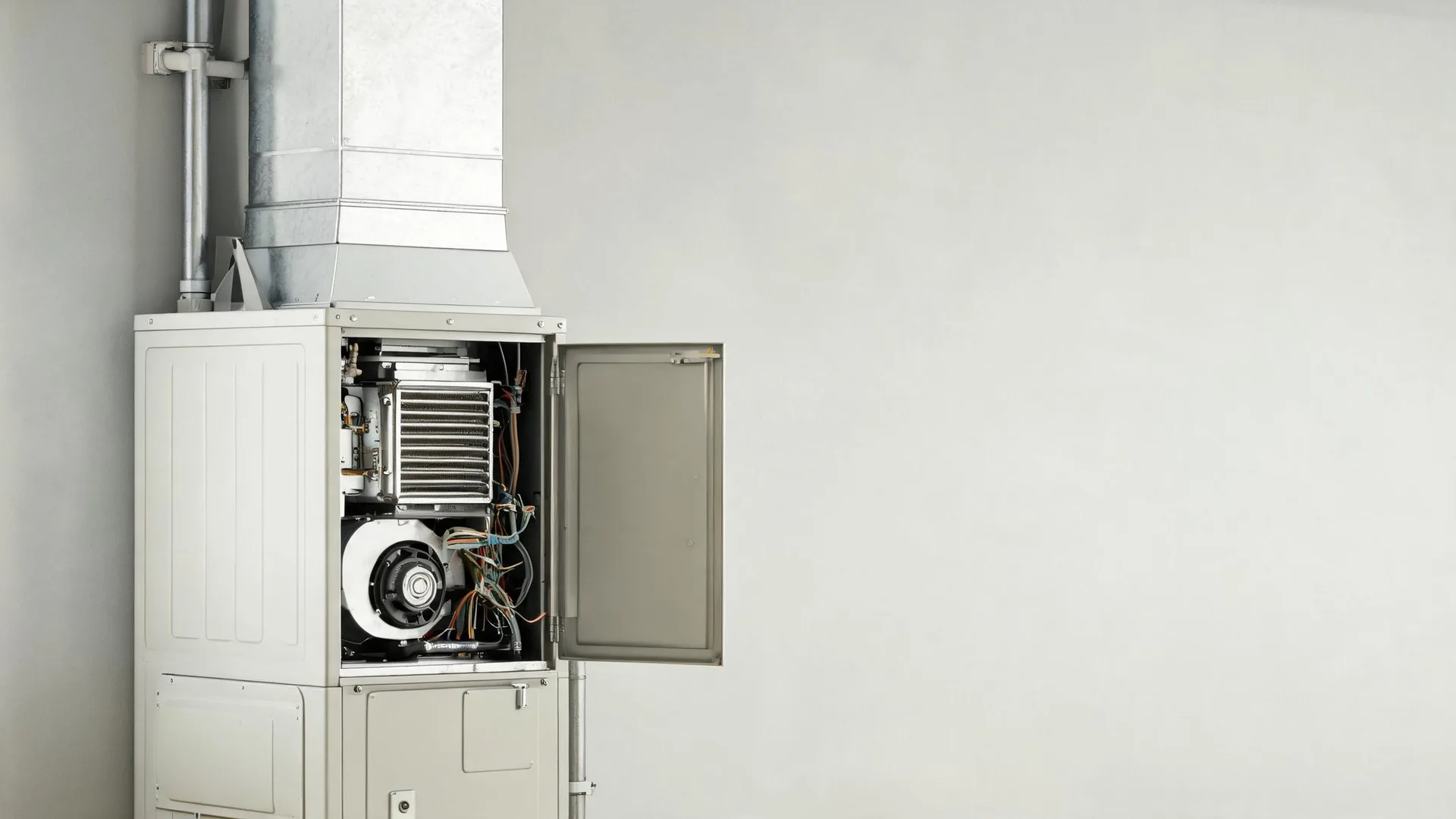
An unfinished basement interior featuring a large metal furnace unit, exposed ceiling joists, concrete walls, and scattered boxes and cables on the floor.

Furnace Repair in Sallisaw, OK

Tell us about the job

Takes about a minute. No obligation.

RepairFurnace or heatingSequoyah County, OK
Step 1 of 2

What ZIP code is the job in?

Check the thermostat and the switch first

Make sure the thermostat is set to heat and the temperature is actually above room temperature. Check the furnace switch, the one that looks like a light switch near the unit or on the wall close by, and make sure it hasn't been bumped off. Look at the breaker too. These take a minute to check and rule out anything being wrong with the furnace itself.


Know what's worth describing to a contractor

Notice whether the furnace is trying to start and failing, running but not heating, or doing nothing at all. Listen for clicking, banging, or a blower that runs without any heat coming through the vents. Check if the filter is dark or clogged, since that can cause shutdowns on its own. Telling a contractor what you saw and heard before they arrive helps them bring the right parts the first time.

7 months
October through April, your furnace is on duty
31°F
the average winter night it heats against
6 winter storms
in ten years, the nights a failure hurts most
Isometric cutaway illustration of a single-story house showing interior rooms with furniture, a furnace unit with connected ductwork and a tall vertical flue pipe extending above the dark shingled roof.
Your furnace works hardest from November through March.

NOAA nClimDiv, 1991–2020 normals

A tech starts by asking what the furnace is doing, not by pulling it apart.

The answers you give about clicking, banging, or no heat at all shape where the tech looks first.

Half the furnaces in Sallisaw are newer than that

Half the homes here were built by 1986
Heat runs October through April
Winter nights average 31°F

Furnaces here start working in October and keep going through April. The first cold snap is when weak parts give out, because a furnace that idled all summer is suddenly running for hours at a stretch. A cracked heat exchanger or a failing igniter can sit quiet all September and then quit in the first week it's actually needed. If yours is already acting up before October, that's worth a look now, before it has to carry a full season. Waiting until the coldest week to call means waiting behind everyone else whose furnace picked the same week to fail.

Repair it

If your system came with a newer house, it likely has plenty of life left. Repair is usually the right call.

Find a contractor
A man in a cap, gray long-sleeve shirt and tan work pants climbs porch steps toward a dark blue front door, carrying a canvas tool bag with tools in its outer pockets.
A gray gas furnace with attached ductwork and piping installed in an unfinished concrete basement.

Few winters on it yet

If your furnace came in with the house and the house is one of the newer ones, it hasn't put in many winters yet. Something acting up this early usually means one part failed, not that the unit is done. That's worth fixing.

A small problem can turn into a big one

A furnace that's short cycling or struggling to light will keep trying over and over if you leave it running. Each failed attempt puts strain on the igniter or the control board. What starts as an intermittent fault can end as a part that won't work at all.

Some failures aren't safe to wait out

A cracked heat exchanger or a flame that looks yellow instead of blue means combustion isn't happening the way it should. Running the furnace in that state doesn't just risk more damage to the unit. It's a reason to shut it off and get it looked at, not a reason to keep it going until someone's free.

Most furnace failures trace back to a handful of parts, and they fail for predictable reasons. An igniter sits in the heat path every time the furnace fires, so it's a wear part, not a defect, and it eventually cracks or burns out. A flame sensor coated in a thin layer of residue stops recognizing the flame and shuts the gas off as a safety measure, even though the furnace is working fine otherwise. Blower motors wear out from running hours at a time, and a failing one can get loud or quit mid cycle. A clogged filter starves the system of airflow, which can overheat the heat exchanger and trip a safety switch long before anything else is actually wrong. Pressure switches and inducer motors fail quietly too, usually showing up as a furnace that tries to start and gives up before it ever lights.

Age isn't the only thing that decides repair versus replacement. How the furnace has been treated matters just as much. One that's had its filter changed on schedule and its flame sensor cleaned now and then tends to fail one part at a time, and each of those is a fair repair. One that's been run hard with a dirty filter or ignored through a few strange noises tends to fail in bunches, because strain on one part puts strain on the next. If a contractor finds a cracked heat exchanger, that's usually the one failure worth replacing over, since it's a safety issue rather than a wear item. Everything else on a furnace, the igniter, the blower, the pressure switch, is a part that can be swapped on its own without touching the rest of the unit.