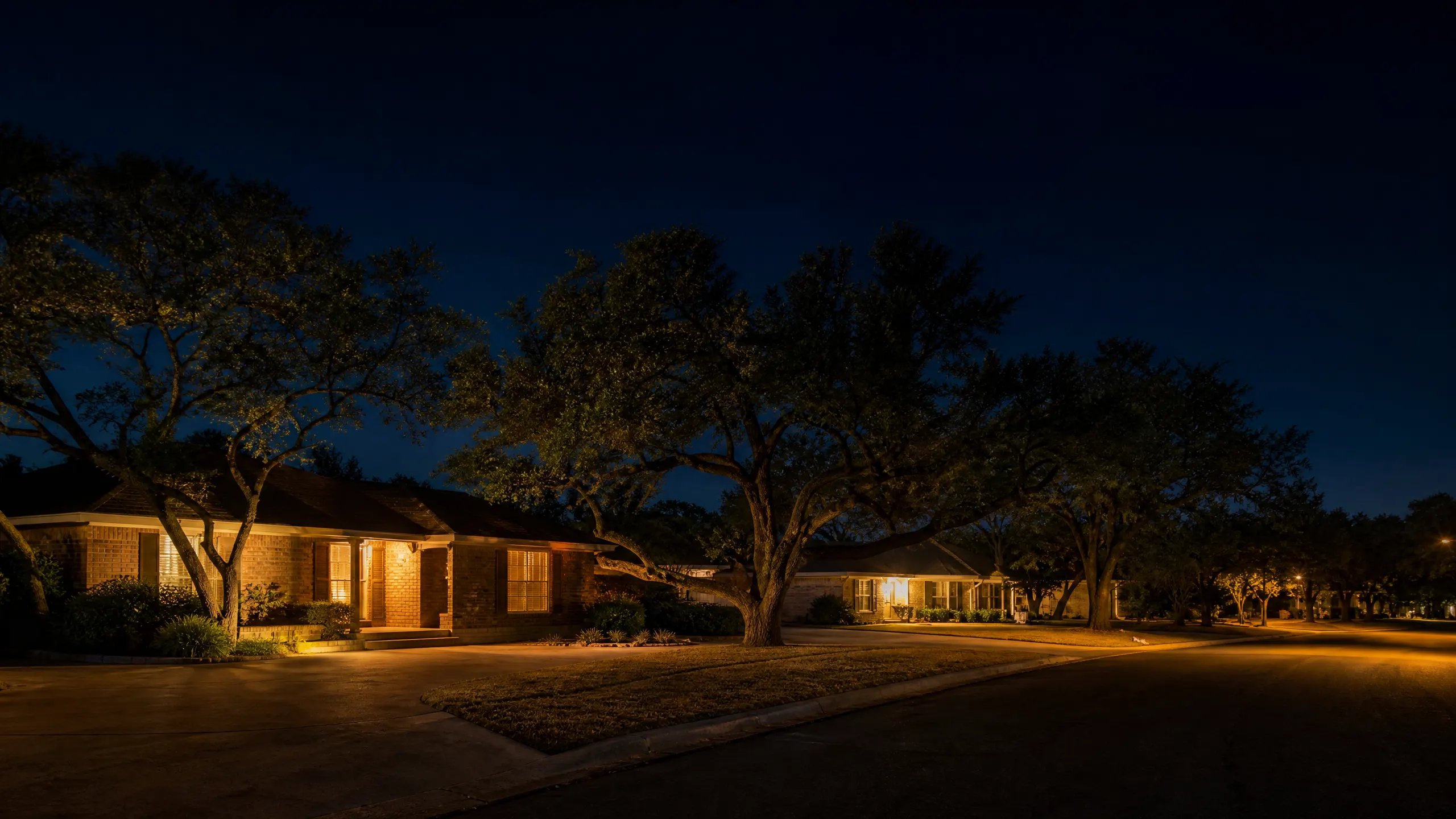
Two illuminated single-story brick ranch houses photographed at night, framed by large oak trees and a wide concrete driveway.

Heat Pump Repair in Tulsa, OK

Tell us about the job

Takes about a minute. No obligation.

RepairHeat PumpTulsa County, OK
Step 1 of 2

What ZIP code is the job in?

Check the thermostat and the breaker first

Set the thermostat to heat or cool and move the temperature well past the room reading, then listen for the outdoor unit to kick on. If nothing happens anywhere in the house, check the breaker panel for a tripped switch before assuming the heat pump itself has failed. A reset breaker that trips again right away points to an electrical fault that a homeowner should not keep resetting.


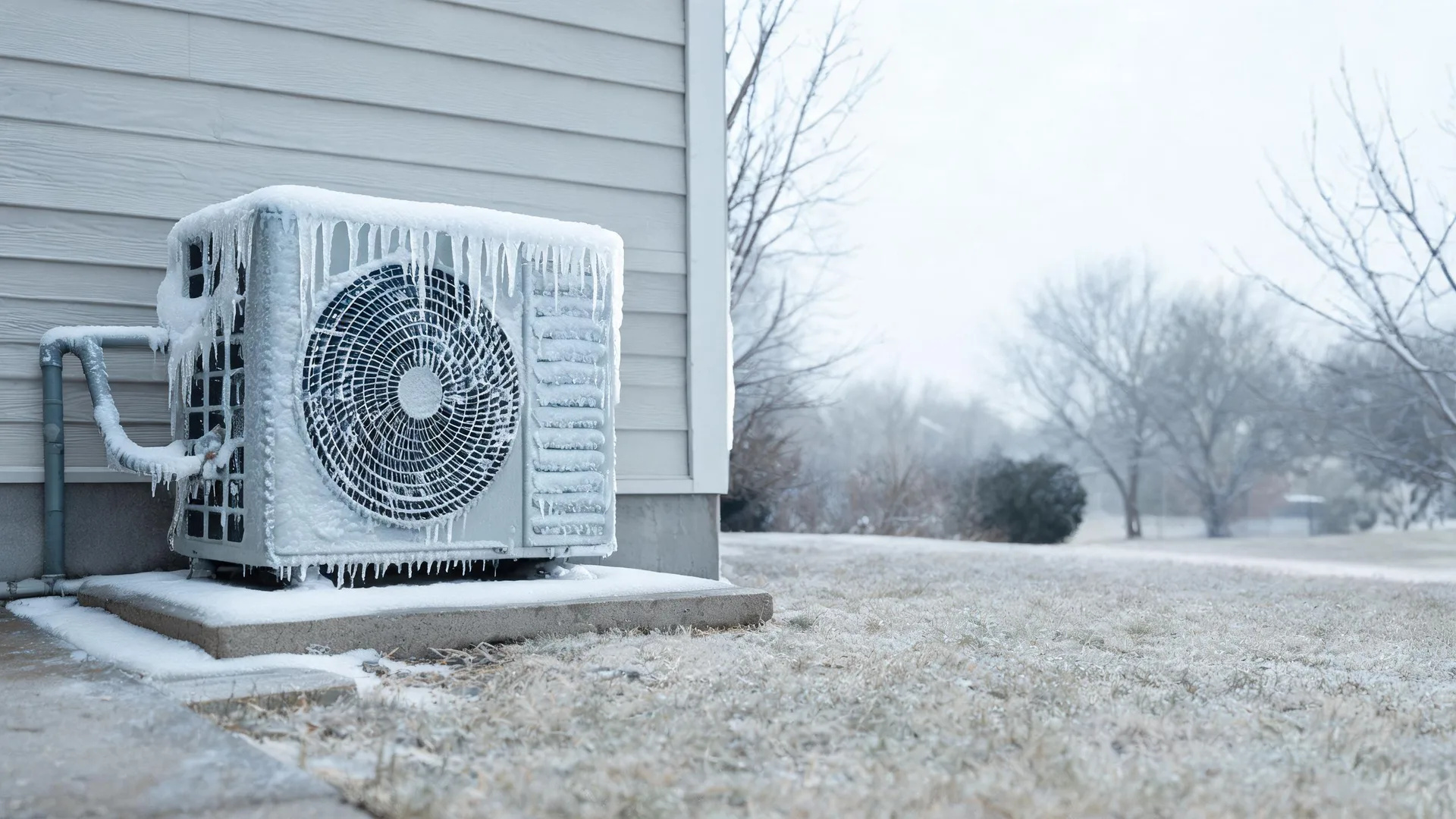
A frozen or iced-over outdoor unit still means a call is needed

Ice across the outdoor coil can look alarming but does not mean the problem is minor or major on its own. Switching the system off lets the ice melt without forcing the compressor to run against it, but the cause, whether low refrigerant, a failed defrost control, or restricted airflow, still needs a technician to find. Running the unit while it is iced over risks more damage, so leave it off until someone can look at it.

7 months
October through April, your system heats
5 months
May through September, it cools
29°F
the average winter night it heats against
91°F
the average summer afternoon it cools against
Isometric cutaway illustration of a single-story house showing interior ductwork, an indoor air handler, and an outdoor condenser unit connected by lines along the exterior wall.
Your system heats October through April and cools May through September.

NOAA nClimDiv, 1991–2020 normals

The reversing valve is what lets a heat pump switch between heat and cool, and it fails more often than almost any other part.

A heat pump stuck blowing the wrong temperature, or stuck in one mode no matter what the thermostat says, usually means that valve.

Half the homes in Tulsa County were built in 1979 or later, and a heat pump that came with one of those houses still has working life in it

Half the homes here were built by 1979
276 damaging wind events from 2015 to 2024
215 hail events from 2015 to 2024

Tulsa County saw 22 tornadoes touch down over the past ten years, and a heat pump sitting outside has nowhere to hide from one. Even a near miss can throw debris through the cabinet or across the coil without stopping the unit outright. If a tornado warning or a bad storm has come through since the unit was last looked at, that's worth checking before the next one. Winter storms hit the county 10 times in that same span, and ice building up on the unit or the line set can bend fins the same way flying debris does. None of this means the unit is damaged. It means a check after the fact catches what the thermostat can't tell you.

After a storm, have the outdoor unit checked even if it still runs

Tulsa County saw 276 damaging wind events and 215 hail events in the last ten years. Either one can bend fins or crack a fan blade without stopping the unit outright. A heat pump that still turns on after a storm can be running on a damaged coil or a motor pulling more than it should.

Find a contractor
A gray outdoor HVAC unit mounted on a concrete pad beside a house with gray lap siding and a stone foundation.

Check the age before you write it off

Find out when your heat pump was installed before you decide anything. If the house is newer, there's a good chance the system is too, and a newer system is worth fixing when something goes wrong. A reversing valve or a capacitor is a repair either way, not a reason to replace a unit that still has years ahead of it. Check the paperwork from when the house was built, or ask the installer if you know who did the work.

A weak capacitor turns into a dead compressor

A capacitor that's losing strength makes the compressor struggle to start, and every hard start heats up the windings a little more than the last one. Keep running it in that state and the compressor itself can burn out, and a compressor failure on a heat pump usually means replacing the whole outdoor unit rather than one part.

Low refrigerant gets worse on its own, slowly

A heat pump low on charge isn't leaking faster because it's running, but every hour it runs low puts extra strain on the compressor and can let liquid refrigerant back into it instead of gas. That kind of damage doesn't show up right away. It shows up as a bigger repair a few months later, from a problem that started small.

A heat pump rarely fails without warning first. Listen for a clicking that repeats without the system ever starting, or a hum from the outdoor unit that never turns into a run. Notice if one room stays cold while the rest of the house is comfortable, or if the air coming out feels barely warm even while the system runs. A unit that cycles on and off every few minutes instead of holding a steady stretch is struggling to satisfy the thermostat, not pacing itself. A musty smell from the vents can mean moisture sitting somewhere it shouldn't. Any one of these is worth a call, and more than one at the same time usually means the system is already working harder than it should.

Age alone doesn't decide this, and neither does a single repair bill. What matters is what's failed and what else is close behind it. A thermostat, a capacitor, a contactor, these are wear parts on any heat pump, and replacing one doesn't say anything bad about the rest of the system. The compressor is different. It sits in the middle of the refrigerant circuit, and nothing about a heat pump works without it running right. A compressor failure is usually the point where a technician stops talking about repair and starts talking about replacement, because the part costs more than most of what's left in the system, and a unit old enough to lose a compressor is often close behind on everything else. The other thing worth asking is how often you've had someone out for this same unit. One repair is a repair. The same system calling for help every season is telling you it's tired, even if each visit fixes what it was called for.