





A lit single-story brick ranch house with a two-car garage photographed at dusk on a quiet residential street lined with oak trees.

Furnace Installation in Anadarko, OK

Tell us about the job

Takes about a minute. No obligation.

New system or replacementFurnace or heatingCaddo County, OK
Step 1 of 2

What ZIP code is the job in?

The efficiency rating on a furnace tells you how much of the fuel it burns turns into heat in your house instead of going up the flue. A higher rating means less of what you pay for escapes as exhaust. That number also tells you what kind of furnace you're looking at. The higher ratings belong to condensing furnaces, which cool the exhaust enough to pull extra heat out of it, and that exhaust is cool enough to vent through PVC pipe instead of metal. That changes where the furnace can go and how it gets vented, since condensing models also produce water that has to drain somewhere. A lower rated furnace vents hot exhaust through metal flue pipe and doesn't need a drain at all. Neither rating tells you how big a furnace to put in. Sizing comes from the heat loss of the house, not the efficiency label.

6 months
November through April, your furnace is on duty
29°F
the average winter night it heats against
80% AFUE
the federal minimum any new unit must meet
Isometric cutaway illustration of a single-story house showing interior rooms with a dark furnace unit, connected ductwork, a vertical flue pipe through the roof, and simple furniture, on a white background.
Your furnace works hardest from November through March.

NOAA nClimDiv, 1991–2020 normals

Half the homes in Caddo County were built in 1972 or earlier.

The furnace going into a house that age has to match the duct and vent setup already there, not the other way around.

Electricity runs $35.86 per million Btu here, cheap enough that a lower-rated furnace is still worth considering

Heat runs November through April
Winter nights average 29°F
13 winter storms from 2015 to 2024
Put it in before NovemberFurnace here runs November through April. October is the month to get it done.

Caddo County has seen 105 damaging wind events and 22 tornadoes in the past decade. That matters for where the outdoor unit goes when the new system is installed. A spot shielded from wind-blown debris holds up better than one out in the open. Winter storms bring their own risk, and a quarter of Oklahoma households lost power for at least a day in 2024. A furnace with a standing pilot keeps running without electricity, but most newer furnaces need power for the igniter and blower, so an outage means no heat even with gas still flowing. Worth asking what backup options make sense before the old system comes out.

Match the new furnace to the fuel already running to your house

Electricity heats close to half the homes in Caddo County, and gas heats most of the rest. If your house already runs on one of those, putting in a furnace that matches it is the straightforward path, and the one most installers here are set up to do without reworking the fuel line or the panel.

Find a contractor
A man in a faded olive work shirt and dark trousers climbs porch steps toward a navy front door, carrying a green canvas tool bag in his right hand, with a potted shrub in a blue planter beside the door.
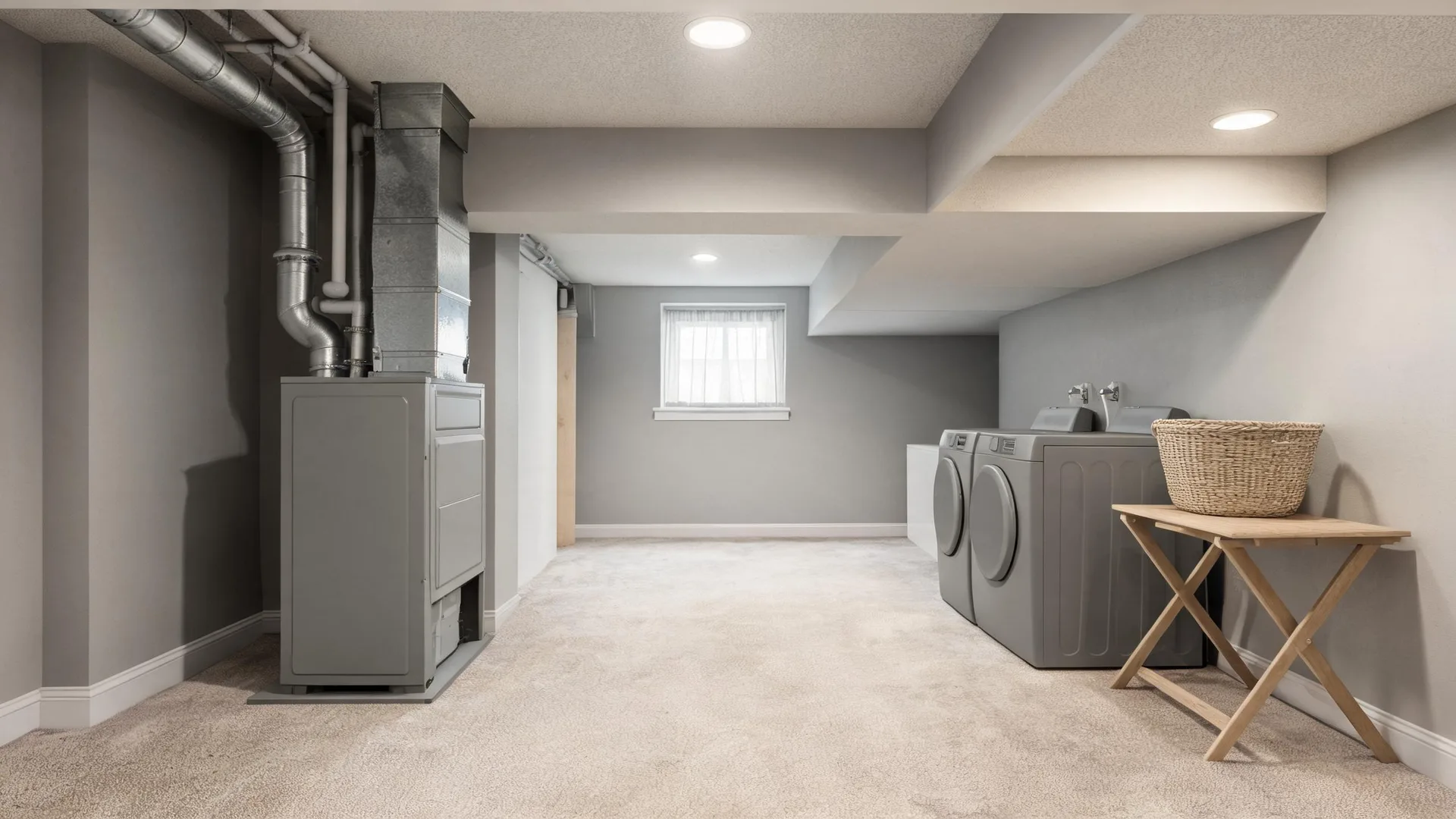
A gas furnace with attached ductwork, gas piping, and condensate lines installed in a concrete-block basement.

Six months on, six months off

Furnace here runs about six months a year, November through April. The rest of the year it sits idle. Overnight lows average 29°F in December, January and February, which is cold but not extreme, and the furnace doesn't have to work as hard as one in a place with harder winters. That six-month season is also why a reliable, correctly sized system matters more than chasing the highest efficiency rating. It won't be running long enough most years to make a big difference in what you spend on gas or electricity. What wears a furnace down here is more likely to be age or a skipped service than the workload.

Ask what heat loss calculation they ran

A furnace quote should come from a room-by-room heat loss calculation on the house, not a guess based on square footage or what was there before. Contractors who skip this step tend to land on whatever size furnace they have on the truck. A furnace sized too big cycles on and off more than it should. One sized too small runs constantly and still doesn't keep the house warm.
Ask what happens to the vent and drain

A condensing furnace and a non-condensing furnace don't vent the same way, so switching from one to the other means new venting, not a reconnect to what's already in place. If the house is getting a condensing furnace for the first time, ask where the drain line will run and what happens when it clogs or freezes. If the furnace is staying non-condensing, ask about the condition of the metal flue it will vent through, since that pipe doesn't get replaced just because the furnace did.

Taking out the old furnace is routine work. A tech shuts off the gas and power, disconnects the vent pipe or flue, and unhooks the ductwork from the plenum. If it's a condensing furnace, the drain line gets capped too. The cabinet usually comes apart in a couple of pieces to get it out the door, especially if it's in a closet or attic. Once it's out, the old unit gets hauled off and recycled, since furnace cabinets are mostly sheet metal. Nothing about removing it should hold up getting the new one in the same day.

Getting the new furnace in starts with setting it in place and running new gas and electrical connections, then sealing it to the plenum so air moves through the ducts the way it should. The vent pipe or flue gets connected next, PVC run to an outside wall for a condensing furnace, metal flue tied into the chimney for a non-condensing one. A tech wires the thermostat, checks the gas pressure at the manifold, and fires the furnace to watch the flame and check the temperature rise through the plenum. Before anyone leaves, they check for gas leaks at every joint and test the safety switches that shut the furnace down if the flue backs up or the flame sensor loses signal. A condensing furnace also gets its condensate line checked to make sure it's draining and not pooling in the cabinet. None of this should spill into a second day unless the ductwork itself needs rework.