






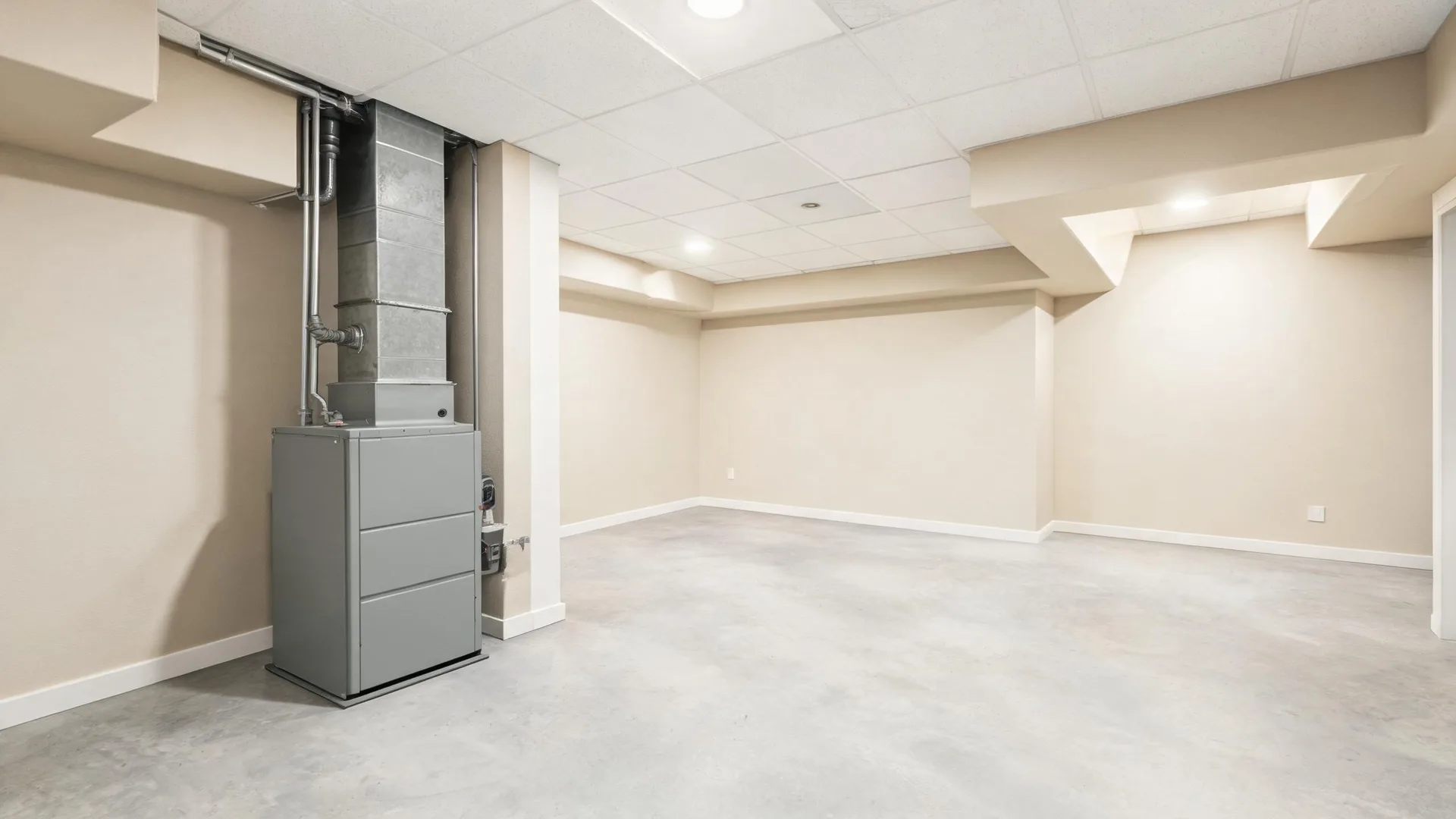
An unfinished basement featuring a forced-air furnace, exposed wooden ceiling joists, bare concrete walls, and miscellaneous items including cardboard boxes and coiled cables on the floor.

Furnace Installation in Ardmore, OK

Tell us about the job

Takes about a minute. No obligation.

New system or replacementFurnace or heatingCarter County, OK
Step 1 of 2

What ZIP code is the job in?

Carter County logged 132 severe weather events between 2015 and 2024. Most of that was wind and hail, 40 damaging wind events and 75 hail events, with 12 tornadoes mixed in. A furnace install should account for that, even though the furnace itself sits inside a closet or utility room. Anything tied to the system outdoors doesn't get that shelter, and a hard storm can knock out power before it touches any equipment at all. A quarter of Oklahoma households went at least a full day without power in 2024. For a house that heats with electricity, a day without power in the cold is a day without heat.

5 months
November through March, your furnace is on duty
32°F
the average winter night it heats against
80% AFUE
the federal minimum any new unit must meet
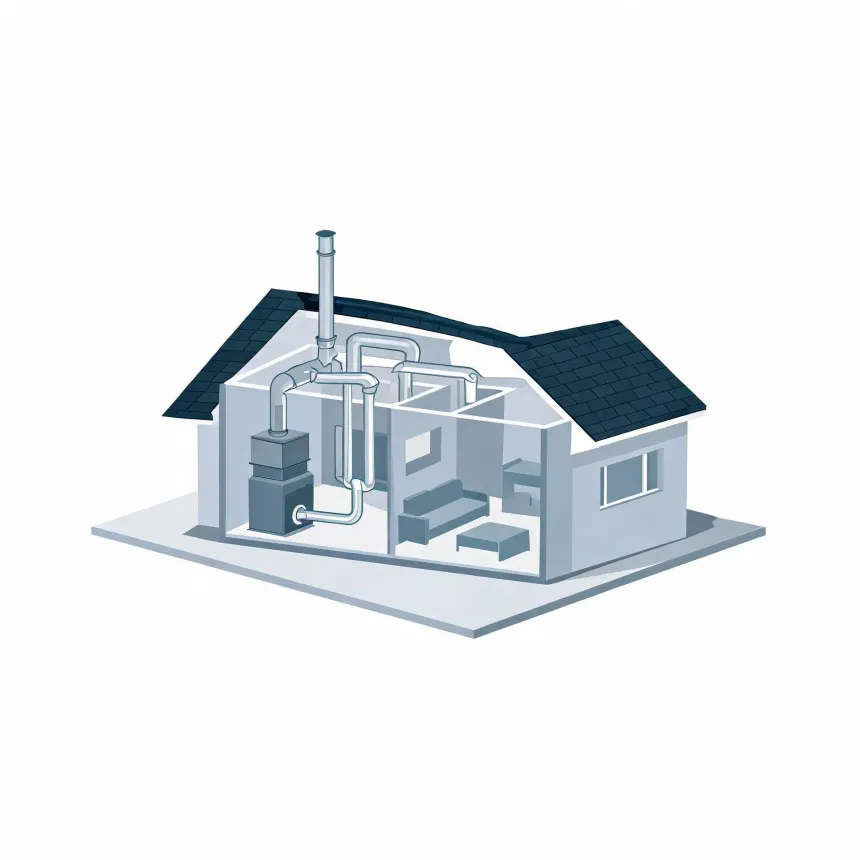
Isometric illustration of a cutaway single-story house showing a gray furnace unit, connected ductwork, and a vertical flue extending above the dark shingled roof.
Your furnace works hardest from November through February.

NOAA nClimDiv, 1991–2020 normals

Furnaces here only run about five months a year, November through March.

A furnace with that little work to do doesn't need to be the top efficiency model on the lot.

Cheap power here means the payback math changes

Climate zone 3A
Heat runs November through March
Winter nights average 32°F
Most Homes Here Run on Electric HeatElectricity heats 62.3% of occupied homes in Carter County, gas a distant second at 32.2%

November is when heat goes on here, so November is also when a dead furnace is worst. Get the replacement done in October and nobody is standing in a cold utility room waiting on a part. A contractor with no emergency on the clock can take the time to size the unit right and check the vent and gas line without rushing. Wait until the first cold snap and you're one of a dozen calls that week, hoping someone has your model in stock. October gives you the slow version of this job instead of the fast one.

Pick reliable, not top of the line

It won't be worked hard here, so pick a reliable system that fits. You don't need the top efficiency model.

Find a contractor
A man in a dark cap, gray long-sleeve shirt and brown work pants climbs porch steps toward a navy front door, carrying a canvas tool tote with tools in its pockets, beside a potted evergreen shrub in a blue planter.
A gas furnace with attached ductwork, gas piping, and condensate lines installed in a concrete-block basement.

Taking Out the Old Furnace

Whoever installs the new furnace will disconnect the old one from the gas line, the vent, the ducts, and the power, then haul it out whole or in pieces depending on the closet or utility room it's sitting in. If it's a gas furnace, that gas line gets capped off safely, not just left loose. The old vent connection needs checking too, since a new furnace sometimes vents differently than the one it's replacing, and that pipe can't just be abandoned halfway. Ductwork usually gets reused, but the plenum connection at the top of the furnace often needs some rework to fit the new unit's dimensions. None of this is optional cleanup. A furnace left half disconnected is a gas leak risk or a carbon monoxide risk, and a contractor doing the job right treats the teardown with the same care as the install.

What the rating actually measures

The efficiency rating on a furnace tells you how much of the fuel it burns turns into heat in the house, and how much goes out the flue. A higher rated furnace squeezes more heat out of the same fuel. It says nothing about how big the furnace is or whether it fits the space, and it doesn't tell you how long the unit will last.
Why a lower rating still does the job

A furnace with a lower rating isn't a lesser machine, it just gives up more heat out the exhaust instead of into the ducts. On a system that doesn't run many months of the year, that difference shows up less, because there are fewer hours of runtime for the gap to add up. Pick based on the fuel you're heating with and how the house is set up, not just the number on the label.

A furnace that's too big for the house cycles on, dumps a blast of heat, and shuts off again before it ever settles into a steady burn. That short cycling is hard on the heat exchanger and the igniter, and it leaves rooms feeling uneven even though the system is working. Too small, and it runs long stretches without catching up, straining to hold the temperature on the coldest nights. Getting the size right isn't a guess off the old unit's label. It's worked out from a heat loss calculation that looks at the square footage, the windows, the insulation, and how the ductwork moves air through the house. Done right, the furnace matches the house, not the other way around.

Any furnace installed here has to meet zone 3A rules under the 2021 energy code, since Carter County falls into that climate zone. For a gas furnace, the federal floor is 80 percent efficiency, meaning at least 80 cents of every dollar of fuel has to become heat in the house rather than exhaust out the flue. That requirement tightens later on. Furnaces built on or after December 18, 2028 will have to hit 95 percent, up from the current 80. A furnace bought and installed now falls under the current rule, not the future one. There's also a federal tax credit available for qualifying high-efficiency equipment, worth checking into if you're deciding between a unit that just clears the minimum and one built to the higher standard ahead of schedule.