





A gray forced-air furnace with ductwork stands in an unfinished concrete basement surrounded by storage items and clutter.

Furnace Installation in Broken Arrow, OK

Tell us about the job

Takes about a minute. No obligation.

New system or replacementFurnace or heatingWagoner County, OK
Step 1 of 2

What ZIP code is the job in?

Taking out the old furnace is part of the job, not an extra step tacked on. The installer disconnects the gas line, the electrical, and the venting, then removes the unit whole or in pieces depending on where it sits. If the old furnace vented through a chimney liner, that liner may no longer be needed once the new system is in, and the installer will tell you whether it has to come out or gets capped off. The same goes for the old thermostat wiring and the return plenum, both of which sometimes get reused and sometimes don't fit the new unit's specs. A good installer checks the ductwork while the old furnace is out, since that's the easiest time to spot a cracked seam or a return that was always too small. Hauling away the old unit is standard practice. You shouldn't be left with a furnace sitting in the garage.

7 months
October through April, your furnace is on duty
30°F
the average winter night it heats against
60%
of homes here heat with gas, so most furnaces here burn gas
80% AFUE
the federal minimum any new unit must meet
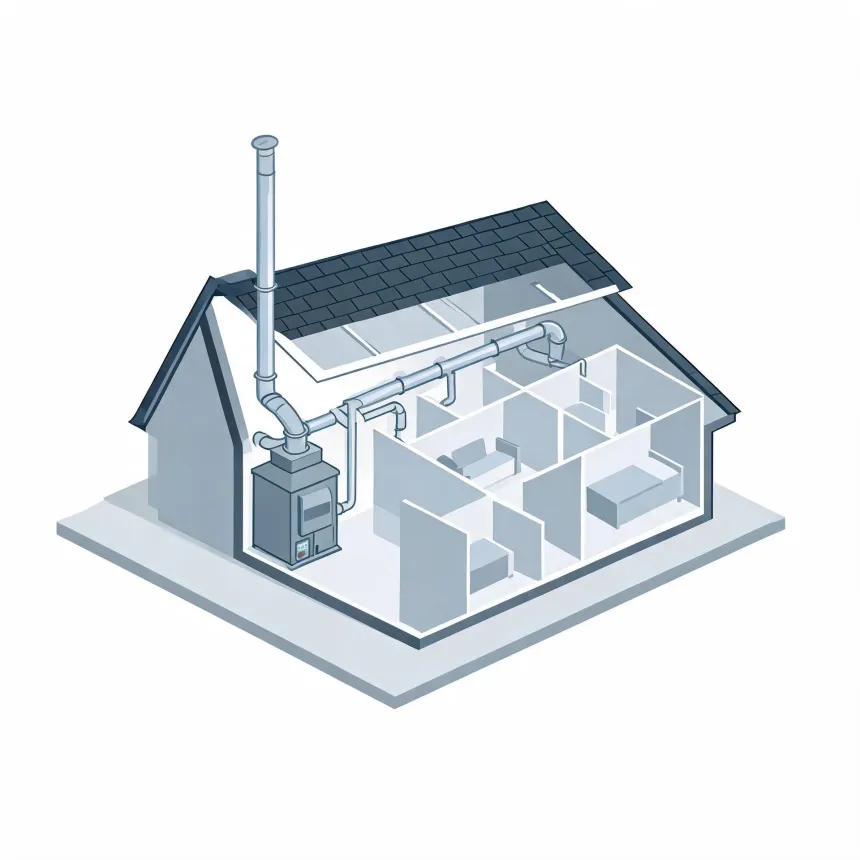
Isometric cutaway illustration of a house showing interior rooms with furniture, a furnace unit with a tall flue pipe outside, and ductwork running through the attic.
Your furnace works hardest from November through March.

NOAA nClimDiv, 1991–2020 normals

Gas heats close to 6 in 10 homes in Wagoner County.

Replacing gas with gas keeps the new furnace matched to the line and venting already in place.

Seven months of heat start in October. Get the new furnace in before then.

Heat runs October through April
Climate zone 3A
Winter nights average 30°F
A furnace that doesn't work hard hereHeat runs October through April, with winter nights averaging 30°F.

Natural gas ran $13.54 per million Btu across Oklahoma homes in 2024, well below what a lot of the country pays. That changes the math on which furnace to buy. A high-efficiency model with a modulating gas valve costs more up front, and with gas this cheap, it takes longer for the lower bills to make up the difference. Reliability is worth more than squeezing out another few points of efficiency. Pick the furnace that fits your ductwork and your gas line, and ask the installer where the payback actually lands before you pay more for the top-tier model.

What a new furnace here has to meet

Zone 3A sets 80 percent AFUE as the floor for a new furnace here, and that holds until December 2028, when the minimum jumps to 95 percent. A furnace bought today only has to clear the lower bar. There's also a federal tax credit for qualifying high-efficiency equipment, worth checking against whatever unit you're considering before you decide which one to install.

Find a contractor
A man in a cap, navy long-sleeve shirt and tan work pants carries a canvas tool bag up steps toward a dark front door, with a potted shrub beside the porch.
A gas furnace with attached ductwork, gas piping, and condensate lines installed in a concrete-block basement.

The size on the nameplate isn't a guess

A furnace that's sized right spends most of winter running well under what it's capable of. The number on the nameplate is worked out room by room, an installer adding up how much heat escapes through the walls, windows, and ceiling, then sizing the unit to replace that loss on the coldest night of the year. That's the one day it runs near full output. Every milder night it throttles back and runs long, steady cycles instead. A contractor who skips that math and just matches the old unit, or goes by square footage, is guessing. Too big and the furnace short cycles, blasting the house warm and shutting off before it's heated evenly, which wears out the heat exchanger and the igniter faster. Too small and it runs flat out even on an average night trying to keep up, which wears it out a different way and still leaves rooms far from the ducts cold. Getting the size right is what lets the furnace sit well below its limit most of the season and only work hard when the weather actually asks it to.

AFUE is the furnace, not the system

The percentage on the label is how much of the fuel burned turns into heat in the house, the rest goes out the flue. It only describes the furnace itself. How warm the house ends up and how the bills look also depend on the ductwork, the thermostat settings, and how tight the house holds that heat once it's made.

The number holds up over time

A furnace doesn't lose efficiency the way a car loses mileage with age. Barring a part that fails, a furnace built to run at a given AFUE keeps running at it for as long as it's in the house. What changes the bills year to year is usually a dirty filter, a clogged burner, or a blower that needs service, not the rating fading.

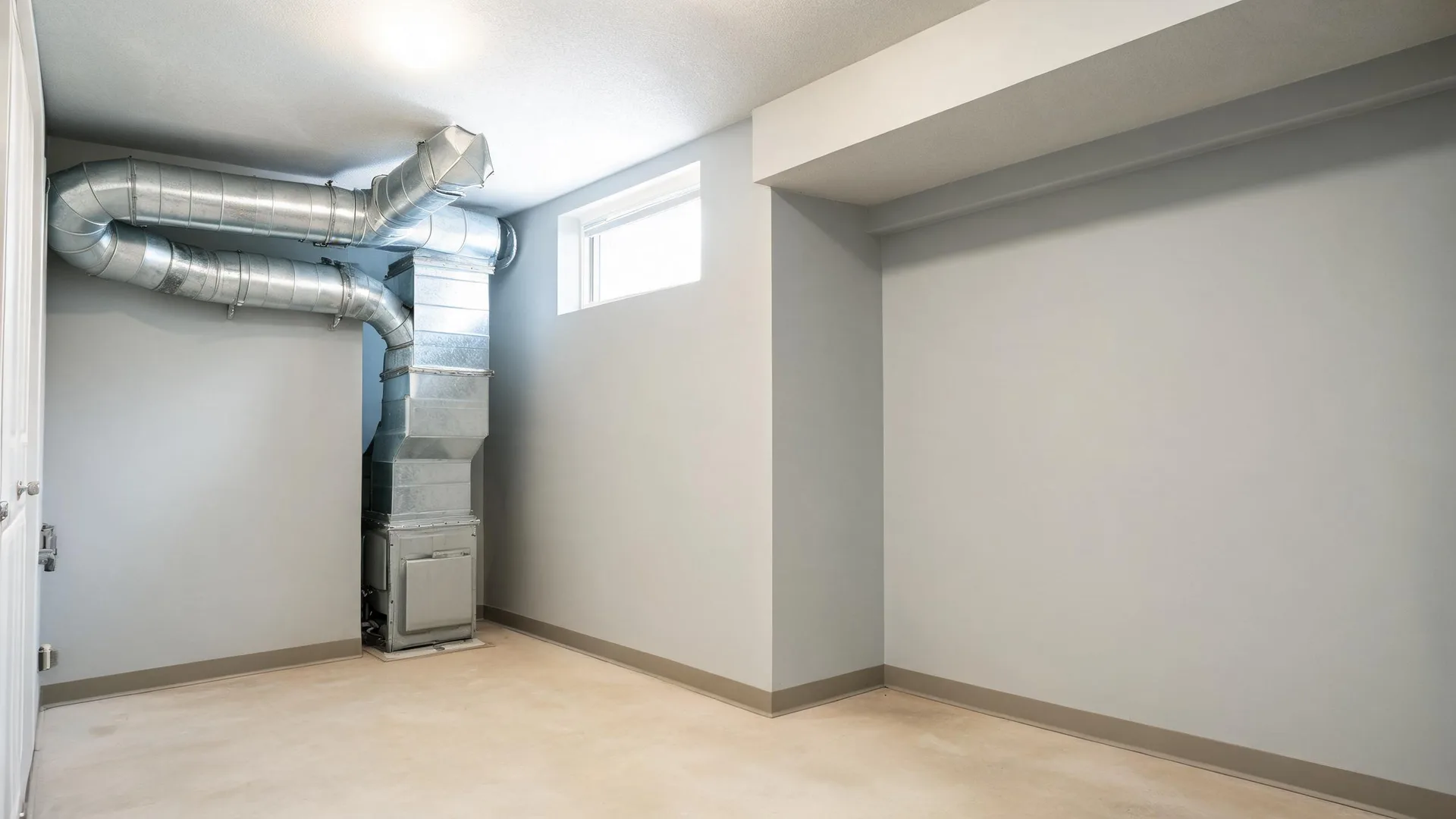
An empty unfinished basement containing a forced-air furnace with overhead ductwork, exposed ceiling joists, and a single hanging light bulb.

A high-efficiency gas furnace would save about $90 a year to run in Wagoner County compared with a gas furnace.

  • A high-efficiency gas furnace$470 a year
  • A gas furnace$560 a year

Estimates for a typical Wagoner County home, from EIA household energy data, Oklahoma fuel prices and NOAA climate normals. Your home will differ.

By the time the new furnace goes in, the old one is already out and the opening is ready. The installer sets the unit, runs the flue or vent pipe, and connects the gas line before touching the electrical. Each gas joint gets tested for leaks before anything is fired up, not after. The ductwork ties into the plenum, and any gap there gets sealed, since air that leaks out at the plenum never makes it to a room. Once the furnace is wired and connected, the installer fires it and checks the flame, the gas pressure, and the temperature rise against what the manufacturer specs for that model. A furnace installed right gets run through a full heating cycle before the installer leaves, so a bad sensor or a loose connection shows up that afternoon instead of the first cold night it has to work for real.