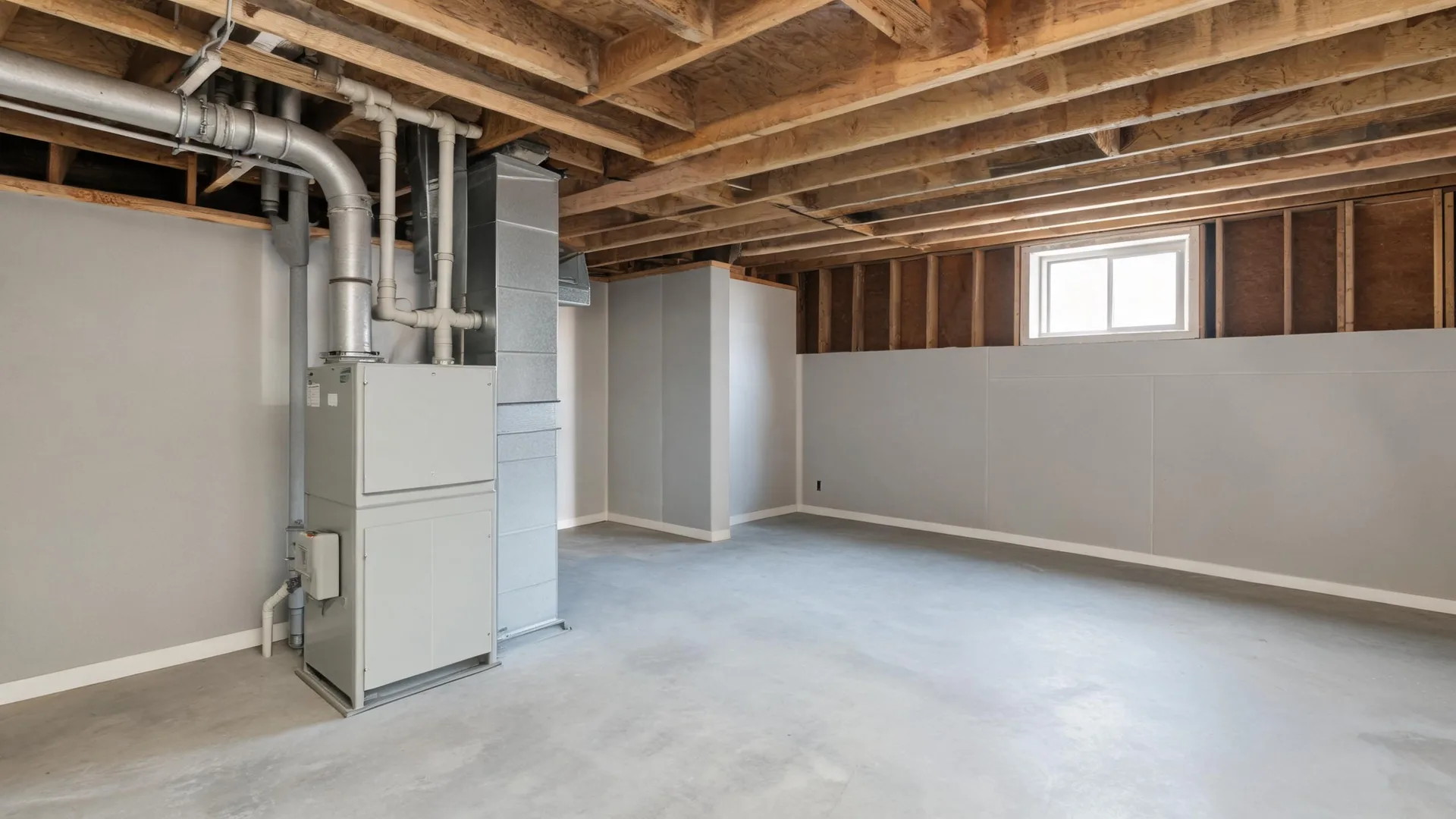
An unfinished basement containing a metal furnace with ductwork, exposed wooden joists on the ceiling, cardboard boxes, a coiled cable, and a single hanging incandescent bulb.

Furnace Installation in Claremore, OK

Tell us about the job

Takes about a minute. No obligation.

New system or replacementFurnace or heatingRogers County, OK
Step 1 of 2

What ZIP code is the job in?

The old furnace gets disconnected and hauled off

A furnace install isn't just setting the new unit in place. The gas line, vent pipe and ductwork all get disconnected from the old furnace first, and the old cabinet comes out before the new one goes in. The installer hauls away the old unit when the job is done, so there's nothing left for the homeowner to deal with.


The new furnace may not hook up the same way

Venting and ductwork sized for the old furnace don't always match what the new one needs, especially if the new unit has a different efficiency rating. An installer checks the vent pipe and duct connections during the swap, not just the furnace itself, because a mismatch there affects how the whole system runs.

7 months
October through April, your furnace is on duty
29°F
the average winter night it heats against
56%
of homes here heat with gas, so most furnaces here burn gas
80% AFUE
the federal minimum any new unit must meet
Isometric cutaway illustration of a single-story house with a dark shingled roof, showing interior rooms with furniture, ductwork, a flue pipe, and a furnace unit.
Your furnace works hardest from November through March.

NOAA nClimDiv, 1991–2020 normals

Gas heats 55.9% of homes in Rogers County, more than electric and propane combined.

Most furnace replacements here are gas-to-gas, so the gas line and vent pipe are usually already in place.

September is the month to replace it, before heat starts in October

Heat runs October through April
Winter nights average 29°F
10 winter storms from 2015 to 2024

Claremore sits in climate zone 3A, with mild winters and summers that run long and humid. Any furnace installed today has to hit 80.0 percent AFUE, the federal minimum for non-weatherized gas furnaces. That minimum jumps to 95.0 percent in a few years, so some of the furnaces sold now won't be on the market much longer. A mild winter doesn't change the rule. The furnace still has to meet the same federal minimum as one going into a house up north.

Pick the furnace that will keep running, not the one with the lowest bill

Gas here runs $13.54 per million Btu, cheap enough that a high-efficiency model takes a long time to earn back the extra cost. With outages a real risk in Claremore, a furnace that starts reliably when the power comes back matters more than squeezing out another point of AFUE.

Find a contractor
A man in a dark long-sleeve shirt and brown work pants, seen from behind, carries a worn canvas tool bag as he steps up porch stairs toward a navy blue front door of a light gray clapboard house, with a potted shrub beside the entry.
A gray residential gas furnace installed in an unfinished basement, surrounded by ductwork, a metal flue pipe, and a gas supply line.

The furnace is one line on the bill, the venting and ductwork are the rest

What drives the cost of an install isn't the furnace sitting in the showroom. It's everything that has to change to put it in. A straight swap, same fuel, same venting, same duct layout, is the cheapest version of this job because the installer isn't rerouting anything. Add a vent pipe that has to be resized, a duct trunk that needs modifying to match the new unit's airflow, or a gas line that needs upsizing, and the labor climbs before the furnace itself is even part of the bill. Efficiency rating plays into it too. A higher-AFUE furnace needs venting built for cooler exhaust, and if that venting isn't already in place, installing it is part of the job, not an extra. The furnace's size matters as much as its rating. An installer sizes the unit to the house with a load calculation, not by matching the old tonnage, and getting that step right is what keeps the new furnace from running longer or shorter than it should for years afterward.

AFUE tells you what burns and what escapes

The AFUE rating on the label is the share of gas that turns into heat in the house over a season. The rest goes out the vent pipe as exhaust. A furnace with a lower rating sends more of that heat outside unused. A furnace with a higher rating pulls more of it into the house before the exhaust leaves, which is why those models need a second heat exchanger to pull the extra heat out.

A higher rating changes what the installer hooks up

The rating is not just a number for comparing models. It decides what kind of vent pipe the furnace needs and whether it can tie into the venting already there. A furnace with a lower rating usually vents the way the old one did. A furnace with a higher rating vents cooler exhaust and needs venting that can handle it, which the installer has to plan for before the new unit goes in, not after.

A gas furnace with sheet-metal ductwork and PVC pipes installed in an unfinished basement.

A high-efficiency gas furnace would save about $90 a year to run in Rogers County compared with a gas furnace.

  • A high-efficiency gas furnace$500 a year
  • A gas furnace$590 a year

Estimates for a typical Rogers County home, from EIA household energy data, Oklahoma fuel prices and NOAA climate normals. Your home will differ.

Install day starts with a walkthrough, not a wrench. The installer confirms the furnace and coil match, checks the return and supply trunks, and marks where the new vent pipe will run before anything gets disconnected. Once the old furnace is out, the gas line gets pressure tested before it's reconnected to the new one, since a leak at the fitting won't show up on its own. The new furnace gets set, leveled, and connected to the ductwork, gas line and vent pipe, then the electrical and thermostat wiring gets hooked up. Before anyone leaves, the furnace runs through a full cycle so the installer can check the flame, the gas pressure, and the temperature rise across the heat exchanger. That last check is what tells them the furnace is actually sized and set up right, not just that it turns on.