






A gray forced-air furnace with metal ductwork stands in an unfinished basement with exposed wooden joists, concrete walls, and a single hanging light bulb.

Furnace Installation in Kingfisher, OK

Tell us about the job

Takes about a minute. No obligation.

New system or replacementFurnace or heatingKingfisher County, OK
Step 1 of 2

What ZIP code is the job in?

Kingfisher County saw 124 severe weather events between 2015 and 2024. Damaging wind came through 50 times in that span, hail 52 times, and 13 tornadoes touched down. Winter storms with heavy snow and ice hit 9 times. None of that is rare weather for here, it's the normal run of a decade. A quarter of Oklahoma households went at least a full day without power in 2024. A new furnace has to be chosen and set up with that in mind, not just sized for a cold morning.

7 months
October through April, your furnace is on duty
28°F
the average winter night it heats against
80% AFUE
the federal minimum any new unit must meet
Isometric grayscale illustration of a cutaway single-story house showing interior rooms with furniture, a furnace unit connected to ductwork and a tall vertical flue pipe extending above the roof.
Your furnace works hardest from November through March.

NOAA nClimDiv, 1991–2020 normals

Natural gas ran Oklahoma homes $13.54 per million Btu in 2024.

A pricier high-efficiency furnace takes longer to earn back here, so how it holds up matters more than the rating on the box.

Seven months of heat riding on one furnace, replaced before October asks anything of it

Heat runs October through April
Winter nights average 28°F
Climate zone 3A
Most of this county heats with gasGas heats 45.5% of homes here, electricity 36.0%, propane 17.0%

Kingfisher County falls in climate zone 3A, and federal rules set the floor for any furnace installed here. Furnaces built from November 2015 on have to turn at least 80 percent of the gas they burn into heat. That floor rises to 95 percent for furnaces built from December 2028 on, so the market is already moving toward units that waste less gas per winter. A homeowner installing now can still choose above the current minimum. A federal tax credit is available for qualifying high-efficiency equipment, worth checking against whatever unit ends up on the quote.

Plan the install for the power cuts and storms this county already gets

Ask where the new furnace and any outdoor equipment will sit, and what shields them from wind and hail. Ask what happens to heat and hot water if the power drops for a day. Both are worth settling at installation, while the system is still being planned, not after a storm.

Find a contractor
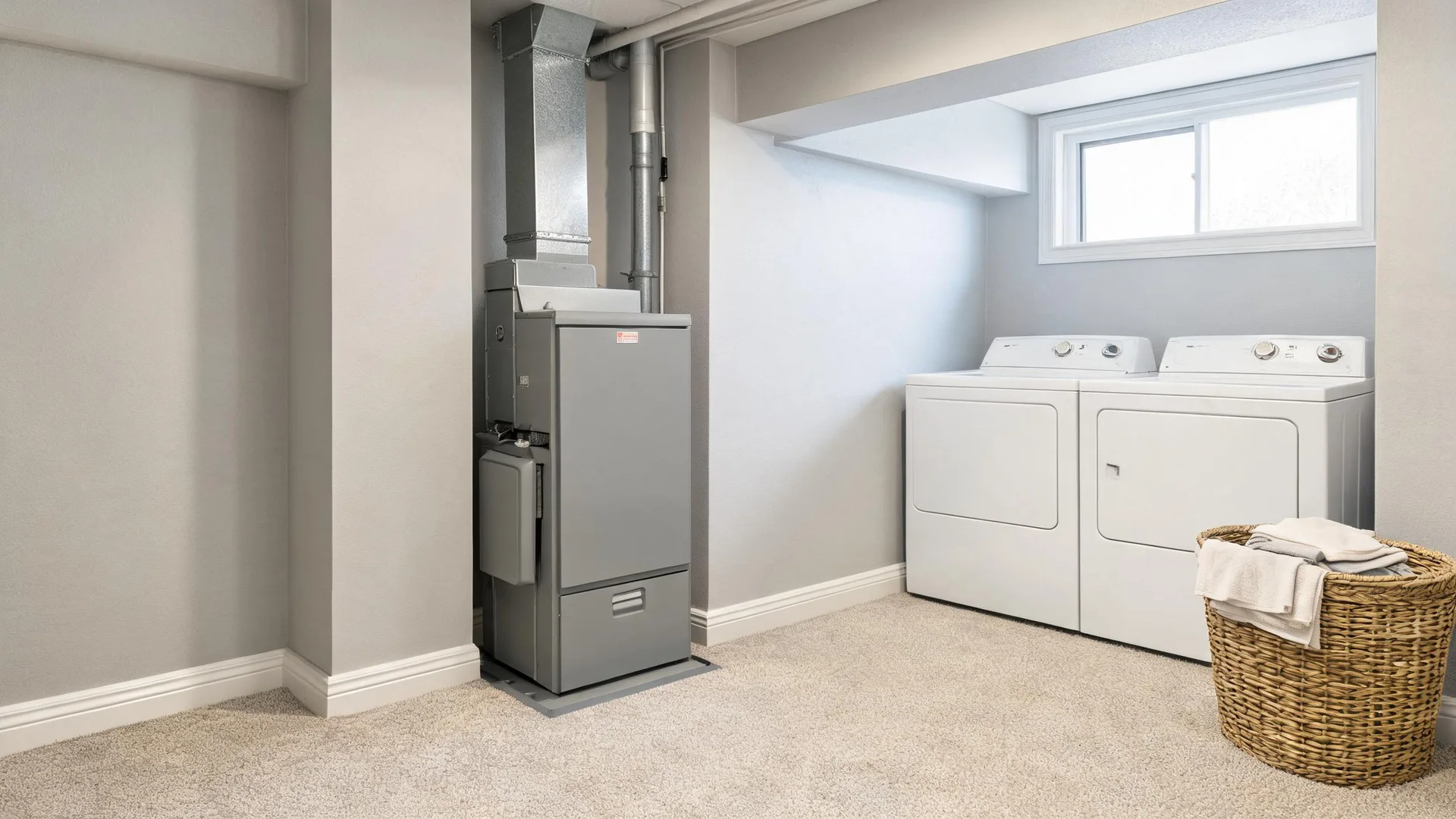
A gray residential gas furnace installed in an unfinished basement, connected to sheet-metal ductwork and PVC pipes.

What's under the price of a new furnace

A furnace installation isn't one price for one box. The furnace itself is one line. Then there's the ductwork it ties into, and if that ductwork is the wrong size or leaking at the joints, a contractor has to account for that before the new unit ever gets set. The venting matters too. A high-efficiency furnace vents differently than an older one, often needing new pipe run through a wall or the roof, where a standard-efficiency unit can sometimes reuse what's already there. The gas line gets checked for whether it can feed the new furnace at the right pressure. The electrical connection and the thermostat wiring get looked at. If the ductwork, venting and gas line are all in good shape already, the job is simpler. If they're not, each one adds work. None of that shows up on the sticker price of the furnace, only on the quote for installing it.

Sizing isn't a guess off square footage

A furnace gets sized by working out how much heat a house loses on the coldest days, counting the walls, the windows, the ceiling, and how they're insulated. Two houses the same size can need different furnaces because one loses heat faster than the other. A contractor runs that calculation room by room rather than reading a number off the old unit.

Wrong size costs you either way

A furnace too big for the house turns on, blasts heat, and shuts off again before it's run long enough to warm things evenly, which wears out the burner and the blower faster and leaves rooms uneven. One too small never catches up on the coldest days and runs nearly nonstop trying. The right size runs in long, steady cycles that actually hold a temperature.

An unfinished concrete basement containing a gas furnace with sheet-metal ductwork, utility shelving, and exposed overhead joists.

A high-efficiency gas furnace would save about $90 a year to run in Kingfisher County compared with a gas furnace.

  • A high-efficiency gas furnace$500 a year
  • A gas furnace$590 a year

Estimates for a typical Kingfisher County home, from EIA household energy data, Oklahoma fuel prices and NOAA climate normals. Your home will differ.

Cheap gas here means a high-efficiency furnace takes longer to pay for itself through lower bills. That changes what's worth paying for on the quote. Instead of stretching the budget for the highest efficiency rating available, put that money toward a unit with a strong warranty and a contractor who sets it up right, properly sized and vented, with the ductwork sealed. A furnace that holds up through the storms this county gets, year after year, is worth more here than a few extra points of efficiency on paper. Ask the contractor what's covered if a part fails in year three or year eight, not just what the furnace costs to run.