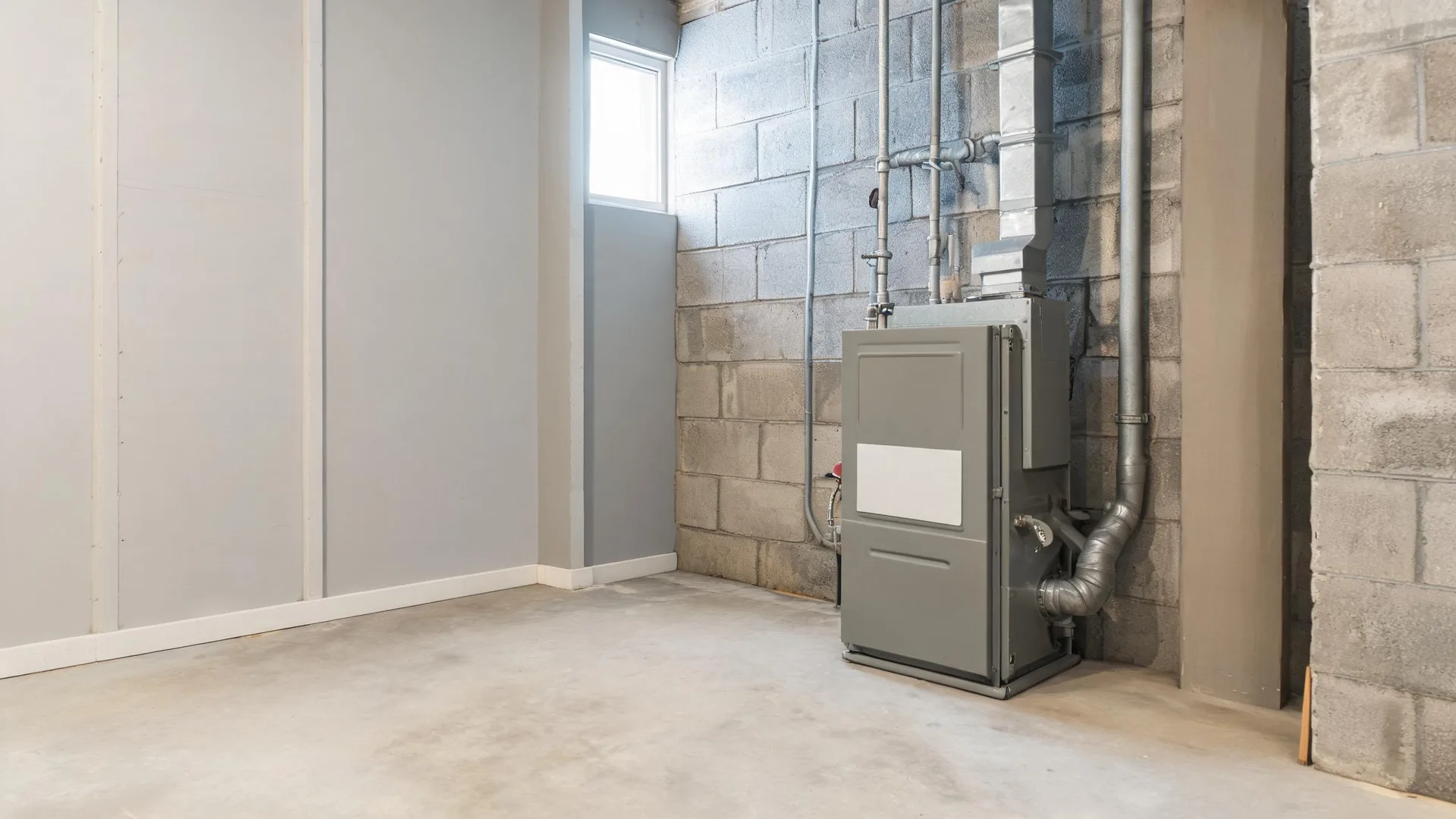
An unfinished basement containing a forced-air furnace with metal ductwork, exposed wooden ceiling joists, a hanging Edison bulb, and bare concrete floors.

Furnace Installation in Muskogee, OK

Tell us about the job

Takes about a minute. No obligation.

New system or replacementFurnace or heatingMuskogee County, OK
Step 1 of 2

What ZIP code is the job in?

Muskogee County sees its share of storms

Muskogee County logged 135 severe weather events between 2015 and 2024. That includes 73 damaging wind events, 36 hail events, 16 tornadoes and 10 winter storms. A quarter of Oklahoma households went at least a full day without power in 2024.

A furnace install has to account for that

A new furnace and whatever sits outside with it are going into a place where wind, hail and ice are a real part of the picture, not a rare one. An outage knocks out an electric furnace along with everything else running on power. Where the equipment goes and what backs it up are worth deciding before the install, not after a storm.

7 months
October through April, your furnace is on duty
31°F
the average winter night it heats against
80% AFUE
the federal minimum any new unit must meet
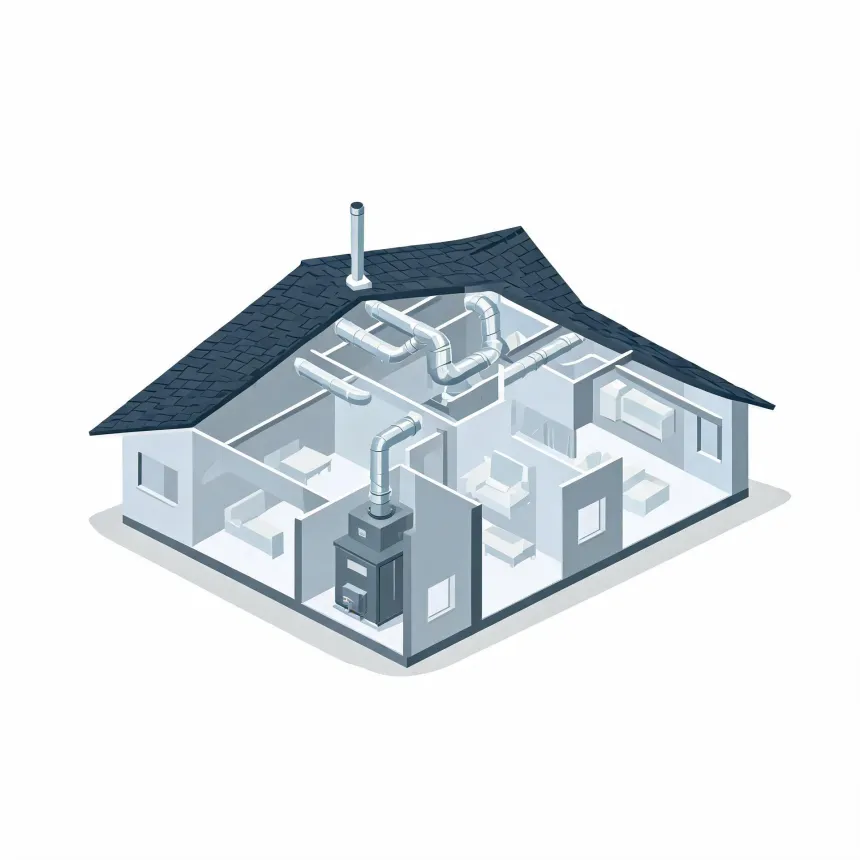
Isometric cutaway illustration of a single-story house showing interior rooms with furniture, a metal ductwork network, and a furnace unit connected to a vertical flue through the dark shingled roof.
Your furnace works hardest from November through March.

NOAA nClimDiv, 1991–2020 normals

More than half the homes in Muskogee County heat with electricity.

An electric furnace is the fit most installers here will recommend first.

Cheap power here changes the math on a furnace

Heat runs October through April
Winter nights average 31°F
10 winter storms from 2015 to 2024
Get it done before OctoberFurnaces here run seven months a year, October through April.

Muskogee County falls under zone 3A in the 2021 energy code, a warm zone with a short, mild winter. Any gas furnace installed here still has to hit a federal efficiency floor regardless of climate. Furnaces built from November 2015 on have to turn at least 80 percent of their gas into heat over the winter. That floor jumps to 95 percent for units built from December 2028 on, so a furnace bought now and one bought in a few years won't be held to the same number. If gas is part of the conversation alongside electric, this is the baseline any unit on the table has to clear.

Decide where it goes before the storm decides for you

Wind, hail and outages are part of the picture here. Where the new furnace and its outdoor equipment sit, what protects them, and how you'll manage an outage are worth settling at install time. Once it's in, those decisions are a lot harder to undo.

Find a contractor
A gas furnace with attached ductwork, gas piping, and condensate lines installed in a concrete-block basement.

Seven months of work, then a long rest

Seven months of heat a year, October through April, is a moderate workload for a furnace. The rest of the year it sits idle, and that break matters more than any single cold snap. A furnace that cycles on and off for part of the year, then rests, wears a lot slower than one running nearly year round further north. When something does go wrong here, age or a skipped filter change is usually behind it, not the system being run into the ground. That's worth knowing when you're picking a unit. You don't need the most heavy-duty furnace on the lot to get a long life out of it here.

Ask what it takes to start and run without power

A furnace needs electricity to run even on gas, since the control board, the inducer motor and the blower all draw power. Ask what the unit needs to fire up, what it draws to keep running, and whether it can run on a generator or battery backup without special work. Some furnaces need a clean, steady power supply to start reliably. That's worth knowing before an outage, not during one.

Ask how the size was worked out

A furnace that's too big for the house short cycles, turning on and off before it heats evenly, which wears the heat exchanger and the igniter faster. One that's too small runs long stretches and never quite keeps up on the coldest days. The right size comes from a load calculation on the house itself, not a guess based on the old unit or square footage alone. Ask to see that number before you agree to a size.

The efficiency rating on a furnace tells you how much of the gas you burn turns into heat in the house, and how much goes straight out the flue. A furnace rated higher at the start of the heating season costs more to buy and less to run every month after that. A lower rated unit costs less up front and more every month you run it. There's no single right answer here, it depends on how long you plan to stay in the house and how the numbers balance out over that time. Ask for the rating in writing before you sign anything, not just the sales pitch on efficiency. The number on the label is tested under set conditions, so it's a fair way to compare one furnace against another, even if your actual bill will depend on the house itself.

Electricity ran $35.86 per million Btu in Oklahoma in 2024. That's cheap enough that a higher efficiency rating takes longer to earn back its extra cost here than it would somewhere with pricier power. So don't pick a furnace on the efficiency number alone. Put more of the decision on whether it starts and runs on what backup power you have, and whether it's sized right for the house. Those two things matter more here than a few extra points of efficiency.