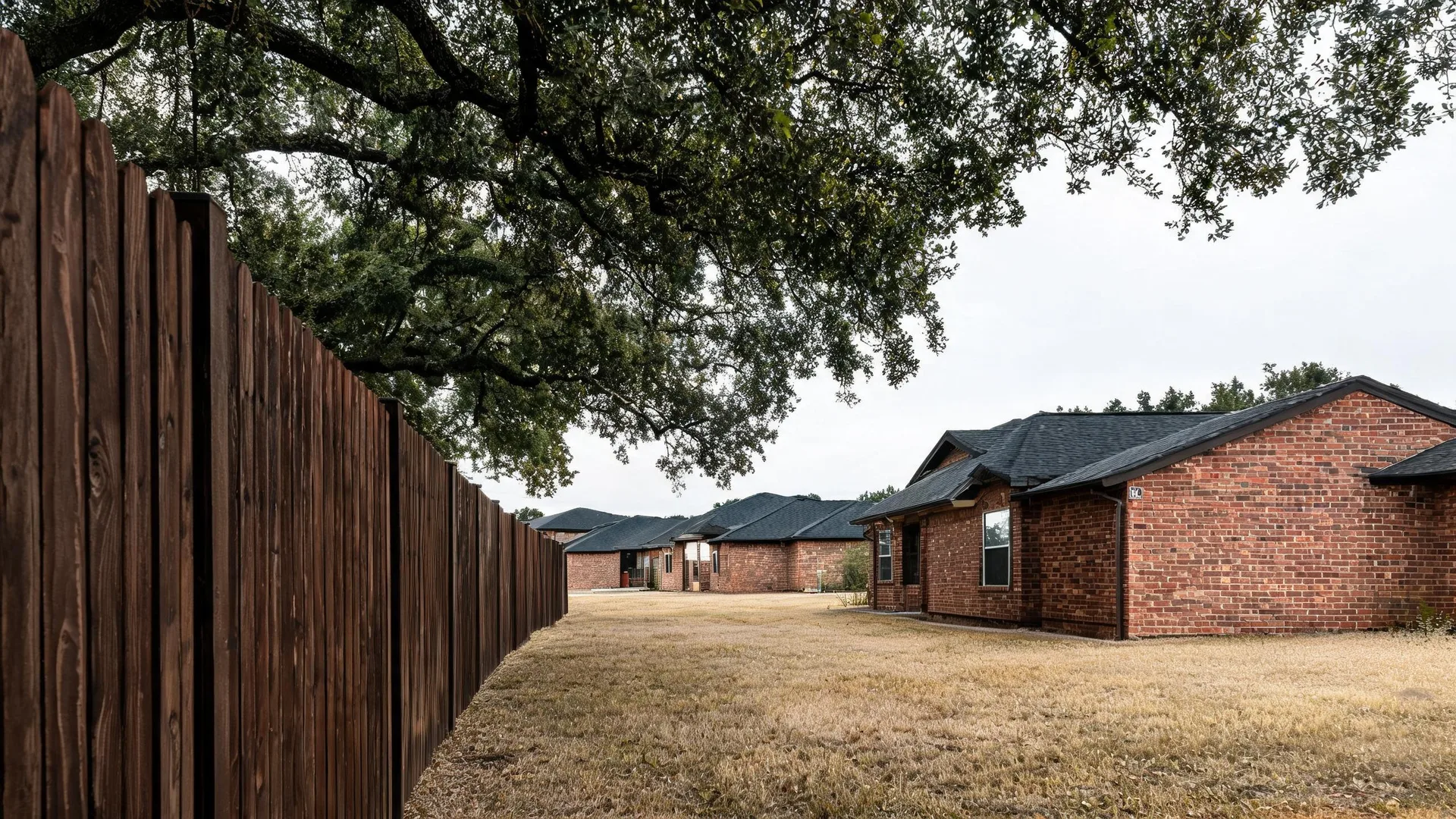
A tall wooden privacy fence runs along the left side of a dry grass lawn, with a row of single-story brick houses with dark shingled roofs on the right and oak branches overhead against an overcast sky.

Furnace Installation in Norman, OK

Tell us about the job

Takes about a minute. No obligation.

New system or replacementFurnace or heatingCleveland County, OK
Step 1 of 2

What ZIP code is the job in?

Cleveland County sees its share of storms

Cleveland County logged 481 severe weather events between 2015 and 2024, hail chief among them. Outdoor equipment here has to deal with that, so where the unit sits and what sits near it is worth planning for.

Power doesn't always come right back

A quarter of Oklahoma households went at least 24 hours without power in 2024. A furnace needs electricity to run even if it burns gas, so an outage that long means no heat until the power is back, not just a cold snap to wait out.

6 months
November through April, your furnace is on duty
30°F
the average winter night it heats against
56%
of homes here heat with gas, so most furnaces here burn gas
80% AFUE
the federal minimum any new unit must meet
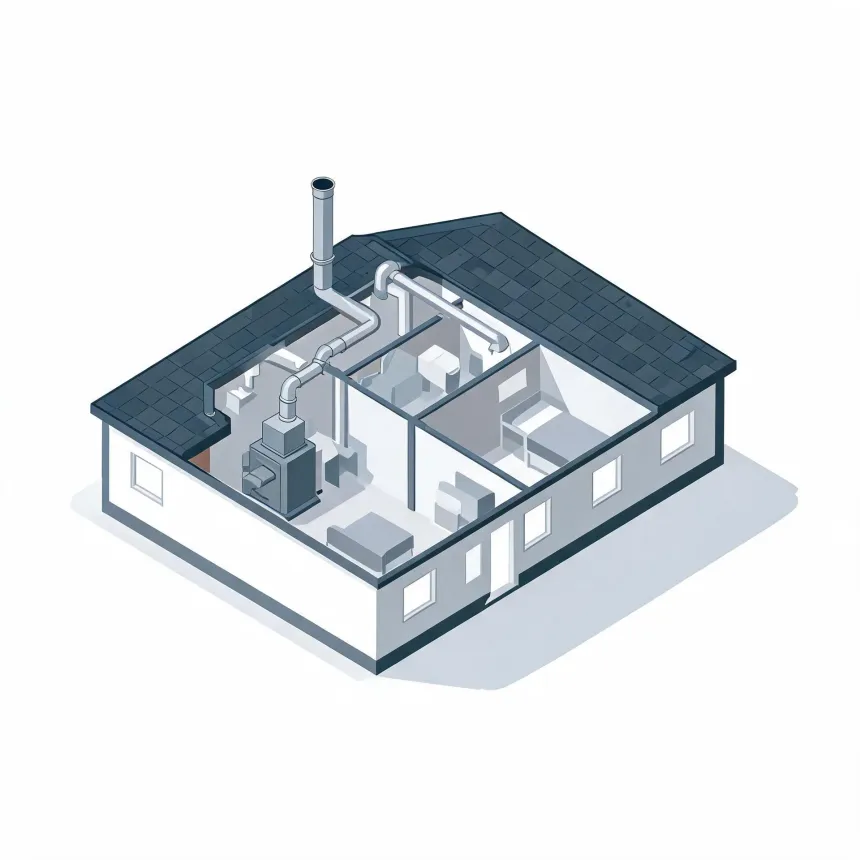
Isometric cutaway illustration of a single-story house with a dark shingled roof, showing interior rooms with furniture and a furnace connected to ductwork and a flue pipe extending above the roof.
Your furnace works hardest from November through March.

NOAA nClimDiv, 1991–2020 normals

Norman furnaces only run about six months a year, November through April.

A furnace that isn't worked year-round doesn't need to be the top of the line to hold up.

Gas here is cheap, so the payback on a high-efficiency furnace takes longer

Heat runs November through April
Winter nights average 30°F
10 winter storms from 2015 to 2024
Get it done before NovemberOctober is the last easy month, before Norman starts six straight months of heat

Any furnace installed in Cleveland County now has to hit at least 80 percent AFUE, the current federal minimum. That floor rises to 95 percent before the decade is out, but nothing you install today has to meet it. Zone 3A's winters are short and mild enough that a furnace at today's minimum still keeps up without running hard. A high-efficiency furnace may also qualify for a federal tax credit, worth checking before you decide what to install.

Most furnaces in Cleveland County run on gas

Gas heats 55.6% of homes here, so a gas furnace is the easy match if that's what your house is already set up for. Installing the same type keeps the gas line, the vent and the thermostat wiring doing the same job they already do.

Find a contractor
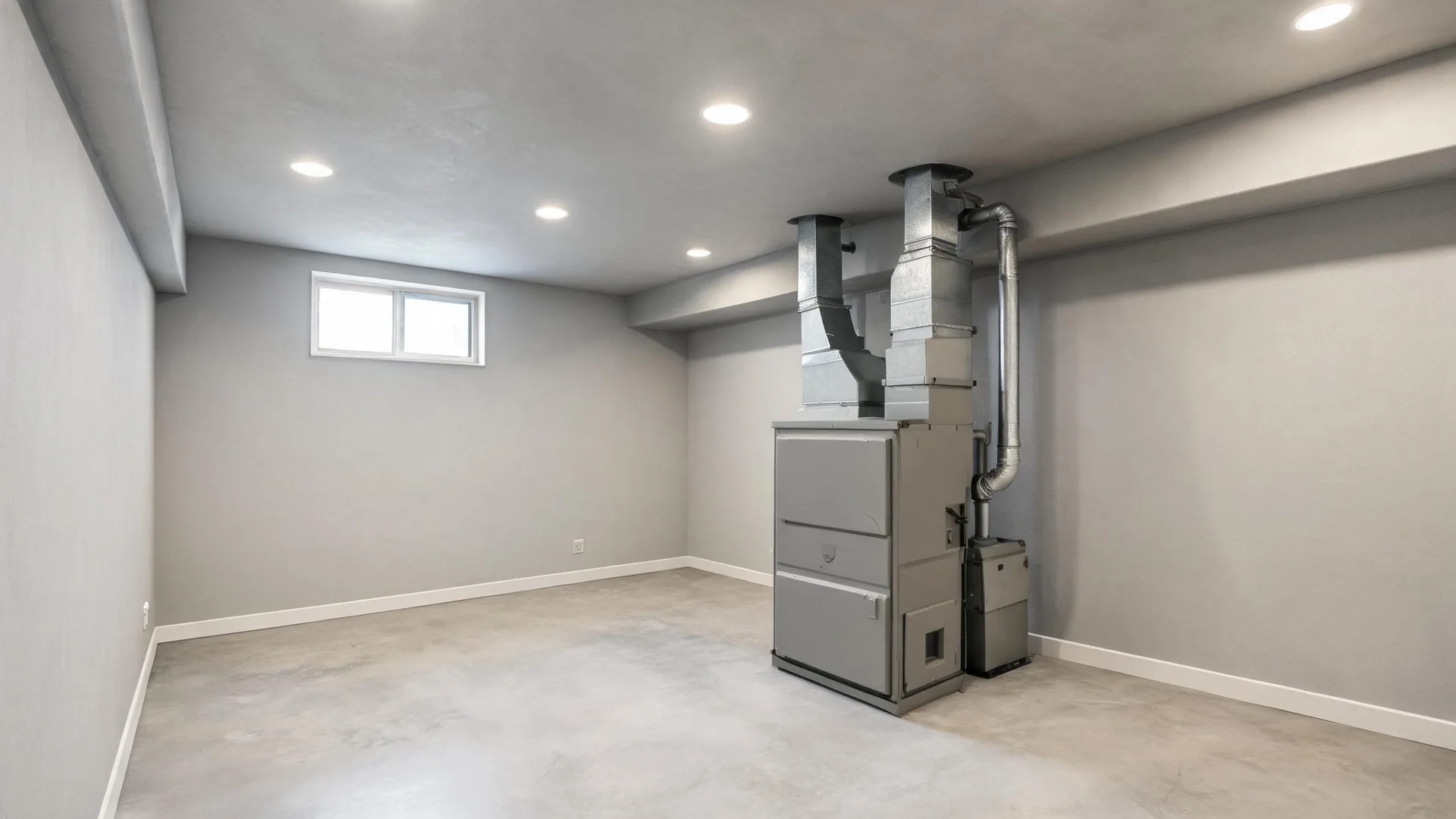
A gray residential gas furnace installed in an unfinished basement, connected to sheet-metal ductwork and PVC pipes.

Six months on, six months off

Six months of work a year is not much strain on a furnace, and that's one more reason not to overspend on this one. Pick a unit built to last through normal wear, sized right for your house, installed well. That gets you through November to April same as the top-tier model would.

AFUE is a fuel number, not a comfort number

The percentage on the label tells you how much of the gas burned turns into heat in the house, and how much goes out the flue. It says nothing about how evenly that heat spreads through the rooms or how quiet the unit runs. A furnace sized wrong or installed with leaky ducts can waste more heat after the fact than the rating ever promised.

The rating only pays you back through the gas meter

A higher AFUE burns less gas to make the same amount of heat. Whether that gap is worth paying for up front depends on the cost of gas and how many months the furnace runs, not on the number on the label. A furnace that's oversized and short cycles can cost more to run than a lower-rated one that's sized right and runs steady.

An unfinished basement featuring a grey forced-air furnace with metal ductwork, concrete block walls, exposed wooden joists, and a single hanging bare bulb.

A high-efficiency gas furnace would save about $80 a year to run in Cleveland County compared with a gas furnace.

  • A high-efficiency gas furnace$460 a year
  • A gas furnace$540 a year

Estimates for a typical Cleveland County home, from EIA household energy data, Oklahoma fuel prices and NOAA climate normals. Your home will differ.

A furnace swap is not a quick parts change. The old unit gets disconnected from the gas line, the vent and the return duct, then carried out, and the new one gets set in its place, leveled, and tied back in. The gas line gets pressure tested before anything gets fired up. The vent pipe matters as much as the furnace itself, since it has to be sized and sloped to carry exhaust out safely, and that often means replacing the vent even when the furnace alone would have fit the old one. Once it's connected, the furnace gets run through a full cycle while the tech checks the flame, the static pressure in the ducts, and the temperature rise across the unit. That last check is what tells you the furnace is burning clean and moving the right amount of air, not just that it turns on.