





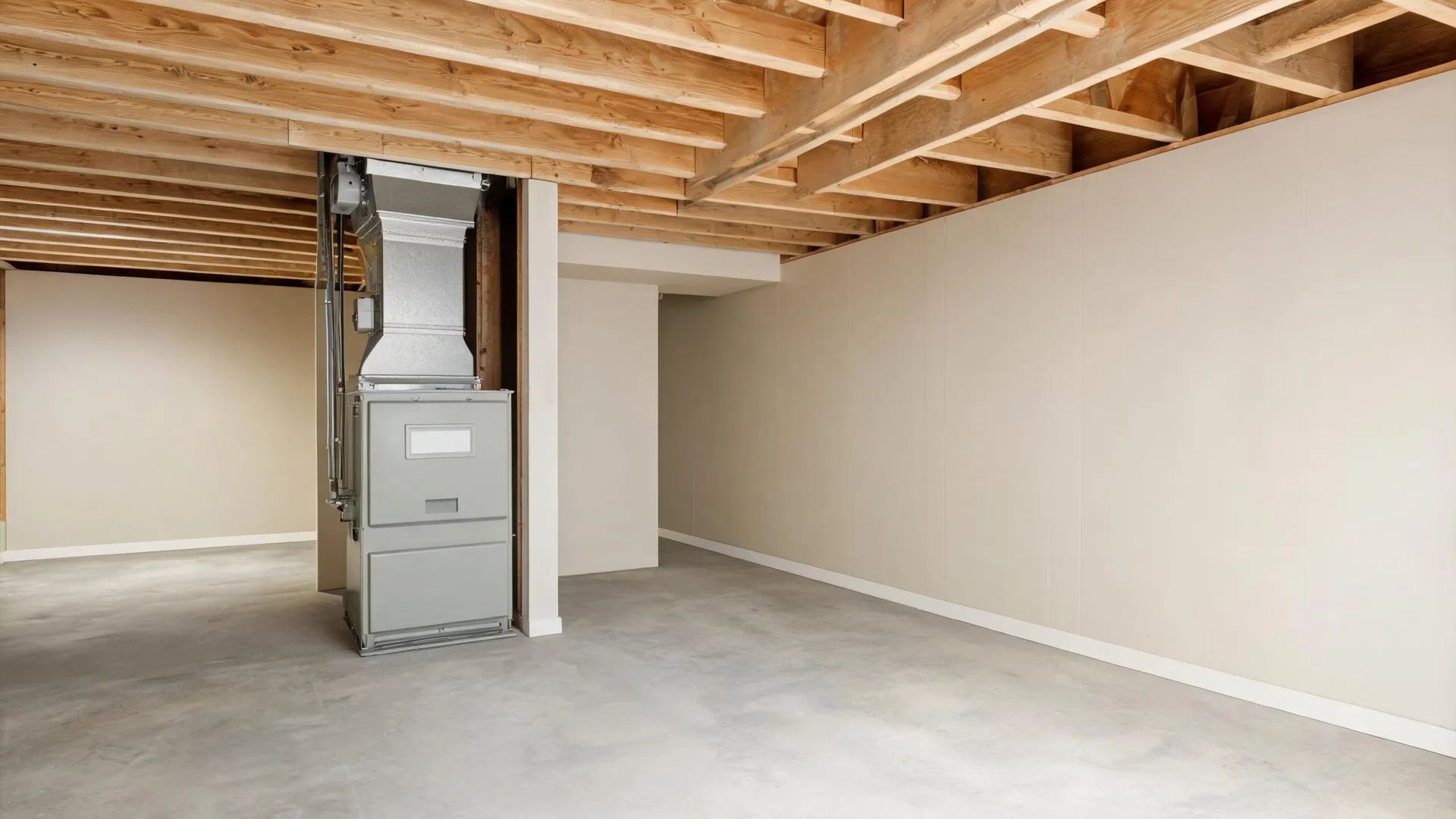
An unfinished concrete basement containing a gas furnace with sheet-metal ductwork, utility shelving, and exposed overhead joists.

Furnace Installation in Pryor Creek, OK

Tell us about the job

Takes about a minute. No obligation.

New system or replacementFurnace or heatingMayes County, OK
Step 1 of 2

What ZIP code is the job in?

Mayes County saw 200 severe weather events between 2015 and 2024. Damaging wind caused 99 of those, hail caused 65, and 27 tornadoes touched down in that same stretch. A new furnace sits through all of that, so the install matters as much as the unit itself. Statewide, a quarter of Oklahoma households went at least a full day without power in 2024. A furnace that can't run without power is a furnace you can't count on here.

7 months
October through April, your furnace is on duty
29°F
the average winter night it heats against
80% AFUE
the federal minimum any new unit must meet
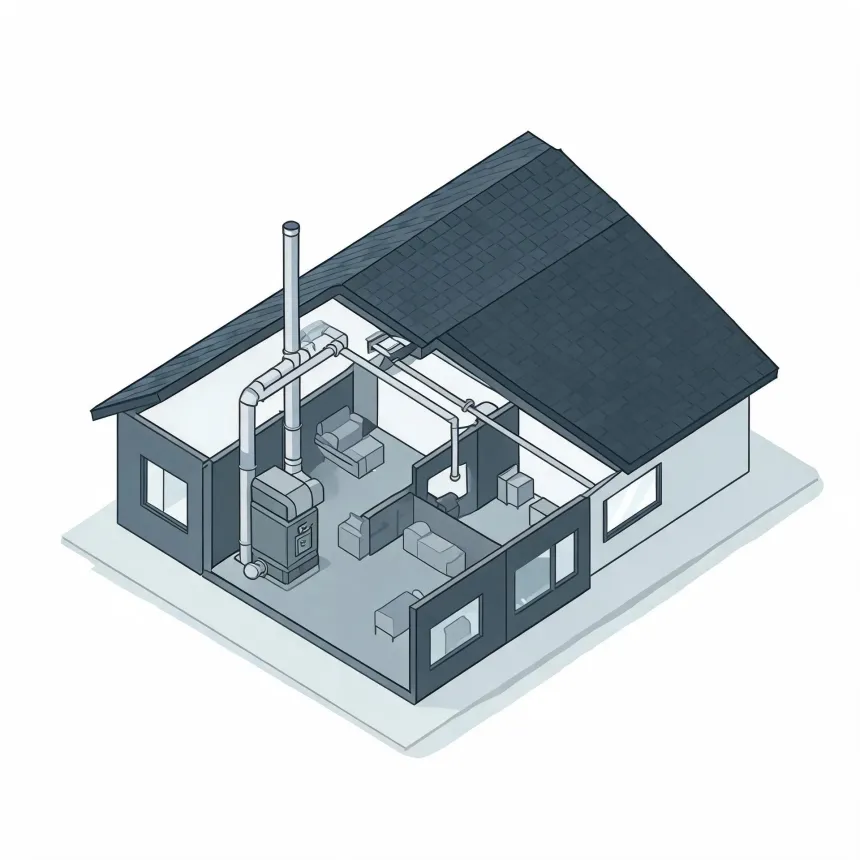
Isometric cutaway illustration of a single-story house showing interior rooms with furniture, a furnace unit connected to ducting and vertical flue pipes running through the roof.
Your furnace works hardest from November through March.

NOAA nClimDiv, 1991–2020 normals

September is the last quiet month before Mayes County furnaces go back to work.

Get the new furnace in before October and it's running on your timeline, not during the first cold snap.

Seven months of work a year, not twelve

Heat runs October through April
Winter nights average 29°F
Climate zone 3A

Mayes County falls under zone 3A in the 2021 energy code, which sets the floor for any furnace installed here. Any gas furnace built after November 19, 2015 has to turn at least 80 percent of the gas it burns into heat over the winter, and that's the minimum a contractor can legally install. That number jumps to 95 percent for furnaces manufactured on or after December 18, 2028, so what counts as code-minimum is about to change. A homeowner shopping now still has a choice between the two, but that window won't stay open much longer. Either way, the furnace going into your house this year has to clear that 80 percent bar before it ever gets near a severe winter storm.

Plan the install around the power going out, not just the cold

Where the installer puts the furnace, how the vents and gas line get run, and what happens when the power drops all get decided at install, not after. Ask about that before the crew starts, not once the system's already in.

Find a contractor
A man in a cap, dark long-sleeve shirt and brown pants carries a canvas tool bag up wooden porch steps toward a navy front door beside a potted shrub.
A gray residential gas furnace installed in an unfinished basement, connected to sheet-metal ductwork and PVC pipes.

Pick for reliability, not for a rating

Seven months of work a year is already settled. What that means for this purchase is simple: put the money into a unit that's sized right and put in clean, not into the highest efficiency rating on the lot. A furnace that isn't straining against a long season is also a furnace where a repair down the road is usually worth making, since the parts wearing out are doing it from age, not from being run hard. Pick a reliable mid-tier system and spend the rest of the budget on the install itself, since that's what decides how it holds up when the weather here turns bad.

Ask what happens when the power cuts out

A standard furnace needs electricity to run even on gas. The draft inducer, the control board, the blower motor all need power to start a cycle and keep it going. If the power drops, the furnace stops, no matter how much gas is still in the line. Ask whether the system can be set up to run on a generator or a battery backup, and what it would take to wire that in now instead of after an outage.
Ask how they sized it, not just what size they picked

Two furnaces with the same rating can perform differently depending on the ductwork and the house they're tied into. A contractor should walk the house, look at the existing vents and the gas line, and size the unit to that, not just swap in whatever matches the old nameplate. A furnace sized wrong runs longer than it should, or shuts off before a room ever gets warm.

A furnace that's too big for the house doesn't heat it any better. It fires up, blasts the rooms closest to the vents, and shuts off again before the heat ever works its way through the rest of the place. That on-off cycling is hard on the parts that start each cycle, the igniter and the blower motor, and it leaves the air feeling uneven even though the furnace is new. Too small, and the furnace runs nearly nonstop trying to keep up, which wears on it just as fast and still leaves the house cold on the worst days. Getting the size right means a contractor calculates the heat loss for the actual house, the square footage, the windows, the insulation, the ceiling height, rather than just matching the number stamped on the unit being replaced. A duct system built for one size of furnace won't always move the right amount of air for a different one, so the ducts matter as much as the furnace itself in that calculation.

Electricity heats 46.7% of the homes in Mayes County, more than gas and propane combined. Utility gas covers 27.0%, propane another 19.2%. If your house is already wired for electric heat, staying with a furnace that runs the same way is usually the straightforward path. It means the circuits and the panel capacity are likely already sized for it, instead of needing a gas line run or upgraded where one doesn't exist. That doesn't rule out switching fuels. It just means replacing what's there is the simpler job, and simpler jobs are easier to get right.