



A single-story brick house with a two-car garage photographed at dusk, with interior lights glowing through the windows and trees on either side.

Furnace Installation in Skiatook, OK

Tell us about the job

Takes about a minute. No obligation.

New system or replacementFurnace or heatingOsage County, OK
Step 1 of 2

What ZIP code is the job in?

Osage County sees its share of rough weather. Between 2015 and 2024 the county recorded 198 severe weather events, including 97 damaging wind events, 68 hail events, 21 tornadoes, and 12 winter storms with heavy snow or ice. A new furnace has to work with that reality, not against it. Winter storms are exactly when a furnace can't fail, and ice or high wind is also when the power grid is most likely to go down. Statewide, a quarter of Oklahoma households went at least 24 hours without power in 2024. That's worth thinking about before the install, not after a storm already has you without heat.

7 months
October through April, your furnace is on duty
27°F
the average winter night it heats against
80% AFUE
the federal minimum any new unit must meet
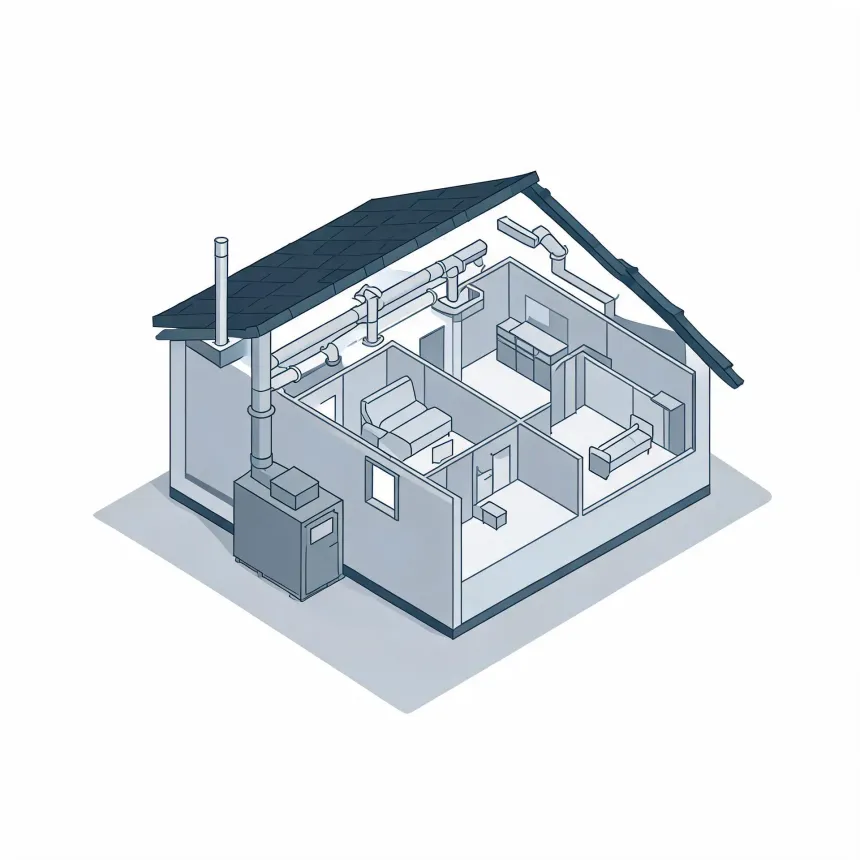
Isometric line illustration of a cutaway single-story house showing interior rooms with furniture, ceiling ductwork, a chimney flue, and a furnace unit outside the exterior wall.
Your furnace works hardest from November through March.

NOAA nClimDiv, 1991–2020 normals

Gas here runs about $13.54 per million Btu, cheaper than in most states.

A high-efficiency furnace saves less here than it would elsewhere, so backup power and a unit that holds up matter more than squeezing out another point of efficiency.

Get it done before October, not during a storm in January

Heat runs October through April
Winter nights average 27°F
12 winter storms from 2015 to 2024

Gas heats 42% of homes in Osage County, more than electric or propane, so a gas furnace is the easy fit here. If your house already has a gas line run to it, swapping in a new furnace is the simplest path, since the venting and gas connection are already worked out. That matters more here than in most places, because a gas furnace keeps running in a power outage if it's paired with a generator or battery backup, where an electric furnace or heat pump just sits dead until the grid comes back. Propane is the fallback for homes without gas service, and it runs the same way once it's hooked up. Either way, the system should be matched to the fuel already feeding the house, not swapped to something new, unless there's a real reason to run new lines.

Plan for the outage before you need it

A gas furnace can keep running when the power goes out, but only if it's set up for that before the storm, not during it. Ask about a transfer switch or battery backup as part of the install, and have the installer place the unit where wind and hail won't reach it. That's a decision made now, while the furnace is going in, not after the lights go out.

Find a contractor
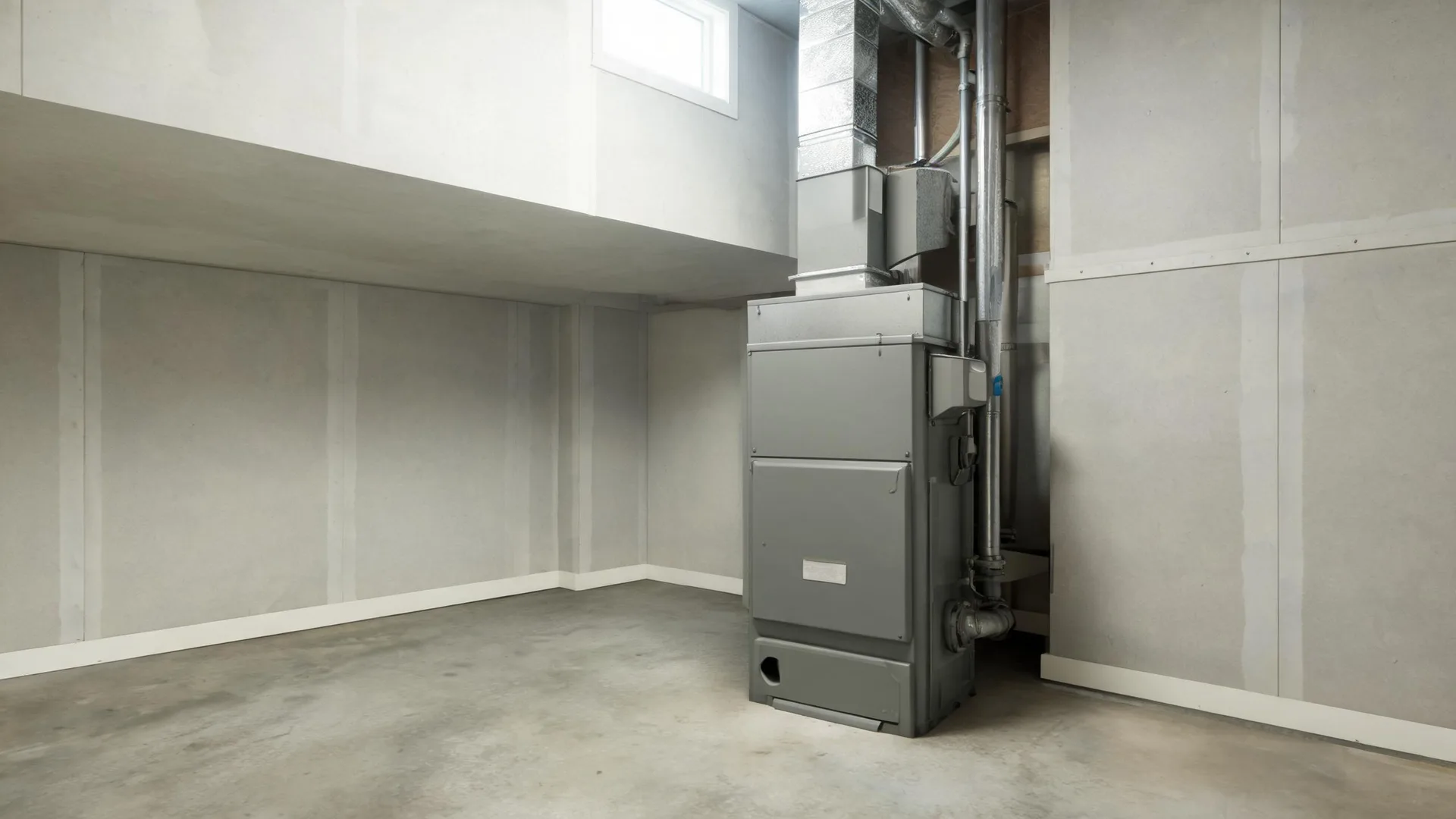
A gray residential gas furnace installed in an unfinished basement, surrounded by ductwork, a metal flue pipe, and a gas supply line.

The size on the nameplate has to match the house, not the old furnace

A furnace that's too big for the house cycles on, satisfies the thermostat fast, and shuts off again before it's warmed the ductwork or the air inside the walls. Short cycles like that wear the ignition system harder, since the igniter and the inducer motor are working through more start-ups over the same stretch of time. Too small, and it runs long stretches without catching up on the coldest nights, which pushes wear onto the blower motor and burners that are rarely allowed to rest. Either mistake shortens the life of the unit before its time. Sizing a furnace right means a load calculation on the house itself: the square footage, the insulation, the windows, the ceiling height, how much outside wall it has. Two houses the same size can need different furnaces if one has more glass or taller ceilings. A contractor doing this right measures the house rather than matching the old unit's size, since the old one may have been wrong from the start.

The old furnace has to come out clean

Disconnecting a gas furnace means shutting off and capping the gas line, pulling the vent connection, and freeing it from the supply and return plenum it's sealed into. Any of that done sloppy leaves a gap for exhaust to leak back into the house or for the next furnace to seal against a plenum that no longer fits right.

The new furnace is rarely a straight swap

Furnace sizes aren't universal, so a new unit sized for the house can be a different height, width, or depth than the one it replaces. The ductwork, the flue, and the gas line may need to be adapted to meet it rather than the furnace being bent to fit the old opening.

An unfinished basement interior featuring a large metal furnace unit, exposed ceiling joists, concrete walls, and scattered boxes and cables on the floor.

A high-efficiency gas furnace would save about $100 a year to run in Osage County compared with a gas furnace.

  • A high-efficiency gas furnace$530 a year
  • A gas furnace$630 a year

Estimates for a typical Osage County home, from EIA household energy data, Oklahoma fuel prices and NOAA climate normals. Your home will differ.

Osage County falls under zone 4A, a mixed climate code that expects a furnace to handle real heat and real cold without cutting corners on either. Any furnace installed here has to hit at least 80 percent efficiency, turning most of the gas it burns into heat instead of sending it out the flue. That rule holds for units built before December 18, 2028. After that date, new furnaces have to reach 95 percent, so the baseline is about to get a lot higher. Installing now still means meeting the current 80 percent floor, and a system that clears it by a wide margin tends to hold up better than one that just squeaks by. A federal tax credit is available for qualifying high-efficiency furnaces, worth checking into before deciding which unit goes in.