Two single-story houses, one with red brick and one with light siding, behind a trimmed hedge and lawn under large oak trees draped with Spanish moss.

Furnace Installation in Tahlequah, OK

Tell us about the job

Takes about a minute. No obligation.

New system or replacementFurnace or heatingCherokee County, OK
Step 1 of 2

What ZIP code is the job in?

Cherokee County sees real storm numbers

117 severe weather events hit this county between 2015 and 2024, including dozens of windstorms and hail events. A new furnace installation is a chance to think about where the outdoor equipment sits and what might come at it.

Power doesn't always come back fast

A quarter of Oklahoma households went at least a day without power in 2024. A furnace needs electricity to run even when the fuel is gas, so an outage means no heat unless there's another way to keep it going.

7 months
October through April, your furnace is on duty
30°F
the average winter night it heats against
80% AFUE
the federal minimum any new unit must meet
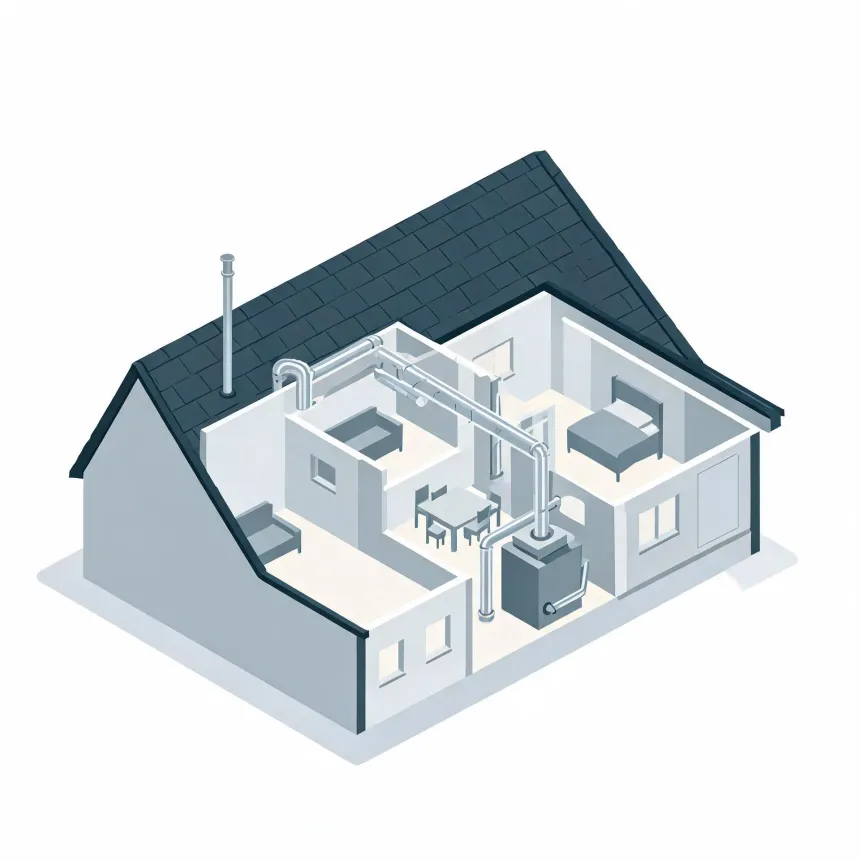
Isometric cutaway illustration of a single-story house with a dark shingled roof, showing interior rooms with furniture and a ducted furnace unit connected to metal ductwork and a roof flue.
Your furnace works hardest from November through March.

NOAA nClimDiv, 1991–2020 normals

Electricity heats 47.2% of homes in Cherokee County, more than gas or propane.

An electric furnace has no pilot light or gas valve to fall back on, so the power cuts this area sees hit it directly.

September is the month to get this done, before heat season starts in October

Heat runs October through April
Winter nights average 30°F
Climate zone 3A
Your furnace won't work hard hereHeat runs seven months a year, and winter nights average 30°F

A furnace installation is also a good time to ask about backup power, not just where the unit goes. A gas furnace with electronic ignition still needs electricity to run the blower and fire the igniter. No power means no heat, even with a full tank or line. Ask the installer what size generator would actually run the blower motor, not just keep the thermostat lit. If this install includes a heat pump or AC condenser outside, ask about a simple cover or screen for the coil. Hail and wind mainly go after what sits outdoors, and that unit will take the weather long after installation day is over.

Power is cheap here, so a furnace earns its keep by running, not by saving pennies

Electricity here runs $35.86 per million Btu, cheaper than most places pay. That changes what's worth chasing in a new furnace. A top-efficiency model costs more up front and takes longer to earn that back when power is already cheap. A furnace that keeps running through storms and cold nights matters more than a high number on the sticker. Ask the installer what fits this place, not just what rates highest.

Find a contractor
A man in a cap, dark T-shirt and brown work pants walks up porch steps toward a navy front door, carrying a canvas tool bag.
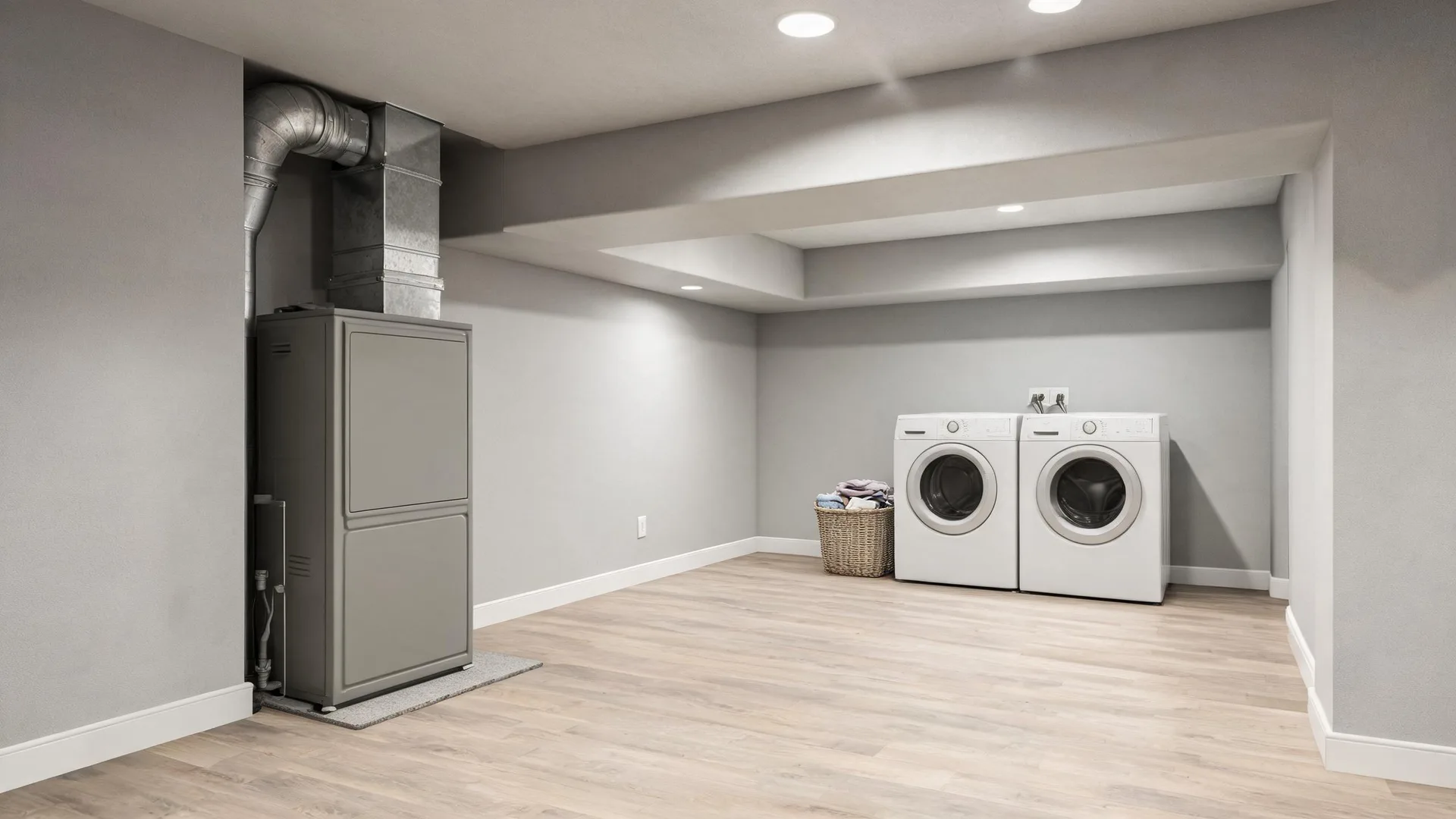
A gray residential gas furnace installed in an unfinished basement, surrounded by ductwork, a metal flue pipe, and a gas supply line.

Pick for the winters here, not worse ones

Pick a furnace built to start reliably and hold up over years, not one rated for a harder climate than this. Thirty degrees overnight is manageable cold, not extreme cold, so there's no need to pay for a system sized or engineered for deep freezes this area doesn't see. Put the money into a reliable ignition system and a unit the installer can service easily, since those are what keep it running through the winters it will actually face.

A furnace sized from square footage alone is a guess

Square footage gets you in the neighborhood, nothing more. A proper sizing calculation, called a load calculation, accounts for how many windows a house has, which way they face, how much insulation is in the attic and walls, ceiling height, and how much shade the house gets. Houses the same size can need different size furnaces once those details are weighed in. Anyone who sizes a furnace off a chart matching house size to furnace size alone is skipping the part of the job that actually matters.

Too big fails differently than too small

An oversized furnace heats the house fast, shuts off, then starts again soon after. That cycling wears the igniter and the blower motor harder than steady runtime would, and it leaves rooms far from the furnace never quite catching up to the thermostat setting. An undersized furnace just runs long and still falls behind on the coldest nights. Both waste money, but they wear out different parts and show up as different complaints well after installation day.

The old furnace doesn't just get unhooked and hauled off. Whoever installs the new one has to disconnect the gas line, pull the flue or vent pipe, and disconnect the electrical before the unit comes out of the closet or basement. If it's a gas furnace, that gas line gets capped off safely, not just left loose. The old ductwork connections get checked too, since the new furnace may have a different size or shape of plenum than the old one, and that joint has to be sealed right or the new furnace runs with a leak from day one. Most installers haul the old unit away as part of the job, since a furnace is mostly steel and the scrap yard takes it. Ask ahead of time whether removal and haul-away are included, because some quotes leave that part out.

Installation day starts with the old equipment coming out, but the new furnace doesn't just drop into place and get bolted down. The installer sets it, then runs gas line to it if it's a gas unit, connects the vent pipe, wires the electrical, and ties it into the ductwork. Each of those connections gets tested before anyone calls the job done. The gas line gets checked for leaks. The vent gets checked for proper draft, since a furnace that doesn't vent right can push exhaust back into the house instead of outside. The system gets run through a full cycle, heat on, blower on, heat off, to make sure it fires, holds, and shuts down the way it should. A thermostat gets set up or reconnected last, after the installer knows the furnace underneath it is actually working.