




A gray forced-air furnace with sheet-metal ductwork stands in an unfinished basement with exposed wooden joists, concrete walls, and a hanging incandescent bulb.

Furnace Installation in Woodward, OK

Tell us about the job

Takes about a minute. No obligation.

New system or replacementFurnace or heatingWoodward County, OK
Step 1 of 2

What ZIP code is the job in?

Woodward County saw 225 severe weather events between 2015 and 2024. Damaging wind caused 144 of those, hail caused 61, and four tornadoes touched down in that same stretch. Any of those can take out power to a house, sometimes for a while. A quarter of Oklahoma households went at least 24 hours without power in 2024. A gas furnace still needs electricity to run its blower and controls, so when the power goes out, so does your heat, even with gas in the line. Worth asking your installer how the new system handles that before it's in the ground.

7 months
October through April, your furnace is on duty
25°F
the average winter night it heats against
80% AFUE
the federal minimum any new unit must meet
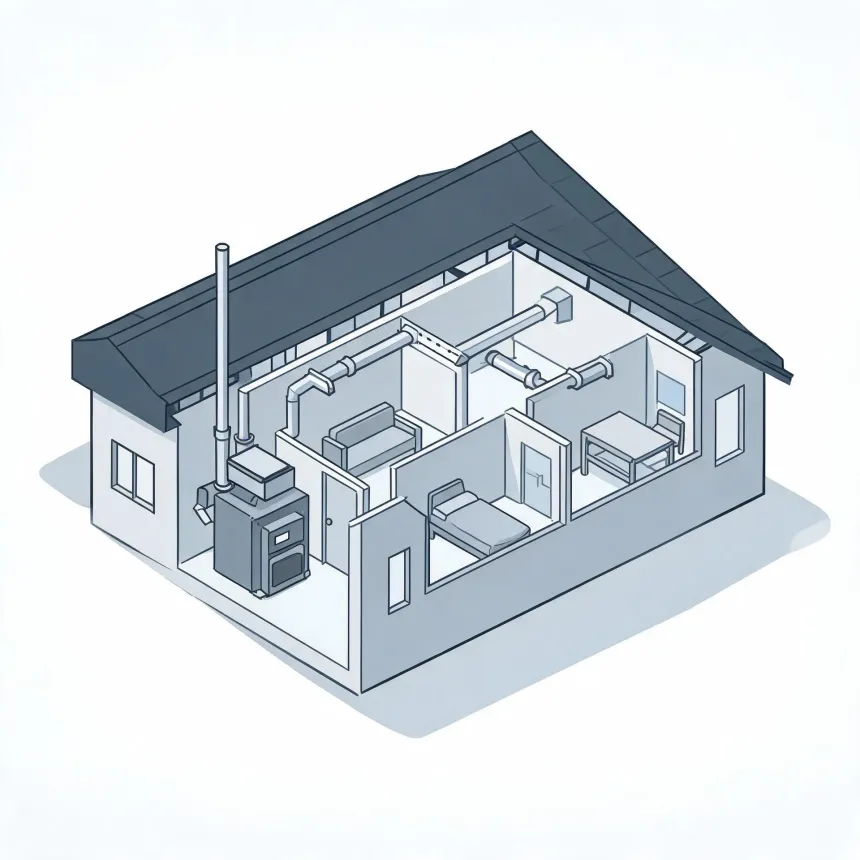
Isometric cutaway illustration of a single-story house showing interior rooms with furniture, overhead ducting, a flue pipe, and a furnace unit against an interior wall.
Your furnace works hardest from November through March.

NOAA nClimDiv, 1991–2020 normals

Natural gas here runs cheaper than in most of the country.

A high-efficiency furnace takes longer to pay for itself on a low gas bill, so pick yours for how it holds up through a Woodward winter, not just the fuel it saves.

Gas already heats most homes here, so your new furnace likely just replaces what was there

47.4% of homes heat with gas
Climate zone 4A
Heat runs October through April

Woodward County falls under zone 4A, and any furnace going in has to burn at least 80 percent of its gas into heat over the winter. That's the floor nationwide right now, not something specific to this county, but it's what your installer is working within. The rule shifts in 2028, when new furnaces will need to hit 95 percent, so a unit bought today is still built to the current standard. Some installers carry furnaces that already clear 95 percent efficiency, which costs more up front but burns less gas doing the same job. If you buy one now, ask what the federal tax credit covers before you decide which efficiency level makes sense for your house.

Plan the install around the power going out, not just the cold

Ask your installer where the outdoor unit will sit and what will shield it from wind-driven debris and hail. Ask what keeps the blower and controls running if the power drops, since that's what carries your heat through an outage. Settle both before the install, not after.

Find a contractor
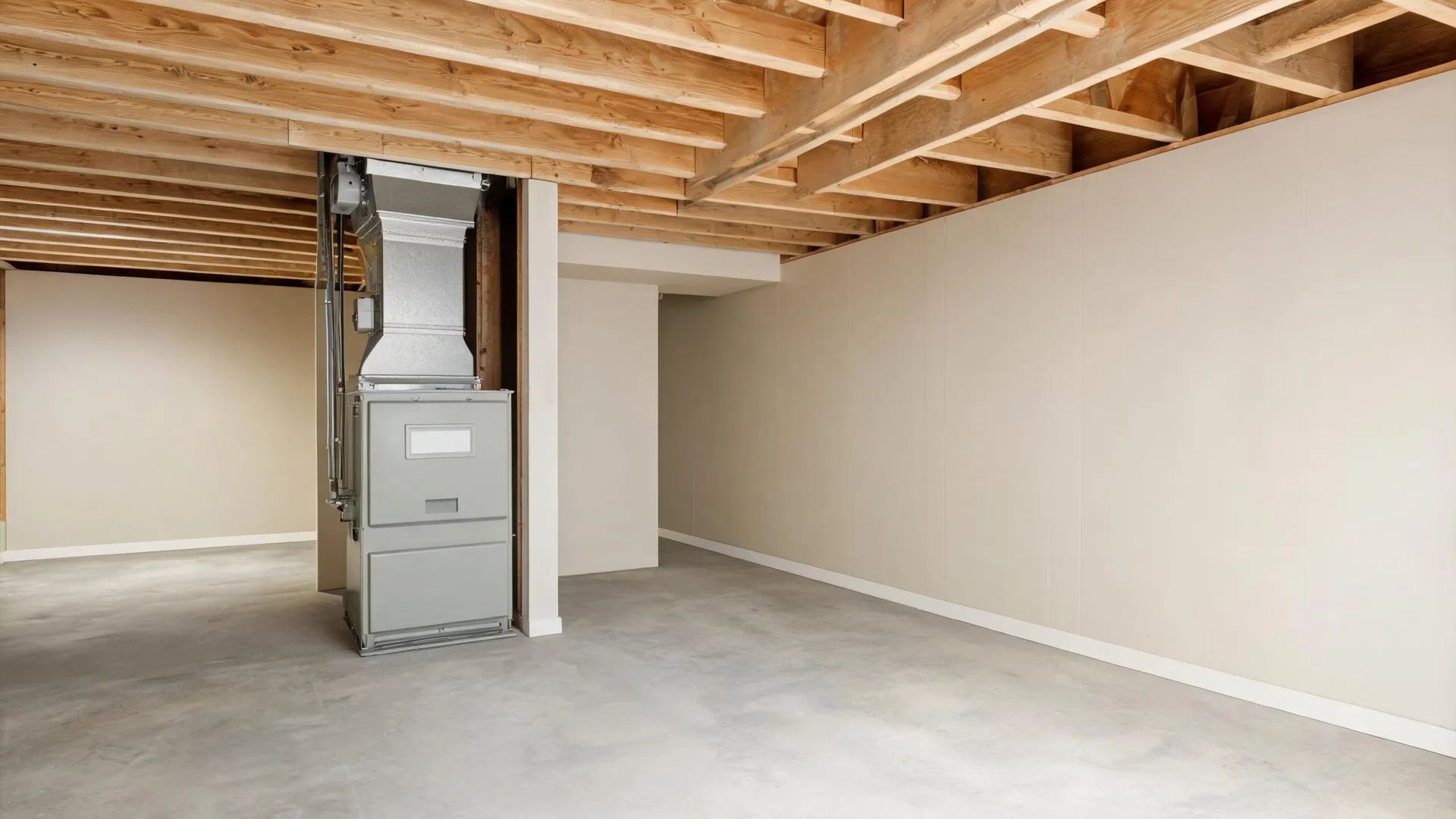
A gray residential gas furnace installed in an unfinished basement, connected to sheet-metal ductwork and PVC pipes.

Put it in before you need it

Heat runs here from October through April, seven months out of the year. September is the last easy month to get a furnace in before it has to work. A furnace installed in the cold, with the old one already dead, gets whatever's in stock and whatever crew is free that day. One installed in September gets picked on its own terms, sized right, checked out, and ready before the first cold night. By December the overnight low averages 25 degrees here, and that's when you find out whether the install was rushed.

Bigger isn't better

A furnace sized too large for the house will short cycle, meaning it fires up, heats the air fast, and shuts off before it's pulled the chill out of the walls and furniture. The house ends up with warm air and cold surfaces, and the burner wears out faster from switching on and off all day. Too small, and it runs nonstop trying to catch up, and never quite does on the coldest nights.

The size comes from a calculation, not the old unit

A contractor works out the right size with a load calculation, which weighs square footage against window count, insulation, ceiling height, and how much sun hits the house. Swapping in the same size as the furnace coming out skips that math and just repeats whatever guess was made last time. If the old one was wrong, the new one shouldn't copy it.

An unfinished basement featuring exposed ceiling joists, a metal HVAC unit with round ductwork, a hanging light bulb, and scattered boxes and debris along the left wall.

A high-efficiency gas furnace would save about $110 a year to run in Woodward County compared with a gas furnace.

  • A high-efficiency gas furnace$560 a year
  • A gas furnace$670 a year

Estimates for a typical Woodward County home, from EIA household energy data, Oklahoma fuel prices and NOAA climate normals. Your home will differ.

Install day starts with the old furnace coming out, and that takes longer than people expect once the technician sees the duct connections and gas line behind it. The gas gets shut off and the old unit disconnected before anything new goes in. Ductwork at the connection point often needs some rework to match the new furnace's dimensions, since cabinets vary even between similar sizes. The technician runs new venting if the system calls for it, connects the gas line, and wires in the thermostat and control board. Once it's set, the furnace gets fired up and run through its paces, checking gas pressure, airflow, and the temperature rise across the heat exchanger. A technician won't leave until that's all measured and within range, not just until the air blowing out feels warm.