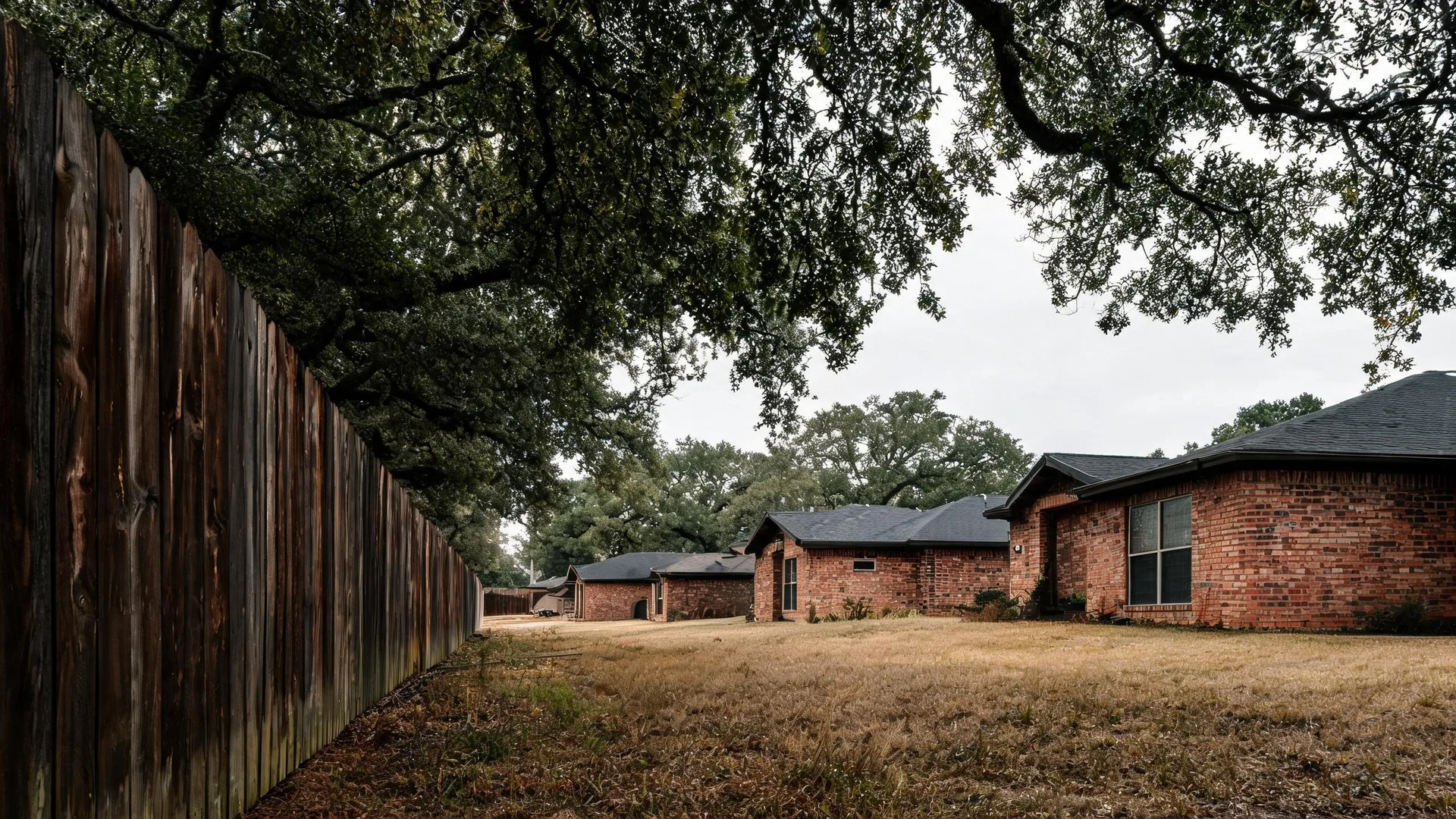
A weathered wooden privacy fence runs along the left side of a dry grass yard beside single-story brick houses with dark shingled roofs, under overhanging oak branches and an overcast sky.

Furnace Maintenance in Durant, OK

Tell us about the job

Takes about a minute. No obligation.

Tune-up, service, or cleaningFurnace or heatingBryan County, OK
Step 1 of 2

What ZIP code is the job in?

Dust and dirt build up where you can't see them

The flame sensor coats with a thin film over time, and the burners collect dust that was pulled in through the return air. A dirty flame sensor starts a cycle of the furnace shutting off a few seconds after it fires, then trying again. None of this looks like anything from outside the cabinet.


Small problems get caught before they strand you

A cracked heat exchanger, a failing inducer motor, a igniter on its way out all give some warning before they quit outright. A furnace that never gets opened up just runs until one of those parts fails, usually on the coldest night it has to work hardest.

A furnace that short cycles or runs longer than it used to is already telling you something.

Catching that on a service call beats catching it when the burners won't light at all.

November is when your furnace starts working. Have it checked in October.

Heat runs November through March
Winter nights average 34°F
Climate zone 3A
Electric heat runs this county73.7% of homes in Bryan County run on electric heat.

Half the homes in Bryan County were built in 1989 or later, which means a lot of furnaces here haven't put in that many years yet. A newer furnace still depends on the same parts wearing down slowly, the flame sensor, the igniter, the inducer motor, and a yearly check is what keeps those failures rare instead of routine. Skip that check for a few years running and a furnace with plenty of life left in it starts failing the same way an old one does. The homes here being newer isn't a reason to put off maintenance. It's the reason a yearly check actually pays off, because there's more working life to protect.

Book it before the season

It starts running hard in the first month of the season here. Book the check the month before.

Find a contractor
A gray residential gas furnace installed in an unfinished basement, surrounded by ductwork, a metal flue pipe, and a gas supply line.

Start the yearly check now, while the furnace is still young

A furnace that's had a handful of yearly checks keeps that advantage for years after. Put the first one on the calendar this fall if it hasn't had one yet, and the same month next year, and the one after that. The appointment itself is short, maybe an hour with the cabinet open. What it buys is a furnace that keeps running the way it does now instead of starting to act like it's older than it is.

Change the filter, leave the rest closed up

A dirty filter is the one thing worth checking yourself. Hold it up to a light. If you can't see light through it, swap it. A filter that's clogged starves the furnace of return air, and that makes the burners run hotter and the heat exchanger work harder than it should. Past that, keep the cabinet closed. The igniter and flame sensor aren't something to clean yourself, and opening up a gas furnace without knowing what you're looking at turns a small job into a bigger one.

Know what normal sounds like

Pay attention to how the furnace starts up and runs once the filter's handled. A clean start is one attempt to light, then a steady burn. If it's clicking, trying to light, shutting off, and trying again, that's worth a call before it turns into a furnace that won't fire at all. Same with a blower that used to run quiet and now rattles or hums louder than before. You don't need to know what's causing it. You just need to notice when it changes.

A thorough tune-up opens the cabinet. The tech pulls the burners and looks at them, checks the flame sensor and cleans it if it's coated, and tests the pressure switch and the draft from the inducer motor. They'll check the flame itself, a steady blue with maybe a touch of orange at the tip, not yellow or lifting off the burner. A quick visit skips most of that. The furnace gets a glance, maybe a filter check, and a sticker on the cabinet saying it was serviced. Both visits take about the same slot on the calendar, so the time it took doesn't tell you much. Ask what was actually touched. If nobody can tell you how the flame looked or what the sensor reading was, the cabinet probably stayed shut.

The heat exchanger is the part a tune-up protects most, and the one a tech can't fully see. Combustion analysis is how it gets checked anyway. A probe in the flue reads the exhaust, carbon monoxide, oxygen, the stack temperature, and those numbers say whether the flame is burning clean or whether exhaust is mixing somewhere it shouldn't. The tech also checks the gas pressure at the manifold, since too high or too low changes how the burners fire and how hot the exchanger runs. The blower gets pulled if needed so the wheel can be checked for dust buildup, since a caked wheel moves less air than it should and makes everything downstream work harder. Wiring connections get checked too, loose ones cause the same stop-start firing a dirty flame sensor does. None of this shows up from outside the cabinet, and none of it gets caught by a filter check and a sticker.