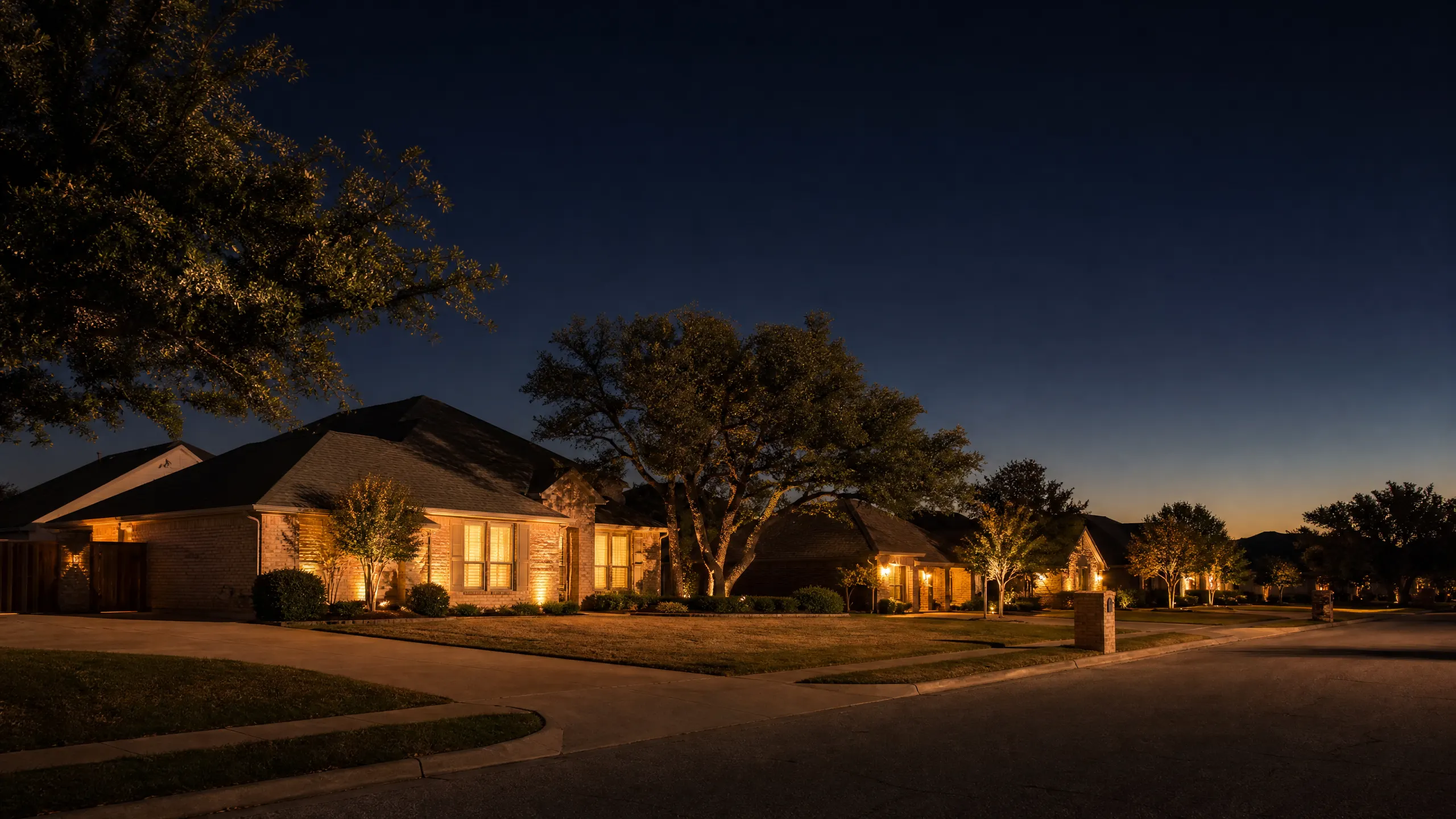
A twilight view of single-story brick homes on a suburban street, lit by warm amber landscape spotlights that illuminate the facades and surrounding trees.

Furnace Maintenance in Enid, OK

Tell us about the job

Takes about a minute. No obligation.

Tune-up, service, or cleaningFurnace or heatingGarfield County, OK
Step 1 of 2

What ZIP code is the job in?

Storms here are frequent

Garfield County logged 223 severe weather events between 2015 and 2024, including 109 damaging wind events and 91 hail events. Seven tornadoes touched down in that same stretch. A furnace left unchecked after that kind of weather is a furnace nobody has looked at.


Power doesn't always hold

A quarter of Oklahoma households went at least 24 hours without power in 2024. A gas furnace still needs electricity to run its blower and controls, so an outage shuts it down right when the cold hits hardest.

Six in ten homes in Garfield County heat with gas.

A tune-up on a gas furnace has to check the burner and venting, not just swap a filter.

Cold hits in October here, so get the furnace looked at in September

Heat runs October through April
Climate zone 4A
Winter nights average 27°F

Half the homes in Garfield County were built in 1970 or earlier. A furnace that old has been through decades of Enid winters, and the parts inside it wear the same way regardless of how well the house around them was kept up. Heat exchangers crack, blower motors weaken, and igniters wear out faster the longer they've been firing. None of that shows up as a problem you'd notice from the thermostat, not until the furnace fails to start or starts leaking something it shouldn't. A yearly check is what catches a cracked exchanger or a tired motor while it's still a repair, not a replacement.

Have the furnace checked before the next storm takes the power out

A technician can check the furnace itself and confirm the blower and controls start back up clean after an outage. Worth doing before winter, not after the power's already out and the house is cold.

Find a contractor
A man in a dark jacket, cap and tan work pants carries a canvas tool bag up stone steps toward a navy front door, with a potted shrub beside the entry.
A gas furnace with attached ductwork, gas piping, and condensate lines installed in a concrete-block basement.

A filter changes monthly. The furnace runs for years.

The filter is the one part the homeowner can see, and it does more than keep dust off the furniture. Pull it and hold it up to a light. If you can't see through it, the blower is working harder than it should to pull air through, and that strain doesn't stay contained to the filter slot. A blower straining against a clogged filter runs hotter and wears its bearings faster, and the reduced airflow can let the heat exchanger run hotter than it's built for. The coil, if the system shares ductwork with air conditioning, picks up the same dust the filter missed, and a coil caked in dust chokes airflow the same way a bad filter does, except it takes a coil cleaning instead of a five-minute swap to fix. The drain matters most in summer, when the same blower and coil handle condensation, but a clogged drain line backs water up into the cabinet, and water in a furnace cabinet finds the control board eventually. None of these three parts fail on their own schedule. They fail on each other's schedule, a dirty filter shortening the life of the blower, a dirty coil shortening the life of the filter's usefulness, and all of it adding up to a furnace working harder every month to do what it used to do without strain.

The furnace will usually warn you first

A burner that used to light with a soft whump and now bangs or hesitates is telling you something about the igniter or the gas valve. A blower that cycles on and off more than it used to may be struggling to pull air through a dirty filter or a clogged coil. Short cycling, a flame that looks yellow instead of blue, a smell of gas when it kicks on, any of these mean the furnace wants a look before it quits outright.

Some failures give no warning at all

A cracked heat exchanger doesn't make noise or change the flame color. It can run for a season before it's found, and the only way to catch it is to have someone open the cabinet and check. The same goes for a blower motor's bearings or a control board losing its calibration. These don't show up as a sign the homeowner would notice. They show up as the furnace not starting, usually on the coldest morning of the year.

Skip the yearly check and a furnace doesn't fail all at once. Dust builds up on the burners and changes how clean the flame burns. A dirty flame leaves soot on the heat exchanger, and that soot acts like insulation, making the metal run hotter than it should. Hotter metal stresses the exchanger until it cracks. A clogged filter makes the blower work harder to push air through the ducts, and a motor that strains season after season wears out sooner than one that never had to. Small problems like a weak flame sensor or a sticking valve don't go away on their own. They sit there getting worse until the furnace either stops lighting or stops shutting off correctly, and both of those are harder, costlier fixes than the maintenance that would have caught them early.

A proper tune-up starts with the burners. A technician pulls them and cleans off the rust and dust so the flame burns even across each one, then checks the flame sensor and igniter since both wear out from being heated and cooled every cycle. The heat exchanger gets inspected for cracks or soot, because soot buildup means the flame isn't burning clean and the metal is running hotter than it should. The blower gets checked too, the wheel wiped down if it's caked with dust and the motor bearings checked for wear, since a dirty blower wheel throws the airflow off even with a new filter installed. Gas pressure gets tested at the valve and set to spec, not left at whatever it drifted to. The venting gets looked over end to end, because a blocked or disconnected vent is a carbon monoxide risk, not just a performance problem. Last, the control board and wiring get checked so the safety switches are doing their job and the thermostat is actually telling the furnace what the homeowner thinks it's telling it.