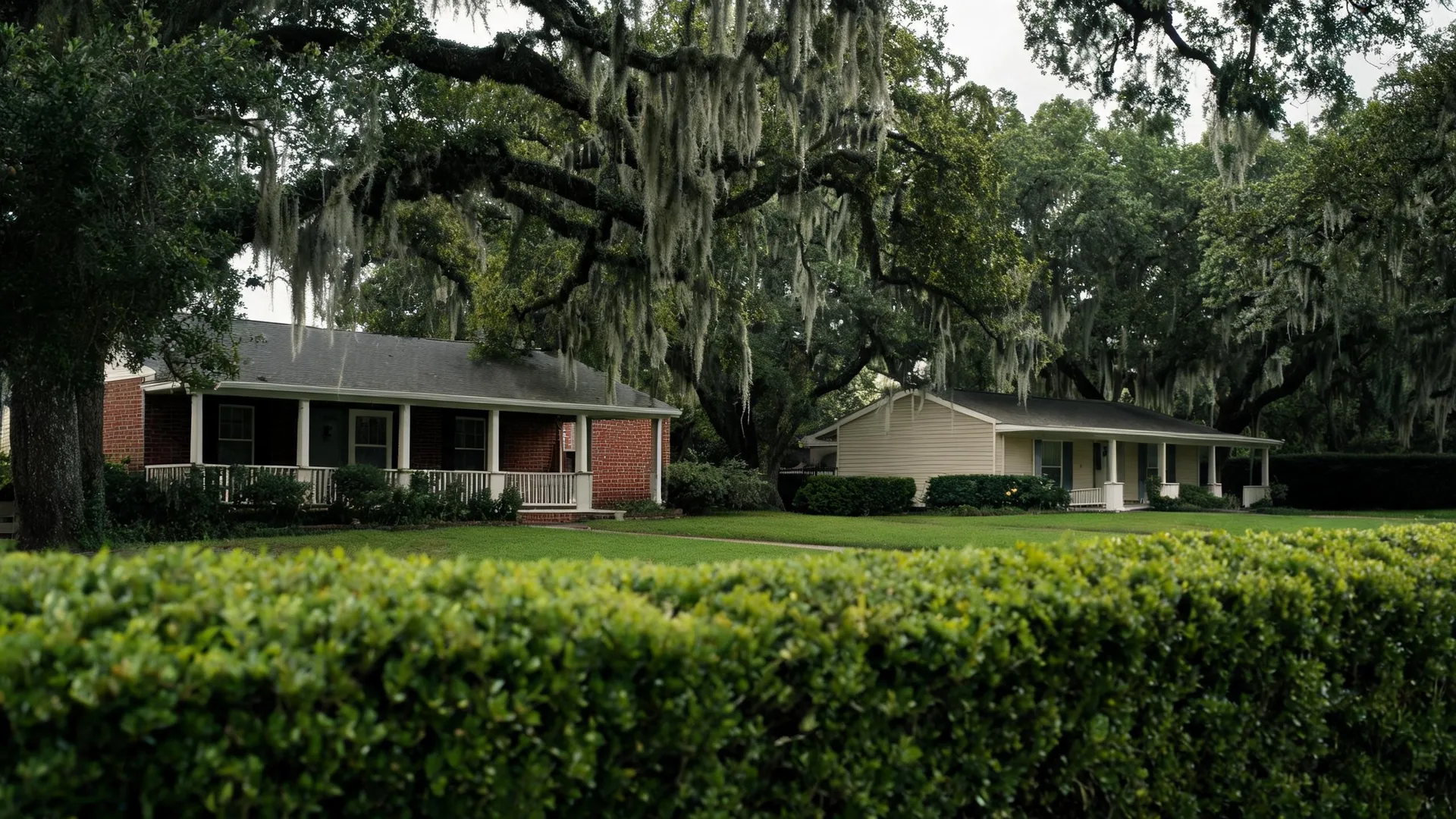





Two single-story houses, one of red brick with a white-columned porch and one with pale siding, sit behind a mown lawn and a trimmed hedge, beneath large moss-draped oak trees.

Furnace Maintenance in Grove, OK

Tell us about the job

Takes about a minute. No obligation.

Tune-up, service, or cleaningFurnace or heatingDelaware County, OK
Step 1 of 2

What ZIP code is the job in?

Delaware County sees more than its share of rough weather. Between 2015 and 2024 it recorded 47 damaging wind events, 40 hail events, and 18 tornadoes, 117 severe weather events in all over that stretch. Hail dents cabinets and bends fins. High wind drives branches and debris into the unit outside. A furnace that sat through one of those events can look fine and still have a bent coil or a cracked line nobody's spotted yet. That's worth catching before cold weather asks the system to work hard.

A dirty filter chokes airflow before the furnace ever gets to the coil.

Starve the coil long enough and the heat exchanger behind it works harder than it should on every single cycle.

Nights are already dropping to 28 degrees by the time this season ends. Get the furnace checked in September, before October puts it to work.

Heat runs October through April
Climate zone 4A
Winter nights average 28°F

Just over half the homes in Delaware County heat with electricity. Most of the rest split between utility gas and bottled or LP gas, close to a third of homes between them. A gas or propane furnace burns fuel to make heat, and that means a burner, a flue to vent exhaust, and safety controls that shut the system down if something's wrong. A tune-up on one of these checks that the burner is firing clean and the venting is doing its job, not just that air is moving through the ducts. An electric furnace skips the combustion side entirely, so if yours runs on gas or propane, that part of the inspection matters more than the filter ever will.

Have the furnace checked before winter, not after the next storm

A furnace that rode out a hailstorm or a bad wind event can look fine from the outside and still have damage nobody's caught. Have it looked over before winter puts it to work.

Find a contractor
A man in a dark long-sleeve shirt and tan work pants carries a canvas tool bag up porch steps toward a navy blue front door, with a potted shrub beside the entry.
A gas furnace with attached ductwork, gas piping, and condensate lines installed in a concrete-block basement.

What a real inspection opens up

A quick visit gets the filter swapped and the thermostat checked, and that's about it. A thorough one opens the cabinet. The tech pulls the burner assembly or the heating element and looks at it, not just listens to it run. On a gas or propane furnace, that means checking the flame itself, a steady blue cone means clean combustion, yellow or flickering means something's off with the air mixture. It means pulling the flue connection apart to look for rust or a gap where exhaust could leak back into the house instead of going outside. It means testing the limit switch and the flame sensor, not just wiping them down. On an electric furnace, it means checking each heating element draws the current it should, because one weak element can fail quietly while the rest keep the air moving enough that nobody notices. A thorough tune-up also means pulling the blower wheel and looking at it, not just the filter in front of it. Dust builds up on the blades themselves over years of running, and a caked wheel moves less air no matter how clean the filter is. Ask what was actually inspected, not just replaced. If the answer is only the filter and a glance at the thermostat, that's a quick visit, not a tune-up.

The crack you can't hear

A cracked heat exchanger can run for a long time before it makes any noise or smell a person would notice. It shows up on an inspection when a tech looks at the metal itself, sometimes with a camera, sometimes by checking for a shift in the flame when the blower kicks on. Left alone, it's a path for exhaust to mix with the air the furnace is pushing through the house.

Wear that doesn't announce itself

Bearings in the blower motor wear down slowly, and a motor can run rough for months before it quits outright. Same with a contactor pitting from normal use, or wiring that's loosened at a connection point from years of heating and cooling. None of it trips an alarm. A tune-up catches it because someone is actually looking at the part, not waiting for it to fail.

Between visits, the filter is the one thing worth checking yourself. Pull it out, hold it up to a light, and if you can't see through it, swap it. A furnace with a gas or propane burner also deserves a glance at the flue connection where it meets the wall or ceiling, just looking for rust streaks or a joint that's pulled apart, nothing to touch or take apart yourself. Keep the area around the furnace clear so the blower can pull air freely. Listen for anything new: a rattle, a squeal on startup, a burner that sounds different lighting off. None of that tells you what's wrong, but it tells you it's time to get someone out before a quick fix turns into a bigger one. Anything involving the burner, the flame sensor, the heat exchanger or the wiring is work for a licensed tech, not a homeowner with a screwdriver.

A tune-up starts with the furnace off and the cabinet open, not with it running. The tech checks the wiring connections for looseness, since a loose connection builds resistance and heat over time. Gas valves and pressure switches get tested, not just eyeballed, because a switch that's slow to respond can let the burner fire before the inducer motor has cleared the chamber. Bearings in the blower motor get checked for play, and belts, where a furnace still has one, get checked for wear and tension. The condensate line on a high-efficiency furnace gets flushed, since algae and sediment build up there quietly and back the line up right when the furnace needs to run hardest. Every safety control, the limit switch, the flame sensor, the rollout switch, gets tested to make sure it still shuts the system down the way it's supposed to, not just that it's present.