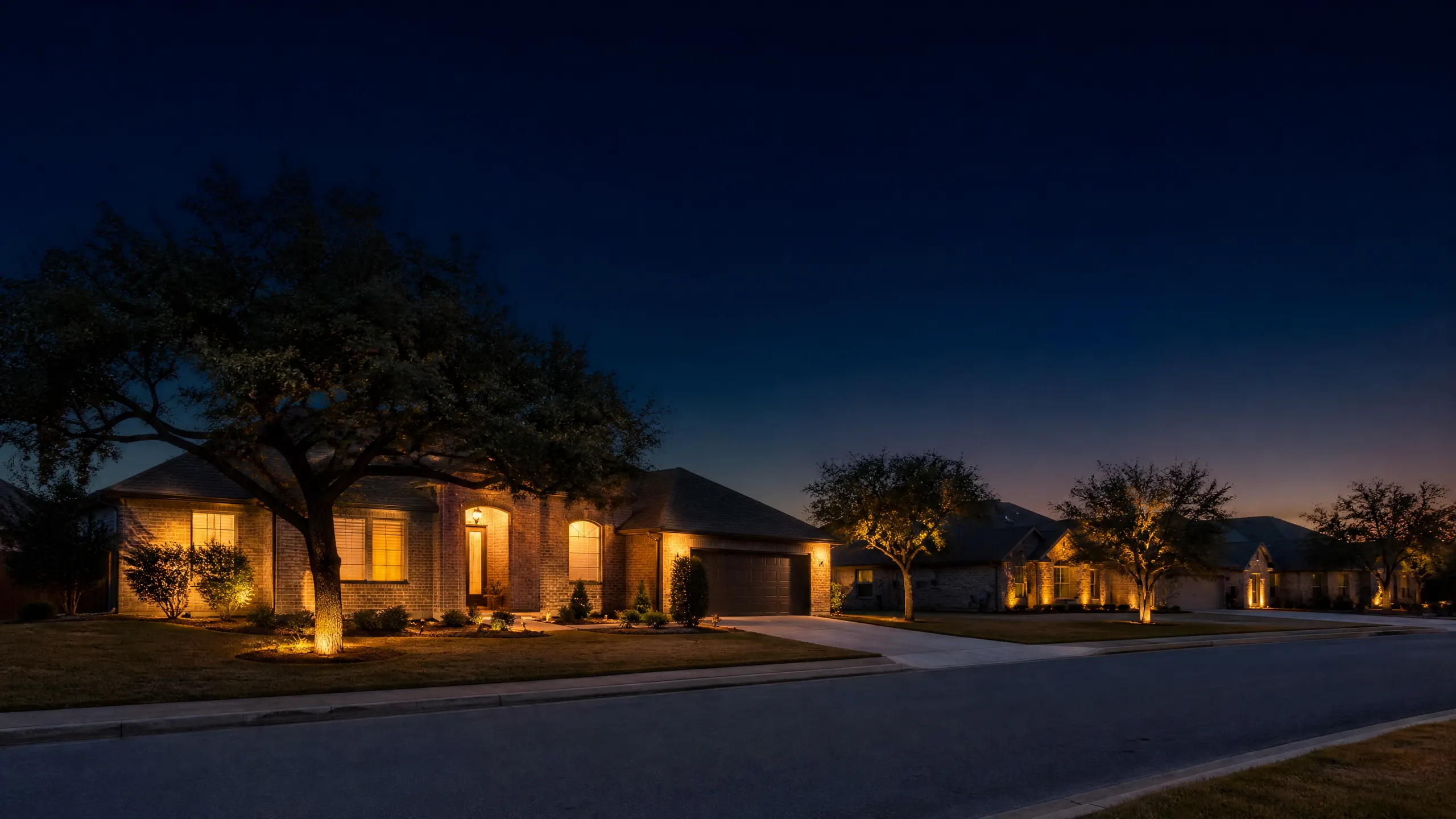
Weather here takes a toll
Texas County logged 363 severe weather events between 2015 and 2024, including 218 cases of damaging wind and 126 hail events. That's wind and ice working on whatever sits outside your house, year after year.
Takes about a minute. No obligation.
Texas County logged 363 severe weather events between 2015 and 2024, including 218 cases of damaging wind and 126 hail events. That's wind and ice working on whatever sits outside your house, year after year.
A quarter of Oklahoma households went at least 24 hours without power in 2024. When a furnace needs electricity to fire up and run, a long outage in the middle of winter is a real problem, not a maybe.
A cracked heat exchanger won't smell like gas or make a sound.
A tune-up checks for it directly, because waiting for a sign means waiting too long.



Furnace season starts here in October and runs through April, seven months of real work. September is the month to get a tune-up done, before the first cold snap and before any contractor's schedule fills up. By December the overnight low averages 23 degrees. That is not a night to find out the igniter is failing or the blower motor is struggling to start. A furnace that gets checked in September has already proven it can carry the winter before the winter asks it to.
A tune-up includes a look at what winter asks of this system: the ignition, the blower motor, the vent, and whether the furnace is wired to come back on cleanly after power drops out and returns. That last part matters here, where outages can run a full day or more. Getting it checked now means one less thing to wonder about when the weather turns.
Find a contractorChange the filter on a real schedule, not when you remember. A clogged filter starves the furnace of airflow, and that makes the heat exchanger run hotter than it should. Walk past the vents once in a while and make sure nothing is blocking them, no furniture pushed in front, no door shut all winter. If the furnace has a standing pilot, you can check that the flame burns steady and blue. A yellow, flickering flame is worth a call. Keep the area around the unit clear of boxes and anything that can burn. Beyond that, leave it alone. The blower motor, the igniter, the flame sensor and the heat exchanger are not things to open up or test yourself, and a furnace that sounds or smells different than usual is telling you to call someone, not to go looking inside it.
A furnace rarely fails without saying something first. The burner flame turns yellow or uneven instead of steady blue. Short cycles start, where it fires up, shuts off, then tries again a few minutes later. The blower runs longer than it used to, or kicks on louder than it should. A smell of dust burning off at the start of the season is normal; a smell that lingers or turns sharp is not. Any of these on their own is worth a look before the furnace is asked to run hard, night after night.
Most of what wears out in a furnace wears out slowly, inside parts the homeowner never sees. The igniter weakens a little each time it lights the burner. The flame sensor collects a film that keeps it from doing its job. The blower motor's bearings dry out over years of running. None of that shows up as a smell or a sound until it's close to failing outright. A tune-up tests these parts directly, while there's still time to replace one before it takes the whole system down with it.
A quick tune-up means someone glances at the furnace, listens to it run, and leaves. A thorough one means the panels come off. The flame sensor gets cleaned or tested, not just looked at. The blower wheel gets checked for dust buildup, which throws off airflow even when the filter is clean. Someone measures the temperature rise across the heat exchanger, because a reading outside the normal range says something a visual check never will. The gas pressure gets tested at the manifold, not assumed to be right because the furnace fired up fine. Electrical connections get checked for looseness, since a connection that's been fine for years can work itself loose from the heat of normal running. If nobody opens the cabinet and nobody tests anything with a meter or a gauge, what happened was a filter change and a once-over, not a tune-up.
A tune-up starts with the gas itself. Someone checks that the burners light evenly across the row, not just the one closest to the igniter, because a burner that lights late or weak is already telling you something. The inducer motor gets checked too, since that's what pulls combustion gases out through the vent before the burners ever fire. If that motor is slow or weak, the furnace may not run at all, or it may run and push exhaust somewhere it shouldn't go. A proper check also looks at the condensate line on a high-efficiency furnace, because a clogged line backs up and can shut the whole system down on its own safety switch. None of this is guesswork. Each part either passes or it doesn't, and a tune-up is the only time most of it gets looked at before the furnace is asked to carry a full winter.

