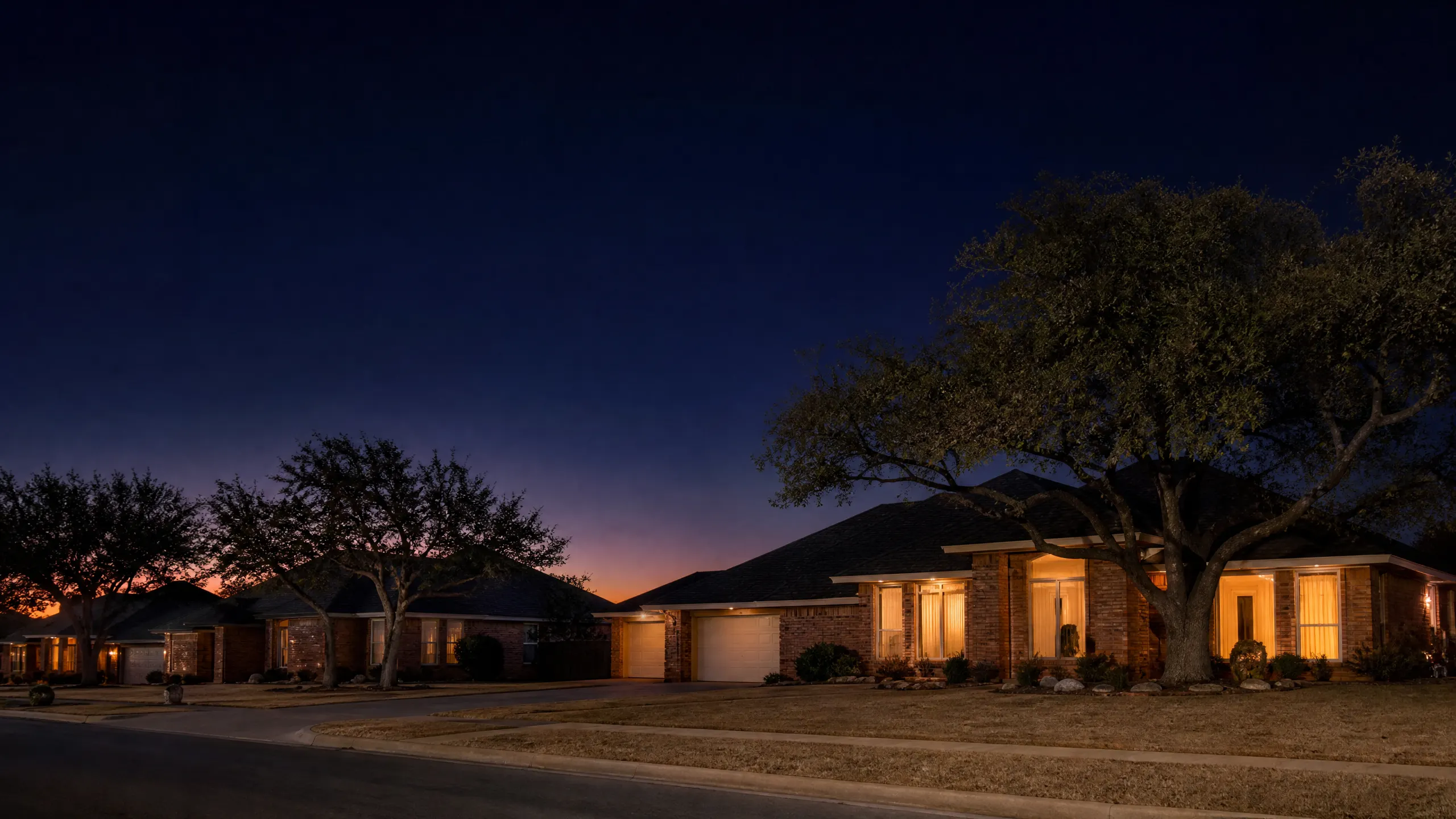
November starts the load
Furnaces in Madill go to work in November and keep running through March. That first cold snap asks for full output right away, no easing into it.
Takes about a minute. No obligation.
Furnaces in Madill go to work in November and keep running through March. That first cold snap asks for full output right away, no easing into it.
Get the furnace checked in October, before it has to run. A tech can catch a weak igniter or a cracked heat exchanger while the furnace is still off, not during the first cold week when it's already working hard.
Your furnace only runs about five months here, November through March.
Light duty still wears on an igniter or a heat exchanger, so a yearly check is what keeps it reliable.




A quick visit gets you a filter swap and a glance at the thermostat. That's it. A thorough one has the tech pull the burner assembly and look at the flame itself, not just listen for it to kick on. They'll check the flame sensor for corrosion, since a dirty sensor is one of the most common reasons a furnace shuts itself off mid-cycle. They'll test the heat exchanger for cracks, because that's the part that can let combustion gases into the air you breathe. They'll check the igniter's resistance rather than just confirming it glows, and look at the inducer motor and venting to make sure exhaust is actually leaving the house. If the visit is over before you'd finish a cup of coffee, something got skipped.
Easy duty still wears parts. A yearly check keeps it going a long time.
Find a contractor
A furnace doesn't have a drain or coils to worry about, that's the air conditioner's side of the system. But the filter still matters, because the same blower pushes air across the heat exchanger. A clogged filter starves that airflow, and the heat exchanger runs hotter than it should. Over years, that's what stresses the metal and opens a crack. Swapping the filter on a regular basis is the cheapest insurance a furnace gets.
If it fires up, runs a few minutes, and shuts off before the house warms, that's not normal wear. A dirty flame sensor or a restricted filter can cause it, and either one is worth a look before the shutdowns get more frequent.
A furnace flame should burn steady and blue. Yellow or flickering means combustion isn't complete, and that's a safety question, not a maintenance one. Don't wait for the yearly visit if you see it.
A tune-up also checks things you'd never think to look at. The tech measures temperature rise across the furnace, the difference between the air going in and the air coming out, because too high or too low both point to an airflow problem you can't see from the vent. They check the gas pressure at the manifold, since too much or too little changes how clean the flame burns. They look at the blower wheel for dust buildup, which throws it off balance and wears the motor bearing early. None of this shows up by watching the furnace run or feeling the air at a register. It's only visible with the panels off and a meter in hand.
A tune-up also means someone checks the safety switches, the limit switch and the rollout switch, by hand rather than trusting they'll work if needed. The limit switch shuts the furnace down if it overheats, and the rollout switch catches flame that isn't going where it should. Neither one announces itself until the day it has to act. The tech also checks the condensate line if the furnace has one, because a clog there can back up and trip the unit off entirely. Wiring connections get snugged too, since a loose connection at the control board causes the kind of intermittent fault that's hard to track down later. This is the part of the visit that isn't about comfort. It's about the furnace shutting itself off correctly when something goes wrong, instead of not shutting off at all.

