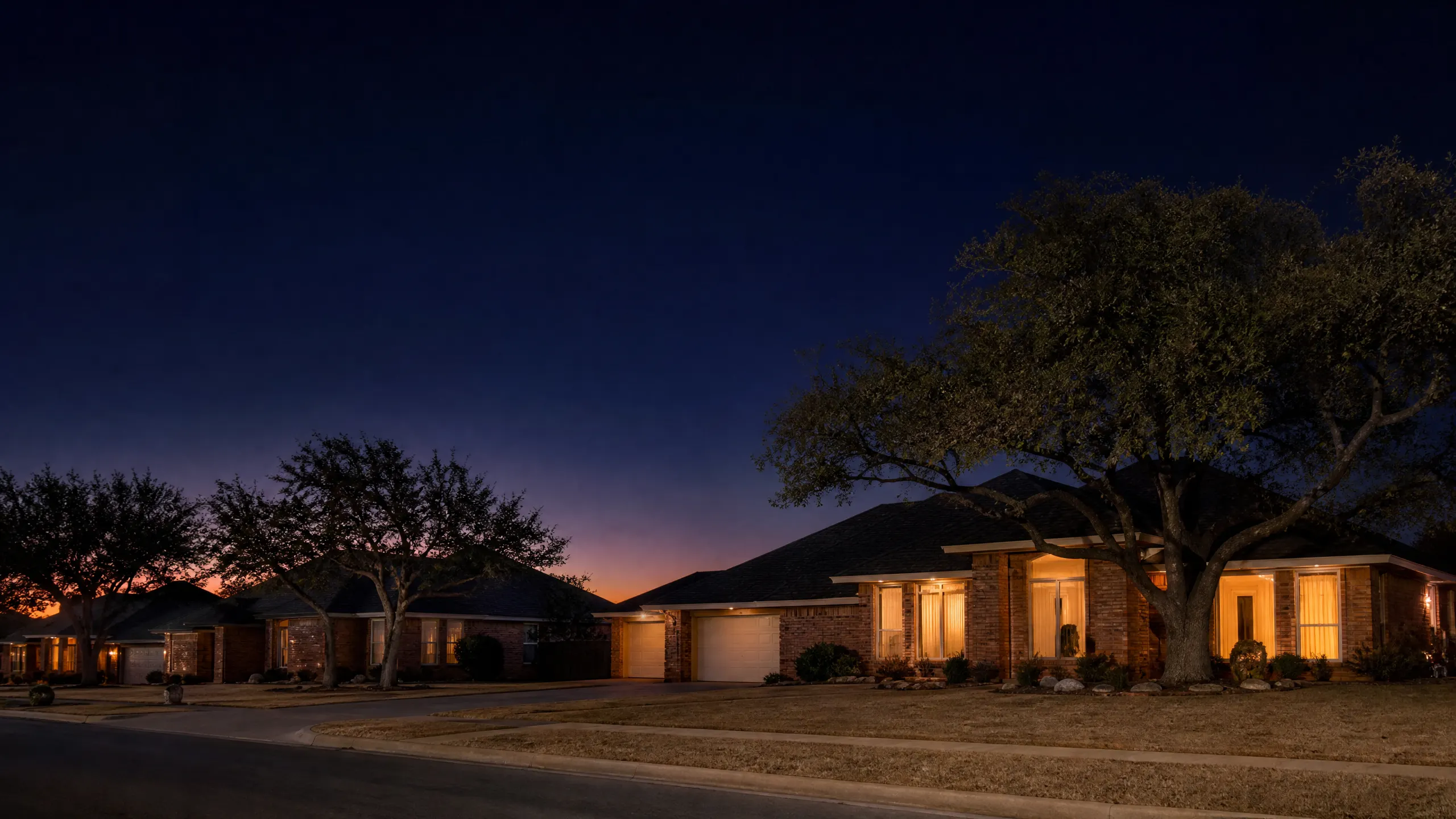




Suburban brick ranch houses with glowing exterior lights photographed at dusk beneath a twilight sky, with a large oak tree in the foreground.

Furnace Maintenance in McAlester, OK

Tell us about the job

Takes about a minute. No obligation.

Tune-up, service, or cleaningFurnace or heatingPittsburg County, OK
Step 1 of 2

What ZIP code is the job in?

A quick tune-up ends with the furnace running and a sticker on the door. A thorough one starts there. The tech should pull the burners and clean them, check the flame sensor instead of just wiping it, and look at the heat exchanger with a light or a camera rather than a glance. They should test the pressure switch, check the inducer motor for noise, and measure the temperature rise across the heat exchanger against what the furnace is rated for. Amp draw on the blower motor tells them if it's working harder than it should. If the visit is over in a few minutes and nobody touched the burners or opened the cabinet beyond swapping the filter, that was a look, not a tune-up.

More than half the homes in Pittsburg County heat with electricity.

Utility gas still heats 30.9% of homes here, and that furnace needs its burner and vents checked, not just a filter change.

November starts cold here. October is when the furnace gets checked.

Heat runs November through April
Winter nights average 32°F
9 winter storms from 2015 to 2024

Skip maintenance and the furnace usually still runs, which is exactly why it gets skipped. What builds up underneath is dust on the burners that changes how clean the flame is, and a flame sensor that reads weaker and weaker until the furnace starts shutting off on its own. A dirty flame sensor doesn't fail all at once. It gives you a furnace that runs fine for a while, then short cycles, then won't stay lit, and by then you're calling for a repair instead of a tune-up. The heat exchanger is the part that actually worries techs. A crack in it doesn't announce itself. It gets found with a camera during an inspection, not by anything you'd notice from the next room. Left unchecked long enough, that's the difference between a furnace that needs a part and one that needs replacing.

Get the burner and venting checked

Gas and oil systems need the burner, venting and safety controls checked, not just a new filter.

Find a contractor
A gray high-efficiency gas furnace installed in an unfinished basement, surrounded by gas lines, a condensate drain, and sheet-metal ductwork.

Every hour it runs leaves a mark somewhere

A furnace wears a little every time it cycles on. The igniter heats and cools over and over through a season, and that's what eventually cracks it. The blower motor's bearings wear from hours of spinning, not from any one bad day. None of it shows up as a sound or a smell you'd notice. A tech finds it with the cabinet open, reading amp draw on the blower or watching how slow the igniter glows compared to what it should. A furnace with a lot of hours on it can still look fine from across the room and still be closer to a shutdown than a newer one would be.

Change the filter yourself

A dirty filter chokes airflow, and the furnace runs harder and hotter to push air through it. Check it once a month during the heating months and swap it when it looks gray or matted. You don't need to open the cabinet or touch the burners to do this. That part is for a tech.

Keep the area around it clear

A furnace needs room to pull in air and push it back out. Don't stack boxes against it or block the vents in the rooms it heats. If it's in a closet, leave the door free to open. None of this fixes a flame sensor or a cracked heat exchanger, but it keeps the furnace from working against itself between visits.

A furnace doesn't have coils or a drain. That's the air conditioner's side of the cabinet, not the furnace's, even though they sit together in the same system. The filter is the part they share. A clogged filter starves the furnace of airflow just like it starves the AC, and a furnace pushing air through a dirty filter runs hotter across the heat exchanger than it should. That extra heat stresses the metal the same way too many cycles do, and it can show up later as a crack. Changing the filter isn't just about airflow. It's one of the few things protecting the heat exchanger from the inside.

A tune-up has a set order because each step checks something the last one couldn't. Cleaning the burners comes before testing the flame sensor, since a sensor reading can look weak just from soot nearby that has nothing to do with the sensor itself. The heat exchanger gets inspected before anything is reassembled, not after, because once the cabinet is closed up that crack is hidden again until next year. Combustion gases get tested only once the furnace has been running a few minutes, since a cold start reads differently than steady operation. Gas pressure gets checked at the manifold, not guessed at from how the flame looks. Skip a step or do them out of order and the ones after it stop telling the tech anything reliable.