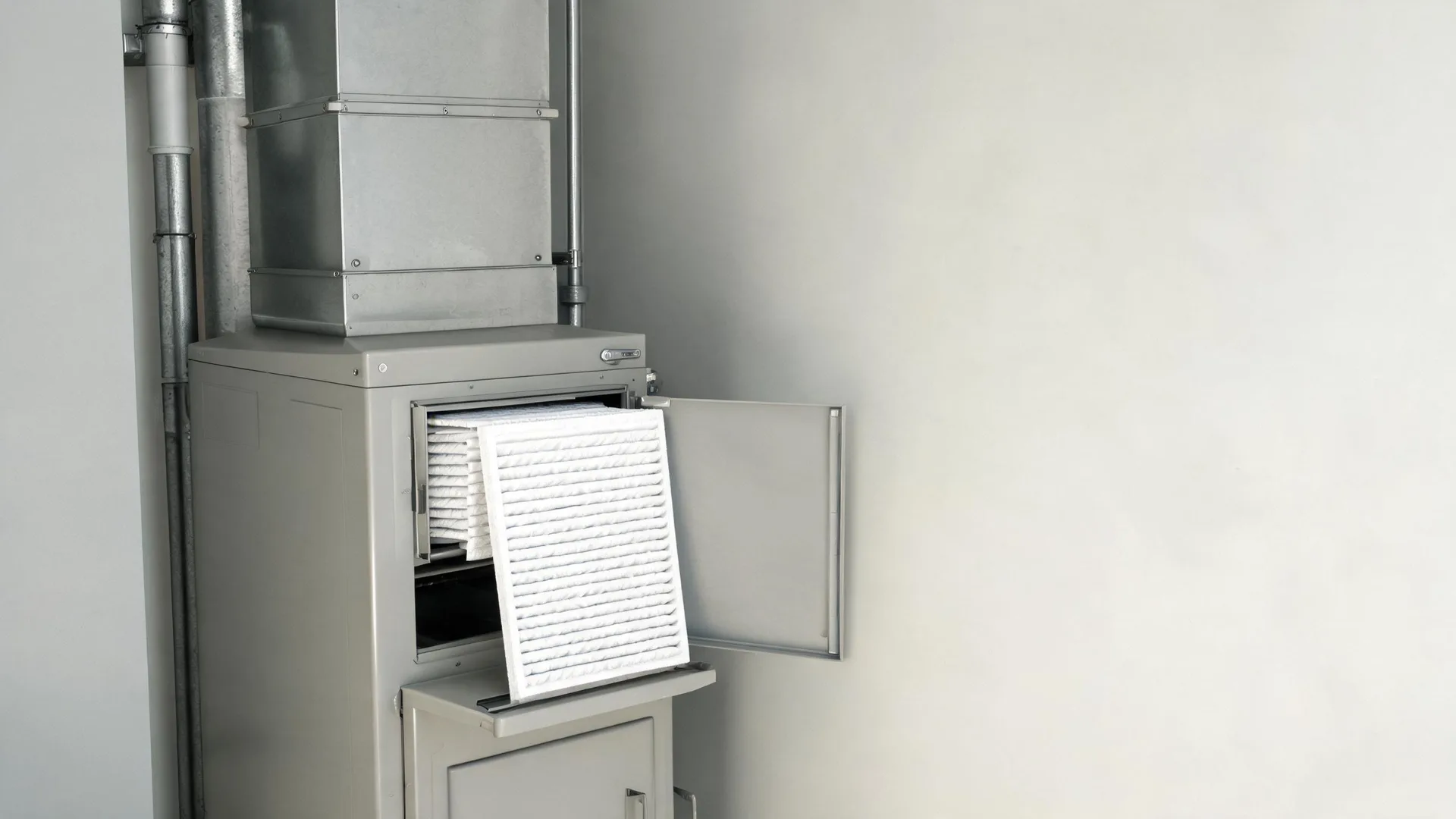
An empty unfinished basement containing a forced-air furnace with overhead ductwork, exposed ceiling joists, and a single hanging light bulb.

Furnace Maintenance in Tulsa, OK

Tell us about the job

Takes about a minute. No obligation.

Tune-up, service, or cleaningFurnace or heatingTulsa County, OK
Step 1 of 2

What ZIP code is the job in?

Tulsa County sees its share of storms

Tulsa County logged 525 severe weather events between 2015 and 2024, including 276 damaging wind events, 215 hail events and 22 tornadoes. Ten winter storms hit the county in that same stretch, bringing heavy snow and ice.

Outages here run long

A quarter of Oklahoma households went at least 24 hours without power in 2024. A furnace that depends on its blower motor and ignition control won't run through an outage like that, so the system needs to be working right before the power goes out, not after.

Half the homes in Tulsa County were built in 1979 or later.

A furnace that young still has years of work left in it, and a yearly check is what gets it there.

Heat starts in October here, so the check belongs in September

Heat runs October through April
Winter nights average 29°F
10 winter storms from 2015 to 2024
Most Tulsa County furnaces run on gasUtility gas heats 62.1% of homes here, which means the burner and venting need the check, not just the filter.

A tune-up turns up things a homeowner has no way to see without taking the furnace apart. The heat exchanger gets inspected from the inside, because a hairline crack in the metal doesn't show from outside the cabinet and won't show up as a smell or a sound until it's gotten worse. Gas pressure at the manifold only shows up on a gauge, not to the eye or ear, and a furnace running slightly rich or lean can do that for a long time before anything seems wrong. The flame sensor's actual response gets tested, not just its appearance, since a sensor can look clean and still be reading the flame wrong. Wiring connections get checked by hand for anything loose, because a connection can carry current fine most of the time and still be the thing that fails on the one cold morning it matters. None of this shows up on a walk past the furnace. It shows up when someone opens it up and checks.

Get the furnace checked before the next outage finds it unready

Storms here knock out power, and when it comes back, the furnace needs to start up on its own and run right. A check now covers the blower motor and ignition control before winter asks anything of them.

Find a contractor
A gray high-efficiency gas furnace installed in an unfinished basement, surrounded by gas lines, a condensate drain, and sheet-metal ductwork.

The furnace usually tells you before it fails

A furnace gives a few warnings before it quits for good. It short cycles, running for a couple minutes then shutting off before the house gets warm, because a cracked heat exchanger or a dirty flame sensor is tripping the limit switch early. It runs long and still leaves rooms cold, which points to a clogged filter choking airflow or a blower wheel caked with dust. The burner flame should burn blue and steady. A flame that flickers yellow or orange means it's not burning clean, and that's not something to wait out. Listen for a boom at startup, which means gas is building up before it lights instead of catching right away. A furnace that smells like it's burning dust for the first few minutes of a cold morning is normal. That same smell lingering, or turning sharp, is not. Any of these is reason enough for a technician to look at the burner, the ignition control and the heat exchanger before the furnace is asked to run every day.

A filter swap isn't a tune-up

A thorough check pulls the burner assembly apart to clean each burner port, since a port clogged with rust or dust throws a weak or uneven flame. It tests the flame sensor instead of just wiping it, checks the pressure switch and draft inducer, and runs the furnace through a full cycle to see how it actually behaves. A quick visit swaps the filter, glances at the flame, and calls it done.

The heat exchanger is the part worth checking

A cracked heat exchanger can leak carbon monoxide into the air the blower pushes through the house, and a crack like that doesn't always show on a quick look. Finding it takes pulling the burners and inspecting the exchanger directly, sometimes with a camera, not just a glance with a flashlight. That inspection is the difference between a technician who checked the furnace and one who checked the filter.

Skip maintenance long enough and a furnace doesn't fail all at once, it drifts. Dust builds up on the blower wheel first, so the blower works harder to push the same air, and the motor bearings wear faster than they should. A dirty flame sensor starts misreading the flame as not there, so the furnace shuts itself off mid-cycle even though it's burning fine. Left alone, that short cycling gets worse and more frequent instead of better. The burner ports collect rust and dust too, and a port that's partly blocked burns unevenly, which stresses the heat exchanger it's firing into. None of this announces itself the way a dead blower motor does. It just means the furnace works harder each winter to do what it used to do without strain, until the part that was already weak is the part that gives out.

A tune-up has a set order because each step checks something the last one depended on. The technician starts with the burners, cleaning them and watching the flame they produce once lit. From there it's the flame sensor, tested against how it actually responds, not just scraped clean and reinstalled. The gas pressure gets checked at the manifold, since too high or too low a pressure throws off the burn even with clean burners. The blower wheel and motor get inspected for dust buildup and wear, because a wheel caked with dust unbalances the motor it's attached to. Electrical connections get checked for anything loose or corroded, since a loose connection is what causes a furnace to quit mid-cycle for no obvious reason. Every one of these is a small thing on its own. Skipped together, year after year, they're what turns a furnace that starts every time into one that doesn't.