




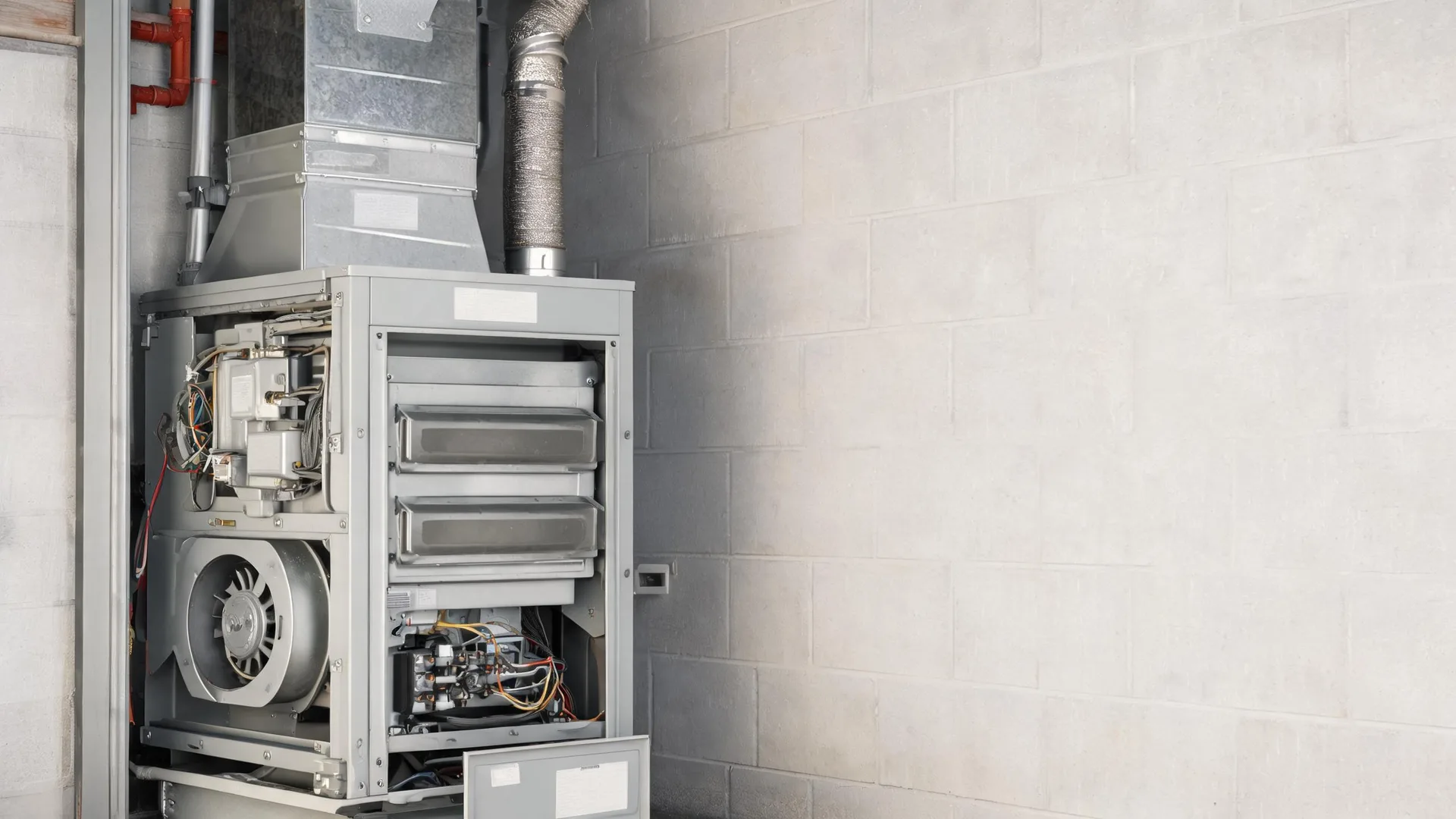
An unfinished basement featuring concrete block walls, exposed floor joists, and a metal forced-air furnace with ductwork near a central pillar.

Furnace Repair in Durant, OK

Tell us about the job

Takes about a minute. No obligation.

RepairFurnace or heatingBryan County, OK
Step 1 of 2

What ZIP code is the job in?

A furnace that's about to need a repair usually tells you before it quits outright. Short cycling is one of the first signs, where it fires up, runs briefly, and shuts off before the house warms. That can mean a dirty flame sensor or a clogged filter choking airflow. A burner that clicks and tries to light but won't catch is often the igniter failing, and once it goes, it doesn't come back on its own. Pay attention to the air coming out of the vents too. If it's lukewarm instead of hot, or if one room never gets warm while others do, something in the system isn't working the way it should. Banging or scraping noises when the blower starts aren't normal either, and they tend to get worse, not better, if you wait.

5 months
November through March, your furnace is on duty
34°F
the average winter night it heats against
2 winter storms
in ten years, the nights a failure hurts most
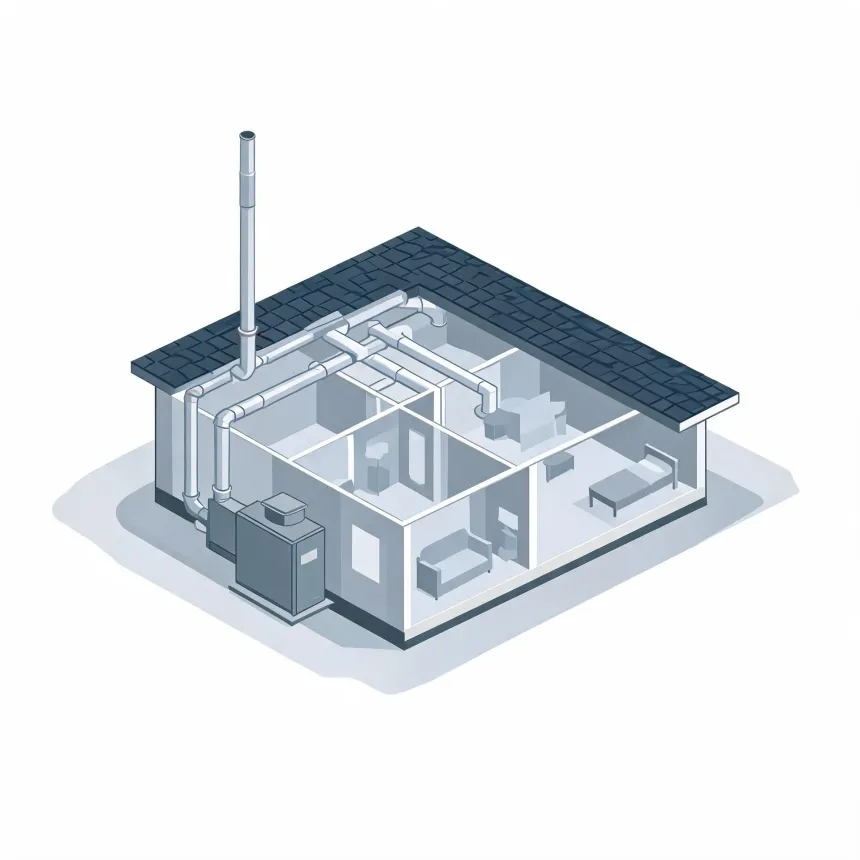
Isometric cutaway illustration of a single-story house with a dark shingled roof, showing interior rooms with furniture, a ducted air distribution system, a tall vertical flue pipe, and a gray furnace unit outside the wall.
Your furnace works hardest from November through February.

NOAA nClimDiv, 1991–2020 normals

Half the homes in Bryan County were built in 1989 or later.

A furnace that age still has years in it, which makes repair the right call before anyone talks about replacing it.

Five months of mild winter means your furnace isn't working as hard as most

Heat runs November through March
Winter nights average 34°F
Climate zone 3A
Furnace repair, ready before NovemberHeat runs November through March here. October is the month to get a weak furnace looked at before it has to work.

Bryan County sees rough weather most years, with damaging wind and hail both common. An outdoor unit doesn't need a direct hit to take damage. Hail can dent the cabinet and bend the fins, and wind-blown debris can get pulled in and still let the unit run, just not the way it should. A quarter of Oklahoma households went at least a day without power in 2024, which matters more for a furnace, since the igniter and blower both need electricity to work at all. If the outdoor unit took weather recently, it's worth having someone look even if the furnace is still keeping the house warm.

An easy winter usually means a furnace worth repairing

Five months a year of real cold, with lows near 34°F in December and January, is a light load for a furnace to carry. A machine that hasn't been worked hard is usually one worth fixing rather than replacing. Get the trouble looked at before you weigh anything bigger.

Find a contractor
A gray residential gas furnace installed in an unfinished basement, connected to sheet-metal ductwork and PVC pipes.

The parts that fail are the ones working every single cycle

Most furnace failures trace back to a handful of parts doing the same job over and over, thousands of cycles a year, until one of them gives out. The igniter sits right in the path of the flame every time the burner lights, and that heat wears it down a little each time. The flame sensor does the same job in reverse, watching for the flame so the gas valve knows it's safe to stay open, and soot builds on it slowly until it can't see the flame at all. Bearings in the blower motor wear from spinning constantly whenever the system calls for heat, and a capacitor that helps the motor start weakens with every cycle until it can't get the motor going. None of that is damage from a hard winter or a mild one. It's just parts reaching the end of how many times they can do their job before they stop doing it.

A cracked heat exchanger gets worse with every cycle

Metal that's already split keeps flexing each time the burner fires and the furnace heats up and cools down. Running it longer doesn't let it heal, it just works the crack wider until exhaust can leak into the air the blower pushes through the house.
A failing blower motor can take other parts down with it

A motor that's struggling pulls more current than it should and runs hotter than it should. Left alone, that strain can trip the limit switch repeatedly or burn the motor out entirely, turning a motor repair into a motor and control board repair.

A few things are safe to check before anyone comes out. Start with the thermostat. Make sure it's set to heat, not fan, and the temperature is set above room temperature. Next, check the filter. Pull it out and hold it up to a light. If you can't see light through it, it's choking airflow and needs to be replaced. Check that the furnace switch, the one that looks like a light switch on or near the unit, is flipped on, and that the breaker for the furnace hasn't tripped. If you have a gas furnace, make sure the gas valve is open and that other gas appliances in the house are working. None of that touches the burner, the igniter or anything behind the panel. Leave that part to someone who works on it for a living.

A furnace rarely fails all at once. One part goes, and the rest of the system is still fine, which is what makes a repair worth doing in the first place. A bad igniter or a failed flame sensor is a wear item. It fails on its own schedule and fixing it brings the furnace right back to running the way it should. A cracked heat exchanger is a different kind of problem, since the metal has already split and heat alone won't let it close back up. The question worth asking when something breaks is whether it's one part causing the trouble or whether the furnace is failing in more than one place at the same time. A furnace with years left in it and a single failed part is almost always worth repairing.