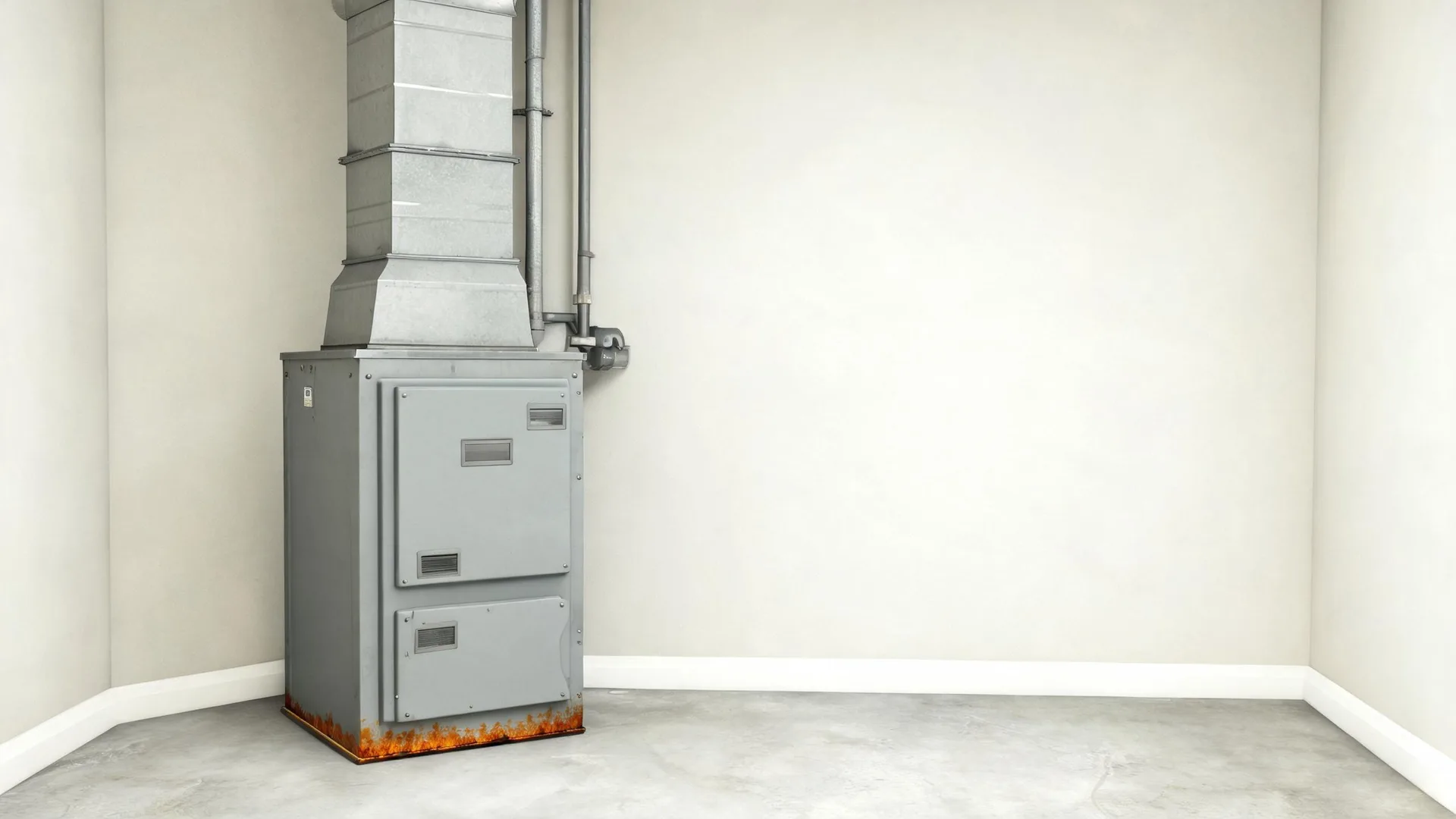
A gray forced-air furnace with metal ductwork stands in an unfinished basement with exposed wooden joists, concrete walls, and a single hanging light bulb.

Furnace Repair in Enid, OK

Tell us about the job

Takes about a minute. No obligation.

RepairFurnace or heatingGarfield County, OK
Step 1 of 2

What ZIP code is the job in?

Garfield County sees its share of storms

Garfield County logged 223 severe weather events between 2015 and 2024. That includes 109 damaging wind events, 91 hail events, and 7 tornadoes. Winter storms with heavy snow and ice hit 12 times in that same span.
A furnace runs off what the power grid gives it

A quarter of Oklahoma households lost power for 24 hours or more in 2024. Hail and wind reach the outdoor parts of a heating system even when the furnace itself sits inside. If a storm has come through and something seems off, have the unit looked at even if it still turns on.

7 months
October through April, your furnace is on duty
27°F
the average winter night it heats against
61%
of homes here heat with gas, so most furnaces here burn gas
12 winter storms
in ten years, the nights a failure hurts most
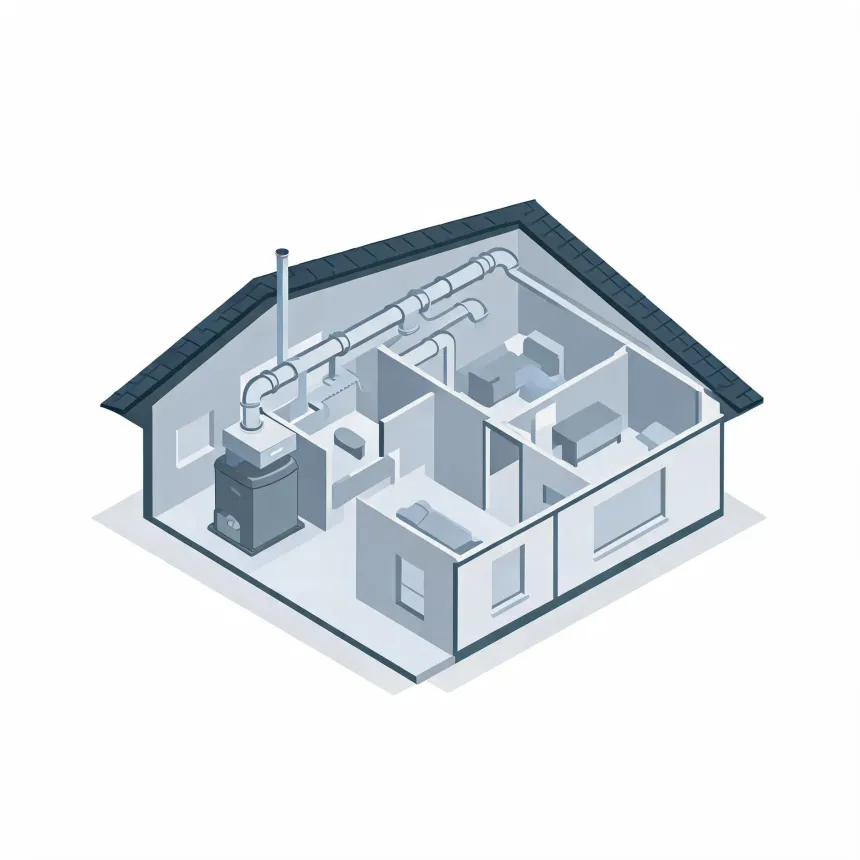
Isometric cutaway illustration of a single-story house showing interior rooms, ductwork running along the ceiling, a flue pipe through the roof, and a dark furnace unit in one corner.
Your furnace works hardest from November through March.

NOAA nClimDiv, 1991–2020 normals

Half the homes in Garfield County were built in 1970 or earlier.

A furnace that old is on borrowed time, so a repair call is also a chance to ask how much life it has left.

Seven months of heat starting in October means a weak part gets found fast

Heat runs October through April
Winter nights average 27°F
12 winter storms from 2015 to 2024

If the furnace came with the house, ask the contractor for its age before signing off on a repair. A technician can read the model and serial number off the data plate and tell you roughly how many years it has left. That changes the math on the repair. A furnace with plenty of life left is worth fixing. One that is near the end is a harder call, and better to make with the actual age in hand than a guess. For a house built in 1970 or earlier, that question is worth asking every time something goes wrong, not just this once.

Get the furnace checked whenever the outdoor unit does

If a storm has come through recently, get the furnace checked along with the outdoor parts, even if the repair call started over something else. A technician already on site can look at both while they're there.

Find a contractor
A gray high-efficiency gas furnace installed in an unfinished basement, surrounded by gas lines, a condensate drain, and sheet-metal ductwork.

What the furnace is telling you before it fails

A furnace usually tells you something is wrong before it quits for good. It might take longer to warm the house than it used to, or run in short bursts instead of staying on. The burner flame should be steady and blue. If it looks yellow or ragged, or if you notice soot near the vent hood, that's worth a call. A clicking igniter that doesn't lead to a flame means it's trying and failing to start. Short cycling wears on the heat exchanger and the blower motor both, so it's not something to wait out. A burning smell the first time it runs after sitting idle is normal and clears fast. One that lingers is not. Rooms that used to heat evenly but now run cold in corners can point to a failing blower or a duct problem rather than the furnace itself. Any smell of gas means shutting it off and calling someone right away, not waiting to see if it passes.

The igniter wears out before anything else

An igniter heats up every time the furnace starts and cools down every time it stops, and that cycle eventually cracks it. It's usually the first part to fail in a furnace that otherwise runs fine. A furnace that won't light, or clicks and tries without catching, often just needs this one part replaced.

A dirty filter causes problems well past the filter itself

When airflow is restricted, the heat exchanger runs hotter than it should and the blower motor works harder to push air through. Left long enough, that strain cracks the exchanger or burns out the motor, and either one costs far more than the filter that caused it. Changing the filter on a regular schedule is the cheapest thing that protects the rest of the furnace.

An unfinished basement featuring concrete block walls, exposed floor joists, a bare concrete floor, and a forced-air furnace with a large metal exhaust duct in the corner.

A new furnace would cut about $120 a year off heating for a typical Garfield County home.

  • A new high-efficiency furnace$520 a year
  • An older furnace$640 a year

Estimates for a typical Garfield County home, compared with an older unit built to the previous federal minimum, from EIA household energy data, Oklahoma fuel prices and NOAA climate normals. Your home will differ.

Repair makes sense when one part has failed and the heat exchanger is sound.

Replacement makes sense when the heat exchanger is cracked or the furnace keeps needing parts.

A repair is worth it when the failure is isolated to one part and the rest of the furnace is sound. A cracked heat exchanger is different. That's the part that separates the flame from the air moving through your house, and once it's cracked, it doesn't get patched, it gets replaced, often along with the furnace itself. Age matters less than what's actually failing. A furnace that's given no trouble until now and just needs an igniter or a flame sensor is worth fixing every time. One that's had a string of separate problems in close succession is telling you something different, even if each repair on its own looks small and cheap. The pattern matters as much as any single part.