




A nighttime street view of a row of illuminated single-story brick houses with large trees along the sidewalk.

Furnace Repair in Madill, OK

Tell us about the job

Takes about a minute. No obligation.

RepairFurnace or heatingMarshall County, OK
Step 1 of 2

What ZIP code is the job in?

October is worth paying attention to here. Furnaces in Madill sit unused most of the year, and November is when they go back to work for about five months straight. A weak igniter or a cracked heat exchanger often holds together fine while the furnace is off. It's that first real heat cycle that finds the part that was already on its way out. If yours struggled last March or made a noise you shrugged off, that's the part likely to fail first, not something new.

5 months
November through March, your furnace is on duty
34°F
the average winter night it heats against
2 winter storms
in ten years, the nights a failure hurts most
Isometric cutaway illustration of a small gabled house showing a furnace with flue pipe and ductwork connecting to interior rooms containing a sofa, bed, and cabinets.
Your furnace works hardest from November through February.

NOAA nClimDiv, 1991–2020 normals

An old furnace can still be worth repairing if the cabinet and heat exchanger are sound.

Once the heat exchanger cracks or the cabinet rusts through, you're replacing it, not patching it.

Half the homes here are older, but your furnace doesn't know that

Half the homes here were built by 1985
Heat runs November through March
Winter nights average 34°F

Marshall County sees its share of rough weather, 75 severe events recorded over the years counted, mostly wind and hail with a handful of tornadoes mixed in. None of that is what takes down a furnace. Wind and hail go after the roof, the siding, the AC unit sitting outside. The furnace is inside, usually in a closet or the garage, and it doesn't care what's happening outdoors. What takes down a furnace is age and use, the same igniter or heat exchanger problem you'd see in a county with calm winters. If the power does go out, most furnaces start back up on their own once it's restored, no reset needed. The thing worth tracking down is what's wrong with the furnace itself, not the weather around it.

A light workload like this, repair is usually the right call

Five months of heat a year, with overnight lows averaging 34, isn't a hard run for a furnace. It's not fighting bitter cold for months on end. So when something breaks, it's rarely the system being worked past its limits. More often it's the part that was already struggling last winter, finally giving out. That's worth tracking down and fixing, not replacing the whole furnace over.

Find a contractor
A gas furnace with attached ductwork, gas piping, and condensate lines installed in a concrete-block basement.

It's not age that breaks a furnace, it's the cycling

Most furnace failures start with a part that has one job and does it thousands of times a cycle. The igniter heats up and cools down every single run, and that repeated stress is what cracks it, not any one bad day. A flame sensor coated in residue stops reading the flame and shuts the burner down as a safety measure, even though nothing is actually wrong with the flame itself. Inducer motors wear out the way any motor does, bearings going stiff until the blower cuts out before heat even starts. The furthest end of that list is the heat exchanger, metal that flexes with every heat cycle until it fatigues and cracks. None of these fail because a furnace is old on paper. They fail because they have been opening, heating, and shutting off over and over, and that cycle is what finally catches up with one part at a time.

What you'll actually notice first

Furnace trouble rarely starts with no heat at all. It starts smaller. The burner clicks and clicks before it catches, or it catches late with a soft thump. The blower runs but the air coming out feels barely warm. You hear a rattle on startup that wasn't there before, or the whole thing shuts off a few minutes into a cycle and won't stay lit. Any of that means a part is struggling, not gone yet, which is exactly the point to get it looked at.
The one sign that changes the answer

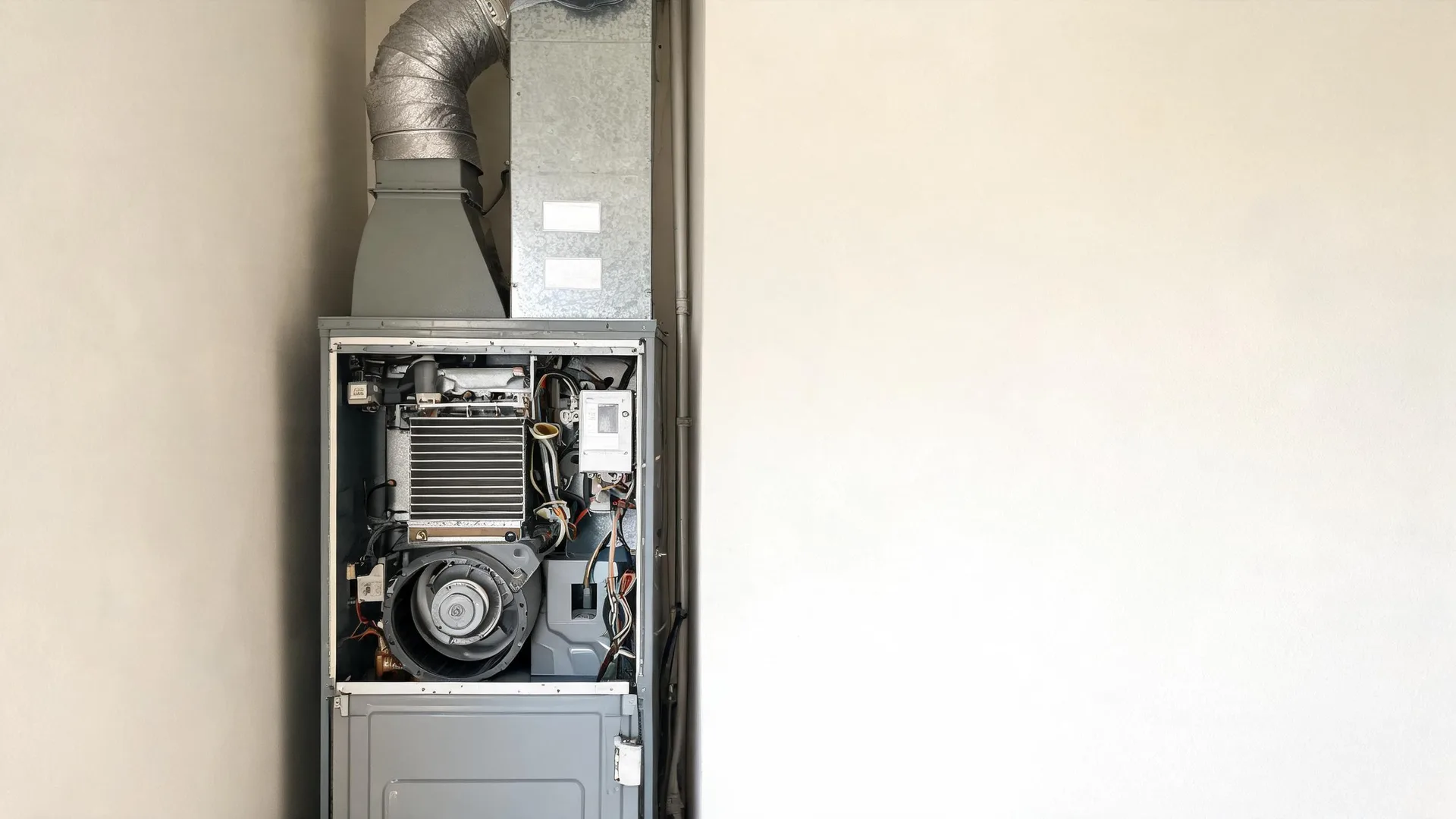
A burning dust smell for the first few minutes is normal and clears on its own. A smell that lingers, or anything closer to a metallic or exhaust odor, is different. So is soot around the furnace, a yellow flame where it should be blue, or a headache that shows up when the furnace runs and fades when it's off. Those point at the heat exchanger or venting, not a worn igniter, and that's not a wait and see situation.

A furnace that's struggling usually isn't done yet, it's asking to be shut off. Short cycling is the clearest example. When the heat exchanger cracks or restricts airflow, the furnace overheats and a safety switch trips, cutting the burner before it finishes a normal run. Keep calling for heat and it keeps tripping, over and over, which is harder on the inducer motor and the igniter than a normal cycle ever is. A flame sensor caught early just needs a cleaning. Ignored, the furnace keeps attempting ignition trying to get a reading, and that repeated strain is what takes out an igniter that still had life left in it. The problems that start small and get worse are almost always the ones left running through them.

A diagnostic visit starts with the thermostat and works backward from there. A tech will run a cycle and watch it happen, not just ask what you heard. That means watching the igniter glow and catch, listening for the inducer motor spin up before it does, and checking that the flame is steady and blue once the burner lights. Flue venting gets checked too, since a blocked or cracked vent changes how the furnace is allowed to run safely. Panels come off to look at the heat exchanger directly, because that's the one part that decides whether a furnace gets repaired or replaced. Most of this happens with the furnace running, not sitting cold, since a part that's failing often only shows it under load.