




A single-story brick ranch house at night, lit by exterior lights that illuminate the facade, driveway, and several large mature trees in the front yard.

Furnace Repair in Ponca City, OK

Tell us about the job

Takes about a minute. No obligation.

RepairFurnace or heatingKay County, OK
Step 1 of 2

What ZIP code is the job in?

Kay County sees real weather. Between 2015 and 2024 the county recorded 98 damaging wind events and 88 hail events, with 200 severe weather events total in that span. Hail dents cabinets and bends the fins on an outdoor unit. Wind throws branches and debris into it. None of that always shows up as a problem right away. Six tornadoes touched down in the county over those same years. If your system took a hit from a storm, even one that still seems fine, it's worth having someone look before the next cold snap.

7 months
October through April, your furnace is on duty
26°F
the average winter night it heats against
71%
of homes here heat with gas, so most furnaces here burn gas
8 winter storms
in ten years, the nights a failure hurts most
Isometric grayscale illustration of a cutaway house showing an interior furnace with a tall flue pipe and ductwork running to rooms under a partially lifted roof.
Your furnace works hardest from November through March.

NOAA nClimDiv, 1991–2020 normals

October is when furnaces in Kay County switch on for the year.

A furnace that sat idle since spring finds its weak part in the first cold snap, not in January.

Half the furnaces here are older than the houses' wiring and ductwork were ever updated for

Half the homes here were built by 1964
Climate zone 4A
Heat runs October through April

Half the houses in Kay County were built in 1964 or earlier. If yours is one of them, and the furnace was never swapped out, it's old enough that parts for it are getting hard to find. A repair on a furnace that age is a bet. You're paying to keep running a unit that's already past what most furnaces are built to last, with no way to know if the next part fails in a month or in five years. Before you pay for the fix, ask the contractor straight: how many years does this buy you. If the honest answer is not many, that changes what the repair is worth to you.

If the power went out this year, check the furnace before winter asks it to work

A furnace doesn't have to take the hit directly to be worth checking. If a storm knocked out power at your place, even for a few hours, it's worth confirming the furnace comes back on and runs the way it did before. Call before the next cold snap puts it to the test.

Find a contractor
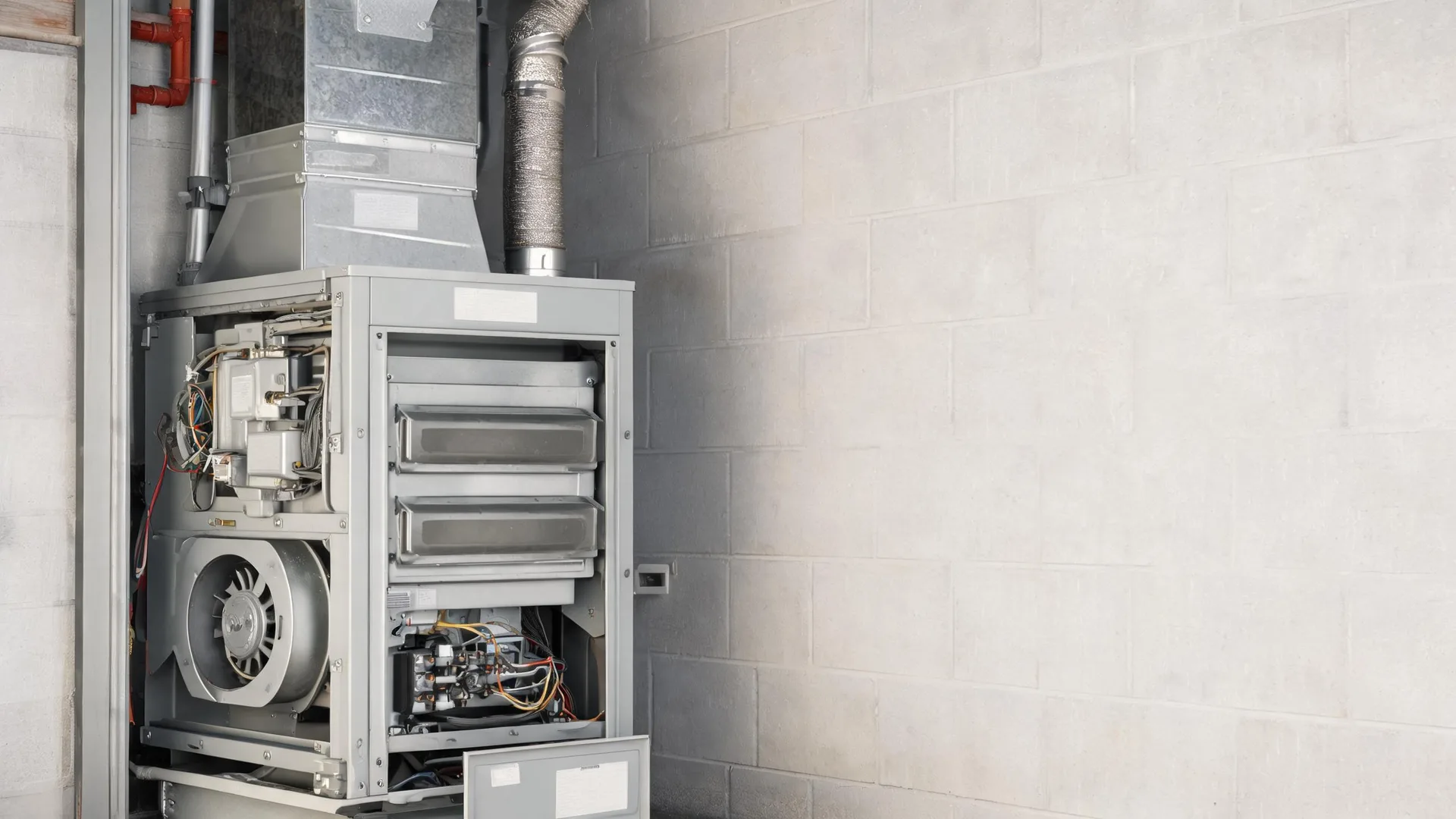
A gray residential gas furnace installed in an unfinished basement, connected to sheet-metal ductwork and PVC pipes.

What to check before you call

Before anyone comes out, check the thermostat is set to heat and the temperature is set above room temperature. Check the breaker for the furnace and the switch that looks like a light switch near the unit, sometimes mounted on or near it. That switch gets bumped or shut off during other work and forgotten. If you have a gas furnace, make sure the gas valve is open and check whether other gas appliances are working. Look at the air filter. A filter clogged with dust blocks airflow, and some furnaces will shut themselves down rather than run that way. If the filter hasn't been changed in a while, swap it before anything else. Check that supply vents and return grilles around the house are open and not blocked by furniture or rugs. If the furnace has a window for viewing the flame, a steady blue flame is normal; yellow or flickering is not, and that one is for the contractor, not you. Listen for what the furnace does when you raise the thermostat. If you hear clicking but nothing lights, or the blower runs but no heat comes out, hold onto those details. Telling the contractor exactly what you saw and heard, rather than just that it's broken, gets to the right fix faster.

A small problem now beats a bigger one later

A cracked heat exchanger, a failing igniter, a blower motor running on a worn bearing. None of these get better with more run time. The crack spreads. The igniter weakens a little more each cycle until it won't glow at all. The bearing wears until the motor seizes. A furnace that's struggling will usually keep answering the thermostat right up until the part finally gives out, and whatever it takes with it, a cracked exchanger, a scorched circuit board, a seized blower, costs more to fix than the original problem did.

Shutting it down when something's wrong is the right call

If the furnace is making a new noise, short cycling, or tripping its breaker, turn it off at the switch and call someone rather than letting it keep trying. A furnace that short cycles is already telling you a safety control is cutting it off before it overheats or before something worse happens. Let it keep attempting to run and you're not giving it a chance to fix itself. You're just running the failing part until it fails for good.

An unfinished basement interior showing a gray furnace unit beneath a bare incandescent bulb, surrounded by exposed joists, concrete walls, cardboard boxes, and utility pipes.

A new furnace would cut about $120 a year off heating for a typical Kay County home.

  • A new high-efficiency furnace$540 a year
  • An older furnace$660 a year

Estimates for a typical Kay County home, compared with an older unit built to the previous federal minimum, from EIA household energy data, Oklahoma fuel prices and NOAA climate normals. Your home will differ.

Repair makes sense when one part has failed and the heat exchanger is sound.

Replacement makes sense when the heat exchanger is cracked or the furnace keeps needing parts.

A diagnostic visit starts before any panel comes off. The contractor asks what you heard or saw: clicking with no flame, warm air that turns cool, a smell when it kicks on. Then they pull the panel and watch it run through a full cycle, from the thermostat call to ignition to the blower kicking in. Each stage has its own test. A multimeter checks whether the igniter is getting power and drawing the right current. A flame sensor gets pulled and cleaned or tested, since a coated sensor reads a flame that isn't really there and shuts the burners down as a safety response. Static pressure readings across the filter and ductwork show whether the system is breathing the way it should. The gas valve and pressure switch get checked too, because a furnace that won't stay lit is often failing one safety check rather than lacking gas. By the end, the contractor isn't guessing which part is weak. They've watched it fail or pass, step by step, and can point to the one that didn't.