Heat pump vs furnace in Kay County, Oklahoma

Find a Pro in Kay County

Heat pump or furnace, one form

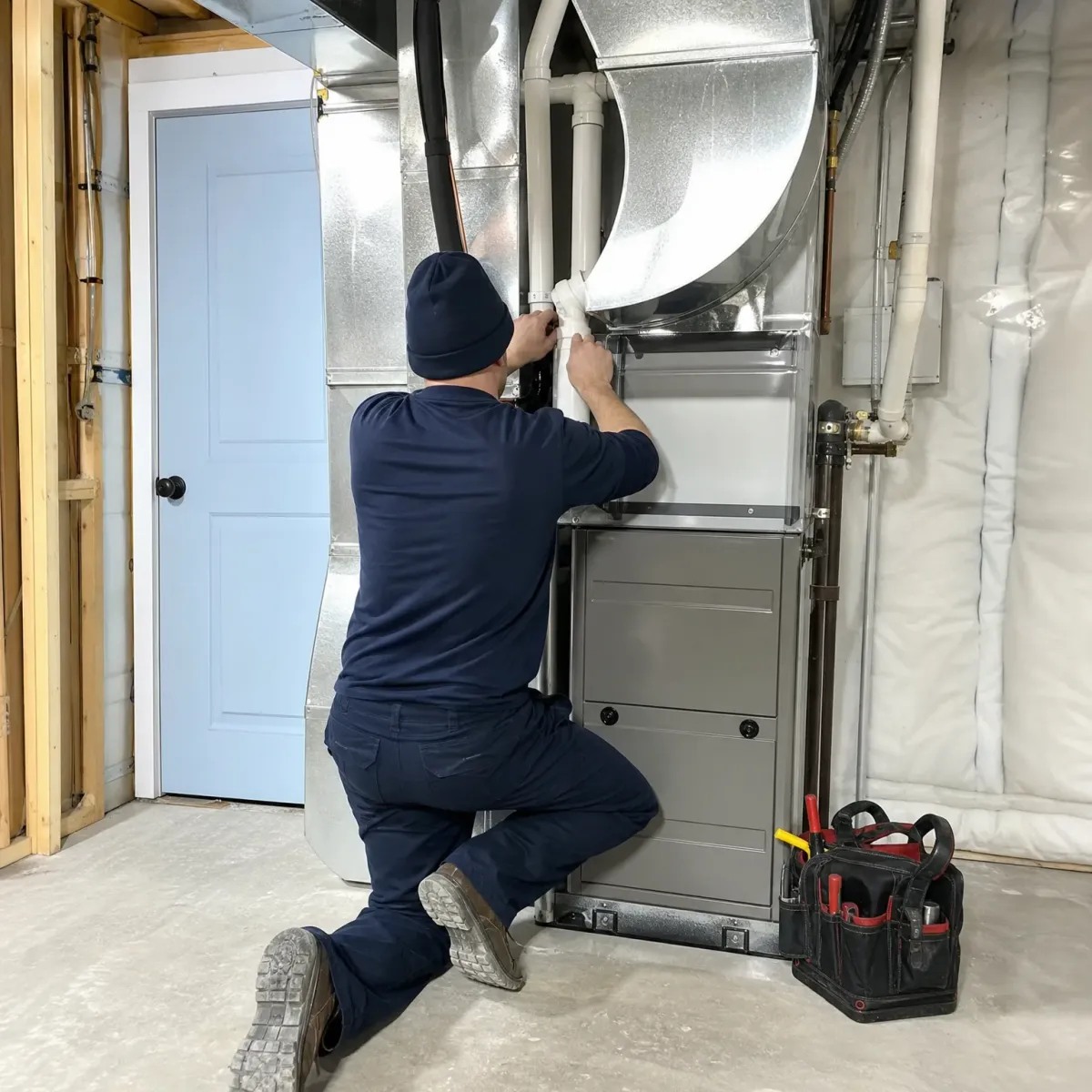
A person in dark clothing and a knit cap kneels on a concrete basement floor while working on piping at the top of a gray furnace, with ductwork, insulated walls, and a tool bag nearby.

Tell us about the job

Takes about a minute. No obligation.

New system or replacementKay County, OK
Step 1 of 3

What kind of equipment?

Which costs less to run in Kay County?

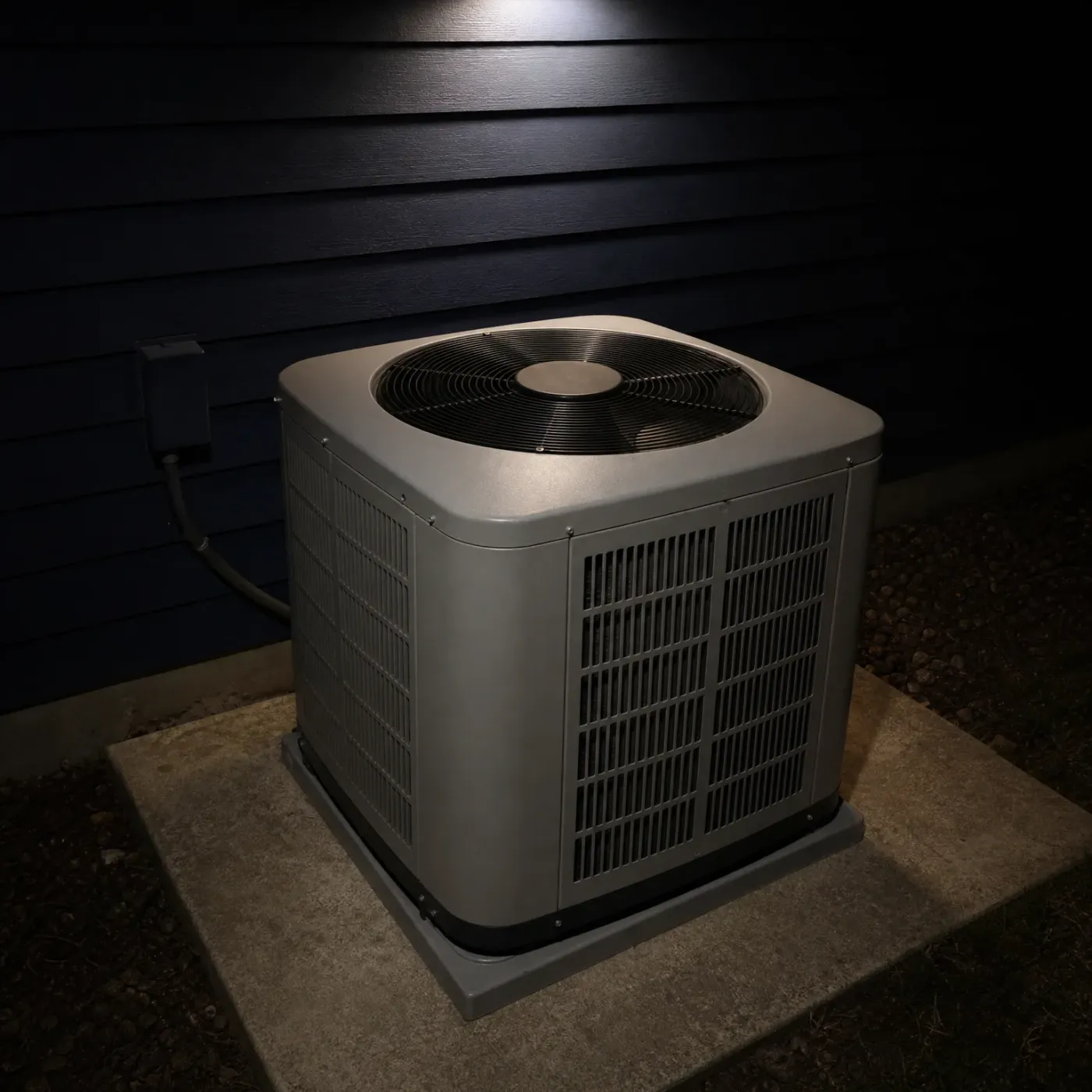
An outdoor air conditioning condenser unit on a concrete pad at night, lit from above, beside a dark horizontal lap-sided wall with an electrical disconnect box and conduit, with gravel on the ground.

Heat pump

To heat your home here$1.63per 100,000 Btu

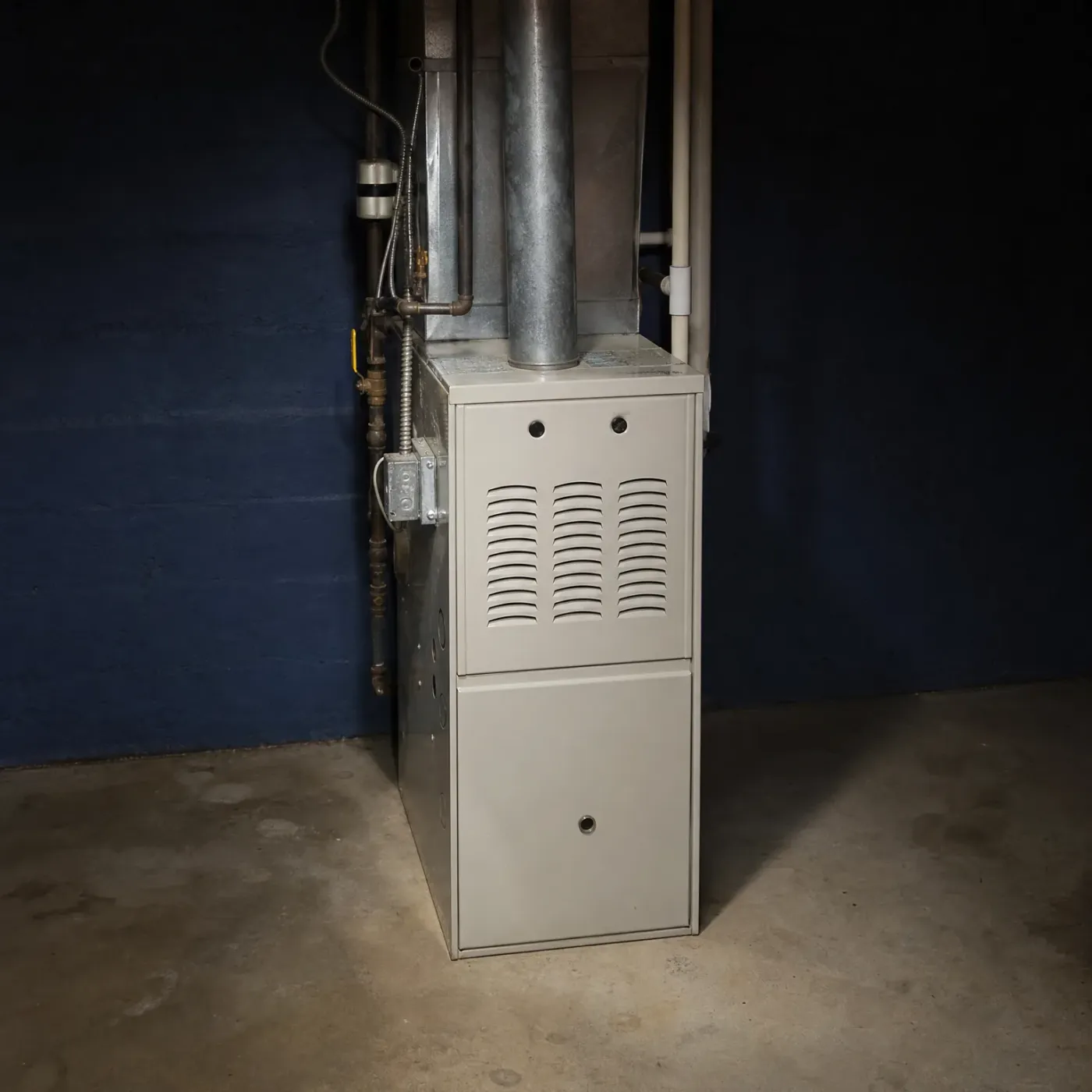
A beige gas furnace with a louvered upper panel stands on a concrete floor against a dark blue wall, with a metal flue pipe and gas and electrical lines running up beside it.

Furnace

To heat your home here$1.69per 100,000 Btu

At Oklahoma's gas and electricity prices, a heat pump and a gas furnace cost about the same to run here.

Btu stands for British thermal unit, the standard measure of heat energy.

Where does a heat pump shine?

  • Covers a long cooling season

    Cooling runs May through September here, five months of the year. A heat pump handles that whole stretch and still gives you heat once it turns cold, all from one system.

    A covered porch with light blue siding and ceiling fan, holding a dark round table with a glass of iced tea, a potted plant, navy cushioned chairs and sofa with blue pillows, hanging ferns, and a person walking in the yard beyond.
  • Steady, even comfort

    It eases up and down with the weather. There are fewer swings between too warm and too cool.

    A golden retriever sleeps on a cream shag rug in a dim living room with a lit wood stove, an armchair with a blue throw and open book, a lamp and mug on a side table, built-in bookshelves, and a window showing snowy evergreens.
  • No gas line, nothing burning in the house

    A heat pump runs on electricity alone. Nothing burns inside the house.

    Kitchen interior with a navy island topped by a wood counter and black induction hob holding a pale blue kettle, cream wall cabinets with a built-in black double oven, glass pendant lights, a vase of blue hydrangeas, and glass doors showing a fenced garden.

Where does a furnace shine?

  • Runs on the gas most homes here already use

    Most homes in Kay County already heat with gas, so the line running to your house is probably already there. A furnace just uses what's already hooked up.

    A row of wood-sided houses with covered porches, stone columns and an exterior gas meter along a snow-covered street, with a person in dark clothing walking on the sidewalk in the distance.
  • Fast, strong heat on demand

    A furnace pushes out hot air within minutes of switching on. A cold house warms up fast.

    Entryway with a dark navy glass-paned door showing snow outside, winter boots on a tiled floor beside a blue runner rug, a sheer curtain at a window, a wooden bench with a blue throw and steaming mug, and coats hanging on wall hooks.
  • Proven, simple, easy to get serviced

    The design is simple and well understood. That keeps service calls short.

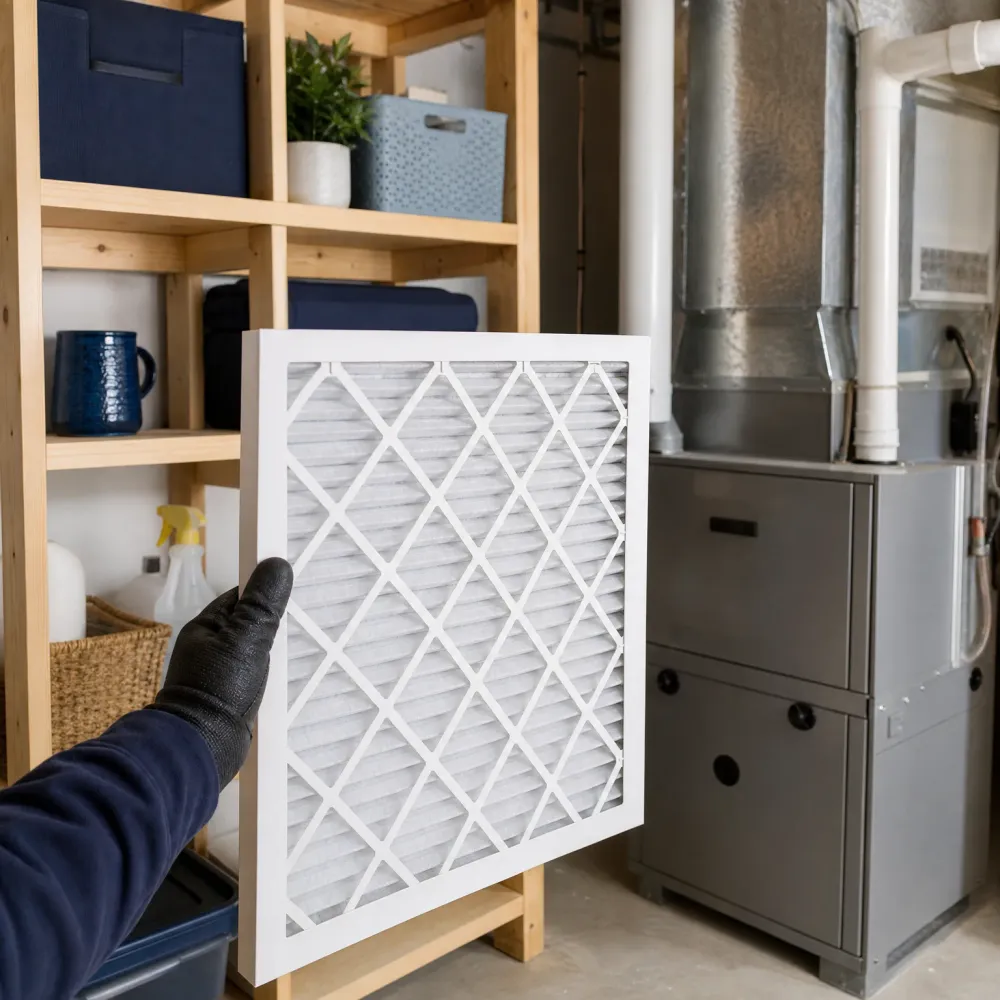
    A gloved hand holds a white pleated air filter in front of wooden storage shelves and a furnace with metal ductwork.

What the cold here does to a heat pump

Your winters are the whole question. Heat runs seven months a year in Kay County, October through April, longer than the five months you run cooling. The overnight low averages 26°F across December, January and February, and that's the number that matters, not the rare cold snap. A standard heat pump falls below its rated heat output once it's under 40°F outside, and below about 35°F it often leans on backup heat to keep up. Your average winter night is under both marks. About 90 nights a year here drop to freezing or below, and every one of those nights is colder than both thresholds too.

That doesn't mean a heat pump quits. Only about one night a year here reaches 0°F, so the deep cold that really strains one is rare, not routine. A two-winter field test of cold-climate heat pumps in occupied homes found backup heat carried only a small share of the load between 0°F and 35°F, and the units almost never ran on backup alone above 0°F. The catch is that result was for cold-climate models, built and tested to hold their output at 5°F. A furnace built to the federal minimum has no such test to pass. It burns gas and makes its heat the same way at 0°F as it does at 40°F.
A navy blue front door with four-pane glass set in light stone trim on a light blue horizontal-siding house, with white porch posts and railing, a potted flowering plant, stone steps, and shrubs beside a concrete walkway.

Cost, gas, and what's already at your house

Run the numbers at Oklahoma's prices and a heat pump costs $1.63 to make 100,000 Btu of heat, a furnace $1.69. That's close enough to call a tie, and the furnace side of that math already assumes gas, not electric backup, filling in on the coldest nights. Where the two really split is what's already running to your house. Utility gas heats 70.5% of homes in Kay County, a little over two in three, against 20.6% on electric heat. If gas already runs to your house, a furnace uses a line that's already there. If it doesn't, bringing one in is a cost the running-cost numbers don't cover.

A furnace only does one job. It has nothing to do for the five months a year you're running cooling, so you're buying a separate air conditioner either way. A heat pump does both from one system, which is worth something across a cooling season with about 70 days a year hitting 90°F or higher. Where that leaves you: if gas already heats your house and you want the furnace's proven, simple heat on the coldest nights, that's a reasonable call at these prices. If you're weighing a single system to cover both seasons, or your house runs on electric heat already, a cold-climate heat pump is built for exactly the winters this county has.

Sources: NOAA nClimDiv · NOAA 1991–2020 seasonal normals · Census ACS 2020–2024 · PNNL Building America guide · PNNL-37127 field study · ENERGY STAR product criteria · EIA SEDS 2024 · 10 CFR 430.32

Single-story yellow brick house with navy blue trim and shutters, a light blue front door with a wreath, and a wide concrete driveway bordered by grass and trees.

Common questions about heat pumps and furnaces

  • Can a heat pump heat a house through an Oklahoma winter?

    Yes, but not alone on every night. Your overnight low averages 26°F across December, January and February, below the 40°F mark where a standard heat pump's output starts falling short and below the 35°F mark where it often needs backup heat. Most nights here, about 90 a year, dip to freezing or below, though only about one night a year reaches 0°F, so the hardest nights are rare even if the cold ones aren't.

  • Will a heat pump keep my house cool enough here?

    Yes. A heat pump cools the same way a central air conditioner does, and that's the easier half of its job here. Cooling only has to handle afternoons at 90°F or above, which happens about 70 days a year, well inside what a central system is built for.

  • Can I keep my furnace and add a heat pump?

    Yes, and here that often means the furnace handles the coldest nights. A heat pump's output drops below 40°F and it often needs backup heat below about 35°F, and your overnight low averages 26°F in December, January and February. Pairing the two lets the heat pump carry most of the season while the furnace covers the nights it can't.

  • Is a heat pump cheaper to run than a furnace in Kay County?

    Yes, by a small margin. At Oklahoma's average prices a heat pump runs $1.63 per 100,000 Btu of heat against $1.69 for a gas furnace. That heat pump figure assumes a unit built to the federal minimum and doesn't add anything for the backup heat it may need on the colder nights here.