




A weathered wooden privacy fence runs along the left side of a dry grass yard beside a row of single-story brick houses with dark shingled roofs, under a pale overcast sky with large oak branches overhead.

Heat Pump Installation in Altus, OK

Tell us about the job

Takes about a minute. No obligation.

New system or replacementHeat PumpJackson County, OK
Step 1 of 2

What ZIP code is the job in?

A heat pump that's too big will short cycle, running for a few minutes and shutting off before it pulls moisture out of the air or settles into a steady rhythm. One that's too small will run constantly and still struggle to keep up on the coldest days. Getting the size right starts with a load calculation, not a guess based on the old equipment or square footage alone. A contractor doing this properly looks at the insulation, the windows, the orientation of the house, and how much duct leakage there is, then works out how much heating and cooling the space actually needs. That number tells them which unit to install, not the other way around. Skipping this step is how homes end up with equipment that wears out early or never feels comfortable no matter how long it runs.

6 months
November through April, your system heats
5 months
May through September, it cools
30°F
the average winter night it heats against
95°F
the average summer afternoon it cools against
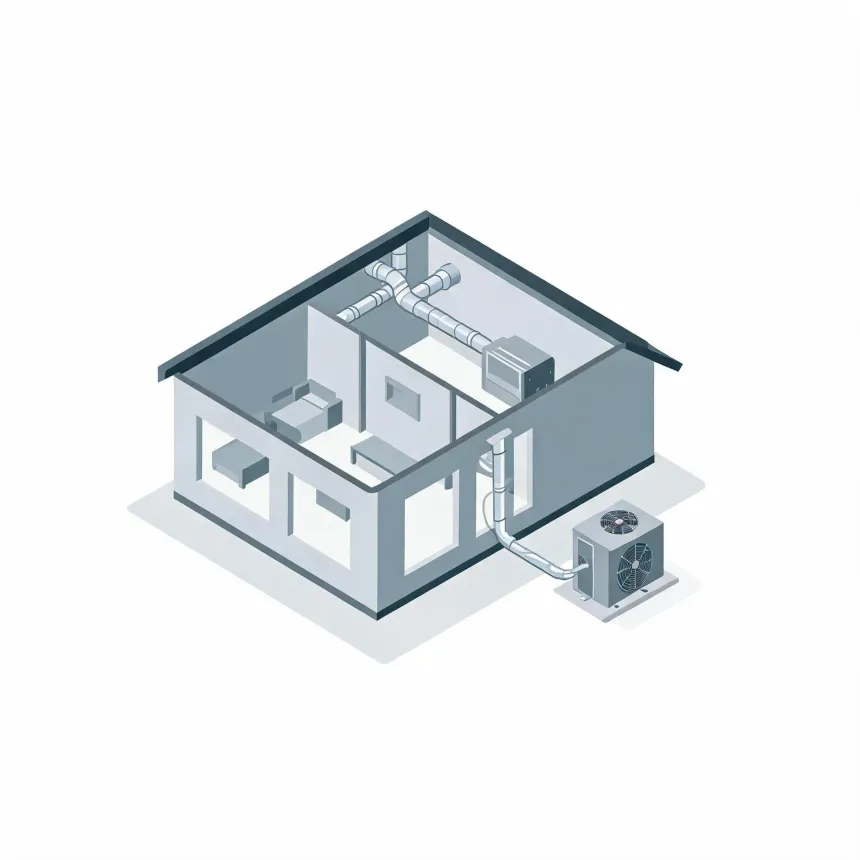
Isometric illustration of a cutaway house showing interior rooms, ceiling ductwork and an air handler, connected by lines to an outdoor condenser unit on a pad beside the building.
Your system heats November through April and cools May through September.

NOAA nClimDiv, 1991–2020 normals

Gas heats 62.9% of homes in Jackson County, more than any other fuel.

A heat pump going into a house here is likely replacing a gas furnace, so the ductwork and the controls both need a second look before install.

Altus runs April into a heat pump, so April is when to put one in

Cooling runs May through September
Heat runs November through April
104 hail events from 2015 to 2024
Altus runs on cheap powerOklahoma electricity ran 12.24 cents per kilowatt-hour in 2024, so pick a heat pump for how it holds up, not just the efficiency rating.

Half the homes in Jackson County were built in 1973 or earlier. A house that age was built for a furnace and a window unit, not a heat pump, and the ductwork is usually the part that was never touched. Old supply and return runs are often sized for the higher heat of a gas furnace, and a heat pump moves a larger volume of cooler air to deliver the same comfort. If the ducts are too small or leaking at the joints, the new unit will run longer to make up for it no matter how well it's sized. A contractor should check the duct sizing and seal any leaks as part of the install, not after someone notices a room that won't warm up.

This is a hard place to be an outdoor unit

Jackson County logged 104 hail events between 2015 and 2024. A heat pump going in now is going in exposed, and it's worth sizing and installing right the first time rather than cutting corners on a unit that has to hold up outside in that.

Find a contractor
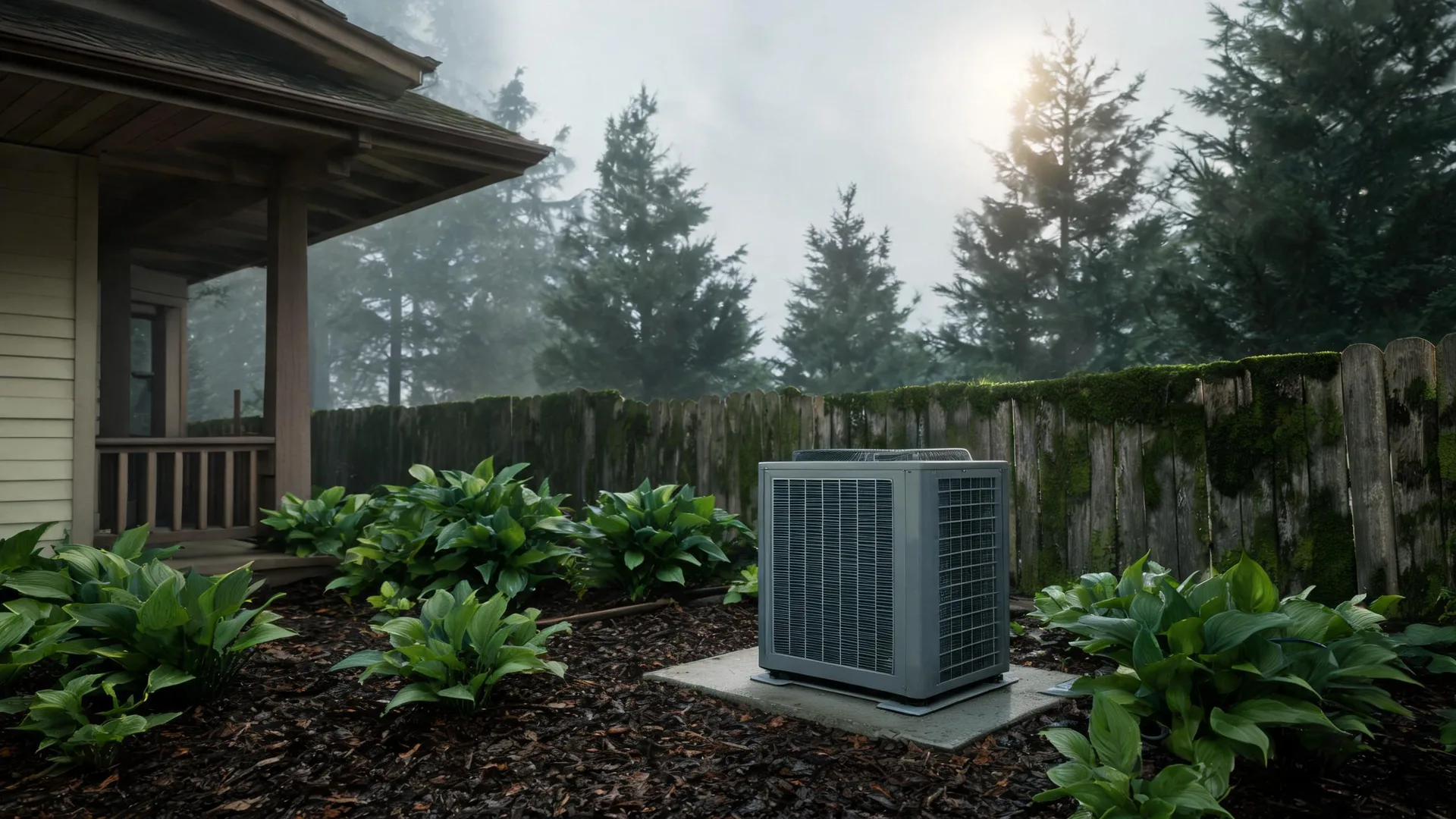
A dark gray heat pump unit mounted on a concrete pad next to a house with gray siding and a stone veneer wall.

Outside, every day, for years

The outdoor unit sits out there every day, all year, taking whatever the weather sends. That cuts both ways. It runs hard in the heat, it runs through winter, and it has to shrug off hail on top of that. None of that changes by picking a bigger unit or a pricier one. What changes it is sizing the system to the load calculation and getting the install done right, the refrigerant charge set correctly, the unit mounted and installed to spec. A unit doing a job it wasn't sized for wears faster no matter what's in the cabinet.

Ask for the rated output at the coldest temperature this place sees, not just the nameplate number

Every heat pump loses capacity as the air outside gets colder, but they don't all lose it at the same rate. A unit that looks strong on paper at mild temperatures can fall off fast once it's cold out. Ask for the capacity at the specific temperature the unit will have to work hardest against, and ask what happens below that point. That's when you find out whether the system leans on backup heat once in a while or all the time.
Ask what the warranty covers and who answers if it fails

A compressor warranty only means something if it covers labor along with the part, since swapping a compressor is mostly labor. Ask whether the warranty is registered with the manufacturer or just assumed, because an unregistered unit can default to a shorter term. Ask too whether the contractor doing the install is who you'd call if something fails down the road, or whether that falls to whoever is still around by then.

The old furnace and coil don't get left in place. A contractor pulls the furnace, the indoor coil, and usually the line set along with the outdoor unit, since reusing old refrigerant lines sized for a different system can cause problems down the road. The gas line gets capped off by someone licensed to do it, not left loose behind the unit. If the furnace shared a flue with the water heater, that flue has to be checked and resized, because venting built for both appliances doesn't always work safely for one. None of this shows up on the heat pump's spec sheet, but skipping it is how a house ends up with an unsafe vent or a gas line that should have been sealed properly and wasn't.

Install day starts with the old equipment coming out, not the new unit going in. The refrigerant in the old system gets recovered, the line set gets inspected or replaced, and the indoor coil and outdoor unit both come off their mounts. A contractor worth hiring checks the electrical whip and disconnect before assuming they can be reused, since a heat pump can draw differently than what was there before. Setting the new outdoor unit means leveling the pad first, because a unit sitting crooked strains the lines and drains wrong once the condensate starts flowing. Inside, the air handler or coil gets set, the line set gets connected and pulled down to a vacuum to clear out moisture and air before any refrigerant goes in. Once it's charged and powered up, a tech should run it through both heating and cooling, checking the temperature split at the vents and the amp draw at the compressor, not just listening for it to turn on.