Storms come through often
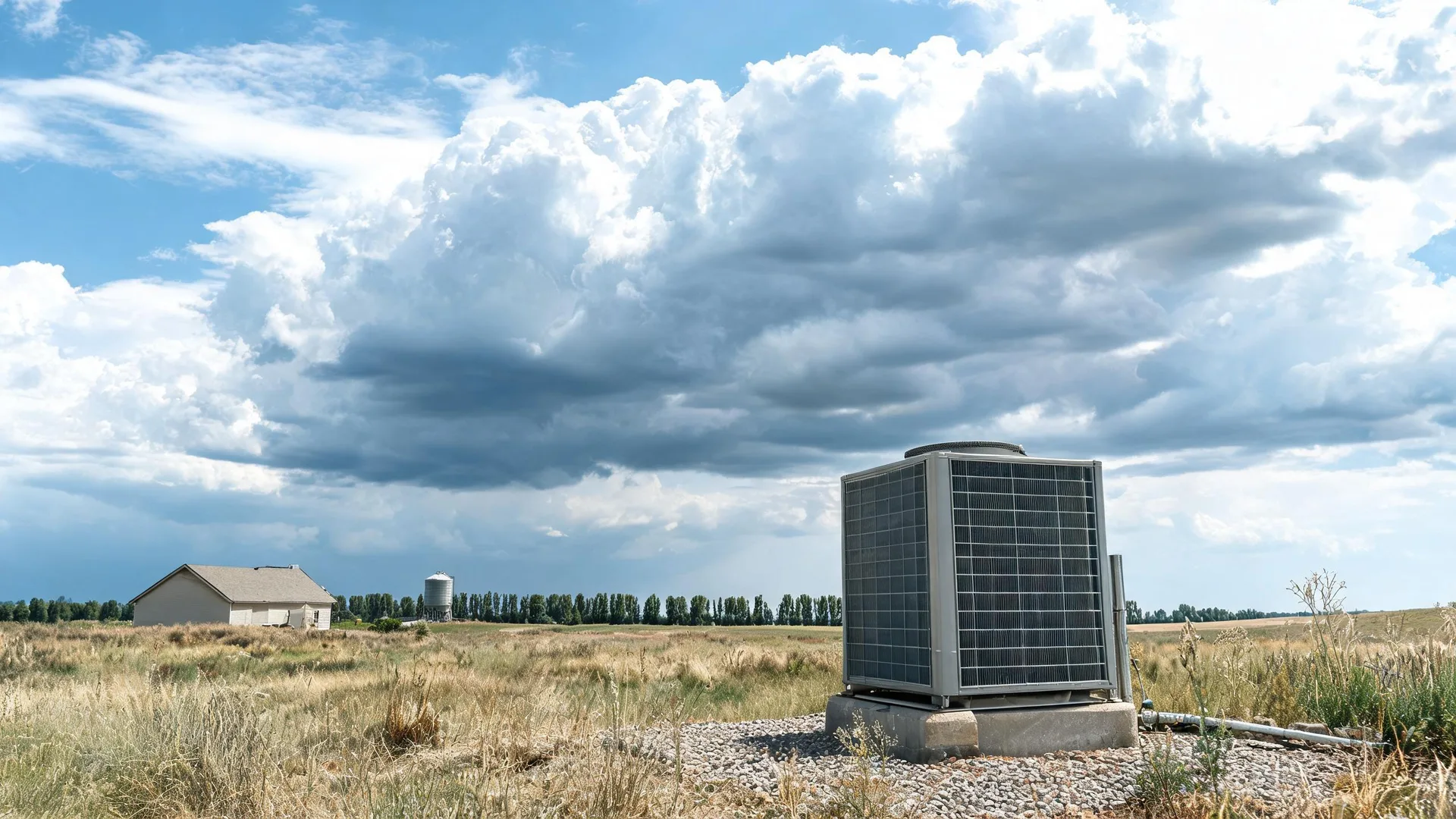
Carter County logged 132 severe weather events between 2015 and 2024. That includes 75 hail events, 40 rounds of damaging wind, and 12 tornadoes. An outdoor heat pump unit sits outside through all of it.
Takes about a minute. No obligation.
Carter County logged 132 severe weather events between 2015 and 2024. That includes 75 hail events, 40 rounds of damaging wind, and 12 tornadoes. An outdoor heat pump unit sits outside through all of it.
A quarter of Oklahoma households went at least 24 hours without power in 2024. When a home heats and cools with electricity, a long outage means no heat pump and no hot water until the power comes back.

NOAA nClimDiv, 1991–2020 normals
Summer air here holds a dew point around 66 degrees, all through June, July and August.
A heat pump sized for a drier climate will run long hours just to keep up with that moisture.




Electricity in Carter County runs 12.93 cents per kilowatt-hour, cheaper than most of the country. That changes the math on which heat pump makes sense here. A higher-efficiency model costs more up front and takes longer to earn that back when power is already cheap. So the better question isn't which unit sips the least electricity. It's which one will keep running when a hailstorm or a downed line hits, and which one is sized right for the long, muggy summer and the cold snaps in between. Fit and reliability carry more weight here than a high efficiency rating does.
Where the outdoor unit sits and what protects it matters as much as the model you pick. So does knowing how heat and hot water hold up when the power doesn't. Settle both before install day.
Find a contractorThe time-lapse above runs day into night because this unit does too. It doesn't shut down for a season. Hot months push it to keep up with the moisture in the air, then cold snaps turn around and ask it to heat the house instead, with barely a stretch of mild weather in between to rest on. That kind of runtime finds a weak spot fast, a compressor working harder than it should or a unit too small for the house it's in. A load calculation done for the actual house, not a match to whatever was there before, is what keeps a new system from wearing out ahead of schedule.
A heat pump swap means the house has no heat and no cooling for a stretch in between. A contractor will plan the teardown and setup to keep that gap as short as possible, sometimes finishing in a single day if the lineset and electrical are already in the right place.
The old refrigerant lines, the electrical whip, the pad outside: a contractor checks all of it before pricing the job. Reusing a lineset that's the wrong size or corroded inside causes problems in the new system that have nothing to do with the new equipment itself.
A heat pump's price comes down to more than the unit on the wall outside. The size of the system matters most. Too small and it runs constantly without keeping up; too large and it cycles on and off so often it never dehumidifies the air properly, and either mistake costs more over the life of the system than it saves on install day. Ductwork is the other big factor. If the existing ducts are undersized, leaky, or routed poorly, a contractor has to decide whether to repair them or recommend a ductless setup instead, and that work can rival the cost of the equipment itself. Electrical capacity plays in too. An older panel may need upgrading to handle the new unit's demands, and that's not something a contractor can skip to save money. Line length and placement of the outdoor unit affect labor more than most people expect, since longer refrigerant lines and harder access both add time to the job.
Carter County falls under climate zone 3A, and that puts a floor under what can legally go in. Any split-system heat pump installed here has to hit at least 14.3 SEER2 for cooling and 7.5 HSPF2 for heating, the federal minimum since January 2023. Central air systems installed on their own face a similar rule in this region, 14.3 SEER2 under 45,000 Btu/h. These aren't efficiency goals to aim for. They're the baseline a contractor has to meet before a unit ever gets quoted, which narrows the lineup to equipment already built for weather like this.