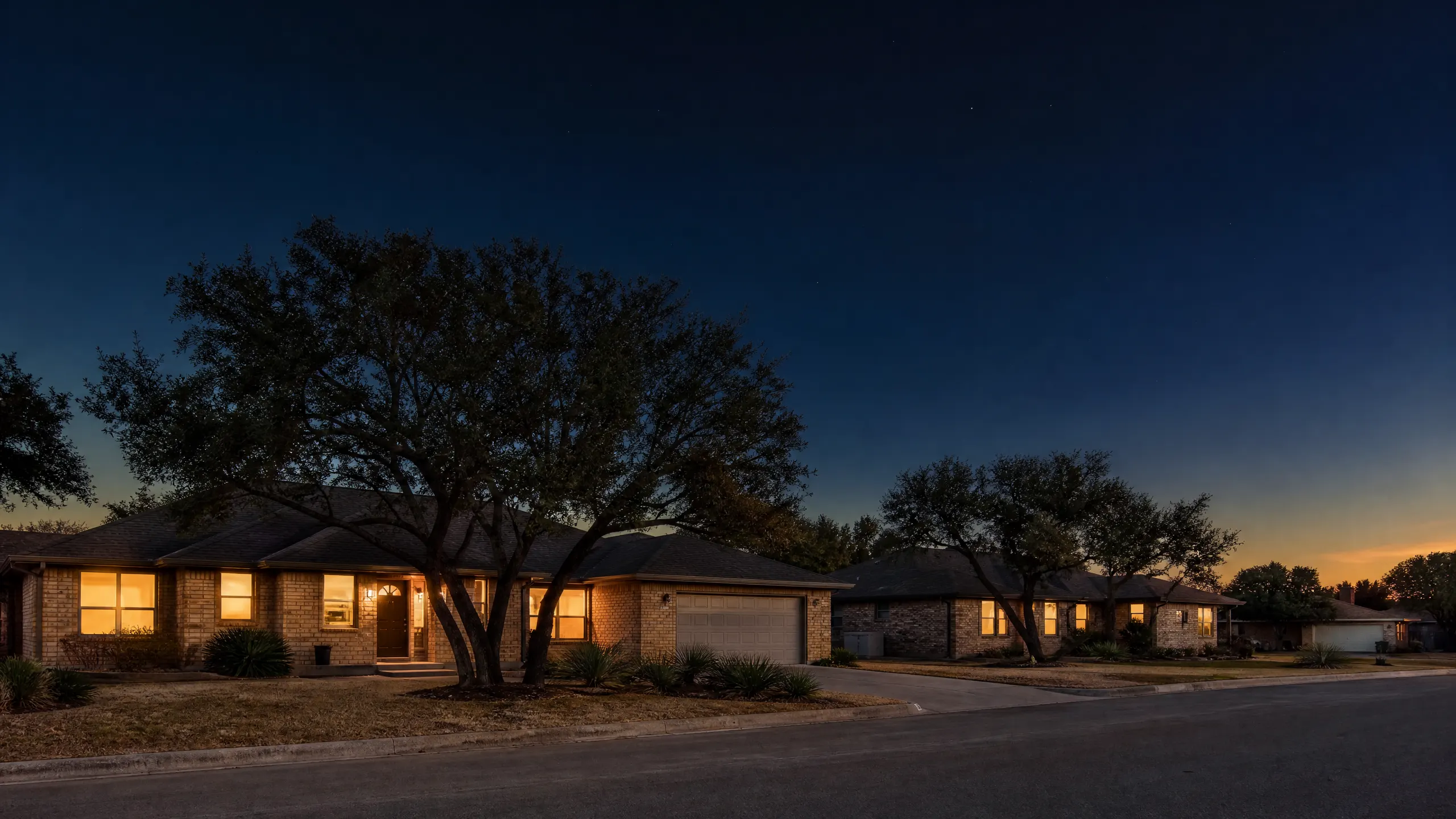







A lit single-story brick ranch house with an attached garage photographed from the street at dusk, flanked by large mature oak trees.

Heat Pump Installation in Bartlesville, OK

Tell us about the job

Takes about a minute. No obligation.

New system or replacementHeat PumpWashington County, OK
Step 1 of 2

What ZIP code is the job in?

Any heat pump installed in Washington County now has to hit 14.3 SEER2 for cooling and 7.5 HSPF2 for heating, since this falls under zone 4A. That's a federal floor set for split systems built from 2023 on, so it narrows the field to equipment that already clears it. A system meeting that minimum is built to handle both sides of the job here, the cold stretches and the humid summer heat, without relying on a backup to carry the load. Beyond the efficiency minimum, a federal tax credit is available on qualifying heat pump installations, worth asking a contractor about when comparing units.

7 months
October through April, your system heats
5 months
May through September, it cools
27°F
the average winter night it heats against
90°F
the average summer afternoon it cools against
Isometric cutaway illustration of a single-story house showing interior rooms with ductwork, an indoor air handler unit, and an outdoor condenser unit connected by lines along the exterior wall.
Your system heats October through April and cools May through September.

NOAA nClimDiv, 1991–2020 normals

Half the homes in Washington County were built in 1971 or earlier.

A heat pump going into a house that old has to match the ductwork and electrical already there, not the other way around.

Most of Bartlesville already heats with gas

62.8% of homes heat with gas
46 hail events from 2015 to 2024
Power costs 12.24 cents a kWh statewide
Hail is part of the weather here46 hail events hit Washington County between 2015 and 2024

Electricity here runs 12.24 cents a kilowatt-hour, below the national average. That changes the math on which heat pump to buy. The highest-SEER2 model on the lot will cost more up front and take longer to earn that back in lower bills than it would somewhere with pricier power. So the case for it rests less on the electric bill and more on whether it holds up through an Oklahoma winter and keeps running when the grid doesn't. A contractor comparing units for this house should weigh the compressor and the warranty behind it as much as the efficiency rating on the sticker.

Have it in before October

Heat here starts in October, with September the month to get ready. Put the heat pump in before then and the contractor can size it, check the ductwork and electrical, and get it running on a day that works for you, not on the first cold morning of the year.

Find a contractor
A man in a cap, dark jacket and tan pants carries a worn duffel bag as he climbs porch steps toward a dark blue front door beside a potted shrub.
A residential heat pump outdoor unit mounted on a concrete pad next to a house with gray vinyl siding.

The install costs more than the box on the pad

Every part of this job gets priced on what it takes to move heat both directions, not just cool air. The outdoor unit, the indoor coil or air handler, the line set connecting them, and the labor to set it all up and charge it correctly. A straight swap where the old equipment matches what's going in costs less in labor than a job where the ductwork needs rework or the electrical panel needs a new circuit to handle the unit's draw. Capacity matters too. A unit sized for the space costs less than one sized up to cover for duct losses or a backup heat strip doing work the compressor should be doing. The compressor itself is the most expensive part to replace, so a longer warranty on it usually comes with a higher price on the unit, and that's a trade worth making deliberately rather than by accident.

Cooling and heating get separate ratings

SEER2 is the cooling side, HSPF2 is the heating side, and a heat pump is rated on both because it does both jobs. A unit can be strong in one and only adequate in the other. Look at both numbers rather than just the one that is easiest to find on the sticker.
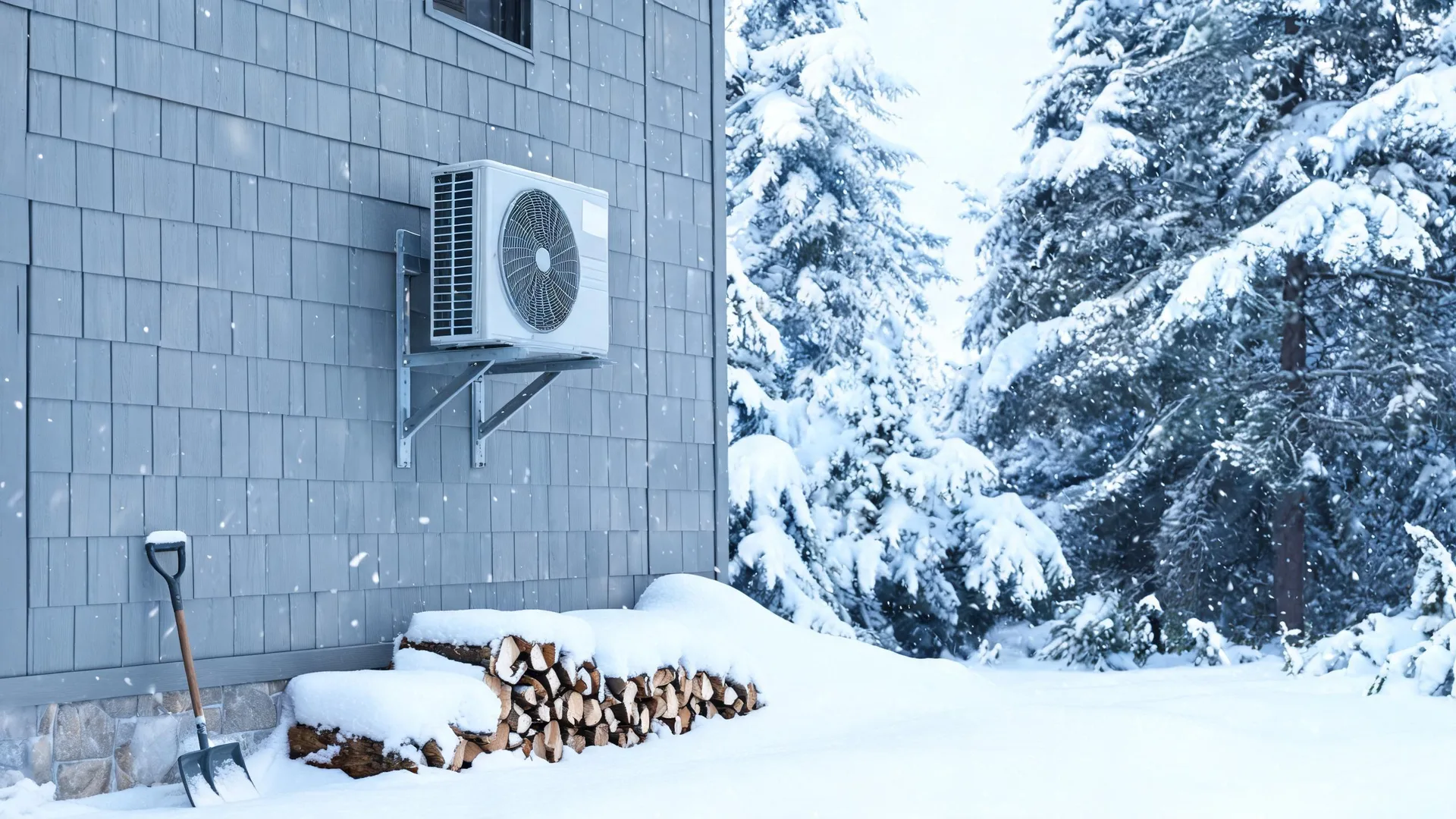
The rating comes from a lab, not your house

SEER2 and HSPF2 are measured under set conditions on a test bench, not inside any particular home. Ductwork that leaks, a system sized wrong for the space, or a coil that never gets cleaned will all pull real performance below what the label promises. The rating is a ceiling the equipment can reach, not a guarantee of what it will do once it is installed.

Ask what happens at the lowest outdoor temperatures the unit is expected to run in. Every heat pump loses capacity as it gets colder outside. Some handle that by running the compressor harder, others lean on a backup heat strip, and that backup is usually electric resistance, the least efficient heat in the system. A contractor should be able to say where the crossover point is, the outdoor temperature where backup starts kicking in, and how that compares across the units on your list. Ask too about sound rating, since the outdoor unit runs year round and sits closer to windows and property lines than a furnace ever did. And ask what the warranty actually covers. Parts, labor, or both, and how many years apply to the compressor specifically, since that's the part most expensive to replace.

Installation day starts outside, not in. The crew sets the new outdoor unit on its pad and runs line set between it and the indoor coil, then they turn to what's already there. A furnace gets pulled if the air handler is taking its place, or the existing air handler gets matched up if it's staying. Line set gets connected, the system gets pressure tested for leaks before anything is charged with refrigerant, and the electrical disconnect gets wired in since a heat pump pulls power the old equipment may not have needed in the same way. Once it's charged and running, a tech checks airflow at the registers, checks the temperature split between the air going in and the air coming out, and walks the thermostat settings with whoever's home. A sloppy charge or a duct that was never sized right shows up in the first week, not years later, which is why that last check matters as much as the install itself.