






A row of single-story brick houses with dark shingled roofs along a dry grass lawn, bordered on the left by a tall wooden privacy fence and overhung by tree branches.

Heat Pump Installation in Chandler, OK

Tell us about the job

Takes about a minute. No obligation.

New system or replacementHeat PumpLincoln County, OK
Step 1 of 2

What ZIP code is the job in?

Lincoln County saw 130 severe weather events between 2015 and 2024. Fifty of those were damaging wind, fifty-nine were hail, and fifteen were tornadoes. Six more were winter storms with heavy snow or ice. An outdoor heat pump unit sits outside through all of it, exposed to whatever hail or wind comes through. And when storms knock the power out, a quarter of Oklahoma households went at least a full day without it in 2024. For a home that heats with electricity, that's a day without heat or hot water, not just a day without lights.

7 months
October through April, your system heats
5 months
May through September, it cools
29°F
the average winter night it heats against
92°F
the average summer afternoon it cools against
Isometric cutaway illustration of a single-story house with a dark gabled roof, showing interior rooms with ductwork leading to an indoor air handler and an outdoor condenser unit connected by lines on the ground outside.
Your system heats October through April and cools May through September.

NOAA nClimDiv, 1991–2020 normals

Electricity in Lincoln County runs about 12.57 cents per kilowatt-hour, cheaper than most of the country.

A high-efficiency heat pump still saves on that bill, but the payback stretches out here, so picking one for reliability makes more sense than chasing the highest efficiency number.

Plan the swap before October catches you without heat

Cooling runs May through September
Heat runs October through April
Climate zone 3A
Built for what this county throws at it59 hail events in Lincoln County between 2015 and 2024, with the outdoor unit standing right in it

Any heat pump installed here now has to clear 14.3 SEER2 and 7.5 HSPF2, the federal minimums for this region. That's set by Lincoln County's climate zone, 3A, which the energy code treats as warm with a long cooling season and a short winter. Contractors can't install a lower-rated system to save you money up front, so every unit you're quoted should already clear that bar. A system installed on or after January 1, 2023 that's rated for the Southeast also has to hit at least 14.3 SEER2 for cooling, so the efficiency floor and the heat pump minimum line up. Where models differ is everything above that floor, and whether the one you pick can take a direct hit from hail or keep running through a long outage.

Plan for the outage before it happens, not during it

Get the outdoor unit placed and protected before the next storm comes through, not after. Ask what backup options keep the system running when the power goes out for a day. Once it's installed the way this county needs, you won't be figuring that out in the middle of an outage.

Find a contractor
A man in a cap, gray long-sleeve shirt and tan pants walks up stone steps toward a dark blue front door, carrying a waxed canvas tool bag in his right hand.
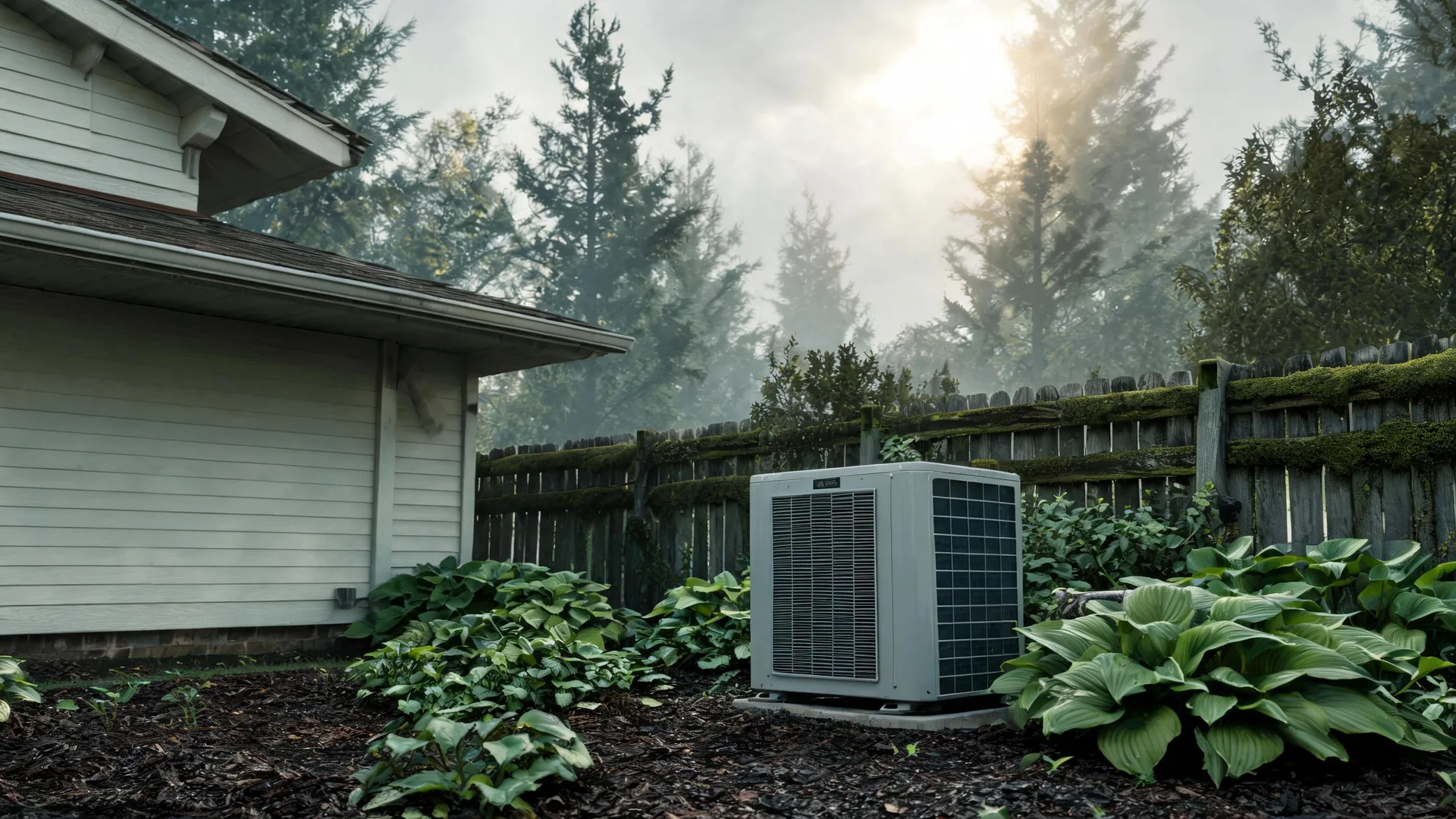
A gray heat pump condenser unit mounted on a concrete pad against the gray lap-siding exterior wall of a house.

What actually drives the cost

Installed cost comes down to what the job has to overcome, not just the equipment sitting in the truck. A straight swap, same spot, same line set reused, same ductwork, is the cheapest version of this job because there's little to change besides the unit itself. Add a new electrical circuit, a bigger disconnect, or a breaker panel that's out of capacity, and the job grows before the heat pump is even mounted. Ductwork is the other big variable. If the existing ducts are undersized or leaky, a contractor either has to seal and modify what's there or recommend replacing sections, and that work costs more than the unit swap itself. Line set length and routing matter too, since refrigerant lines run between the outdoor unit and the indoor coil, and a longer or more complicated run takes more labor and material than a short, direct one. The size of the system plays in as well. A larger house with a bigger load calculation needs a bigger compressor and air handler, and bigger equipment costs more than smaller equipment. Features above the minimum efficiency rating, like a variable-speed compressor or a cabinet built to withstand impact, add cost over a baseline unit. None of this is about one contractor charging more than another for the same job. It's about how much of the job is already done by what's in the walls, and how much has to be built from scratch.

Size it to the house, not the old unit

A heat pump has to be sized against how fast the house loses heat in winter and gains it in summer, room by room, not just matched to whatever was pulled out. A contractor works this out with a load calculation that accounts for the walls, the windows, the attic, and how the house is laid out. Going by square footage alone skips all of that.
Wrong size costs you either way

A heat pump that's too big cools the air fast and shuts off before it pulls the moisture out, so the house feels damp even with the thermostat satisfied. One that's too small runs constantly during the hardest stretches of summer and winter and still can't keep up, leaning hard on backup heat strips that drive the bill up. The right size runs long, steady cycles instead of short ones or endless ones.

The old equipment doesn't just get unplugged and hauled off. If the system has a gas furnace or any refrigerant in the lines, that refrigerant has to be recovered into a tank rather than vented, that's the law, and it's handled before anything gets disconnected. The outdoor unit, the indoor coil, and the air handler or furnace all come out, along with the old line set if it's not being reused. A contractor will check whether the existing ductwork, the electrical disconnect, and the breaker can serve the new system or need work of their own before the new unit goes in. Scrap metal from the old cabinet and coil usually gets recycled rather than landfilled. None of that swap work should leave you without heat or cooling for more than that one day.

Electricity heats 48.2% of homes in Lincoln County, more than gas or propane, so most of what gets pulled out here is another electric system. That makes a heat pump the straightforward replacement, not a stretch from what's already in the walls. Gas still heats a share of homes in the county, and propane another chunk, and either of those can pair with a heat pump too. But for the near-majority already on electric heat, swapping like for like means the electrical service is probably already sized for it. A contractor still has to confirm the breaker and disconnect can handle the new unit, but it's a shorter list of changes than starting from gas.