







A grey outdoor HVAC unit mounted on a concrete pad beside the beige-sided exterior wall of a suburban house.

Heat Pump Installation in Chickasha, OK

Tell us about the job

Takes about a minute. No obligation.

New system or replacementHeat PumpGrady County, OK
Step 1 of 2

What ZIP code is the job in?

The efficiency rating on a heat pump tells you how much heat it moves for the power it uses, nothing more. A higher rated unit pulls more warmth out of cold outside air in winter and more heat out of your house in summer, using less electricity to do it than a lower rated one would. That rating comes from a lab test run under set conditions, so it does not account for how tight your ductwork is, how well the house holds heat, or where the thermostat gets set day to day. Homes running the exact same unit can end up with different power bills for reasons that have nothing to do with the equipment itself. The rating is worth comparing between the models you're looking at, but treat it as a measure of the machine, not a promise about what your bill will be.

6 months
November through April, your system heats
5 months
May through September, it cools
30°F
the average winter night it heats against
92°F
the average summer afternoon it cools against
Isometric line illustration of a cutaway house showing interior rooms with furniture, ceiling ductwork under a dark shingled roof, and an outdoor condenser unit connected by lines on the right.
Your system heats November through April and cools May through September.

NOAA nClimDiv, 1991–2020 normals

Electricity heats close to half the homes in Grady County.

A heat pump runs on electricity already, so swapping in one here doesn't mean changing how the house gets its power.

Power here runs 12.24 cents a kilowatt-hour, so paying more for a higher rating back takes longer to earn back.

Power costs 12.24 cents a kWh statewide
145 damaging wind events from 2015 to 2024
146 hail events from 2015 to 2024
Get it in before NovemberHeat starts running in November here, so October is the month to have it done.

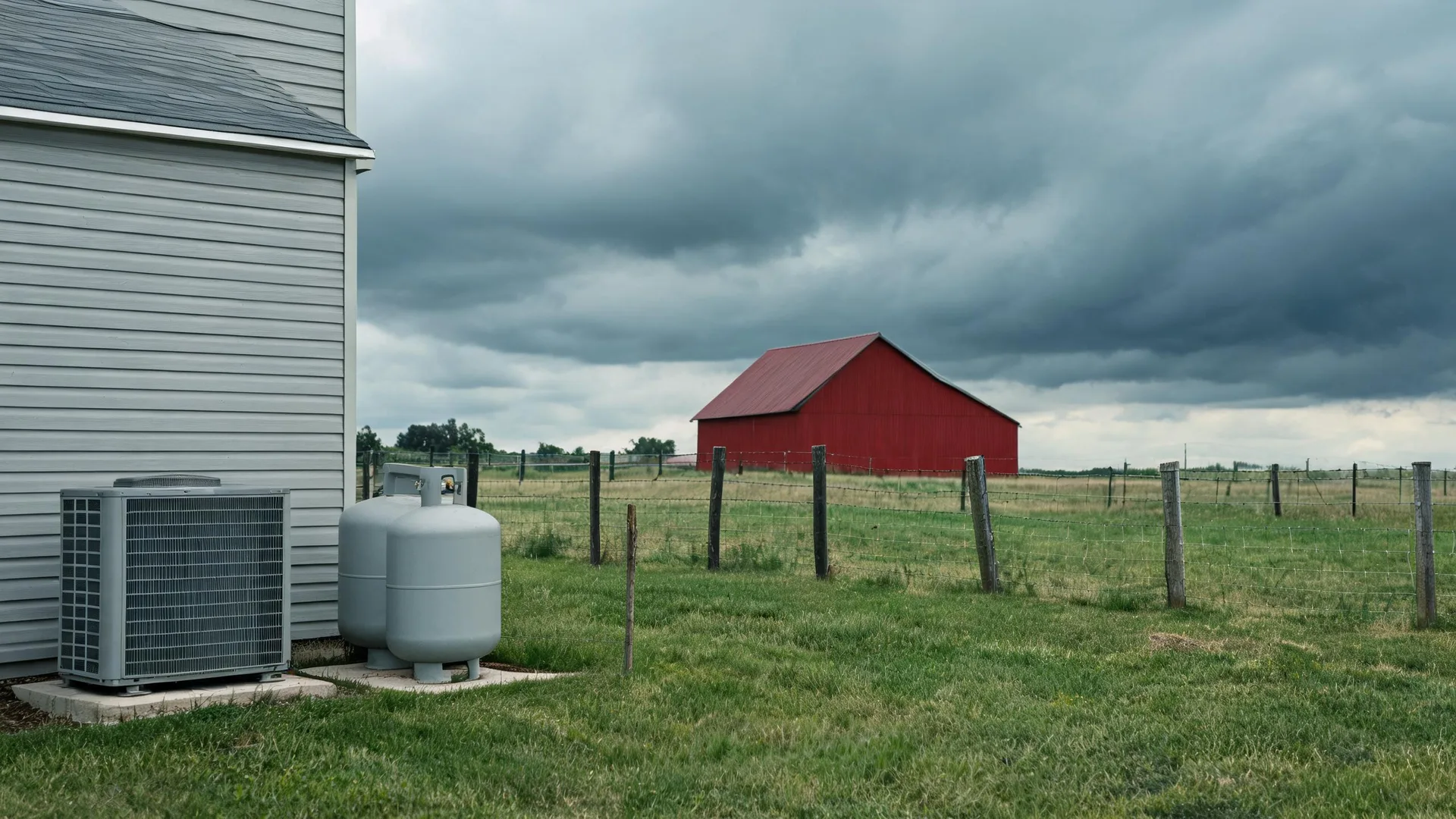
Grady County logged 326 severe weather events between 2015 and 2024, including damaging wind, hail and tornadoes. An outdoor heat pump unit sits exposed to all of it, so where the installer places it and how it's shielded from debris and hail matters as much as the model you pick. A heat pump runs on electricity for both heat and cooling, so when the power goes out, it stops. A quarter of Oklahoma households went at least a full day without power in 2024. Worth asking the installer what, if anything, backs up the system when the grid goes down.

A new system here starts at 14.3 SEER2

Any heat pump installed here now has to hit 14.3 SEER2 for cooling and 7.5 HSPF2 for heating, Grady County's minimum under zone 3A rules. That sets a floor on what an installer can put in, not a ceiling, so the choice is which qualifying unit fits your house and budget. A federal tax credit is available on top of that for units that meet the efficiency requirements.

Find a contractor
A man in a dark long-sleeved shirt and tan work pants, seen from behind, climbs porch steps toward a navy front door while carrying a canvas tool bag.
A residential heat pump outdoor unit mounted on a concrete pad next to a house with gray vinyl siding.

What runtime does to a heat pump over the years

The old system rarely wears out evenly. A compressor can still be solid while the outdoor coil has thinned from years of weather, or the reversing valve starts sticking before anything else quits. The hardest wear happens in the coldest and hottest stretches, when the unit runs longest and cycles most often to keep up. A heat pump that was sized wrong for the house from the start can show that same wear even if it isn't old, because it never gets a real break between cycles. Whoever pulls the old unit should check the line set and the pad underneath it. If the lines are the wrong diameter for the new system, or the pad has shifted or cracked, that gets handled during the swap instead of left for later.

The house decides the size, not a chart

Sizing a heat pump right means working out how much heat the house loses in winter and gains in summer, room by room, not just matching the old unit's number. One sized too big short cycles, turning on and off before it ever settles into a steady run, and that wears the compressor faster than steady use would. One sized too small runs flat out in the worst weather and still can't keep up. Getting this step right costs more up front in the installer's time, and it's what everything else about the install depends on.
Ductwork decides whether the new unit can do its job

A heat pump moves a steady, lower temperature of air compared to a furnace, and it depends on the ducts to carry that air where it needs to go without losing it along the way. Ducts that leak at the joints, or that were sized for a different kind of system, can choke a new unit's output no matter how good the equipment is. Checking and sealing the ductwork during install is often what decides whether the new system meets the rating it was sold on.

A load calculation is what that sizing work is actually called, and it goes room by room through the house, adding up windows, wall area, insulation and ceiling height instead of guessing off square footage. Houses that look about the same size on paper can need different sized units once that math is done. The outdoor unit and the indoor coil get matched to that number, then the ductwork gets checked to see if it can carry what the new unit puts out. Skipping this step and swapping in whatever matches the old unit's tonnage is how a house ends up with a unit that short cycles or one that never quite catches up on the coldest days.

Install day starts with the old unit coming out, both the outdoor cabinet and the indoor coil, along with the old line set if it isn't being reused. The refrigerant gets recovered first, never vented. Once the pad is set and the new outdoor unit is in place, the crew runs new line sets or pressure tests the old ones, then pulls a vacuum on the system to clear out moisture and air before any refrigerant goes back in. A system charged without a proper vacuum will run, but it won't hit its rated efficiency and the compressor wears faster for it. Indoors, the coil and air handler go in, the electrical and condensate drain get hooked up, and the thermostat gets wired and set. Before the crew leaves, the system should run through a full heating and cooling cycle while someone checks the refrigerant charge, the airflow at the vents, and the temperature split between the air going in and the air coming out.