Single-story brick ranch houses with lit garages and large oak trees along a residential street at dusk.

Heat Pump Installation in Claremore, OK

Tell us about the job

Takes about a minute. No obligation.

New system or replacementHeat PumpRogers County, OK
Step 1 of 2

What ZIP code is the job in?

The size has to match the house

A heat pump that's too big will short cycle, turning on and off before it pulls the moisture out of the air. One that's too small will run constantly and still struggle on the coldest days. Getting the size right means someone calculating heat loss and heat gain for the actual house, not just swapping in whatever size was there before.

The ductwork gets inspected before anything else

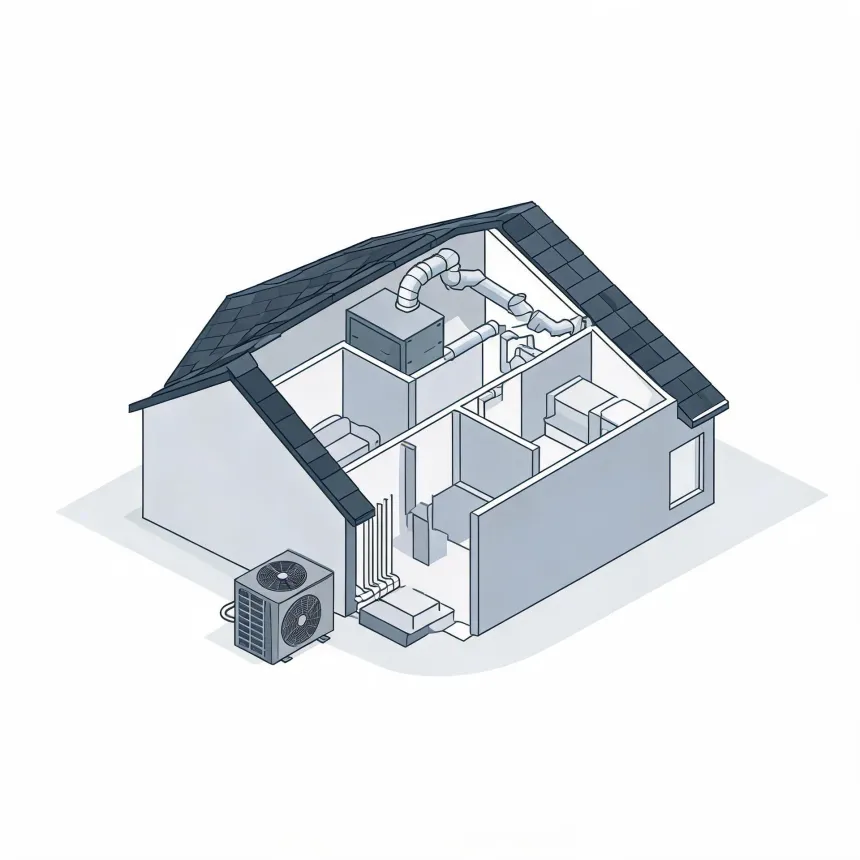
A heat pump moves a different volume of air than a furnace, often for longer stretches at a time. If the ducts are undersized, leaky, or routed poorly, the new system will fight them the same way the old one did. Sealing or modifying ductwork adds to the job, but skipping it means the new equipment never performs the way it's rated to.

7 months
October through April, your system heats
5 months
May through September, it cools
29°F
the average winter night it heats against
90°F
the average summer afternoon it cools against
Isometric line illustration of a cutaway house showing interior rooms, an air handler with ductwork in the attic space, and an outdoor condenser unit beside the exterior wall.
Your system heats October through April and cools May through September.

NOAA nClimDiv, 1991–2020 normals

The rating on the label is measured for the whole season, not one setting.

A higher number costs more up front and less to run, so the right choice depends on how long you plan to stay and how hard the system works each year.

Most homes in Rogers County heat with gas, which changes how a heat pump gets installed here

55.9% of homes heat with gas
109 damaging wind events from 2015 to 2024
63 hail events from 2015 to 2024

A contractor works out size with a room by room load calculation, not a chart that matches tonnage to square footage. That calculation looks at how much heat the house loses through its walls, windows, and roof in the cold, and how much it gains in the heat, along with things like window orientation and ceiling height. Homes built to the same footprint can still need different sized equipment depending on how they're put together. Getting it wrong in either direction shows up fast. Oversized equipment cycles on and off quickly, which leaves some rooms warmer or cooler than others and never really pulls the moisture out of the air in summer. Undersized equipment runs long stretches without ever catching up on the coldest or hottest days. The right size is the one that matches what the house actually needs, worked out before anything gets installed.

Pick the system that holds up, not just the one with the best rating

Electricity here runs 12.24 cents a kilowatt-hour, cheaper than most places pay. That changes the math on a heat pump. The top-efficiency model still costs more to install, and it takes longer to earn that back when power is already cheap. Sizing it right and setting up the ductwork to match matters more than chasing the highest number on the label.

Find a contractor
A man in a cap, gray long-sleeve shirt and brown work pants walks up porch steps toward a dark blue front door, carrying a canvas tool bag, with gray horizontal siding and a potted flowering plant nearby.
A gray heat pump outdoor unit mounted on a concrete pad next to the stone-accented exterior wall of a house.

This runs nearly year round, so timing the swap matters

Heat runs here from October through April, seven months out of the year. Cooling picks up in May and runs through September. A heat pump works both sides, so there's no real off season to install it in without the weather pushing back. September and April are the mild months before each season starts, and that's when a swap goes in without the house needing it that same week. Wait for the old system to quit instead, and whatever gets installed goes in under pressure, on whatever schedule a failed system allows.

Ask what happens below freezing

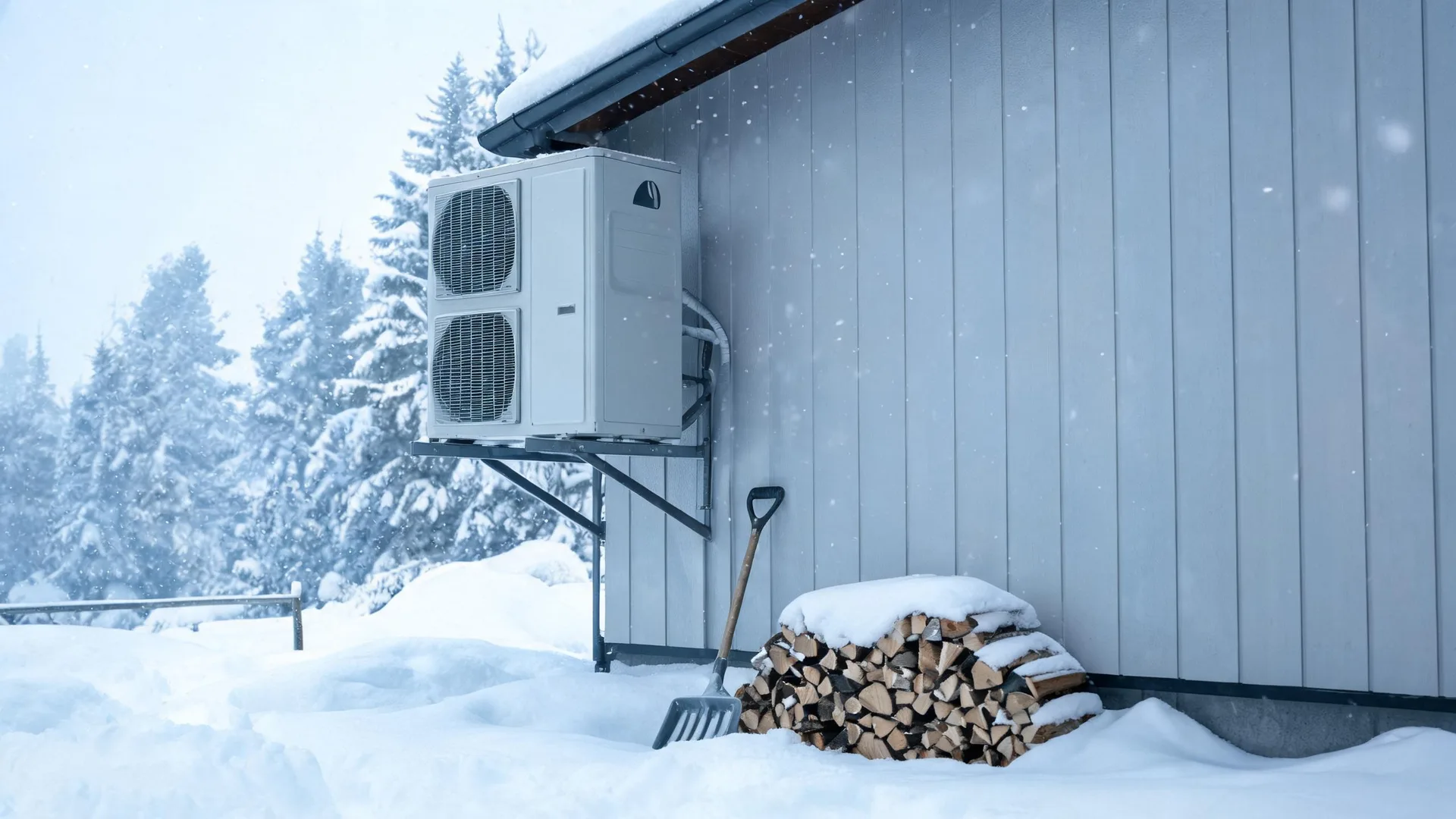
Every heat pump loses capacity as the outdoor temperature drops, and below a certain point it needs backup heat to keep up. Ask what that backup is, whether it's electric resistance strips or something else, and at what temperature the system switches over. That crossover point tells you how the system actually behaves on the coldest nights, not just how it's rated.

Ask who services the brand locally

A heat pump runs harder and longer than a furnace, with more moving parts exposed to the weather outside. When something goes wrong, you want a contractor who can get parts for that specific brand without a long wait. Ask what's covered under warranty, for how long, and whether the labor is included or just the equipment.

The old furnace and condenser don't stay behind as backup. Once the heat pump goes in, the gas furnace usually gets disconnected and removed, along with the outdoor condenser and the line set running between them. If the furnace shares a closet or flue with the water heater, a contractor has to check what happens to that flue once the furnace is gone, since venting sized for both appliances doesn't always draft right for one. The refrigerant in the old condenser gets recovered, not vented, and that's a legal requirement, not a courtesy. Any gas line that fed the furnace gets capped off safely if nothing else in the house still runs on it. None of this is hard, but it has to happen in order, and it's worth asking the contractor to walk through it before the install date rather than finding out what's involved on the day itself.

Rogers County falls in zone 3A, and any split-system heat pump installed here now has to meet 14.3 SEER2 for cooling and 7.5 HSPF2 for heating, the same federal floor that applies everywhere equipment ships new. Central air systems installed in this part of the country face a higher bar than that national minimum, since the Southeast carries its own standard on top of it. That narrows what a contractor can legally install, regardless of what a homeowner might find priced lower elsewhere. A federal tax credit is available for qualifying heat pump installations, which can offset some of the cost of meeting these standards. The rating only describes what the equipment is built to do. Whether it actually performs that way in a given house still comes down to sizing and the ductwork it's tied into.