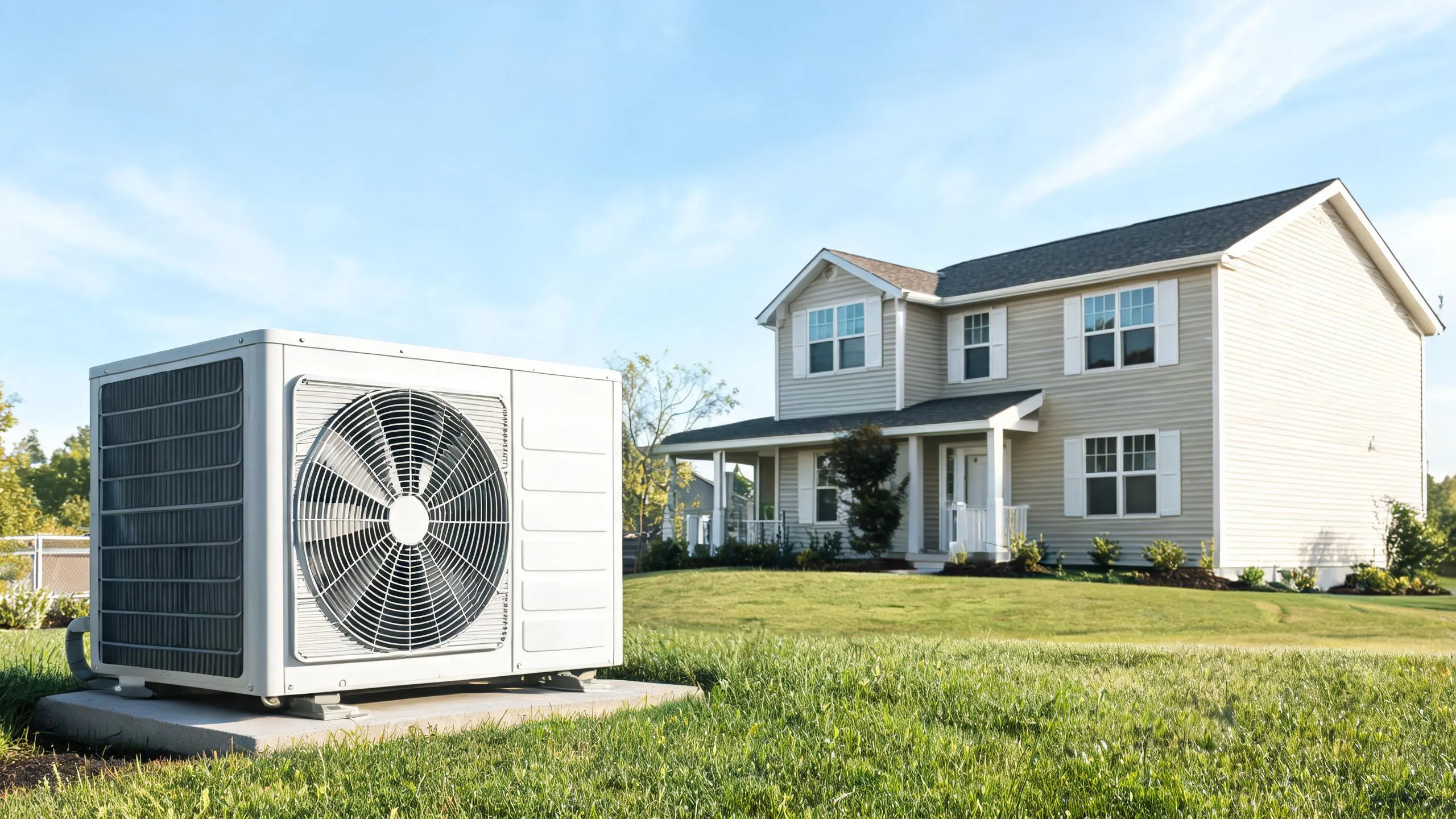







An outdoor heat pump unit mounted on a concrete pad in front of a two-story suburban house.

Heat Pump Installation in Hugo, OK

Tell us about the job

Takes about a minute. No obligation.

New system or replacementHeat PumpChoctaw County, OK
Step 1 of 2

What ZIP code is the job in?

Electricity heats 67% of homes in Choctaw County, more than every other fuel combined. Gas, propane, and oil make up what's left. A heat pump fits right into that picture, since it runs on electricity and can replace a straight electric furnace or baseboard heat without any new fuel line to run. If your home already has electric heat, you're not changing how the house is set up, just what's doing the work. That's the simplest kind of installation there is.

5 months
November through March, your system heats
5 months
May through September, it cools
33°F
the average winter night it heats against
92°F
the average summer afternoon it cools against
Isometric grayscale illustration of a cutaway house showing interior rooms, ceiling ductwork and an air handler, connected by lines to an outdoor condenser unit on a pad outside.
Your system heats November through March and cools May through September.

NOAA nClimDiv, 1991–2020 normals

Taking out the old furnace or baseboard heaters is part of the job, not an extra step.

The installer disconnects the old heat source and caps off what's no longer needed before the heat pump goes in.

At 12.24 cents a kilowatt-hour, a high-efficiency model earns its keep slower here

Power costs 12.24 cents a kWh statewide
Climate zone 3A
Cooling runs May through September
Get it in before NovemberHeat pumps here cover both seasons, so October is the month to have one in place.

The size of the unit is what moves the price most. A contractor figures that by measuring the house and checking the windows, insulation, and layout, not by matching whatever was there before. Go too big and the system short cycles, turning on and off instead of running steady. Too small and it struggles on the coldest days, running constantly and still falling short. Beyond the equipment itself, the job depends on what's already in place. If the ductwork is sound and sized right, the installer connects to it. If it's leaky, undersized, or missing altogether, that work gets added to the job. Where the outdoor unit sits, how far the lines have to run, and whether the electrical panel can handle the new load all factor in too.

Pick the system that holds up, not the one with the best rating

With power this cheap, a high-efficiency model takes longer to earn back the difference in cost. What matters more is a heat pump sized right for your house and installed clean. Get a quote and compare what's being offered.

Find a contractor
A man in a gray t-shirt and tan work pants, seen from behind, climbs concrete steps toward a dark blue front door while carrying a canvas tool bag, with a potted shrub beside the entry.
A gray air-source heat pump mounted on a concrete pad next to a house with gray vinyl siding, surrounded by gravel and flanked by green shrubs and white hydrangea flowers.

Running all day is normal. Starting and stopping all day is not.

A heat pump that's sized right runs long, slow cycles, moving heat the whole time it's on. That's what keeps a house comfortable and what keeps the system healthy. One that's oversized reaches the thermostat setting fast, shuts off, then starts again a few minutes later. All that stopping and starting wears on the compressor more than steady running ever does, and it leaves the air feeling uneven since the system never runs long enough to settle the house. An undersized unit has the opposite problem. It runs nearly nonstop on the coldest and hottest days, straining to keep up and still losing ground. Getting the size right means a room by room look at the house, not a guess based on square footage alone. Window area, insulation, ceiling height and how much sun a wall gets all change how much heat a space gains or loses. Houses that look alike from the outside can need different sized systems for exactly that reason.

Ask what happens on the coldest days

A heat pump loses capacity as the temperature drops outside, and at some point it needs backup heat to keep the house warm. Ask what that backup is, how it switches on, and whether it's part of the quote or an add-on. The answer says more about how the job was thought through than the brand on the unit.
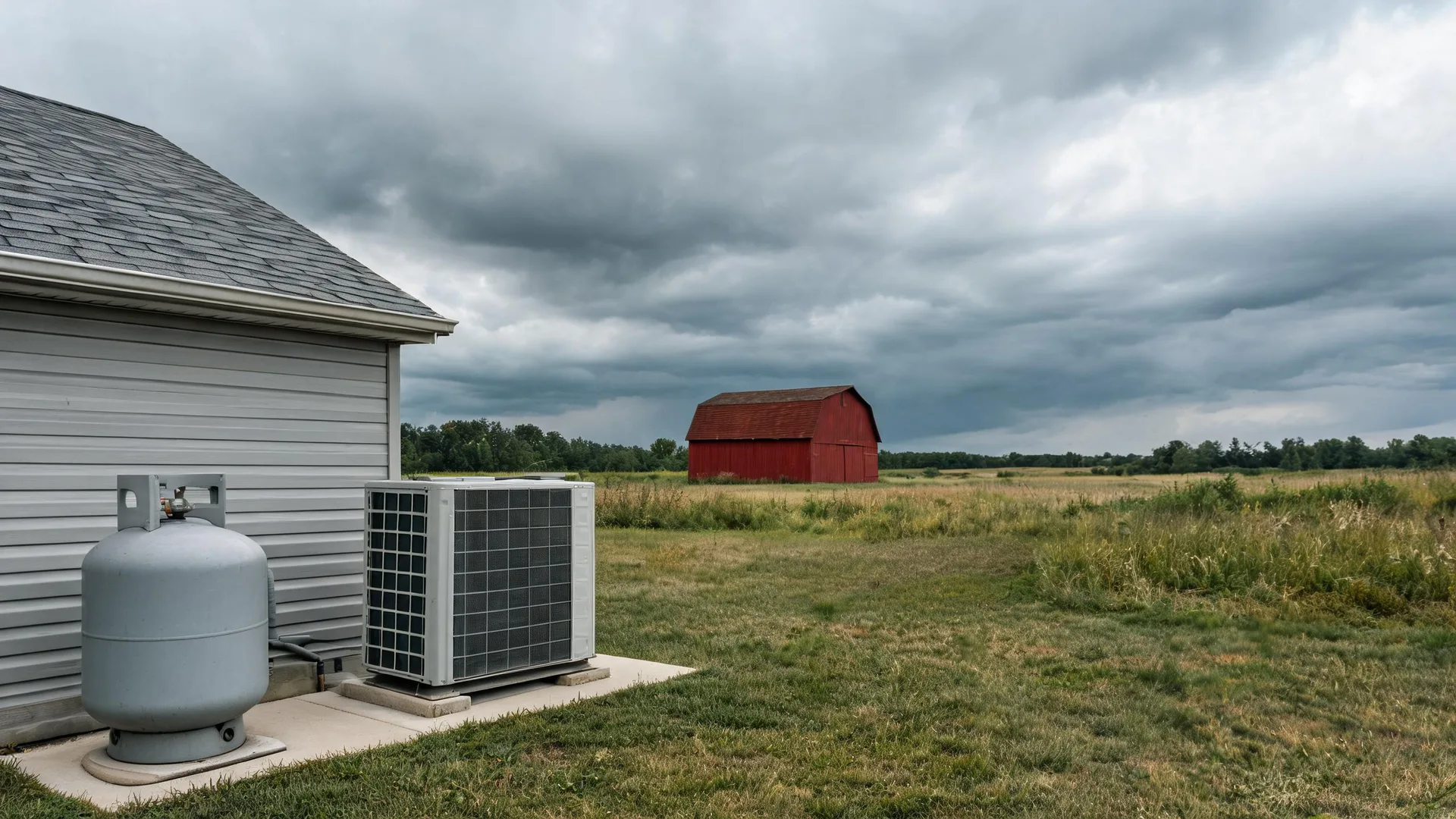
Ask who sized the system and how

A proposal should come with a room by room load calculation, not a price next to a tonnage number. Ask to see what the contractor measured and what they based the size on. If the answer is a guess tied to the old equipment, get a second quote.

The efficiency rating tells you how much heat a system moves for the electricity it uses, nothing more. It isn't a measure of how warm the house gets or how fast. A heat pump with a higher rating usually has a variable speed compressor instead of one that just switches on and off, and that hardware costs more up front. Whether that extra cost comes back to you depends on how much you run the system and what you pay for power, not on the rating itself. It's worth comparing between similar proposals for similar houses. It's not worth paying for past the point where the house and the budget stop agreeing with it.

Installation day starts with the old equipment coming out and the new outdoor unit and air handler going in, but most of the day goes to the connections between them. The refrigerant lines get run, joined, and sealed, then the whole system gets pulled down to a vacuum to clear out any air and moisture before it's charged. A rushed vacuum is one of the most common reasons a new system underperforms from day one. Once it's charged, the installer checks refrigerant levels against the manufacturer's spec for the line length, not just a gauge reading that looks close enough. The electrical work gets tied in and tested, the thermostat gets set up, and then the system runs through a full cycle while the installer checks airflow at the vents and confirms the temperature split between the air going in and the air coming out. That last check is what tells you the system is actually doing its job, not just that it turned on.