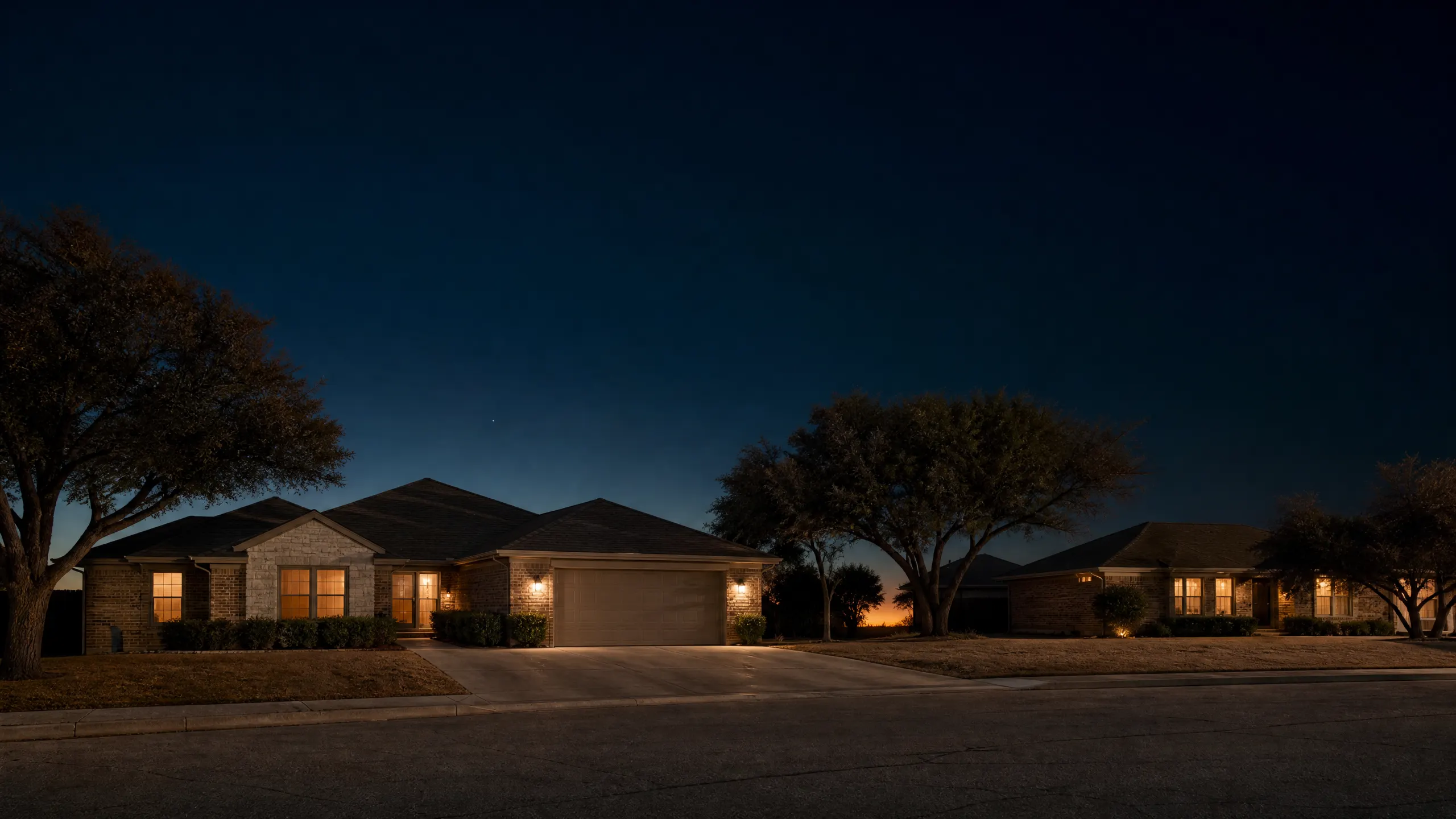
A single-story brick house with a two-car garage photographed at dusk, with interior lights glowing through the windows and trees on either side.

Heat Pump Installation in Muskogee, OK

Tell us about the job

Takes about a minute. No obligation.

New system or replacementHeat PumpMuskogee County, OK
Step 1 of 2

What ZIP code is the job in?

Muskogee County sees real storm numbers

Muskogee County recorded 135 severe weather events between 2015 and 2024. That includes 73 damaging wind events, 36 hail events, 16 tornadoes and 10 winter storms with heavy snow or ice. A quarter of Oklahoma households went at least a day without power in 2024.


A heat pump has to take the hit and keep running

The outdoor unit sits outside year round, where wind-blown debris and hail can reach it. When a storm knocks out power, that same unit is what brings the heat back in winter and the hot water back any time of year. Installing one here means planning for both.

7 months
October through April, your system heats
5 months
May through September, it cools
31°F
the average winter night it heats against
91°F
the average summer afternoon it cools against
Isometric grayscale illustration of a cutaway two-story house showing interior ductwork, an indoor air handler unit, and an outdoor condenser unit on a pad beside the building.
Your system heats October through April and cools May through September.

NOAA nClimDiv, 1991–2020 normals

More than half of homes in Muskogee County heat with electricity.

A heat pump replacing that setup fits what's already there, with no new gas line or fuel switch to plan for.

Get it done before either season starts

Cooling runs May through September
Heat runs October through April
Power here costs 13.41 cents per kilowatt-hour
Built for air this heavySummer dew points in Muskogee County average 68°F, among the highest in the country.

Muskogee County falls under zone 3A in the energy code, a warm zone with a long cooling stretch. Any split-system heat pump installed here now has to clear 14.3 SEER2 for cooling and 7.5 HSPF2 for heating, the federal floor for a unit this new. Central air systems installed in this region face a higher bar still, 14.3 SEER2 under 45,000 Btu/h. Those numbers set a floor on what a contractor can legally put in, not a ceiling, so a system can still be sized and matched to the house above that minimum. A heat pump bought today, either way, starts out more efficient than one bought even a few years back.

Plan for the outage, not just the install

Where the outdoor unit goes and how it's mounted is worth deciding before install day, not after a storm. Ask what happens to heat and hot water if the power goes out, and what backup options exist for a system that depends on electricity to run. Get the details settled now, while you're already planning the install.

Find a contractor
A man in a navy shirt and tan trousers, seen from behind, carries a canvas tool bag up wooden porch steps toward a dark blue front door, with shrubs and a large planter nearby.
A gray outdoor HVAC unit mounted on a concrete pad beside a house with gray lap siding and a stone foundation.

Running nearly every day of the year

This heat pump will run most days of the year here, cooling through the muggy stretch and carrying the heat load all winter since electricity is how most homes here keep warm. That's close to year-round duty, with only short breaks in spring and fall. The outdoor unit doesn't get a season off to sit idle and recover. Parts that cycle this often, the compressor, the reversing valve, the outdoor fan motor, see more hours of work per year than they would in a milder climate, and that adds up across the system's life. None of that is a reason to hold off. It's a reason to size the unit correctly for this house and skip whatever is cheapest on the lot.

Size and capacity drive the bid

A contractor has to work out how much heat the house loses in winter and gains in summer before pricing anything. That calculation sets the size of the unit, and size moves the price more than any other single factor. A larger compressor and a larger outdoor coil cost more, and the indoor coil and air handler have to be matched to them. Going bigger than the house needs doesn't buy comfort. It just costs more up front and cycles harder than it should.

What the ductwork can take matters as much as the unit

A heat pump only works as well as the duct system moving air through the house. If the ducts are undersized, leaky, or routed wrong for the new system's airflow, they need work before the unit earns its rating, and that work is priced separately from the equipment itself. A straightforward swap onto ductwork that already fits is a different job than one where the line set, the refrigerant lines running between indoor and outdoor units, has to be run new or the duct runs reworked.

A heat pump is sized by working out how much heat the house loses on the coldest day and gains on the hottest one, not by matching the unit that was there before. That load calculation looks at the walls, the windows, the ceiling, the duct layout, all of it together, because a house isn't just square footage. Get the size wrong on the low side and the unit runs flat out without ever catching up on the coldest or hottest days. Get it wrong on the high side and it short cycles, reaching the set temperature fast and shutting off before it's pulled enough moisture out of the air or settled into a steady run. Either mistake wears on the compressor over the years. The right size is the one that matches the house, not the biggest unit on the lot or the smallest price on the quote.

Electricity here runs 13.41 cents a kilowatt-hour, cheaper than most of the country pays. That changes the math on which heat pump to buy. A higher-efficiency model costs more up front, and in a lot of places that extra cost comes back fast in lower bills. Here it comes back slower, because the power behind it is already cheap. That doesn't make efficiency pointless, it just means it isn't the thing to decide on. What matters more in Muskogee County is whether the unit holds up through the storms and runs the load this house actually has.