







A lit single-story brick ranch house with a two-car garage photographed at dusk on a quiet residential street lined with oak trees.

Heat Pump Installation in Norman, OK

Tell us about the job

Takes about a minute. No obligation.

New system or replacementHeat PumpCleveland County, OK
Step 1 of 2

What ZIP code is the job in?

A heat pump that's too big for the house will short cycle, kicking on, running a few minutes, then shutting off before it pulls moisture out of the air or settles into a steady rhythm. One that's too small will run constantly on the coldest and hottest days and still lose ground. Getting the size right isn't about matching the old equipment or going with whatever fits the budget. A contractor works it out with a load calculation, which looks at the square footage, the windows, the insulation, the ceiling height, and which way the house faces, then figures out how much heating and cooling it actually needs to stay comfortable. Skip that step and you end up paying for a system that can't do its job right, no matter how good the equipment is.

6 months
November through April, your system heats
5 months
May through September, it cools
30°F
the average winter night it heats against
92°F
the average summer afternoon it cools against
Isometric line illustration of a cutaway single-story building showing interior rooms, ceiling ductwork, an indoor air handler, and an outdoor condenser unit connected by refrigerant lines.
Your system heats November through April and cools May through September.

NOAA nClimDiv, 1991–2020 normals

October is the last quiet month before heat season starts here.

Get the new system in then and it's running clean before the first cold night, not installed in the middle of one.

Most homes in Cleveland County run on gas, which is worth knowing before you switch

55.6% of homes heat with gas
163 damaging wind events from 2015 to 2024
267 hail events from 2015 to 2024
Running a heat pump here costs less than you'd thinkOklahoma homes paid 12.24 cents per kilowatt-hour in 2024, below most of the country

Cleveland County has seen 481 severe weather events over the last ten years, between damaging wind, hail and tornadoes. A heat pump's outdoor unit sits outside year round, so that kind of weather is something to plan for. Where it goes matters. Keep it clear of the roofline where ice or debris can come down on it, with room around it so nothing falls into the coils. Power matters too. A quarter of Oklahoma households went at least a full day without power in 2024, and a heat pump without electricity can't heat or cool the house. Worth factoring in if backup power is part of the plan.

Any system installed here has to clear this region's efficiency minimum

Cleveland County falls in climate zone 3A, and any heat pump installed here now has to meet 14.3 SEER2 for cooling and 7.5 HSPF2 for heating at minimum. That's a federal floor, not a local one, so it narrows down what a contractor can put in. A federal tax credit is available on qualifying equipment, worth asking about while you compare models.

Find a contractor
A man in a faded olive work shirt and dark trousers climbs porch steps toward a navy front door, carrying a green canvas tool bag in his right hand, with a potted shrub in a blue planter beside the door.
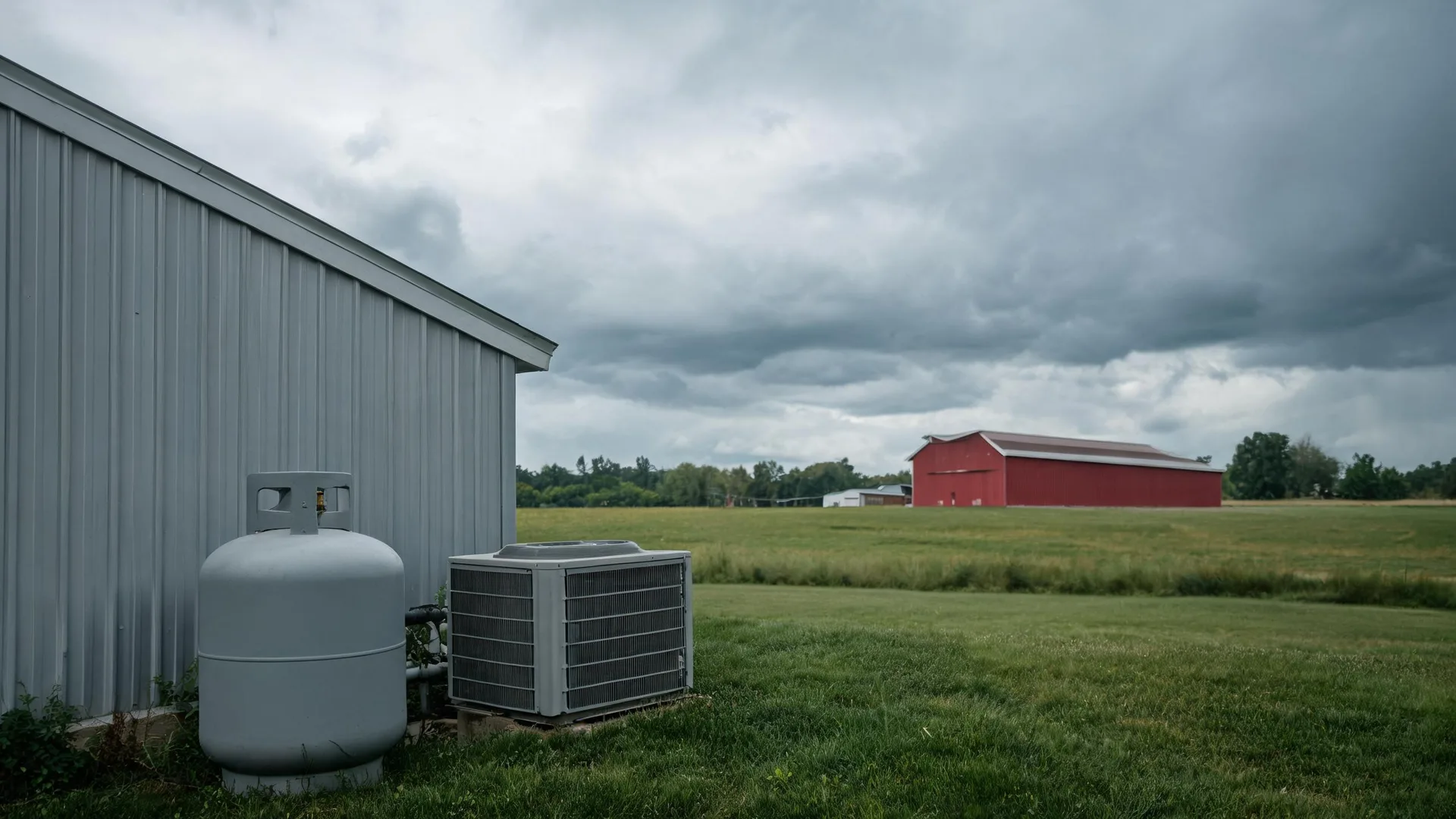
A gray heat pump condenser unit mounted on a concrete pad against the gray lap-siding exterior wall of a house.

The rating on the box isn't the whole story

A heat pump runs in both directions, so look at how it's rated for each one. The cooling number tells you how it performs on the hottest afternoons. The heating number, usually listed separately, tells you how it performs in the cold, and that number matters more with a heat pump than it ever did with a furnace, because a heat pump is still trying to pull warmth out of cold air rather than burn fuel to make it. Systems can carry the same cooling rating and perform differently once the temperature drops. Ask about the heating number specifically, not just the cooling one, and ask how the unit performs at low outdoor temperatures rather than at the mild ones the average is built from. Also ask what happens below that point. Some heat pumps lean on electric resistance strips to make up the difference, which works but costs more to run than the compressor does on its own. Find out at what outdoor temperature the system switches over, and how often that's likely to happen in a typical winter. A system that runs efficiently most days but leans hard on backup heat on the coldest ones isn't performing the way its rating suggests.

The equipment is only part of the bill

Heat pumps with the same rating can still cost different amounts to put in. Line sets, a new disconnect, a pad for the outdoor unit, changes to the ductwork if the old system wasn't a heat pump to begin with. If the indoor coil or air handler doesn't match the new outdoor unit, that gets swapped too. None of that shows up on the price tag of the equipment itself.
What's already there changes the job

Pulling out a furnace and putting in a heat pump is a different job than replacing one heat pump with another. Electrical service sized for a gas furnace's blower might not be sized for a heat pump that handles both heating and cooling. A contractor checks the panel, the breaker, the wiring gauge before anything goes in, not after.

If the house is moving from a furnace to a heat pump, that furnace doesn't have much life after it. Some contractors will pull the parts that still have scrap value, but the cabinet, the heat exchanger, the old ductwork connections usually go to a landfill or a metal recycler. If a working heat pump is coming out, ask the contractor what happens to the refrigerant first. It has to be recovered into a tank, not vented, and that's a legal requirement, not a courtesy. A unit drained properly can sometimes be resold or stripped for parts. Either way, removal is part of the installation job, not something left for the homeowner to deal with afterward. Ask upfront whether hauling away the old equipment is included.

Installation day starts with the outdoor unit and indoor coil, then moves to whatever connects them. If the line set is being reused, a contractor checks it for the right size and has it flushed out before the new refrigerant goes in. If it's new, that gets run and brazed, then pressure tested before anything is charged. The electrical work usually happens alongside that, running power to the outdoor unit and setting a disconnect within reach of it. Once everything's connected, the system gets charged with refrigerant to the manufacturer's spec, not just topped off by feel. Airflow gets checked too, across the indoor coil and through the ducts, since a heat pump that's low on airflow won't heat or cool the way it's rated to. The last part is running it in both directions, heat and cooling, before anyone calls the job done.