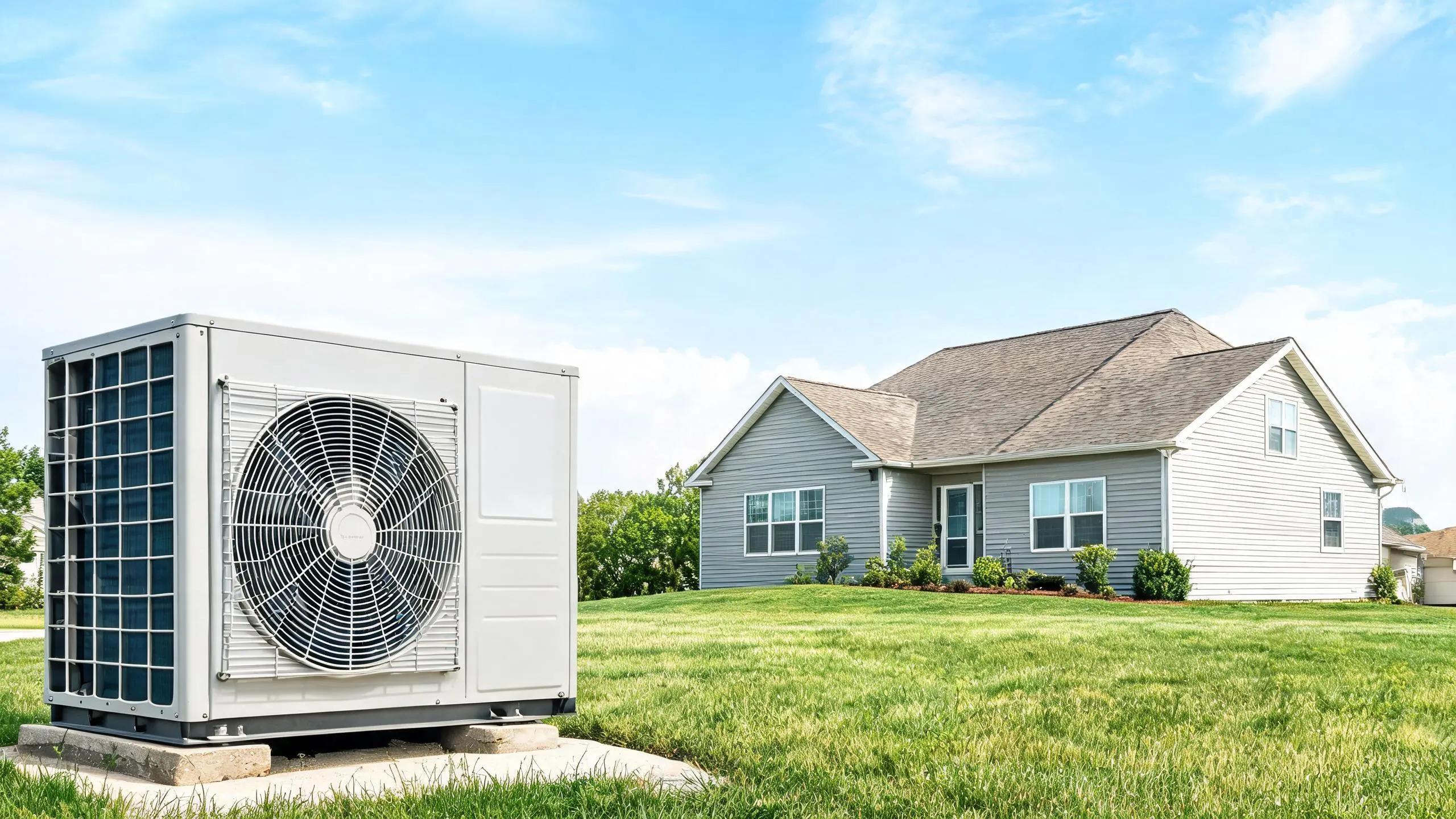
An outdoor HVAC condenser unit on a concrete pad in front of a single-story house with gray siding and a shingle roof.

Heat Pump Installation in Pauls Valley, OK

Tell us about the job

Takes about a minute. No obligation.

New system or replacementHeat PumpGarvin County, OK
Step 1 of 2

What ZIP code is the job in?

Garvin County sees its share of severe weather

Hail, high wind and tornadoes all show up in the county's weather record. An outdoor heat pump unit sits outside through all of it, so where it goes and what shields it, a fence, an overhang, some distance from the slope of a roof, matters at install time.

The power doesn't always stay on

A quarter of Oklahoma households went at least 24 hours without electricity in 2024. A heat pump runs on electricity for both heat and cooling, so it's worth asking your contractor what happens to your system when the grid goes down.

6 months
November through April, your system heats
5 months
May through September, it cools
31°F
the average winter night it heats against
92°F
the average summer afternoon it cools against
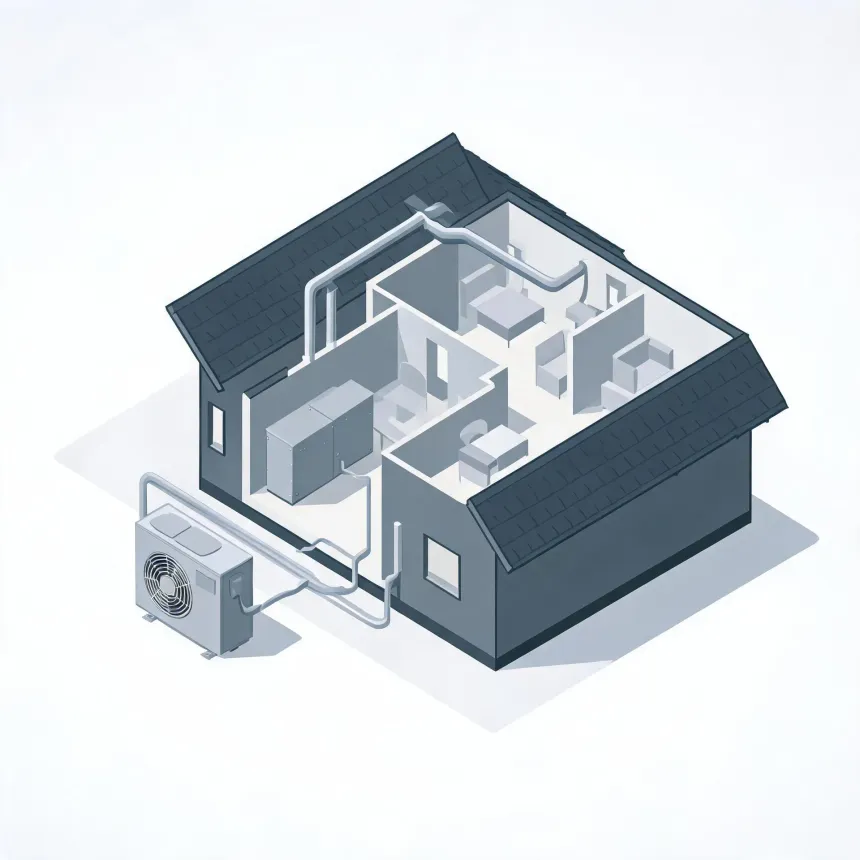
Isometric grayscale illustration of a cutaway house showing interior rooms, ductwork and an indoor air handler connected by lines to an outdoor condenser unit on the ground outside.
Your system heats November through April and cools May through September.

NOAA nClimDiv, 1991–2020 normals

Heat here runs November through April.

Put the heat pump in during October and it's already proven before the cold sets in.

Most homes in Garvin County already run on electricity

65.3% of homes heat with electricity
73 hail events from 2015 to 2024
Power costs 12.24 cents a kWh statewide
An older home needs a heat pump sized for the house it's going intoHalf the homes in Garvin County were built in 1973 or earlier.

Electricity in Oklahoma ran 12.24 cents a kilowatt-hour in 2024, below what most of the country pays. That changes the math on which heat pump to install. A top-tier efficiency model costs more up front and takes longer to earn that back when power is already this cheap. It's still a good machine, but the case for paying extra for the highest rating is weaker here than somewhere with expensive power. Given what this county's grid and weather put a system through, how well it holds up matters more than squeezing out another point of efficiency.

Garvin County weather puts a heat pump to work

73 hail events hit this county between 2015 and 2024. Whatever goes in outside, the condenser, the lines, the pad it sits on, takes that along with the wind and the heat and cold through every season. Size it for this house and build it to hold up, not just to run efficient on a mild day.

Find a contractor
A gray heat pump outdoor unit mounted on a concrete pad next to the stone-accented exterior wall of a house.

The number on the label is a lab result, not a promise

The rating on a heat pump's label comes from a lab, with a clean coil and the airflow set exactly right. Dirt on the coil, a duct that is too small, a charge that is off even a little, and the machine will never see that number in the house. A heat pump carries a rating for heat and another for cooling, because it has to earn both, and a unit can be strong in one and weaker in the other. The rating also compares one unit against another, not one fuel against another, so it tells you how the machine stacks up against the rest of the field, not what it will cost to run. None of that happens on its own. A unit with a strong rating still needs clean coils, good airflow and the right charge, year after year, to get anywhere near the number on its label.

Ask what happens below freezing

Every heat pump loses capacity as the outdoor air gets colder, and at some point it needs backup heat to keep up. Ask what kicks in when that happens and how the system decides to switch over. Some use electric resistance strips, some pair with a furnace. Either way, know what's actually heating the house on the coldest night before you buy.

Ask who sizes it, and how

A heat pump that's too big short cycles, never running long enough to dehumidify or heat evenly. One that's too small runs constantly and still falls short. Sizing should come from a load calculation on the house itself, the windows, the insulation, the layout, not a guess based on square footage or what the old system was. Ask to see the calculation, not just the number it produced.

What drives the price of an install is mostly what has to happen before the new unit ever shows up. Pulling the old equipment out, setting a new line set or confirming the old one can take the new refrigerant, running wire to match the new unit's electrical draw, these add labor regardless of which heat pump you pick. Ductwork matters too. A heat pump moves a different volume of air than what was there before, and if the existing ducts are too small or leaky, they need work before the system can perform the way it's rated to. The unit itself varies in price by size and stage, meaning whether it runs at one fixed speed or adjusts output to match the load. A single-stage unit costs less than a variable-speed one, but the variable-speed unit holds steadier temperatures and tends to run quieter. None of this is optional based on preference. It's dictated by the house and what's already in the walls.

Installation day starts with the old system coming out, not the new one going in. Refrigerant gets recovered from the old unit, the lines get disconnected, and the old pad or mounting gets cleared. Then the contractor checks the line set, the wiring and the ductwork against what the new heat pump needs, since none of that is guaranteed to match just because it worked for the old equipment. Setting the new outdoor unit and air handler, brazing the line set, pulling a vacuum to clear out moisture and air, these take hours and have to happen in that order. Once the system is charged with refrigerant, the contractor runs it and checks airflow, temperature split and pressures against what that unit is supposed to do. A heat pump that gets fired up without that last check might run, but nobody actually knows yet if it runs right.