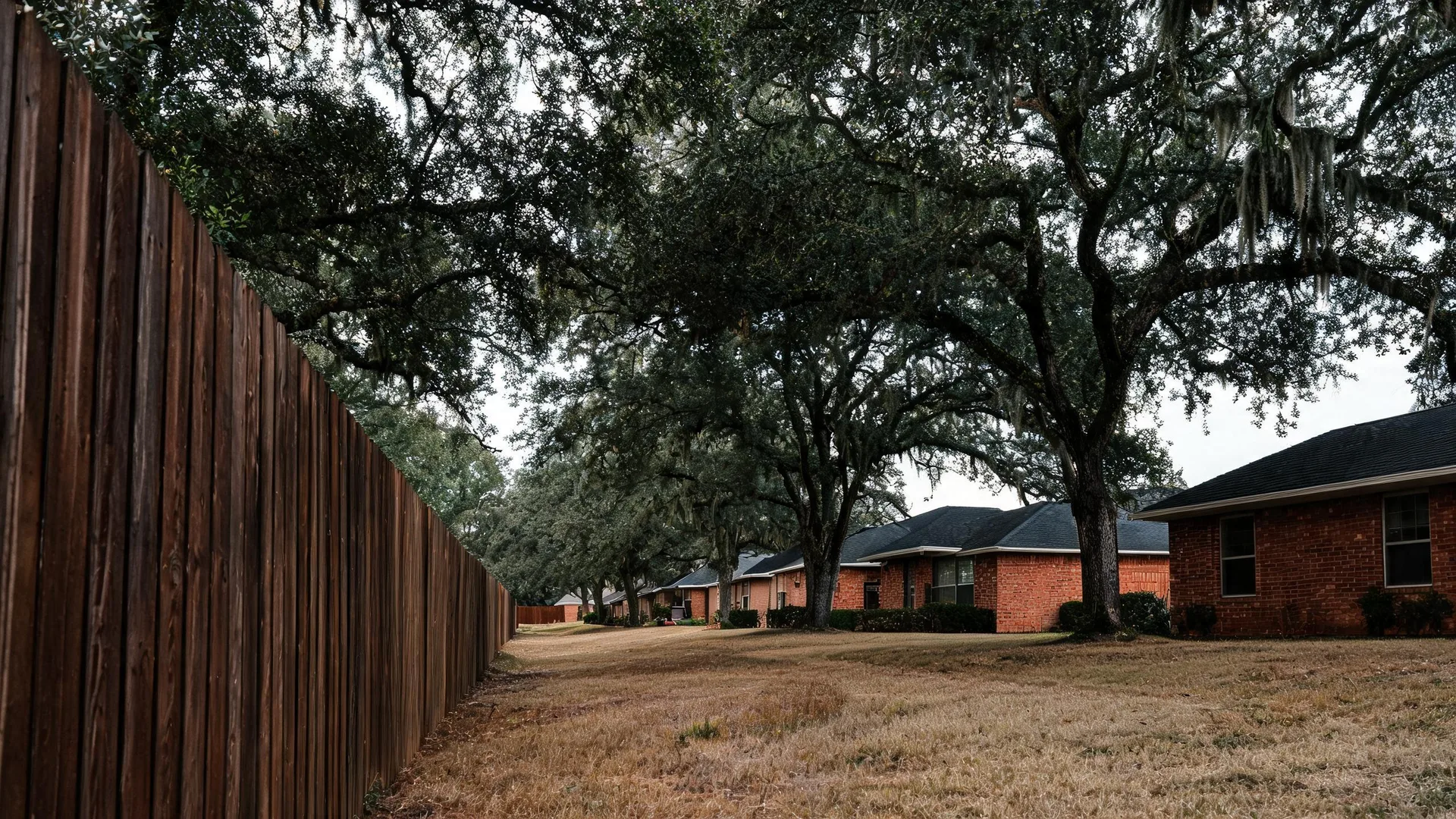







A tall wooden privacy fence runs along the left side of a dry grass strip, with a row of single-story brick houses and large spreading oak trees on the right under an overcast sky.

Heat Pump Installation in Sapulpa, OK

Tell us about the job

Takes about a minute. No obligation.

New system or replacementHeat PumpCreek County, OK
Step 1 of 2

What ZIP code is the job in?

Creek County saw 144 severe weather events between 2015 and 2024. Most of that was wind and hail, 65 damaging wind events and 58 hail events, with 12 tornadoes and 9 winter storms mixed in. A heat pump has an outdoor unit sitting right in the path of that, so where it goes and what shields it matters. Outages follow the same storms. A quarter of Oklahoma households went at least a full day without power in 2024, and a heat pump needs power to heat or cool anything. Plan for both when you install one here, not just for the heat and cold.

7 months
October through April, your system heats
5 months
May through September, it cools
29°F
the average winter night it heats against
91°F
the average summer afternoon it cools against
Isometric line illustration of a cutaway house showing interior rooms with furniture, ceiling ductwork connected to an indoor air handler, and an outdoor condenser unit linked by refrigerant lines.
Your system heats October through April and cools May through September.

NOAA nClimDiv, 1991–2020 normals

Creek County's summer air sits at a 67 degree dew point on average, heavier than most of the country ever sees.

A heat pump sized for that load runs long hours all summer, so undersizing it to save money up front costs you comfort every one of those hours.

It runs most of the year here, so put it in before a season starts, not during one

Cooling runs May through September
Heat runs October through April
58 hail events from 2015 to 2024
Electricity here is cheapCreek County pays 13.23 cents per kilowatt-hour, less than most of the country.

Creek County falls under zone 3A in the energy code, a warm humid zone with a long cooling season. Any split-system heat pump installed here has to hit at least 14.3 SEER2 for cooling and 7.5 HSPF2 for heating, the federal minimum for units built from 2023 on. Go above 45,000 Btu/h and the cooling number is a bit lower, 13.8 SEER2, but that applies to central air conditioners rather than heat pumps. A unit that clears these numbers qualifies for a federal tax credit, worth looking into before you settle on a model. The rating tells you what the system has to deliver over a full season, not what it does on any one afternoon, so two units with the same SEER2 number can still feel different running through a Creek County summer.

Plan the install around the storms before they decide it for you

Decide where the outdoor unit sits and what protects it before the installer shows up, not after a storm takes it out. Ask about a surge protector for the system and a backup plan for heat and hot water, since the unit only works when the power does. Settle this at install, while it's one decision instead of an emergency repair.

Find a contractor
A man in a cap, dark shirt and tan work pants, seen from behind, carries a worn canvas tool bag up steps toward a dark blue front door beside a tall planter of flowers.
A dark gray heat pump unit mounted on a concrete pad next to a house with gray siding and a stone veneer wall.

It doesn't get a break here, so don't buy it one size too small

This clip runs the unit from morning into night because that is close to how it actually operates here. A heat pump sized for a Creek County summer is not cycling on and off for an hour in the afternoon. It is running long stretches, day into evening, because the air it's pulling heat out of in summer and pulling heat from in winter rarely lets up. That long runtime is also what makes sizing matter. A unit too small for the load just stretches those hours out further trying to catch up, and the compressor and outdoor fan motor are the parts doing that work every one of those hours. Buy on the lowest price and you're buying more run hours for years, not fewer.

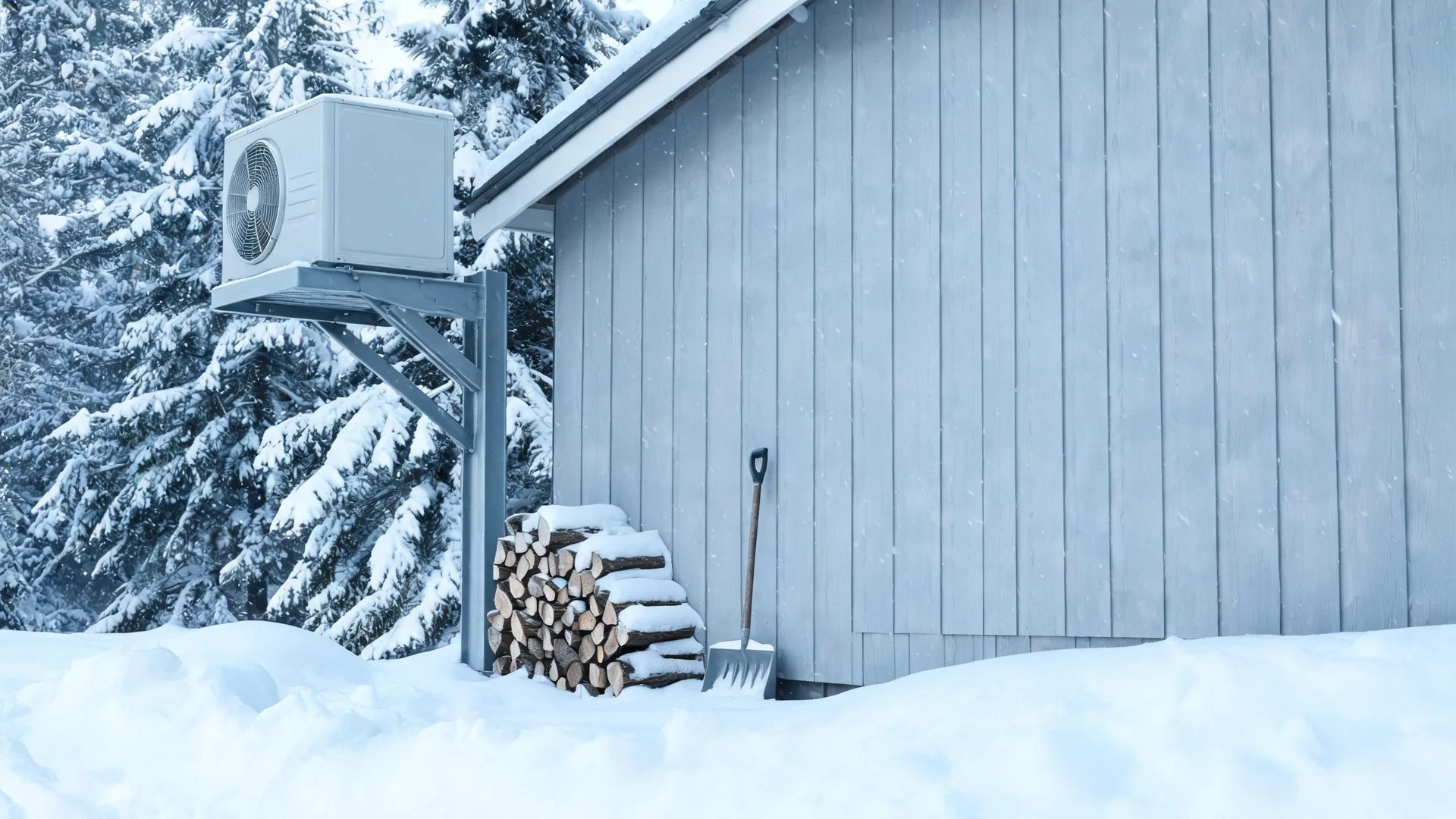
Ask what happens below freezing

Every heat pump loses capacity as the outdoor air gets colder, and each model has a point where it can't keep up on its own. Ask what that point is and what the system does when it hits it. Some switch to backup heat strips, some pair with a gas furnace in a dual fuel setup. Get the straight answer on which one you're buying and how the switch happens, because that decision shapes how the system performs on the coldest night of the year, not the mildest one.
Ask how the system handles a power interruption

A heat pump needs power to run the compressor, the outdoor fan and the indoor air handler. When power cuts out and comes back, most systems restart on their own, but some have a delay built in to protect the compressor from restarting under pressure too soon. Ask whether the thermostat holds its settings through an outage or needs to be reprogrammed, and whether the outdoor unit needs anything checked after a hard shutdown before it runs again.

Sizing a heat pump starts with a load calculation, not a tape measure around the house. A contractor works out how much heat the place loses in winter and gains in summer by looking at the walls, the windows, the insulation, the ceiling height, which way rooms face. That number, not the square footage, tells you what size unit to buy. Oversize it and the system short cycles, blasting the space cold or hot and shutting off before it ever pulls the moisture out of the air, so the place feels damp even when the temperature reads fine. Undersize it and it runs constantly without ever catching up on the hottest or coldest days, and the compressor wears under that strain. The right size is the one that matches the load, not the biggest unit that fits the budget or the smallest one that fits the price.

Gas heats 45.1% of homes in Creek County, just ahead of electricity at 42.1%, with another 10% on bottled or LP gas. If gas already runs to your house, the straightforward path is a dual fuel setup, where the heat pump handles the mild months and the furnace takes over when it gets too cold for the heat pump to keep up. That split matters more here than in most places, since the storms that knock out power tend to hit in the same seasons the cold snaps do. A furnace that runs on gas already in the house keeps working when the heat pump can't, whether that's from deep cold or an outage. Ask the installer whether your existing gas line and furnace can pair with the heat pump being installed, or whether the setup calls for backup heat strips instead.