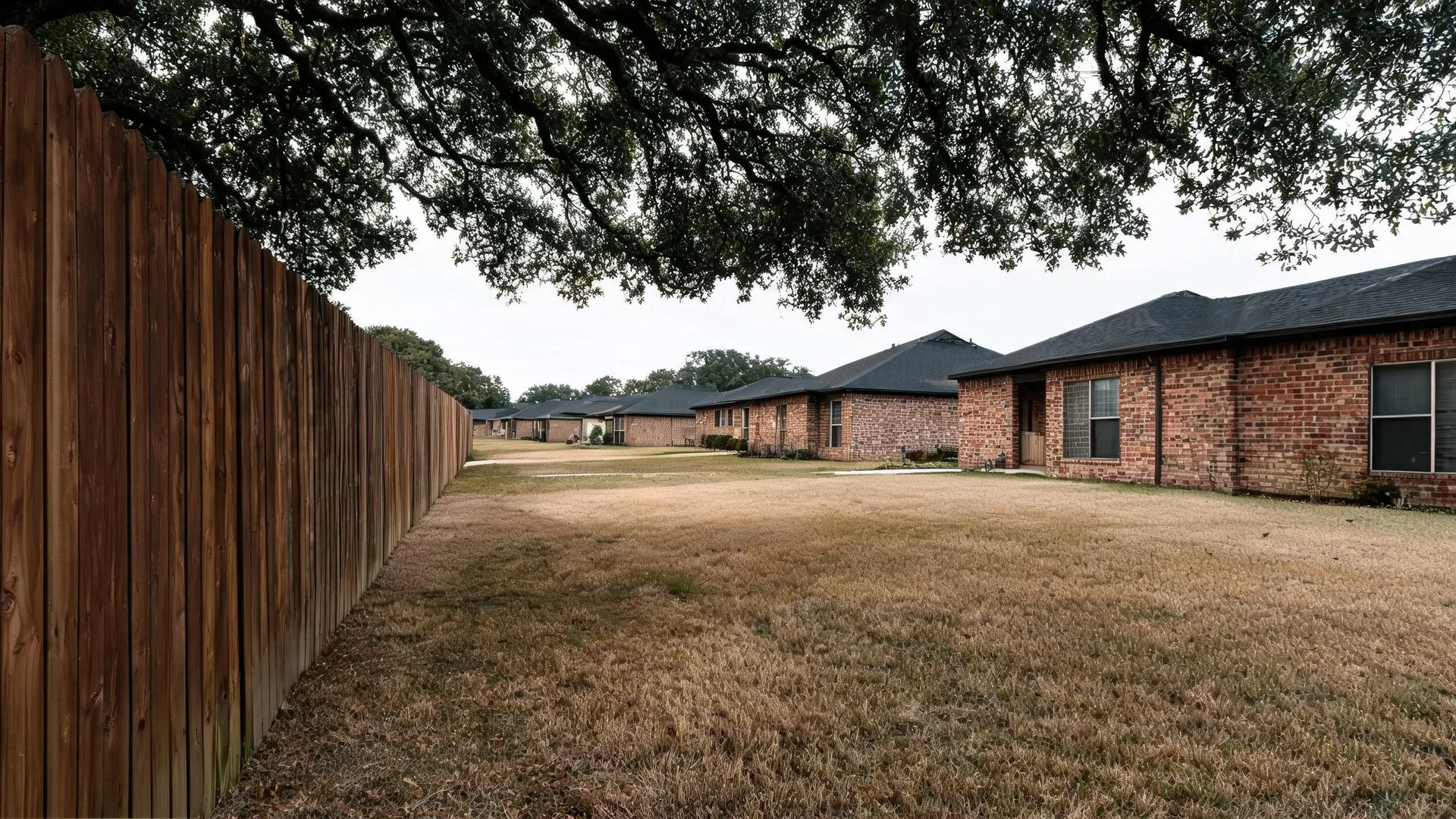






A wooden privacy fence runs along the left side of a dormant grass lawn, with single-story brick houses on the right and overhanging tree branches at the top of the frame.

Heat Pump Installation in Skiatook, OK

Tell us about the job

Takes about a minute. No obligation.

New system or replacementHeat PumpOsage County, OK
Step 1 of 2

What ZIP code is the job in?

Osage County sees more severe weather than most places you'd compare it to. Between 2015 and 2024 the county recorded 198 severe weather events, including 97 damaging wind events, 68 hail events, and 21 tornadoes. A heat pump's outdoor unit sits outside year-round, so it takes whatever comes through: hail dents the cabinet fins, wind throws branches and debris at the coil. Winter storms hit less often, 12 times over that same stretch, but ice and heavy snow are part of the mix too. A quarter of Oklahoma households went at least a full day without power in 2024. When the power goes, both the heat pump and most gas furnace ignition systems stop working, and an electric water heater stops too. Where the outdoor unit goes and what backs it up during an outage are worth planning before installation, not after a storm.

7 months
October through April, your system heats
5 months
May through September, it cools
27°F
the average winter night it heats against
90°F
the average summer afternoon it cools against
Isometric cutaway illustration of a small house showing interior ductwork and an air handler connected by lines to an outdoor condenser unit on a pad beside the building.
Your system heats October through April and cools May through September.

NOAA nClimDiv, 1991–2020 normals

Osage County logged 97 damaging wind events and 68 hail events between 2015 and 2024.

Your outdoor unit has to stand up to that record, not just an average day's weather.

Cheap power, but durability matters more than efficiency here

Power here costs 12.86 cents per kilowatt-hour
97 damaging wind events from 2015 to 2024
68 hail events from 2015 to 2024
Get It In Before OctoberHeat here runs October through April, so a fall storm catches a half-finished job.

Osage County sits in climate zone 4A, which asks real work from both sides of a heat pump, heating and cooling alike. That rules out low-end equipment. Any split-system heat pump installed new has to pull at least 14.3 Btu of heat for every watt-hour it uses in summer, and deliver at least 7.5 Btu per watt-hour in winter. Central air systems here face a similar floor, 14.3 SEER2 for anything under 45,000 Btu/h. These are federal minimums, not local add-ons, so they set the baseline for what a contractor can legally put in your yard. A federal tax credit is available on top of that for qualifying equipment, which is worth asking about before you settle on a model.

Plan for the Outage Before the Install, Not After

Decide where the outdoor unit sits and how you'll cover heat and hot water in an outage before the crew shows up, not after. That conversation belongs in the installation plan itself, next to the equipment choice and the duct work.

Find a contractor
A white mini-split heat pump outdoor unit mounted on a concrete pad beside a gray-sided house, surrounded by gravel and green shrubs.

Built to Run Through What This County Throws at It

This heat pump will run most months of the year, cooling through the summer stretch and carrying part of the winter load alongside the furnace. That's a lot of hours on the outdoor unit, and most of them are spent outside where the wind and hail already logged in this county can reach it. A dented cabinet or a bent fin doesn't stop the system working right away, but it shows up later as a harder-running compressor or a coil that doesn't shed heat the way it should. Installing it now, before this year's storms, means the equipment and its mounting are chosen with that record in mind instead of patched up after the fact.

What the Installer Actually Prices

A heat pump quote covers more than the outdoor unit and the air handler. Line sets have to be sized and run between the two, and if the existing lineset was built for a different system it may need replacing rather than reused. The electrical circuit feeding the unit has to match its draw, and older panels sometimes need a new breaker or subpanel work before the equipment goes in. Ductwork gets inspected too. Heat pumps move a different volume of air than a furnace alone, and ducts that were never sealed or sized right will cost efficiency no matter how good the new equipment is.
Where the Real Differences Show Up

Two systems with the same efficiency rating can price out differently once the site is accounted for. A straightforward swap, same location, same ductwork, same electrical service, goes faster than a job where the pad has to move or the panel needs upgrading. Multi-stage and variable-speed compressors cost more up front than single-stage units but run quieter and hold steady temperatures better. A backup heat strip or a hybrid setup with an existing furnace adds its own wiring and controls. None of this is padding. Each piece is doing a job the homeowner will notice later, in how the house holds temperature and how often the system has to work hard to do it.

Sizing a heat pump isn't a guess based on square footage. A contractor works out a room by room heat loss and heat gain calculation, looking at insulation, window area, ceiling height, and how much wall faces the sun. That calculation tells them how much heating and cooling capacity the house actually needs, not how much the old system happened to have. Too big and the unit short cycles, running in quick bursts that cool or heat the air without running long enough to pull moisture out of it. That leaves rooms feeling clammy even when the temperature reads fine. Too small and it runs constantly, straining to keep up on the hottest and coldest days, which wears the compressor down faster. The right size runs longer, steadier cycles, which is what actually keeps a house comfortable and keeps the equipment alive.

Utility gas heats 42% of homes in Osage County, more than any other fuel, with electricity close behind at 38.6%. That gap is narrow enough that plenty of houses here already have the panel capacity an electric heat pump needs, even if the furnace next to it burns gas. A heat pump doesn't replace that furnace outright in most of these homes. It pairs with it, handling the milder days and letting the gas furnace take over when the temperature drops low enough that a heat pump alone can't keep up efficiently. That kind of hybrid setup is a common path here precisely because gas heat is already so established. Worth asking a contractor whether your existing furnace can be paired this way before assuming the whole system needs replacing.