





A white Southern-style house with a wraparound porch photographed at night, surrounded by Spanish moss-draped oak trees lit by landscape lights.

Heat Pump Installation in Stilwell, OK

Tell us about the job

Takes about a minute. No obligation.

New system or replacementHeat PumpAdair County, OK
Step 1 of 2

What ZIP code is the job in?

Electricity heats more homes in Adair County than anything else, at 38.2 percent. Gas, bottled or utility, covers most of the rest. A heat pump fits an electric-heated home directly, since it runs on the same fuel already wired to the house. If your home currently heats with propane or utility gas, a heat pump still works, but the contractor will need to look at your electrical panel to see what it takes to run one.

7 months
October through April, your system heats
5 months
May through September, it cools
29°F
the average winter night it heats against
89°F
the average summer afternoon it cools against
Isometric cutaway illustration of a single-story house showing interior rooms with furniture, an attic duct system connected to an indoor air handler, and an outdoor condenser unit linked by lines along the exterior wall.
Your system heats October through April and cools May through September.

NOAA nClimDiv, 1991–2020 normals

Adair County saw 69 severe weather events between 2015 and 2024, including damaging wind, hail and tornadoes.

A heat pump sized right for this house holds up to that without needing anything bigger or special.

A standard heat pump, sized for the house, is all this county needs

Half the homes here were built by 1982
Climate zone 3A
Power costs 12.24 cents a kWh statewide

Stilwell sits in climate zone 3A, warm with a long stretch of summer and a short mild winter. Any split-system heat pump installed here now has to meet 14.3 SEER2 for cooling and 7.5 HSPF2 for heating. That is the federal minimum, and it sets the floor for what can legally go into this house. A federal tax credit is also available for heat pumps that meet efficiency requirements, which can offset part of the cost. Ask the contractor which models on their truck qualify before you sign anything.

Here, the right fit matters more than the efficiency number

Electricity runs 12.24 cents per kilowatthour in Oklahoma, lower than most of the country. That keeps the payback on a high-efficiency model slow, so the case for one here comes down to sizing and reliability, not the power bill. Get the unit matched to this house.

Find a contractor
A gray heat pump outdoor unit mounted on a concrete pad next to a residential house with lap siding and stone accents.

What you're paying for isn't the unit

The price difference between installs on paper units of the same size comes down to what the crew finds once they're on site, not the equipment itself. Line set length is one factor. The run between the outdoor unit and the indoor coil takes more refrigerant and more labor to pressure test and seal the longer it gets. Ductwork condition is another. Ducts that leak air or were sized for a furnace's airflow rather than a heat pump's may need sealing or modification before the new equipment can perform the way it's rated to. The electrical panel matters too. Some panels have room to spare for the new outdoor unit, others need a breaker added or upgraded, and that call belongs to an electrician, not a guess from the sales visit. Accessibility plays in as well. A pad that's level and easy to reach costs less to work on than a unit that needs a crane, an awkward tie-in, or work in a tight mechanical closet. None of this shows up until a contractor is actually looking at the panel, the ducts, and the space the equipment has to fit into.

The old equipment gets hauled away

Whoever installs the new heat pump disconnects the old furnace, air conditioner or condenser and takes it with them. The refrigerant in an old AC or heat pump has to be recovered first, by law, before the unit is cut loose and removed. That's standard practice, not an extra step you need to arrange.
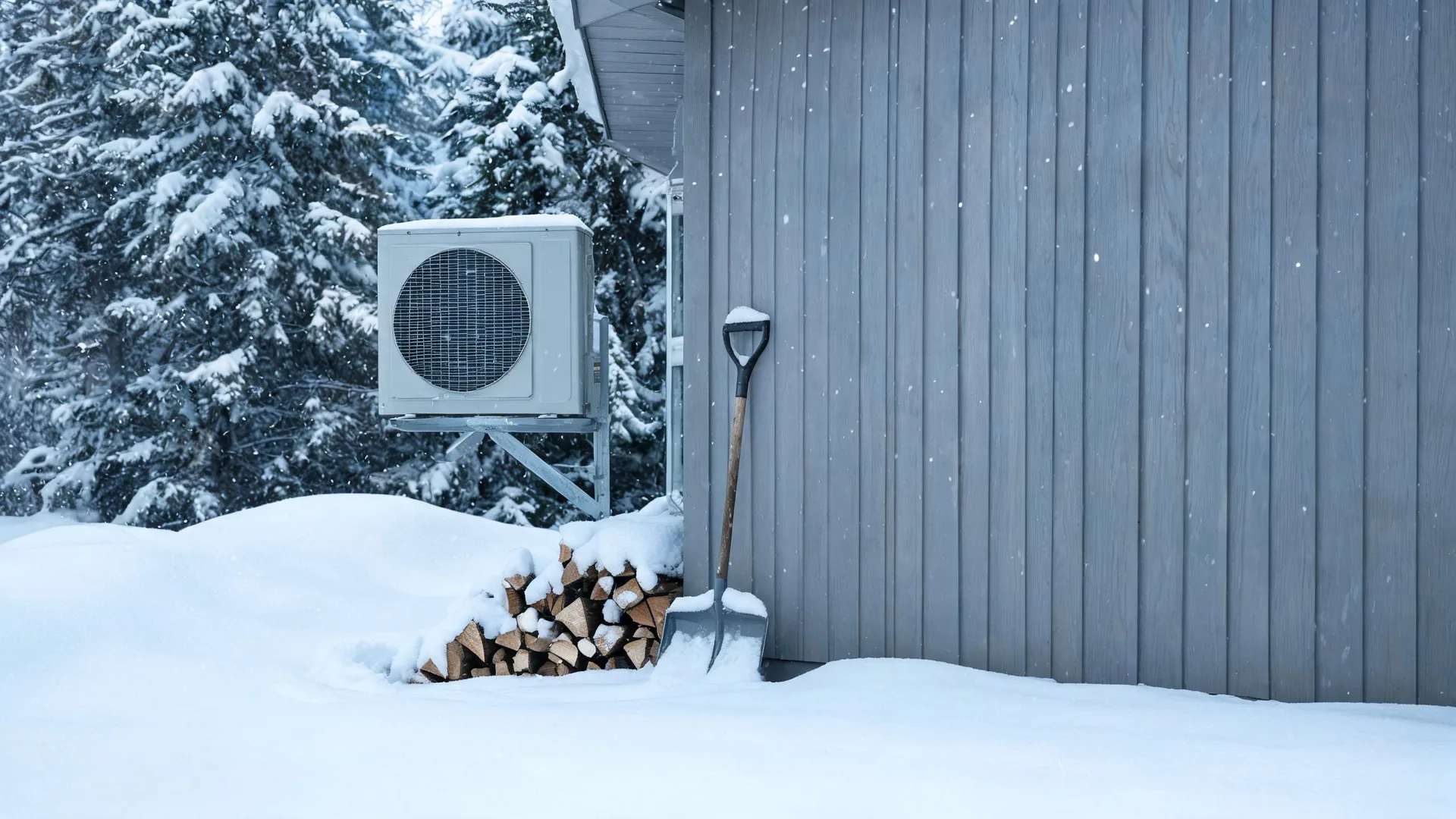
What's already in place often stays

The ductwork, the thermostat wiring, the electrical disconnect box outside, most of that gets reused if it's in good shape. A contractor checks it during the install rather than replacing it by default. If something does need upgrading, like the breaker or the disconnect, that's worth knowing before the old system comes out, not after.

A heat pump that's too big cools the house fast, shuts off, and leaves the air damp, since it never runs long enough to pull moisture out. One that's too small runs constantly in the hottest and coldest stretches and still can't keep up. Getting the size right starts with a load calculation, not a guess based on the old unit or the square footage alone. A contractor measures the walls, the windows, the insulation, and how much sun the house takes on, then works out how much heat the house gains in summer and loses in winter. That number, not a rule of thumb, is what decides the size of the equipment. The old system is a clue, not an answer, since it may have been sized wrong from the start.

Installation day starts with the outdoor unit and the indoor coil, not the paperwork. The crew sets the new outdoor unit on its pad, runs the refrigerant lines, and connects the electrical disconnect. Inside, the air handler or furnace coil gets swapped or tied into the existing ductwork, and the refrigerant lines get connected, pressure tested for leaks, then evacuated to pull out moisture and air before any refrigerant goes in. None of that is visible from the thermostat, but skipping it is what causes a system to fail early. Once everything is sealed and charged, the contractor sets the airflow, checks the temperature split at the vents, and confirms the thermostat is talking to the right equipment. A heat pump also needs its defrost control checked, since that's what keeps the outdoor coil from icing over once the weather turns cold. Expect the better part of a day for a straight swap, longer if ductwork or electrical work is involved.